Moving to Jamaica, from the Shipping Container to the Driving Test
Jamaica · Relocation
Key Facts
- —What arrives duty free Jamaica allows US$1,000 of personal and household goods per traveller aged 18 or over, whether carried or shipped separately.
- —Bringing a car Imported cars, station wagons and sport utility vehicles may be no more than six years old. Motorcycles no more than five.
- —The catch Dogs and cats may be imported only from Great Britain, Northern Ireland and Ireland, with a permit and 14 days of quarantine.
- —Your driving licence There is no straight swap. A foreign licence spares you the provisional stage but not the written and road tests.
- —What utilities cost Residential electricity runs about US$0.29 per kilowatt hour, roughly 172% of the world average, on data collected in June 2025.
- —How renting works Deposits are uncapped but usually one month. Landlords must give 30 days notice and then obtain a Parish Court order.
The container and the paperwork are the easy part. The dog, the driving licence and the electricity bill are where new arrivals lose time and money.
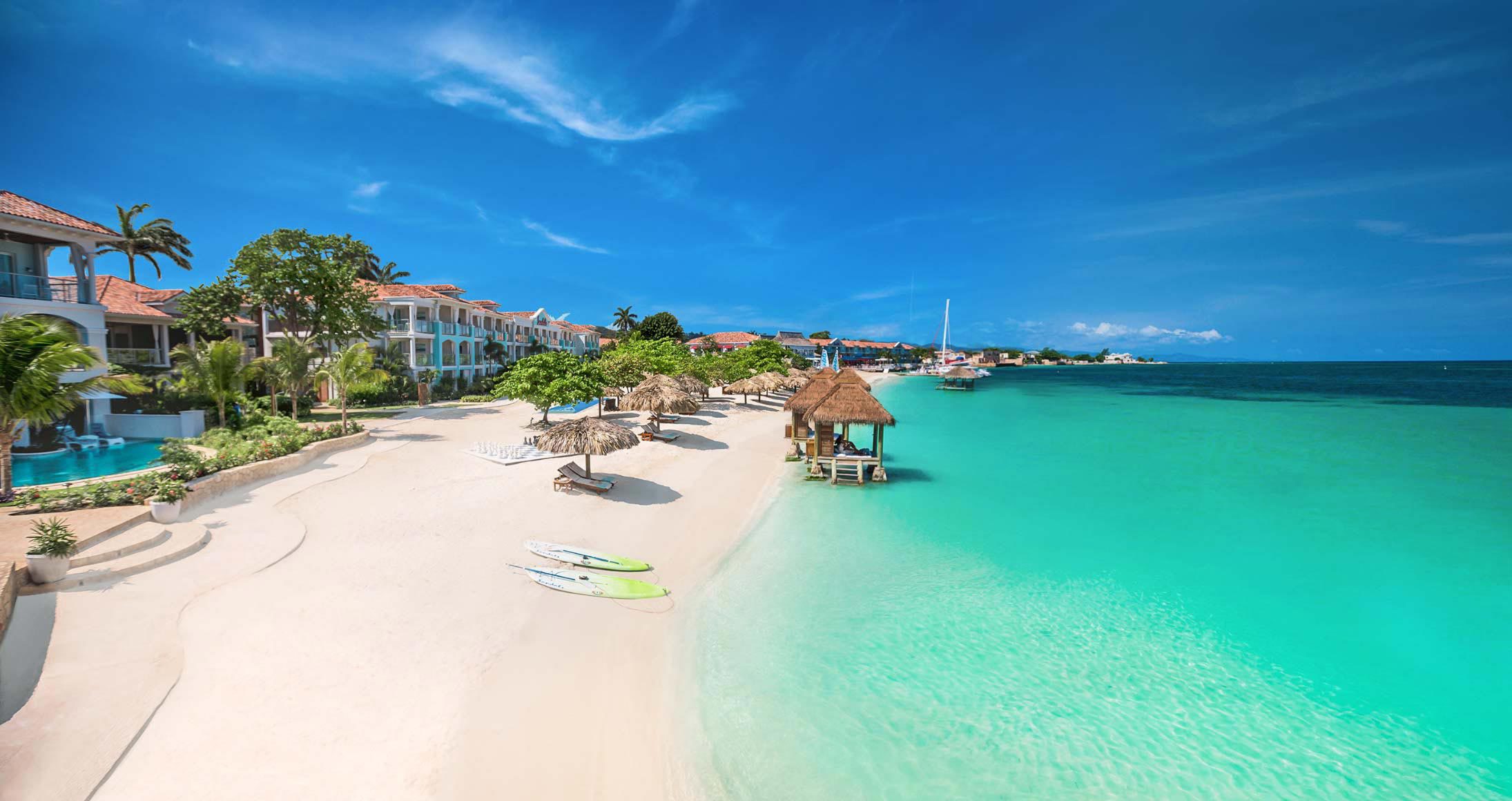
Moving to Jamaica is mostly a customs exercise, and the customs rules are stricter than the island’s reputation suggests. Two of them decide whether your household arrives intact.
What the container costs is not the number that matters
No public schedule exists for shipping a container to Kingston or Montego Bay. Rates are quoted commercially, by volume and by port of origin.
The figure that matters comes afterwards. Jamaican charges are computed on the CIF value, meaning cost, insurance and freight together.
So the freight you paid is itself part of the taxable base. A cheap crossing lowers the duty as well as the shipping invoice.
The Jamaica Customs Agency allows US$1,000 of personal and household goods for every passenger aged 18 and over. The allowance covers accompanied luggage and unaccompanied shipments alike.
Personal items are defined by nature, quantity and intended use, and must show no commercial intent. Children under 18 get no allowance, though their own belongings may be imported.
Above the allowance, charges apply to the excess value. Any unused part of the allowance can offset the charge on that excess.
Clearing a barrel of personal items carries a minimum processing fee of 6,500 Jamaican dollars (about US$41). Postal items with a value of US$100 or less arrive free of duty.
The charges that land on a household shipment
The customs agency publishes the types of charge rather than the rates. Import duty follows the customs tariff, which sets a rate for each classification of goods.
General consumption tax is then applied, at a standard rate of 15%. A special consumption tax hits alcohol, most tobacco and some petroleum products.
Two small percentages ride along with everything. A standard compliance fee of 0.3% of CIF is collected for the Bureau of Standards.
The environmental levy was long set at 0.5% of CIF. It rose to 0.8% on 1 May 2026, one of a package of revenue measures adopted after Hurricane Melissa.
Stamp duty of 100 Jamaican dollars (about US$0.65) applies where the CIF value exceeds 5,500 Jamaican dollars (about US$35). A customs administrative fee is charged as well, though the agency does not publish the amount.
There is no published percentage for used household effects as a class. The rate depends on how each item is classified, which is why brokers quote after seeing the packing list.
The car has an age limit and you probably do not beat it
Imported cars, station wagons seating up to eight and sport utility vehicles may be no more than six years old. The limits took effect on 6 November 2019.
Motorcycles and all-terrain vehicles may be no more than five years old. Light commercial vehicles are treated similarly, at six or ten years depending on weight.
Larger vehicles get longer lives. The limits are about age, not condition or mileage.
Returning residents may import vehicles up to ten years old. That concession belongs to Jamaicans coming home and does not extend to foreign arrivals.
A separate 2026 change does not touch private importers. From 1 May the general consumption tax exemption was removed from the concession granted to public officials.
The import duty and special consumption tax relief survived that change. The measure was part of the post-Melissa revenue package.
The pet rule is the one that stops people
This is the single biggest surprise in the relocation process. The Jamaican High Commission in London states that dogs and cats may come only from Britain, Northern Ireland and Ireland.
Animals must also have had no contact with animals from countries outside those three. For anyone moving from North America, that reads as a closed door.
Rabies vaccination requirements differ between the two official sources. Confirm with the Veterinary Services Division before you book anything.
What both sources agree on is the machinery. Every dog or cat needs an import permit from the Veterinary Services Division, part of the agriculture and fisheries ministry.
A veterinary health certificate is required, certified by the national animal health authority of the exporting country. The Trade Portal also lists an ISO-standard microchip and a laboratory report filed 72 hours before export.
Three weeks of notice before arrival is expected, with confirmation 72 hours ahead. Quarantine of at least 14 days follows, at the National Quarantine Facility at Plumb Point and at the owner’s expense.
No permit fee is published; the Trade Portal lists it as applicable. Treat the pet question as the first thing to resolve, not the last.
Your licence does not simply convert
Jamaica does not exchange a foreign driving licence for a local one. Tax Administration Jamaica is explicit that the written and road tests must both be passed.
The only concession is that an existing overseas licence removes the need for a provisional licence. That saves a stage, not the tests.
The process starts with a general or private licence form and an examination fee paid at a tax office. Three certified passport photographs go with the form to an Island Traffic Authority depot.
After both tests you complete a further form at the tax office and pay the applicable fees. Those fees are not published as figures on the guidance.
How long a newcomer may drive on a foreign licence is not addressed by either agency. Ask the Island Traffic Authority directly rather than assuming a grace period.
Power, water and the bill that surprises everyone
Electricity comes from the Jamaica Public Service Company, with tariffs overseen by the Office of Utilities Regulation. Water comes from the National Water Commission.
Residential power costs US$0.291 per kilowatt hour on data collected in June 2025. GlobalPetrolPrices puts that at about 172% of the world average.
That single line changes how a household lives. Air conditioning, electric water heating and a pool pump are the three that turn a bill into a shock.
Numbeo, a crowd-sourced database, puts basic utilities for an 85 square metre home at 27,750 Jamaican dollars (about US$177) a month. Its Kingston page was updated on 20 August 2026 from a thin sample.
Broadband at 60 megabits or better costs 8,384.81 Jamaican dollars (about US$53) a month on the same data. The two mobile operators are Digicel and Flow.
Hurricane Melissa remains the backdrop to all of this. International SOS reported that more than 70% of the island lost power and that intermittent disruption persisted in western parishes.
At the time of the prime minister’s statement on 4 November 2025, 66% of water commission customers had supply restored. A generator and a water tank are ordinary equipment here, not luxuries.
Schools, and what Melissa did to them
Moving to Jamaica with children adds a question the customs rules do not answer. Foreign families cluster around a handful of schools.
They include the American International School of Kingston, Hillel Academy, Belair School, the International School of Jamaica and Florida International Academy.
Hillel Academy publishes separate fee schedules for Jamaican and international students, covering several academic years. The amounts sit in downloadable documents, so ask admissions for the current schedule rather than trusting a figure online.
The national picture matters even for private schools. International SOS reported that more than 450 schools, nearly two-thirds of the national total, were damaged by Hurricane Melissa.
That has consequences for timetables, transport and repairs in the west. Ask any school directly what it lost and what has been rebuilt.
How the rental market really behaves
There is no legal cap on a rental deposit. Standard practice is one month’s rent, with two months sometimes sought for furnished properties.
Agreements may be verbal or written, and tenancies may be fixed-term or periodic. Get it in writing, because the verbal option exists and is used.
The Rent Restriction Act of 1944 governs controlled premises, typically older buildings and lower-income housing. There, increases must be fair and reasonable.
Newer and higher-value property is generally outside that control. In exempt properties the landlord may raise the rent freely, usually at renewal.
Eviction is slower than newcomers expect. A landlord must give 30 days notice to quit and then obtain a Parish Court order, with enforcement averaging 14 calendar days.
Changing the locks or removing belongings is illegal. The Rent Assessment Board handles disputes and can convene the parties within five or six days.
Global Property Guide assesses the overall system as favouring tenants, particularly under rent control. That is worth knowing before you sign, and again before you sublet.
On price, Numbeo puts a one-bedroom flat in central Kingston at 152,477.65 Jamaican dollars (about US$970) a month. A three-bedroom outside the centre averages 222,494.97 Jamaican dollars (about US$1,415).
What catches people in the first month
The pattern is consistent among new arrivals. Moving to Jamaica goes wrong at the pet desk, the licence depot and the first electricity bill.
Resolve the animal question before the flights, because quarantine and country-of-origin rules cannot be negotiated at the airport. Book the driving tests early, because the road test is not a formality.
Ship less than you think and price the shipment on CIF, not on freight alone. Anything you can buy locally within the US$1,000 allowance is rarely worth the duty.
Rent before buying, and rent in the parish where you will actually work. Moving to Jamaica twice is the common and avoidable expense.
Keep the practical inheritance of Melissa in mind when choosing a house. A sound roof, stored water and back-up power are what residents now check first.
More: Caribbean coverage, every day from The Rio Times.
Sources: Jamaica Customs Agency on personal items and the duty-free allowance, Jamaica Customs Agency on the charges applied to imports, Jamaica Information Service on the 2026 revenue measures, Jamaica Customs Agency on motor vehicle age limits, Jamaican High Commission in London on importing pets, Jamaica Trade Portal on the veterinary import permit, Tax Administration Jamaica on obtaining a driver’s licence, GlobalPetrolPrices on Jamaican electricity tariffs, Numbeo crowd-sourced costs for Kingston, Global Property Guide on Jamaican landlord and tenant rules
This article was produced by The Rio Times’ automated newsroom system. How we use AI · Report an error
Read More from The Rio Times