Ethiopia Swears In Abiy for a Second Five-Year Term

Key Facts
- —What happened Ethiopia’s newly elected House of Peoples’ Representatives opened its new term on Monday 5 October 2026, and Prime Minister Abiy Ahmed was sworn in for a second five-year term.
- —Who holds power The ruling Prosperity Party won 438 seats in the 1 June election, and the prime minister calls the new administration the “Medemer Government”.
- —Prediction markets Polymarket traders price Abiy at 98.7% to be Ethiopia’s next prime minister (US$286 million traded across the event) and an Eritrean invasion by 31 December at 21.0%. Bets, not polls; read 5 October 2026, 11:06 a.m. ET.
- —Why it matters to the US The new government inherits a war in Tigray and a broken relationship with Eritrea, both beside the Red Sea route that carries US-bound trade.
- —What is not known The full list of ministers has not been published, and nobody has said how the new cabinet will handle the war.
Parliament has reopened in Addis Ababa and Abiy Ahmed holds the oath for five more years. The harder test is a war in the north and a border that has gone silent.
Ethiopia’s new House of Peoples’ Representatives opened its term on Monday 5 October 2026, and Prime Minister Abiy Ahmed was sworn in for a second five-year term. The ruling Prosperity Party holds 438 seats after the 1 June election. For readers in the United States, the vote matters less than what follows. The new government takes over a war in Tigray and a diplomatic rupture with Eritrea, close to the Red Sea shipping lane.
This is a preview of the decisions still ahead, not a final account. The cabinet has not been published in the reports we could confirm.
What parliament did on its first day
The House opened its seventh term as the formal start of the government-formation process. Under Article 56 of the Constitution, the party with a majority forms the federal government. Prosperity Party has that majority by a wide margin, according to Fana, an Ethiopian broadcaster.
Abiy took the oath in the inaugural session, according to the prime minister’s office, as quoted by Capital FM, a Kenyan outlet. His office calls the new administration the “Medemer Government”. Medemer is an Amharic word for “addition” or “coming together”. It was the theme of his first term, and he has kept it.
The next step is the cabinet. The prime minister is expected to put his ministerial nominees to the House for approval. We do not know the names, the timing, or whether the number of ministries will change. We will report them once they are official.
How big the mandate is
The election took place on 1 June 2026. More than 54 million people voted, according to the National Election Board of Ethiopia. Forty-two parties and 10,438 candidates took part. The Prosperity Party won 438 seats.
That size of majority means the opposition cannot block the government. Votes in the House will mostly confirm decisions taken elsewhere. For investors, this brings predictability on paper. It does not remove the risks that come from security and from the economy.
The war and the border Eritrea closed
Fighting returned to Tigray in late September 2026. Capital FM reports that the Tigray People’s Liberation Front (TPLF) has withdrawn from Mekelle, the regional capital, and that airstrikes and artillery have been reported. Our own report on federal forces retaking Mekelle airport covers that fighting in detail.
Ethiopia also accuses Eritrea of backing a rebel alliance. On 1 October, Eritrea cut diplomatic ties with Ethiopia. The two countries fought a war from 1998 to 2000, and Abiy won the Nobel Peace Prize in 2019 for the 2018 peace with Asmara. That peace has now collapsed.
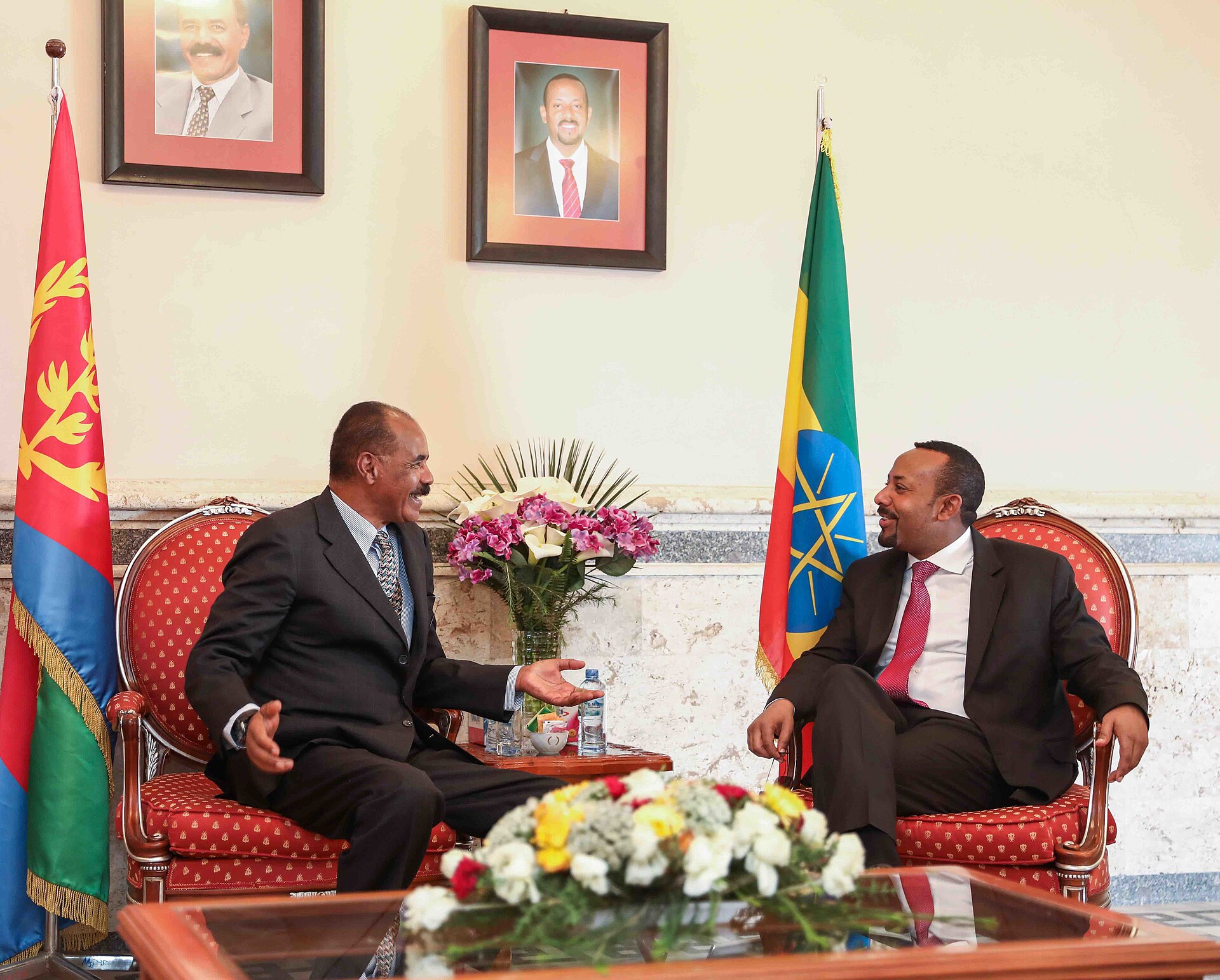
Regional alignments are shifting too. On 4 October, the presidents of Egypt, Eritrea and Somalia and Sudan’s Sovereignty Council chairman met in New Alamein and issued a joint declaration. It says Red Sea governance is “the exclusive responsibility of littoral states”, which are the countries with a Red Sea coast, and it rejects unilateral measures that harm downstream Nile users, according to Daily News Egypt. The text does not name Ethiopia, which has no coastline. Our report on the African Union meeting in El-Alamein covers the wider summit.
The new term therefore begins with two linked tests. One is whether the government can end the fighting in Tigray without a wider war. The other is whether it can reopen any channel to Eritrea. For background on the man at the centre, see our profile, Who Is Abiy Ahmed?
What Prediction Markets Say
On Polymarket, a crypto-based prediction market, the contract “Next Prime Minister of Ethiopia?” had US$286 million traded across all its candidate markets on 5 October 2026 (11:06 a.m. ET). Abiy Ahmed traded at 98.7%. The next names were Demeke Mekonnen at 0.8% and Gedion Timothewos at 0.6%.
A separate, much smaller market asks whether Eritrea invades Ethiopia. Traders gave 7.5% for an invasion by 31 October and 21.0% by 31 December, with only US$56,496 traded across the two contracts. A third market, “Abiy Ahmed out as Prime Minister in 2026?”, stood at 6.0% on US$12,642. Thin markets move easily, so treat that last pair with care.
Prices are bets, not polls. A price of 98.7% is the market’s implied probability, not a vote count.
Why we show this: prediction markets turn real-money bets into a live probability that moves within minutes of the news, which is why investors, campaigns and newsrooms in the United States now follow them closely. We show them next to polls and official results, never instead of them.
What it means for you
If you hold Ethiopian exposure, or ship through the Red Sea, the political question is settled and the security question is not. Abiy’s position is secure for now, but the war and the Eritrean rupture shape how risky the country looks. Ethiopia has more than 120 million people and is the diplomatic home of the African Union, so instability there travels. Travellers should follow their government’s advice for Tigray and the border regions.
There is a stabilising side. A government with a firm majority can pass emergency or budget measures quickly, and the cabinet list may show whether Abiy wants a more conciliatory line.
What is not known
We do not know who will serve as ministers, or when the House will vote on them. We do not know whether the government plans talks with the TPLF or with Asmara. We also cannot independently confirm battlefield claims, because communications in the north are limited.
The cabinet list and the first statements on Tigray are the next facts to watch. If the list keeps the current security and foreign-affairs team, the war strategy is unlikely to change soon.
Sources
- Capital FM Kenya, Abiy sworn in for second term, 5 October 2026
- Fana Media Corporation, Ethiopia enters a new chapter of government, 5 October 2026
- allAfrica, New government takes shape as Ethiopia opens new parliamentary term, 5 October 2026
- Daily News Egypt, Alamein Declaration by Egypt, Eritrea, Sudan and Somalia, 4 October 2026
- Polymarket, Next Prime Minister of Ethiopia?, read 5 October 2026
Frequently Asked Questions
What happened in Ethiopia on 5 October 2026?
The new House of Peoples’ Representatives opened its term, and Abiy Ahmed was sworn in for a second five-year term as prime minister, according to Ethiopian and Kenyan reports.
How many seats does the Prosperity Party hold?
It won 438 seats in the 1 June 2026 election, according to Fana, an Ethiopian broadcaster. That gives it the constitutional mandate to form the federal government.
Has the new cabinet been named?
Not in the reports we could confirm on 5 October. The prime minister is expected to put ministerial nominees to the House for approval.
What is the Medemer Government?
Medemer is an Amharic word often translated as “addition” or “coming together”. It is the name the prime minister’s office gives the new administration.
What do prediction markets say about Ethiopia?
On 5 October 2026 at 11:06 a.m. ET, Polymarket priced Abiy Ahmed at 98.7% to be the next prime minister, and an Eritrean invasion of Ethiopia by 31 December at 21.0%. These are traders’ bets, not polls.
This article was produced by The Rio Times’ automated newsroom system. How we use AI · Report an error · Editorial responsibility: Matthias Camenzind, Editor-in-Chief
Part of our ongoing coverage
Africa: The New Scramble — the great-power contest over the continent.