Dominican Republic Power Explained, Elites and Regions

GUIDES · DOMINICAN REPUBLIC
Key Facts
- —The country The Dominican Republic shares the island of Hispaniola with Haiti and had about 11.5 million people in 2025. Income per person was about US$11,059 that year.
- —Who governs Luis Abinader of the Modern Revolutionary Party (PRM) has been president since 2020. He won re-election on 19 May 2024 with 57.44% of the vote, and his last term ends on 16 August 2028.
- —The families A few family groups sit atop banking, sugar and tourism. They include the Grullón family at Grupo Popular and the Fanjul family at Central Romana.
- —Inequality The Gini index stood at 39.0 in 2024. The richest tenth of people took 29.5% of income that year, against 2.3% for the poorest tenth.
- —Who is left out In 2025, 17.3% of Dominicans lived in monetary poverty, including 21.6% in rural areas and 30.1% of children under 15.
- —Integrity The country scored 37 out of 100 on the 2025 Corruption Perceptions Index, one point more than in 2024.
Dominican Republic power rests with a dominant governing party, a few family business groups, the capital and the Catholic Church. For US readers it matters because the same circles shape deportation policy, anti-drug cooperation, tourism rules and the investment climate.
This guide maps those centres of influence as of October 2026, from the presidency to those left outside. Every figure carries its date.
How Power Works at the Top
The Dominican Republic is a presidential republic in which the president is both head of state and head of government. Luis Abinader of the Modern Revolutionary Party (PRM) has held the office since 2020.
He was re-elected in the first round on 19 May 2024 with 57.44% of the vote, in the Central Electoral Board count as reported by Dominican media. Leonel Fernández of the People’s Force (FP) came second with 28.85%, and Abel Martínez of the Dominican Liberation Party (PLD) took 10.39%.
The constitution, reformed and proclaimed on 27 October 2024, keeps the limit of two presidential terms. Abinader’s second term ends on 16 August 2028, and he cannot run again.
The president names the cabinet and the governors of the 31 provinces, and he is commander in chief of the armed forces. Decision-making is therefore centralised in the National Palace in Santo Domingo.
Vice President Raquel Peña has served alongside him since 2020. José Ignacio Paliza serves as minister of the presidency.
Parties, Congress and the Race for 2028
The PRM is the governing party, formed in 2014 after a split in the older Dominican Revolutionary Party (PRD). It won the presidency in 2020 and ended 16 years of PLD rule.
The PLD, founded by Juan Bosch in 1973, governed from 2004 to 2020 under Leonel Fernández and then Danilo Medina. Fernández left it in 2019 and founded the People’s Force, now the main opposition.
In the 2024 election the PRM and its allies won 29 of the 32 Senate seats, Dominican press reported from the Central Electoral Board count. The People’s Force took the other three, and the PLD won none.
The race to succeed Abinader has already begun inside the PRM. An ACD Media poll of 1,200 people, taken on 2 to 4 July 2026, put Tourism Minister David Collado first with 20.6%.
Senator Omar Fernández of the opposition, the son of Leonel, followed with 14.5%. Leonel Fernández himself had 12.1%, and the broadcaster Santiago Matías, known as Alofoke, had 6.3%.
A further 25.3% did not know whom to back, so the field is open. By party preference the same poll gave the PRM 31.5%, the People’s Force 21.9% and the PLD 21.0%.
Polls this early are snapshots, not forecasts. The candidates of the main parties have not yet been chosen.
The Business Families
Dominican private wealth sits in a small number of family-led groups in banking, sugar, tourism, retail and tobacco. Few publish full ownership details, so this guide names only groups and people confirmed in company statements or named reporting.
Grupo Popular, the parent of Banco Popular Dominicano, is chaired by Manuel Grullón, with René Grullón as executive president. Its 2025 net profit was RD$34.8 billion (about US$566 million at about RD$61.4 per US dollar, the midpoint of the buying and selling reference rates on 14 October 2026).
Its consolidated assets reached RD$1.12 trillion (about US$18 billion) at the end of 2025, up 11.7% in a year. The figures were presented to shareholders at the group’s assembly in April 2026.
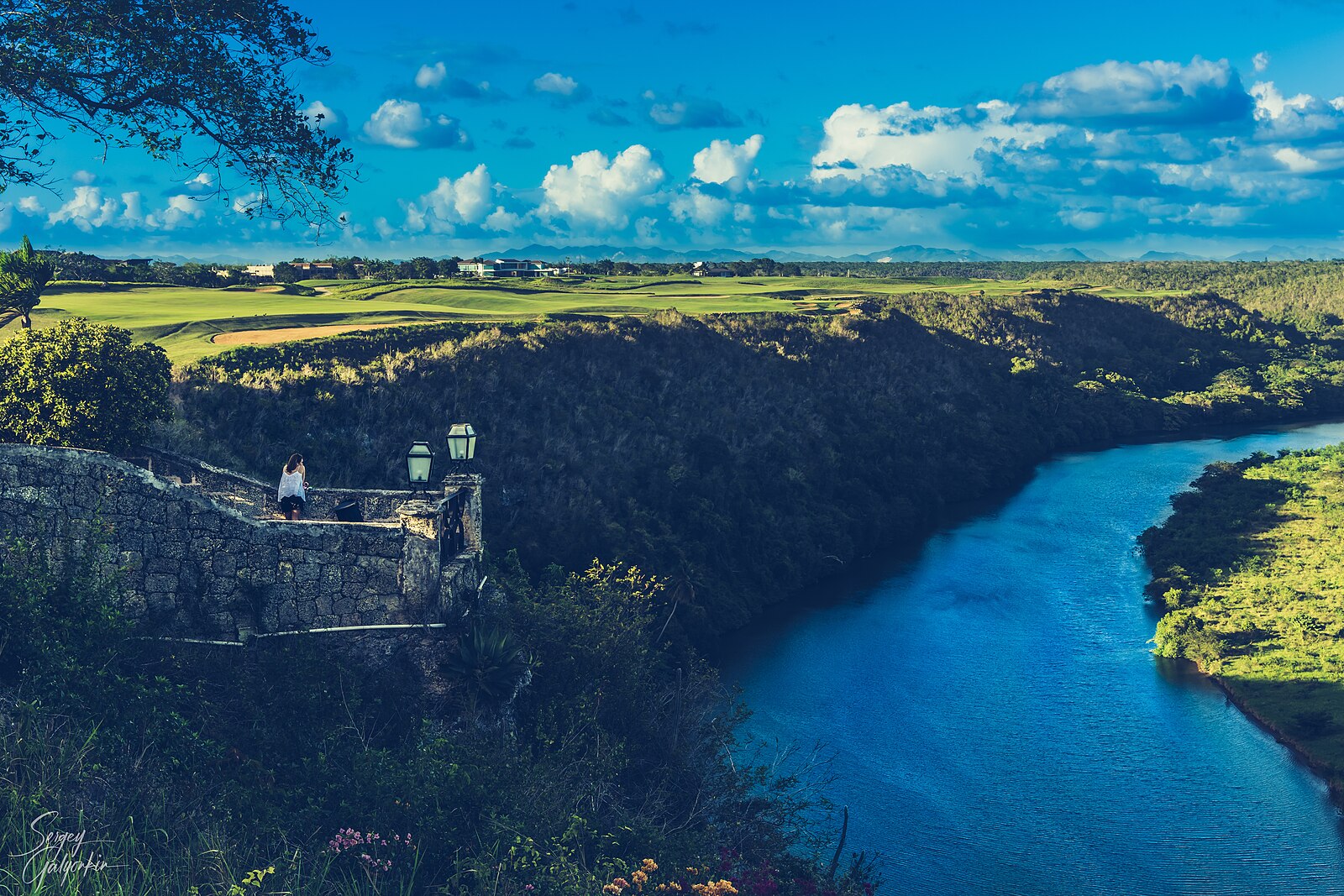
Central Romana Corporation began in 1912 as a sugar producer and now also works in tourism, free zones, ports, construction materials and real estate. Its resort, Casa de Campo, near La Romana, is its best-known tourism asset.
The Fanjul family, Florida sugar producers of Cuban origin, is a part-owner, and Alfonso Fanjul signed a 2023 letter as chief executive. Reporting in 2025 called the firm the country’s largest private employer and landholder.
In 2022 US Customs and Border Protection (CBP) barred imports of Central Romana sugar over alleged forced-labour indicators, including withheld wages and abusive conditions. CBP modified the order in March 2025, and its website now lists it as inactive, citing documented improvements in labour standards.
Central Romana says it gave US officials two years of independent audits and has invested in workers’ living conditions. Rights groups allege that the reforms were superficial, and those claims are theirs, not court findings.
The main employers’ voice is the National Council of Private Enterprise (CONEP). Celso Juan Marranzini Esteva of Multiquímica Dominicana chairs it and was re-elected unanimously for the 2025 to 2026 term.
Santo Domingo, the Cibao and the Regions
Power is concentrated in Santo Domingo, where the National Palace, Congress, the central bank and the largest banks sit. The country had about 11.5 million people in 2025, and the capital region is its largest urban area.
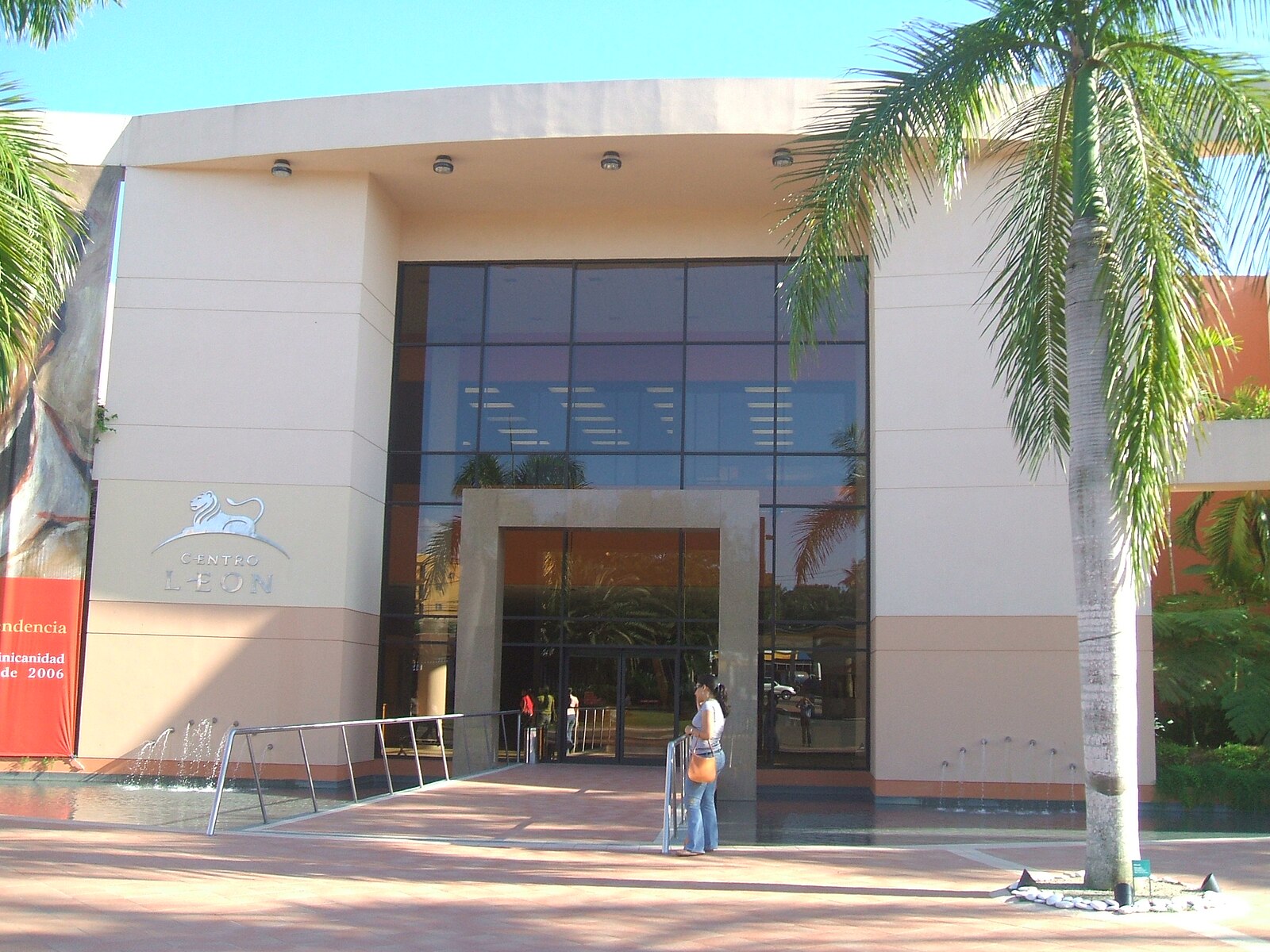
Santiago de los Caballeros, the main city of the northern Cibao valley, is the second centre. Its Centro León museum, formally the Eduardo León Jimenes Cultural Center, is a leading cultural institution of the northern city.
The east, around La Romana and Punta Cana, runs on sugar and tourism. Central Romana in the first and the large resort groups in the second shape local jobs and land use.
The southwest and the border with Haiti are poorer and have less influence in Santo Domingo. In 2025 extreme poverty rose in the southern region even as it fell in the north and east, the finance ministry data show.
Local government has little independent power because the president appoints the provincial governors. Elected mayors run the municipalities, and Carolina Mejía of the National District was named in 2025 press reports as a possible PRM candidate.
Politics is organised around parties, patrons and provinces rather than ethnic blocs. The clearest ethnic dividing line is with Haitians and people of Haitian descent, who hold almost no formal power.
The Armed Forces and the Police
The constitution makes the president commander in chief, and the Ministry of Defence runs the army, navy and air force. Lt Gen Carlos Antonio Fernández Onofre is defence minister, and his appointments of 17 August 2026 covered the land-border security corps and an intelligence directorate.
The army’s most visible task is the border with Haiti, where military checkpoints are common. The National Police is a separate force and answers to the interior ministry.
The armed forces were the backbone of Rafael Trujillo’s dictatorship, which ran from 1930 until his assassination in 1961. Since the transfer of power to an opposition president in 1978 they have stayed under civilian rule.
Churches and Unions
The Catholic Church holds a special legal position under the 1954 Concordat with the Holy See, whose first article says Catholicism remains the religion of the Dominican nation. The constitution also guarantees freedom of worship, and commentators debate how far the two fit together.
On 12 October 2026 Pope Leo XIV accepted the resignation of Archbishop Francisco Ozoria Acosta of Santo Domingo, who had led the archdiocese since 2016. Carlos Morel Diplán, named coadjutor with the right of succession in October 2025, now heads it.
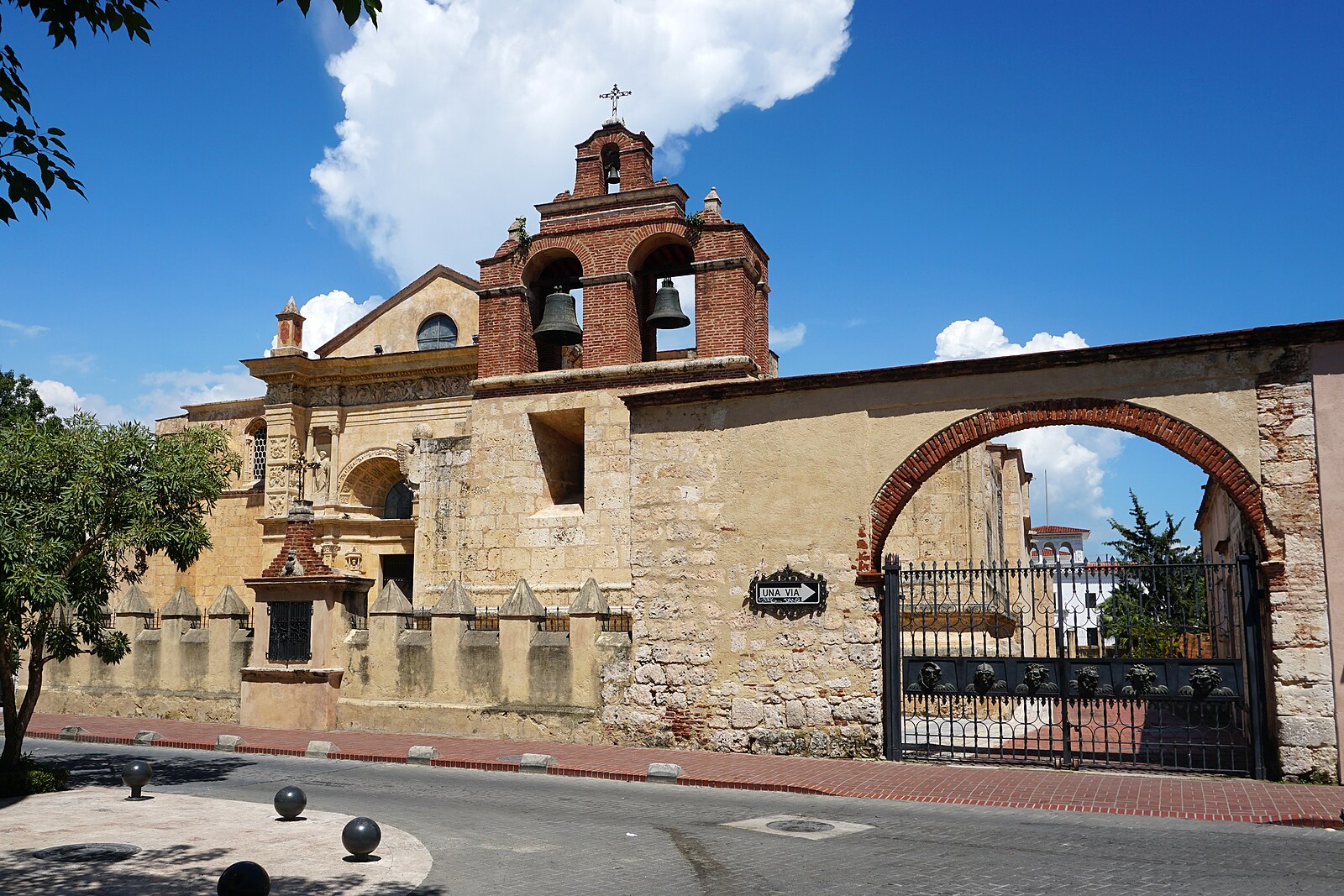
Morel Diplán also serves as military ordinary, the bishop who looks after the spiritual needs of the armed forces. The post links the Church to the barracks in a pastoral role.
Evangelical and Pentecostal churches are also active in public life. No recent official count of church membership is available, so no shares are given here.
Organised labour is weak and split among three main confederations, the CNUS, the CASC and the CNTD. In the second quarter of 2026, 53.8% of the country’s 5,271,005 workers held informal jobs, which are largely out of unions’ reach.
Unions have long defended severance pay, known as cesantía, in the debate over changing the Labour Code. Union leaders said in 2019 that years of employer proposals had failed to win their agreement.
Inequality and Who Is Left Out
The Gini index, which runs from 0 for perfect equality to 100 for total inequality, stood at 39.0 in 2024. The poorest tenth of people took 2.3% of income that year, while the richest tenth took 29.5%.
The finance and economy ministry reported that monetary poverty fell to 17.3% in 2025 from 19.0% in 2024. Extreme poverty was 2.2%.
Poverty is higher in the countryside, at 21.6%, than in cities, at 16.5%. It is also higher among women, at 18.6%, than men, at 15.9%, and reached 30.1% among children under 15.
Transparency International gave the country 37 out of 100 on its 2025 Corruption Perceptions Index, one point higher than a year earlier. A score that low means business people and experts see considerable corruption in the public sector.
People of Haitian origin, and Dominicans of Haitian descent, hold the least formal power. In ruling TC/0168/13 of 23 September 2013, the Constitutional Court applied a stricter nationality rule back to 1929.
The Inter-American Commission on Human Rights said in October 2013 that the ruling could leave tens of thousands of people stateless. It said the effect fell most heavily on people of Haitian descent.
Informal workers also sit outside the circles of power. Of the 147,456 net new jobs in the year to June 2026, 72,663 were informal and 74,794 formal.
What It Means for US Readers
Investors face a government with a large legislative majority, so key decisions come from a small circle in Santo Domingo. A free-trade agreement with the United States has been in force since 2007, and income per person reached about US$11,059 in 2025.
The Central Romana case shows that US import rules can reach Dominican business families directly. Buyers of Dominican sugar should check a supplier’s labour record.
The State Department rated the country Level 2, Exercise Increased Caution, on 12 June 2025, with crime as the risk indicator. Military checkpoints are common near the Haiti border, and travellers should carry their passports.
Expats working in free zones, tourism or farming deal with employers and landowners from the families and groups described above. Checking who owns a property or an employer is a basic precaution.
What Is Not Known
It is not known who will win the PRM nomination for 2028, or whether the opposition will unite behind one candidate. Early polls show about a quarter of voters undecided.
Private wealth is hard to measure because family groups rarely publish full ownership, and no recent official count of church membership is available. How far recent labour changes at Central Romana have reached workers is also disputed between the company and rights groups.
The next CONEP board is due after the 2025 to 2026 term, and its chair is not known. The effect of the new archbishop’s appointment on church-state relations also remains to be seen.
Connected Coverage
Frequently Asked Questions
Who holds the most power in the Dominican Republic?
President Luis Abinader of the PRM, in office since 2020, heads the state and the government and names the cabinet and the provincial governors. His party and its allies won 29 of the 32 Senate seats in 2024.
Which families have the most influence?
Prominent groups include Grupo Popular, chaired by Manuel Grullón, and Central Romana, which is partly owned by the Fanjul family. No single public ranking of family wealth exists, so this list is not complete.
How unequal is the Dominican Republic?
The Gini index was 39.0 in 2024, and the richest tenth took 29.5% of income against 2.3% for the poorest tenth. Monetary poverty was 17.3% in 2025.
Does the military run politics in the country?
No, the armed forces are under civilian control, with the president as commander in chief and Lt Gen Carlos Antonio Fernández Onofre as defence minister. Their most visible task is border security with Haiti.
What role does the Catholic Church play?
The 1954 Concordat gives the Catholic Church a special legal status, and Carlos Morel Diplán became archbishop of Santo Domingo on 12 October 2026. The constitution also guarantees freedom of worship.
Who is left out of power?
People of Haitian origin and Dominicans of Haitian descent, rural and southern communities and informal workers have the least influence. Rural poverty was 21.6% in 2025, against 16.5% in cities.
Who might succeed Abinader in 2028?
A July 2026 ACD Media poll put Tourism Minister David Collado first among possible candidates with 20.6%, ahead of Senator Omar Fernández on 14.5%. No candidate has been chosen, and 25.3% of respondents were undecided.
Sources: World Bank, Gini index for the Dominican Republic; World Bank, income share of the top 10%; World Bank, income share of the bottom 10%; World Bank, GDP per capita; World Bank, population; Acento, poverty figures of the Ministerio de Hacienda y Economía, 29 June 2026; Revista Mercado, 3 March 2026; Acento, ACD Media poll, 13 July 2026; El Día, PRM succession race; El Caribe, Grupo Popular assembly, April 2026; WLRN, Central Romana order, 20 March 2025; Central Romana Corporation; Centro León; Revista Mercado, CONEP board 2025 to 2026; Presidencia de la República, Ministry of Defence appointments, 17 August 2026; Revista Mercado, new archbishop of Santo Domingo, 12 October 2026; Infovaticana, 12 October 2026; Acento, the 1954 Concordat; IACHR press release on ruling TC/0168/13, 8 October 2013; Dominican Today, Corruption Perceptions Index 2025; elDinero, Banco Central employment data, April to June 2026; El Caribe, union confederations, 2019; Revista Mercado, reference exchange rate, 14 October 2026; US State Department, Dominican Republic travel advisory. Election results: Junta Central Electoral count as reported by Dominican media, May 2024 (portal: elecciones2024.jce.gob.do). Office-holders: Presidencia de la República (Vice President Peña), Ministerio de la Presidencia (Minister Paliza). Trade agreement: US Trade Representative, Dominican Republic. All accessed 17 October 2026.
This article was produced by The Rio Times’ automated newsroom system. How we use AI · Report an error · Editorial responsibility: Matthias Camenzind, Editor-in-Chief
Expat Guide to Dominican Republic
What The Rio Times publishes for foreigners who live in or move to Dominican Republic.
Start here
- Best Places to Live in the Dominican Republic 2026
- Cost of Living Santo Domingo 2026 — Rent and the Power Question
- Healthcare in the Dominican Republic 2026: What Foreigners Can Actually Get
- Safety in the Dominican Republic 2026: The Real Risks for Foreigners
City guides
Coming up in Dominican Republic
- Soy Luna Plays Santo Domingo on 31 October 2026 31 Oct
- Eladio Carrion in Santiago, Dominican Republic, 31 October 31 Oct
- Keinemusik's &ME Plays Santo Domingo on 31 October 31 Oct
- Afro Fest Punta Cana 2026 in the Dominican Republic: Afro Nation's Afrobeats Weekender on November 6–8 6 Nov
Understand Dominican Republic