Dominican Republic History Explained, From Origins to 2026

GUIDES · DOMINICAN REPUBLIC
Key Facts
- —The country The Dominican Republic shares the island of Hispaniola with Haiti and had about 11.5 million people in 2025. Its capital, Santo Domingo, was first settled in 1496 and is the oldest continuously inhabited European-founded settlement in the Americas.
- —Independence It won independence from Haitian rule on 27 February 1844, after 22 years. Spain took it back in 1861 and gave it up again in 1865.
- —The 20th century The United States occupied the country from 1916 to 1924 and landed troops again in April 1965. Rafael Trujillo ruled as dictator for 31 years until his assassination on 30 May 1961.
- —Who governs Luis Abinader, president since 2020, won re-election in May 2024 with about 57% of the vote. The constitution’s 2015 text bars a two-term president from running again.
- —The economy It grew 2.1% in 2025 and 4.5% in January to June 2026, and output stood near US$127 billion in 2025. Non-resident visitors by air and sea numbered 11.6 million in 2025.
Dominican Republic history runs from the Taíno people and Columbus to a democracy built on tourism. This guide follows the turning points in order, with dates.
Dominican Republic history starts with the Taíno and Columbus in 1492, then runs through Haitian rule, independence in 1844, two US interventions and a 31-year dictatorship. For US readers it explains a close but unequal relationship with Washington, a tourism boom and a tense border with Haiti.
This guide covers the main turning points as of October 2026. Every date comes from the sources listed at the end.
The Taíno, Columbus and the First Colonial Capital
Hispaniola was home to the Taíno when Christopher Columbus first sighted the island in 1492. The US Library of Congress country study, which also calls them Arawaks, says they welcomed the Spaniards, who wanted gold.
Relations soured as settlers seized food and abused the islanders. The Taíno rebelled and were crushed in 1495, and in 1503 the Spanish crown formalised the encomienda system, which put them to work for settlers.
The Taíno population collapsed from exhaustion, hunger and disease. The Library of Congress study cites an estimate of about 1 million in 1492 and roughly 500 by 1548, which is not a census count.
Spain began importing African slaves in 1503 to work sugar plantations. By 1520 African labour was used almost exclusively, one root of the African heritage in Dominican society.
Spain’s first permanent settlement in the New World rose on the south coast, where Santo Domingo stands. The Library of Congress calls it the oldest continuously inhabited, European-established settlement in the Americas.
The town was first set on the east bank of the Ozama River in 1496. UNESCO dates its founding to 1498 under Bartholomew Columbus, and in 1502 Governor Nicolás de Ovando moved it to the west bank.
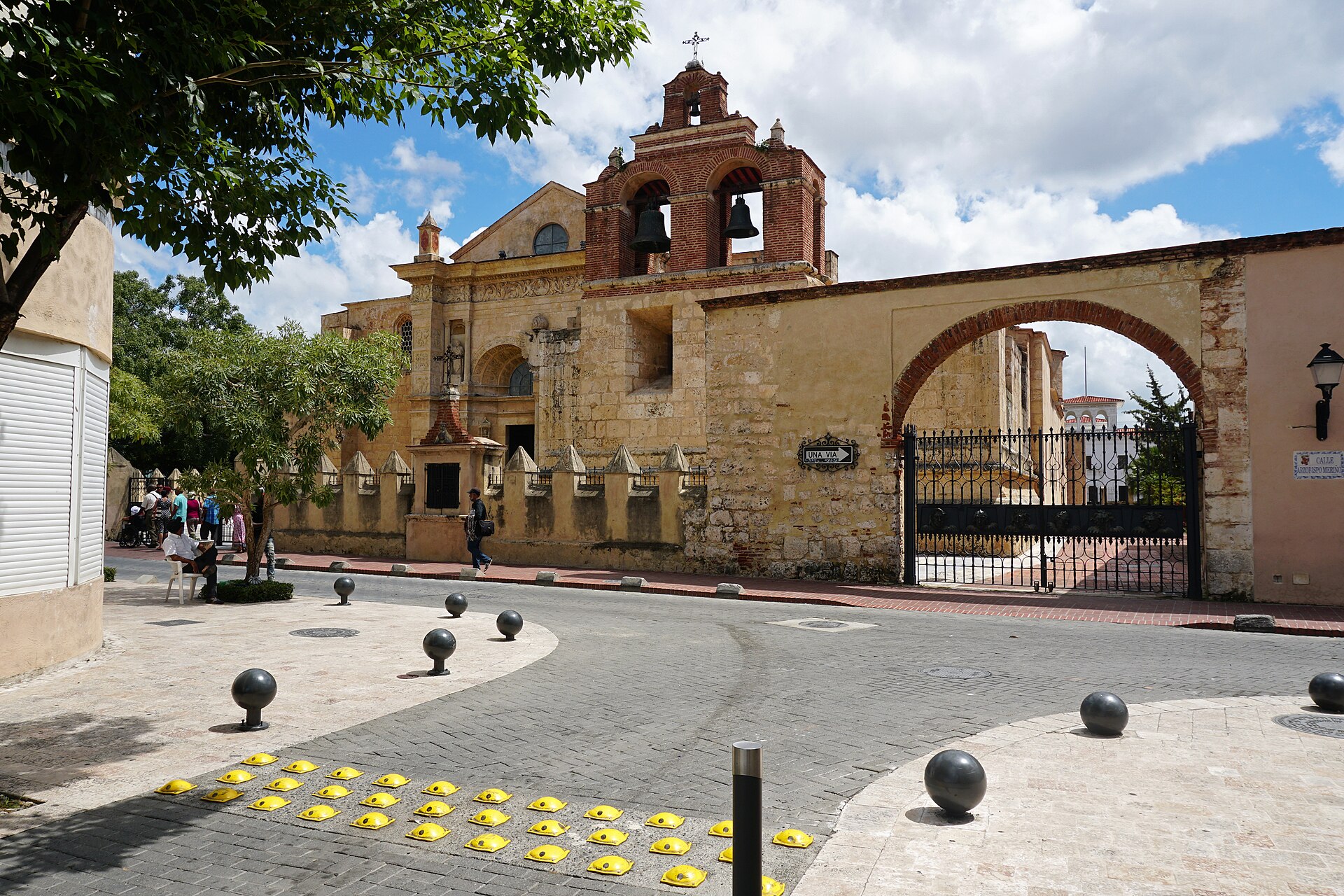
UNESCO inscribed the Colonial City of Santo Domingo as a World Heritage site in 1990. It lists the first cathedral, hospital, customs house, university and fortified city in the Americas.
Santo Domingo served as the seat of government for the entire Spanish Indies. In the Library of Congress’s words, Hispaniola was the logistical base for the conquest of most of the Western Hemisphere.
A Forgotten Colony and Haitian Rule
As Spain’s attention moved to the mainland, Santo Domingo became a poor backwater that rivals raided. English forces under Francis Drake captured and plundered the city in 1586.
A second English attack failed in 1655. The Treaty of Ryswick in 1697 then divided the island, and France took the western third, which became the rich plantation colony of Saint-Domingue.
The two colonies drifted apart. Saint-Domingue imported huge numbers of slaves, while the smaller Spanish colony imported far fewer, and by 1800 freedmen formed the majority of its people.
The Haitian Revolution began in August 1791, and the Treaty of Basel in 1795 ceded Spain’s eastern colony to France. Haiti declared independence in January 1804 under Jean-Jacques Dessalines, who tried and failed to take Santo Domingo in 1805.
Spanish rule returned in 1809, in a period some historians call España Boba, or Foolish Spain. On 30 November 1821 Lieutenant Governor José Núñez de Cáceres declared independence as the state of Spanish Haiti.
Núñez de Cáceres asked to join Simón Bolívar’s Gran Colombia, but Haitian President Jean-Pierre Boyer invaded first and reunited the island in 1822. Haiti then ruled the east for 22 years.
The Library of Congress study describes economic decline, confiscated church property and deported foreign clergy under that rule. Many landowners fled, and Haitian troops lived off the land.
Independence, Annexation and Debt, 1844 to 1916
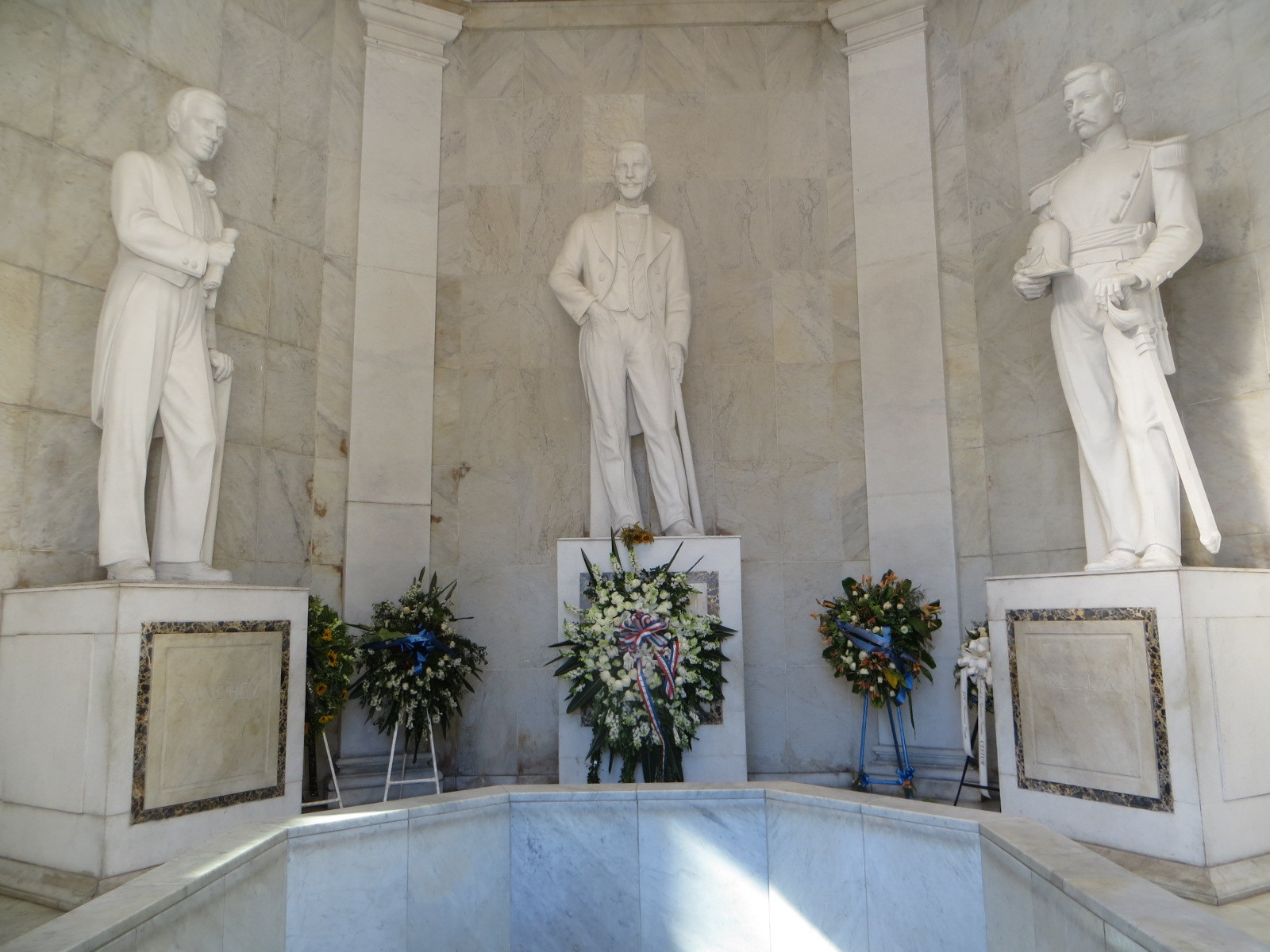
Resistance took shape in 1838 around Juan Pablo Duarte, a young Dominican who had studied in Europe. His secret society, La Trinitaria, organised its recruits in cells of three, and Duarte is remembered as the father of the country.
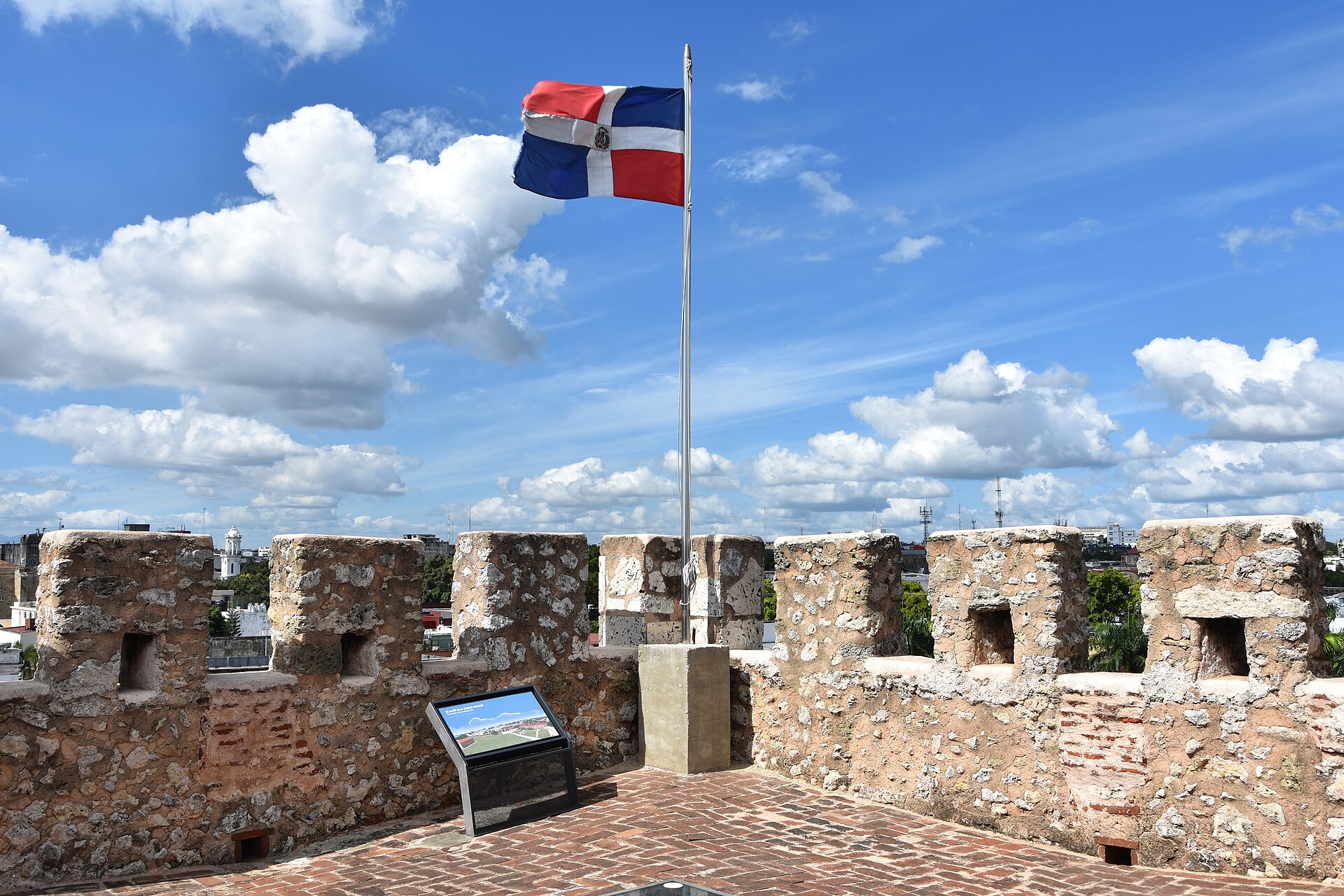
The overthrow of Boyer in Haiti in 1843 gave the rebels their opening. On 27 February 1844 Francisco del Rosario Sánchez and Ramón Mella seized the Ozama fortress in Santo Domingo, and the Haitian garrison withdrew.
The Dominican Republic still celebrates 27 February as Independence Day. Duarte, delayed by illness abroad, returned on 14 March and entered the capital the next day, and he is credited with designing the modern flag.
Independence brought no stability. Generals Pedro Santana and Buenaventura Báez alternated in power by force until 1864, and both repeatedly sought a foreign protector.
The new republic repelled Haitian invasions, including at Las Carreras in April 1849. Santana, who feared Haiti, then announced the annexation of the country by Spain in March 1861.
Spanish rule met revolt over taxes, currency and church reforms. A war of restoration began in 1863, and on 3 March 1865 the Queen of Spain approved a decree repealing the annexation.
Ulises Heureaux ruled as dictator from 1882 until he was shot dead at Moca on 26 July 1899. The Library of Congress study says his regime ran up a heavy foreign debt, much of it spent on a secret police and his own extravagances.
Debt and unrest drew in Washington. Under a financial accord of 7 February 1905 the United States took charge of collecting Dominican customs duties and repaying the national debt.
The US Occupation, 1916 to 1924
Political conflict kept returning after 1900, and Washington sent a commission backed by 750 Marines in September 1912. President Woodrow Wilson later gave the factions an ultimatum to elect a president or have one imposed.
President Juan Isidro Jimenes stepped down on 7 May 1916 after his war minister took control of the army and Congress. US Marines landed on 16 May 1916, and a military government followed in November.
The occupation balanced the budget, built roads that linked every region for the first time and created a professional constabulary. Most Dominicans nonetheless resented the loss of sovereignty, and the press was censored for most of it.
From 1917 to 1921 US forces fought a guerrilla movement known as the gavilleros in the eastern provinces. The Library of Congress study calls the counterinsurgency methods often brutal.
Public opinion in the United States turned against the occupation after the First World War. A provisional president took office on 21 October 1922, and Horacio Vásquez won the election of 15 March 1924.
Vásquez was inaugurated on 13 July 1924, which returned control to Dominican hands. The new National Army, built from the US-trained constabulary, soon became the power base of the man who ruled next.
The Trujillo Years, 1930 to 1961
Rafael Trujillo, a police recruit of 1918 who rose to command the National Army, took power in 1930. He stayed neutral in a revolt whose leader had struck a deal with him, then announced his election by a landslide.
He ruled for 31 years, holding the presidency in 1930 to 1938 and 1942 to 1952 and governing through puppet presidents in between. Santo Domingo was renamed Ciudad Trujillo during his rule.
State monopolies enriched the Trujillo family and its allies. The Library of Congress study notes that the economy expanded and roads, ports and schools improved, while a secret police monitored opponents at home and abroad.
In October 1937 Trujillo ordered the massacre of Haitians living in the country. The Library of Congress study says the army killed as many as 20,000 people, mostly in border areas, and the exact toll is not settled.
Negotiations fixed an indemnity of US$750,000, later cut to US$525,000. The affair damaged his image abroad but did not lead to action to remove him.
His downfall came from foreign policy. After an attempt on Venezuela’s President Rómulo Betancourt on 24 June 1960, the Organization of American States voted to cut diplomatic ties and impose sanctions.
Trujillo was assassinated on 30 May 1961, leaving no designated successor. The Library of Congress study cites the journalist Bernard Diederich for a claim that the CIA supplied the assassins’ weapons, which remains an allegation.
Coup, Civil War and Balaguer, 1961 to 1978
In November 1961 US warships off the coast helped end an attempt by Trujillo’s brothers to return to power. A seven-member Council of State formed on 1 January 1962 lasted only 16 days before a coup, and a restored council organised elections.
Juan Bosch, a scholar and poet of the Dominican Revolutionary Party, won the 20 December 1962 election by a wide margin. His 1963 constitution separated church and state and promised land reform, and the military overthrew him on 25 September 1963.
Bosch’s supporters, the Constitutionalists, rose on 24 April 1965, and conservative army units struck back the next day. On 28 April President Lyndon Johnson sent US forces that eventually totalled 20,000, saying he feared communist influence.
An Organization of American States force joined the US troops, and Héctor García Godoy became provisional president on 3 September 1965. Joaquín Balaguer, a former Trujillo aide, won the election of 1 June 1966 with 57 percent.
Balaguer governed for 12 years, and the economy grew at a record rate on high sugar prices in what was called the Dominican miracle. His re-elections in 1970 and 1974 were won largely through intimidation, and the opposition boycotted both.
Democracy, Tourism and Haiti Since 1978
In the election of 16 May 1978 Antonio Guzmán of the Dominican Revolutionary Party led the count. Military units occupied the electoral board the next morning, and US pressure backed by a naval deployment led Balaguer to let the count resume.
Guzmán took office on 16 August 1978, which the US State Department calls the first peaceful transfer of power between freely elected presidents. Balaguer returned to office in 1986 and 1990.
Leonel Fernández was elected in 1996 and Hipólito Mejía in 2000. Fernández won again in 2004 with 57.11 percent against 33.65 percent for Mejía, the State Department records.
The US Trade Representative says the CAFTA-DR trade agreement was signed on 5 August 2004. It covers the United States, the Dominican Republic and five Central American countries.
A Constitutional Court ruling of 23 September 2013, numbered TC/0168/13, changed nationality rules retroactively to 1929. The Inter-American Commission on Human Rights warned on 8 October 2013 that it could strip citizenship from tens of thousands of people, many of Haitian descent.
Article 124 of the constitution’s 2015 text allows one consecutive re-election and bars a two-term president from ever running again. Luis Abinader won re-election in May 2024 with about 57 percent of the vote in the electoral board count, against about 29 percent for Leonel Fernández.
The central bank counted 11,635,151 non-resident visitors by air and sea in 2025, when the economy grew 2.1 percent. Growth picked up to 4.5 percent in January to June 2026, and visitors in that half-year numbered 6,599,594.
Remittances from Dominicans abroad reached US$11.87 billion in 2025, up 9.3 percent. The World Bank put output at about US$127 billion that year, or about US$11,059 per person.
What the Past Left Behind
The Library of Congress study describes Dominican history as a long competition among strongmen shaped by personalism, militarism and elitism. It says the shadow of Trujillo still hung over the country in the late 1980s.
The border with Haiti runs 388 kilometres and was fixed by treaties, the latest being a 1936 protocol revising the frontier treaty of 1929. Disputes over migration and nationality, including the 2013 court ruling, keep the border a live political issue.
The United States has stood at key moments in this story, from the 1905 customs accord to the Marines of 1916 and the troops of 1965. That record helps explain why Dominican leaders watch US policy closely.
The Museo Memorial de la Resistencia Dominicana in Santo Domingo keeps the anti-Trujillo struggle in view, which opened in 2011. Dominican history remains a living argument about dictatorship, sovereignty and who counts as Dominican.
What It Means for US Readers
Investors face a tourism-led economy with a policy rate of 5.25 percent in June 2026, and foreign direct investment reached US$5.03 billion in 2025. Past disputes, such as the stalled count of 1978, are one reason electoral rules draw close attention.
Travellers can visit the Colonial City, a UNESCO site since 1990, in the capital. The central bank counted 4,963,343 non-resident air passengers in January to June 2026, up 10.0 percent on a year earlier.
Expats and long-stay visitors should expect nationality, migration and the Haiti border to stay sensitive topics. The State Department’s country page lists a meeting on 16 October 2026 between Secretary Marco Rubio and Foreign Minister Bisonó Haza.
The peso traded at RD$61.83 per US dollar at the central bank’s sell rate on the close of 16 October 2026. The average sell rate for January to June 2026 was RD$60.84 per US dollar.
Connected Coverage
What Is Not Known
The size of the Taíno population in 1492 is an estimate, and scholars have not settled it. The same applies to the exact death toll of the October 1937 massacre, which the Library of Congress study puts at as many as 20,000.
Sources differ on the start of the war of restoration against Spain in 1863. The State Department background note gives 16 August 1863, while the Library of Congress study dates the Act of Independence to 14 September 1863.
The claim that the CIA supplied the weapons used against Trujillo in 1961 rests on one journalist’s account. Who will lead the governing party after Abinader’s second term, and how Haiti’s instability will affect the border, cannot yet be known.
Frequently Asked Questions
When did the Dominican Republic become independent?
It declared independence from Haitian rule on 27 February 1844 after 22 years of occupation. Spain re-annexed it in 1861, and the annexation was repealed on 3 March 1865.
Who founded Santo Domingo, and why does it matter?
Santo Domingo was first settled on the east bank of the Ozama River in 1496, and UNESCO dates the town to 1498 under Bartholomew Columbus. It is the oldest continuously inhabited European-established settlement in the Americas and a UNESCO World Heritage site since 1990.
Did the United States ever occupy the Dominican Republic?
Yes, from 1916 to 1924, when US Marines ran a military government. US forces landed again on 28 April 1965 during a civil war and eventually numbered 20,000.
Who was Rafael Trujillo?
He was the dictator who ruled from 1930 until his assassination on 30 May 1961, holding the presidency for part of that time and governing through puppets for the rest. His rule included the October 1937 massacre of Haitians, in which as many as 20,000 people died, according to the Library of Congress study.
When was the first peaceful transfer of power between elected presidents?
The US State Department says it came with the inauguration of Antonio Guzmán on 16 August 1978. Military units had halted the count in May of that year until US pressure forced it to resume.
Who is the president of the Dominican Republic in 2026?
Luis Abinader, who has been president since 2020 and won re-election in May 2024 with about 57 percent of the vote. Under the 2015 text of the constitution, a president who has served two terms may never run again.
Sources: US Library of Congress, Dominican Republic country study (countrystudies.us/dominican-republic/, chapters 2 to 14 and 17); Library of Congress Maps blog on Santo Domingo, December 2025 (blogs.loc.gov/maps); UNESCO World Heritage Centre, Colonial City of Santo Domingo (whc.unesco.org/en/list/526/); US State Department, Background Note on the Dominican Republic (2009-2017.state.gov/outofdate/bgn/dominicanrepublic/46906.htm) and country page (state.gov/countries-areas/dominican-republic); US Trade Representative, CAFTA-DR (ustr.gov); Inter-American Commission on Human Rights, press release 73/13 of 8 October 2013 (oas.org); Constitute Project, Constitution of the Dominican Republic 2015, Article 124; Banco Central de la República Dominicana, Informe de la economía dominicana for January to December 2025 and January to June 2026, and exchange-rate notice of 16 October 2026 (bancentral.gov.do); World Bank, World Development Indicators (api.worldbank.org); Diario Libre and Listín Diario on the 2024 election count (diariolibre.com, listindiario.com), accessed 19 October 2026.
Editorial responsibility: Matthias Camenzind, Editor-in-Chief · Editorial standards · Report an error
Expat Guide to Dominican Republic
What The Rio Times publishes for foreigners who live in or move to Dominican Republic.
Start here
- Best Places to Live in the Dominican Republic 2026
- Cost of Living Santo Domingo 2026 — Rent and the Power Question
- Healthcare in the Dominican Republic 2026: What Foreigners Can Actually Get
- Safety in the Dominican Republic 2026: The Real Risks for Foreigners
City guides
Coming up in Dominican Republic
- Soy Luna Plays Santo Domingo on 31 October 2026 31 Oct
- Eladio Carrion in Santiago, Dominican Republic, 31 October 31 Oct
- Keinemusik's &ME Plays Santo Domingo on 31 October 31 Oct
- Afro Fest Punta Cana 2026 in the Dominican Republic: Afro Nation's Afrobeats Weekender on November 6–8 6 Nov
Understand Dominican Republic