Spain Polls Split Ahead of 29 November Vote

Spain votes on Sunday, 29 November 2026, and the polls disagree sharply on who is ahead. Most private pollsters favour the conservative People’s Party (PP), while the state-run CIS survey has the ruling Socialists (PSOE) well in front. Our Spain Election 2026 dossier tracks the race.
Prime Minister Pedro Sánchez called the early vote on 5 October. This came after Congress rejected two of his housing decrees on 2 October, with the PP, Vox and Junts voting against.
Key Facts
- When: Sunday, 29 November 2026; Madrid is six hours ahead of US Eastern Time on that date.
- Private polls: PP about 31% to 32%, PSOE about 25% to 26%, Vox about 18% to 20%.
- State poll: the CIS has PSOE at 34.0% and PP at 22.2%, an 11.8-point gap.
- Majority: 176 of the 350 seats in Congress.
- Prediction markets: Polymarket prices Feijóo at 82% to become prime minister, Sánchez at 14.9% (22 October 2026, 8:30 pm ET).
This story is part of our coverage of the Spain Election 2026. Dates, times and how to follow it are in our guide.
Polls Point in Opposite Directions
The CIS, a state body led by José Félix Tezanos, published its survey on 14 October. It is based on more than 5,000 interviews from 1 to 6 October and gives the PSOE an 11.8-point lead.
Private pollsters see the opposite. Sigma Dos for El Mundo, published on 19 October, has the PP at 31.5%, the PSOE at 25.3% and Vox at 19.5%. The PolitPro average on 23 October shows the PP at 31.8%, the PSOE at 26.4% and Vox at 18.9%.
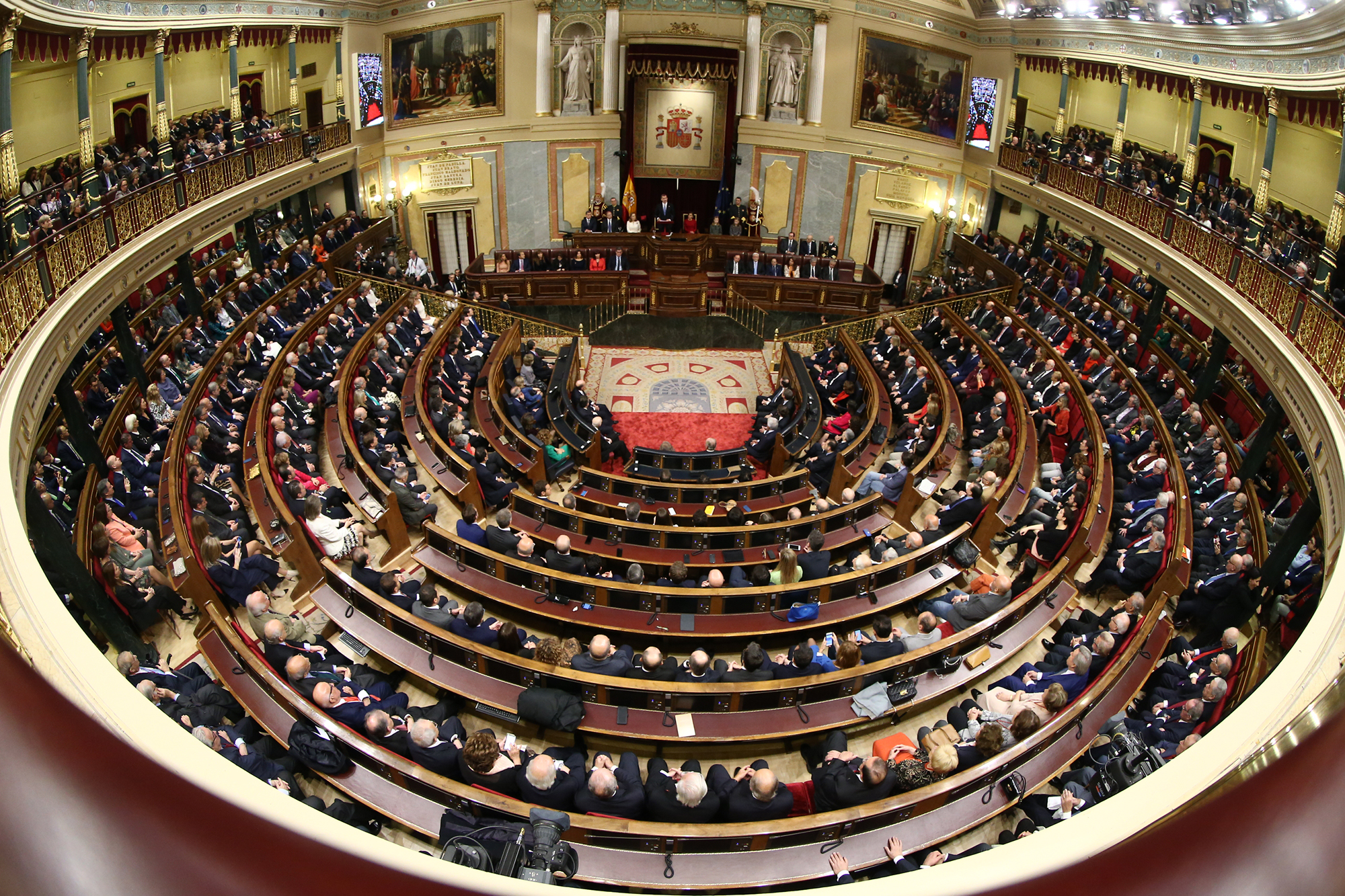
What the Seat Projections Show
A GAD3 poll for ABC, published on 12 October from 1,077 interviews, projects 133 seats for the PP and 107 for the PSOE. Vox would win 65, so the PP and Vox together reach 198 seats, above the 176 needed.
Seats depend on provincial results, regional parties and turnout. National vote shares can therefore give very different seat counts.
What Prediction Markets Say
- Polymarket: Feijóo 82.0%, Sánchez 14.9%, Santiago Abascal of Vox 1.9% to be the next prime minister (about US$2.06 million traded).
- Kalshi (regulated in the US by the CFTC): Feijóo 79%, Sánchez 20%, Abascal 3%.
- Stand: 22 October 2026, 8:30 pm ET (2:30 am in Madrid). These are bets, not polls.
Why we show this: prediction markets turn real-money bets into a live probability that moves within minutes of the news, which is why investors, campaigns and newsrooms in the United States now follow them closely. We show them next to polls and official results, never instead of them.
What It Means for US Readers
A PP-led government backed by Vox would move Spain to the right. The split between the CIS and private polls echoes US arguments over poll reliability.
Traders currently see the opposition as the favourite despite the CIS result. They could be wrong, as bets are not votes.
What Is Not Known
We have not confirmed polling-station hours or the full campaign calendar. Nobody knows yet whether the PP and Vox can reach 176 seats together, or whether the CIS gap will narrow.
Frequently Asked Questions
When is Spain’s general election?
Sunday, 29 November 2026. Prime Minister Pedro Sánchez called it on 5 October after Congress rejected two housing decrees.
Who is leading in the polls?
Most private pollsters put the conservative People’s Party (PP) ahead, with 31% to 32% of the vote. The state-run CIS survey instead shows the Socialists (PSOE) ahead 34.0% to 22.2%.
What do prediction markets say?
On 22 October, Polymarket gave Alberto Núñez Feijóo of the PP an 82% chance of becoming prime minister and Sánchez 14.9%. Kalshi showed 79% and 20%; these are bets, not polls.
How many seats win a majority?
The Congress of Deputies has 350 seats, so a party or bloc needs 176 for an absolute majority.
Sources: CIS; GAD3 for ABC; Sigma Dos for El Mundo (via Electomanía); PolitPro; Diario de León and Euronews on the election call; Polymarket; Kalshi.
This article was produced by The Rio Times’ automated newsroom system. How we use AI · Report an error · Editorial responsibility: Matthias Camenzind, Editor-in-Chief