Brazil Congress Centrão Bloc Keeps Trading Ministries for Billions in Secret Budget Amendments
Politics · Brazil
—The stakes. The Centrão is not a party but a bloc of centrist and center-right parties that trades legislative support for state resources.
Runoff · Sunday, 25 October
Brazil Runoff 2026: Lula vs Flávio
Date, polls, debates, odds and how the runoff works, updated every day.
Read our Brazil election 2026 runoff guide →
Brazil runoff polls · Polymarket and Kalshi odds · When results come · Brazil election poll data (CSV)
Prediction markets · who wins the runoff
Implied chance of winning Brazil’s presidency on 25 October, from traders’ prices.
Polymarket
Flávio Bolsonaro 79.5% · Lula 20.5% (US$194 million traded)
Kalshi (regulated in the US by the CFTC)
Flávio Bolsonaro 79% · Lula 22%
As of 24 October, 5:20 am ET (10:20 Lisbon), updated every 20 minutes. Prices are bets, not polls, and can move fast.
Why we show this: prediction markets turn real-money bets into a live probability that moves within minutes of the news, which is why investors, campaigns and newsrooms in the United States now follow them closely. We show them next to polls and official results, never instead of them.
—The origin. The term emerged in the 1987-1988 Constituent Assembly and was revived as the blocao in 2014.
—The mechanism. Presidents offer ministries, appointments and budget amendments in exchange for votes and protection from impeachment.
—The money. Parallel bench amendments worth R$9.4bn were committed between 2020 and 2025, and 61 percent of them cannot be traced to an author.
—The legal fight. Supreme Court rulings have targeted the secret budget but alternative opaque channels continue to operate.
Brazil’s Centrão has become a standing reference not because of ideology but because of its permanent role in distributing state resources, ministries and budget amendments to its member parties.
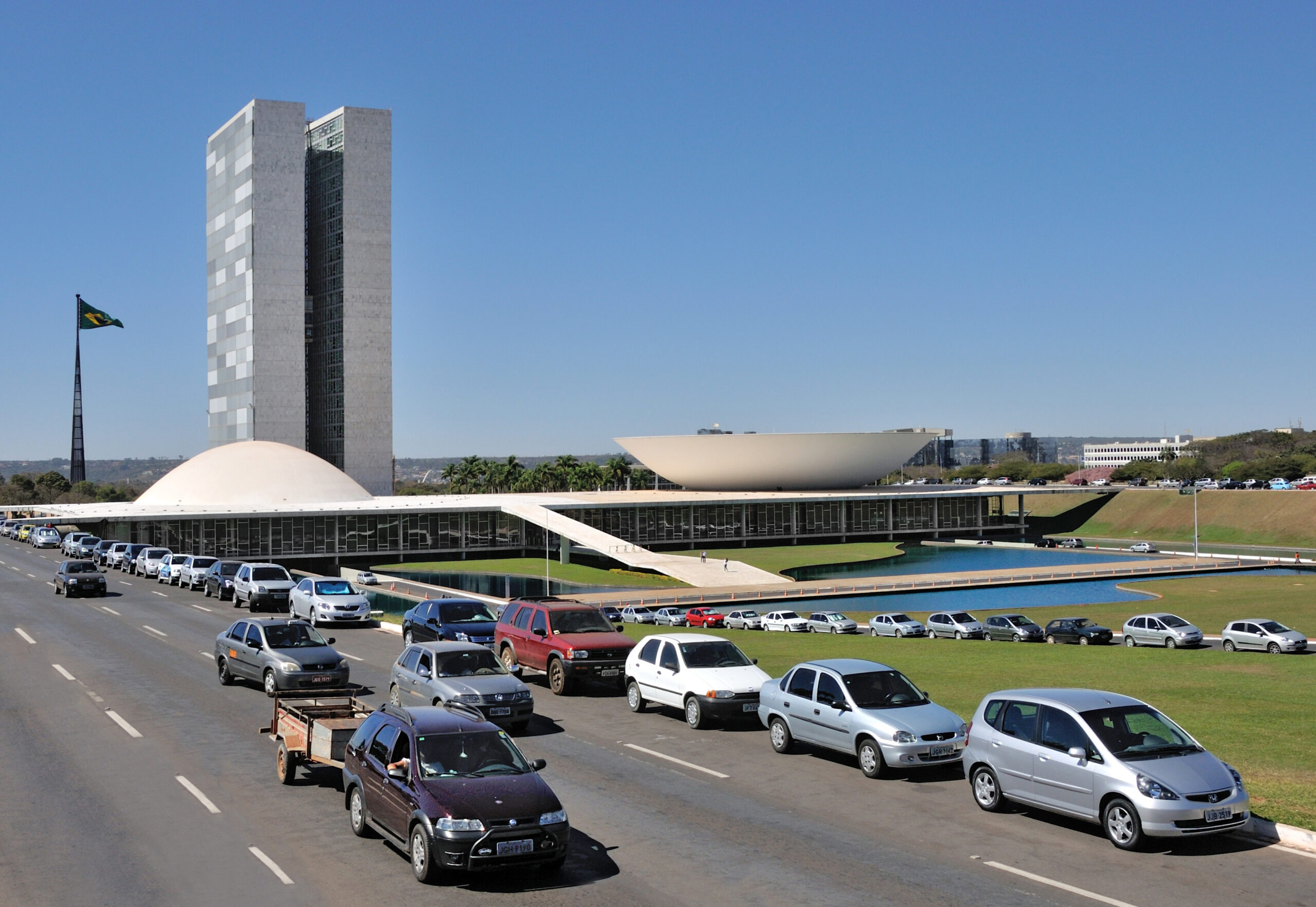
Centrão as a Standing Reference
The Centrão is a bloc of centrist and center-right parties in Brazil’s Congress that bands together mainly to trade legislative support for access to state resources, such as ministries, appointments and budgetary control.
The group is not a formal political party, but a pragmatic, clientelistic and non-programmatic coalition focused on patronage and distribution of benefits.
It avoids cohesive policy platforms and instead prioritizes negotiating state resources for its member parties and their allies.
Despite its lack of formal structure, the Centrão has repeatedly controlled a large share of seats, making it indispensable to any president seeking to govern Brazil.
Origin in the Constituent Assembly
The term Centrão originates in the 1987-1988 National Constituent Assembly, which was convened to draft the post-dictatorship Constitution.
At that time, the bloc referred to a group of center-right parties aligned with then-president José Sarney, who governed from 1985 to 1990.
The original Centrão aimed to block more progressive proposals backed by reformist constituents such as Ulysses Guimarães.
Parties in that original bloc included the PFL, PL, PDS, PDC, PTB and segments of the PMDB.
Fragmented Party System and Coalition Building
The Centrão emerged from Brazil’s highly fragmented party system, which operates under open-list proportional representation and permissive party formation rules.
This system produced a large number of medium and small parties, making presidential coalition-building essential for governance.
No single party has generally been able to dominate Congress, forcing presidents to assemble broad alliances.
The Centrão became the most consistent and effective negotiating bloc within that fragmented party system.
Revival as the Blocao and the Cunha Era
The bloc re-emerged around 2014, when Eduardo Cunha as PMDB leader in the Chamber assembled an enlarged government-base bloc.
This blocao included at least eight parties: PSC, PP, PROS, PMDB, PTB, PR, Solidariedade and others.
Together they totalled 242 deputies, corresponding to 47 percent of the Chamber of Deputies.
Cunha’s control over this bloc facilitated his election as Speaker of the Chamber in the first round in February 2015, reinforcing the Centrão as the primary power center within the lower house.
Role in Impeachment and the Temer Government
The Centrão bloc was a key actor in the impeachment of President Dilma Rousseff, who was removed from office in May 2016.
After the impeachment, the bloc supported Michel Temer’s government from 2016 to 2018.
In exchange for votes, the Centrão received policy concessions and budgetary advantages from the Temer administration.
This pattern confirmed the bloc’s standing as a governing necessity rather than a temporary alliance.
How the Centrão Trades Votes for Power
Brazilian presidents operating in a fragmented Congress typically assemble coalitions of convenience with the Centrão, offering cabinet posts, leadership of state-owned enterprises and control over budget amendments.
In return, the bloc delivers votes on key legislation and protection from impeachment or oversight.
This exchange is not secret in principle, but the specific allocation of budget resources often remains opaque to the public.
Control over budget amendments gives Centrão leaders direct influence over federal spending directed to their preferred local projects.
Emendas Parlamentares and the Budget Amendment System
Emendas parlamentares are budget amendments proposed by deputies and senators to allocate federal funds to specific projects, entities or subnational governments such as states and municipalities, within the annual Orçamento da União, or Union budget.
The major categories relevant to the Centrão include emendas individuais, individual amendments by each parliamentarian with equal quotas, and emendas de bancada, state caucus or thematic caucus amendments.
Other categories include emendas de relator, known as RP9, which became famous as the orçamento secreto, or secret budget, and emendas de comissão, known as RP8, adopted by standing committees.
After the Supreme Court restricted some opaque mechanisms, emendas Pix emerged as transfer channels with fewer formal restrictions and less tracking.
Billions in Opaque Amendments
According to technical data from the Controladoria-Geral da União, the federal comptroller agency, the government has committed tens of billions of reais in parliamentary amendments since 2020.
That is approximately US$12.1 billion at an exchange rate of 5.4 reais per US dollar.
Of that total, Transparencia Brasil found that of R$9.4bn in parallel bench amendments between 2020 and 2025, only R$3.7bn could be traced to a named author.
The 2026 budget carries R$61bn in amendments, about US$11.8bn, inside a R$6.5 trillion total. That is roughly a quarter of the federal spending ministers can actually direct.
The pressure has kept building. On 23 August this year Justice Flavio Dino declared void every amendment requested or indicated by party presidents rather than by sitting legislators.
Nineteen parties formally denied operating quotas, two were fined while they delayed, and the replies went to the federal police. Two of the bloc’s largest parties, PP and União Brasil, formally left the government in September last year and still vote with it about seven times in ten.
The most severe opacity was found in emendas de relator, where of R$46.5 billion in RP9 expenditures from 2020 to 2022, nominal authorship could be associated with just R$8.4 billion.
Supreme Court Rulings on Amendment Transparency
The Supreme Court has repeatedly ruled that opaque budget amendment practices are unconstitutional, particularly regarding the orçamento secreto.
In response, emendas de comissão between 2022 and 2024 showed almost complete author identification, with proponents identified for R$16.9 billion out of R$18.9 billion.
However, technical reports indicate that the Chamber of Deputies continued to direct R$1.3 billion in amendments without identifying the author, a practice the court considers unconstitutional.
The conflict shows that legal rulings alone have not eliminated the underlying system of resource distribution through less transparent alternative channels.
Why Every President Governs Through the Centrão
Every president since redemocratization has had to assemble a coalition with the Centrão because the fragmented party system prevents any single party from securing a legislative majority alone.
The bloc’s clientelistic structure makes it a reliable partner for presidents who distribute resources, but a constant threat to those who refuse.
During the secret budget period from 2020 to 2022, Centrão parties concentrated around 50 percent of the R$10.9 billion in reported RP9 resources, while opposition parties indicated only 1.8 percent.
This concentration demonstrates the structural power of the Centrão over federal spending and its central role in determining executive survival and legislative success.
Investor Implications and Institutional Risk
Foreign investors following Brazil need to understand that the Centrão is not an opposition force but a standing part of the governing architecture.
Budget amendments controlled by the bloc affect infrastructure, health and education spending across states and municipalities.
The lack of attribution creates uncertainty about fiscal oversight and project quality. Committee amendments alone ran to R$20.36bn in 2025, of which R$8.5bn carried no authorship trace.
The Centrão will likely continue to demand ministries and budgetary power from any president, making it a permanent factor in Brazilian governance and policy risk.
Connected Coverage
Brazil’s Financial Morning Call for Tuesday, September 8, 2026
The Big Picture
Latest developments
- Brazil Stocks Slip 0.9% Before Bradesco Earnings — 22 October 2026
- Brazil Newspaper Asks Court to Stop Meta — 22 October 2026
- Brazil Prosecutors Sue Meta Over Bans — 21 October 2026
- Brazil Stocks Fall 0.9% as Poll Tightens — 21 October 2026
This article was produced by The Rio Times’ automated newsroom system. How we use AI · Report an error · Editorial responsibility: Matthias Camenzind, Editor-in-Chief
Expat Guide to Brazil
What The Rio Times publishes for foreigners who live in or move to Brazil.
Start here
- Do US Citizens Need a Visa for Brazil? Yes, US$80.90 E-Visa
- Brazil Education and Healthcare Explained
- Brazil Security and Crime Explained 2026
- Brazil Rent and Power Bills After 4.58% Inflation
City guides
Rio de Janeiro, São Paulo, Florianópolis, Salvador, Belo Horizonte, Curitiba, Porto Alegre, Brasília
Coming up in Brazil
- Brazil Runoff Date and Results Time: 25 October, 4 p.m. ET 25 Oct
- Brazil Runoff Day on 25 October for Foreign Visitors 25 Oct
- Brazil Votes 25 October, Polls Close 4 p.m. Eastern 25 Oct
- Brazil Election 2026: Lula vs Flávio Runoff on 25 October 25 Oct
Understand Brazil