Who Runs Botswana’s Economy, the Key Players in 2026
BOTSWANA · ECONOMY
Key Facts
- —The country Botswana is a landlocked southern African republic of about 2.36 million people (2022 census), with Gaborone as capital and the pula as currency.
- —Who runs it President Duma Boko leads the government, Ndaba Gaolathe is both vice president and finance minister, Bogolo Kenewendo runs minerals and energy, and Lesego Moseki governs the Bank of Botswana (October 2026).
- —Growth Real GDP rose 8.7% year on year in the second quarter of 2026 on a diamond rebound, while the non-mining economy shrank 0.2% and inflation was 7.8% in September 2026.
- —Diamonds Debswana, owned half by the state and half by De Beers, mined 15.1 million carats in the first nine months of 2026, 14% more than a year earlier, while De Beers’ average price fell 37% to US$97 a carat.
- —The budget The 2026/27 budget plans spending of US$7.74 billion (P103.58 billion) against revenue of US$5.77 billion (P77.22 billion), a deficit equal to 8.9% of GDP.
- —The market The Botswana Stock Exchange lists 33 companies worth US$75.5 billion (P1.01 trillion) at 30 September 2026, but 94% of that is foreign companies, and domestic firms are worth only US$4.55 billion.
- —The state The state holds 50% of Debswana, 15% of De Beers and 54.16% of Botswana Telecommunications, and public pension money sits behind several listed companies.

Botswana’s economy runs through a short list of institutions: the presidency and Treasury, the Bank of Botswana, a diamond partnership the state owns half of, and public pension funds that sit behind several listed firms. This guide names who holds each lever in October 2026, with pula amounts converted at the Bank of Botswana rate of 23 October 2026, about P13.39 to the US dollar.
Botswana Economy at a Glance
Statistics Botswana, the national statistics office, put real output 8.7% above its level a year earlier in the second quarter of 2026, after a 5.2% contraction in the same quarter of 2025. Mining and quarrying rose 81.7% and diamond mining 94.7%, while the non-mining economy slipped 0.2%.
The rebound is a diamond story, not a broad recovery: agriculture fell 23.0% and manufacturing 9.2%, and foot-and-mouth disease cut cattle sales to the Botswana Meat Commission (BMC) by 46.3%. The Bank of Botswana measured growth of only 0.2% over the twelve months to March 2026, and the Ministry of Finance projects 3.1% for 2026.
Inflation was 7.8% in September 2026, above the central bank’s 3% to 6% objective range, and the bank’s August statement expects it to stay above that range until the first quarter of 2027. The International Monetary Fund projects growth of 4.4% for 2026 after a 0.7% contraction in 2025.
Two rating agencies marked the country down in 2026: S&P Global Ratings cut it to BBB- on 13 March and affirmed that grade with a negative outlook on 11 September, while Moody’s cut it from Baa1 to Baa2 on 25 September and moved its outlook from negative to stable. Both grades remain investment grade, but BBB- is the lowest rung of that category.
Foreign exchange reserves stood at US$4.41 billion (P59.1 billion) on 30 June 2026, or 7.5 months of import cover, and Mmegi reported a 23-month high of US$4.72 billion (P63.2 billion) in July. Better diamond sales and receipts from the Southern African Customs Union (SACU), a regional customs revenue pool, helped lift the total.
In Plain English
The Presidency, Treasury and Central Bank
President Duma Boko heads the government, and Ndaba Gaolathe is both vice president and minister of finance. Gaolathe presented the 2026/27 budget to the National Assembly on 9 February 2026.
The budget plans spending of US$7.74 billion (P103.58 billion) against revenue and grants of US$5.77 billion (P77.22 billion), leaving a deficit of US$1.97 billion (P26.35 billion), or 8.9% of GDP. Of the financing the government needs, about US$1.39 billion (P18.6 billion), or 6.3% of GDP, had not been secured when the speech was given.
SACU receipts are budgeted at US$2.00 billion (P26.79 billion), the largest single source and 34.7% of revenue and grants. Mineral revenue is budgeted at only US$912 million (P12.21 billion), after the 2025/26 estimate was revised down to US$901 million (P12.06 billion) from US$1.18 billion (P15.75 billion).
Public debt, including state guarantees, stood at US$6.72 billion (P90.03 billion) in December 2025, or 33.02% of GDP, and the budget projects 44.66% by the end of 2026/27. That would break the 40% statutory ceiling, which the speech says needs to be recalibrated.
The Government Investment Account, the state’s reserve for financing deficits, held US$217 million (P2.91 billion) in November 2025, against a peak of US$2.78 billion (P37.2 billion) in 2014. The speech says that depletion leaves limited room for further drawdowns.
The Bank of Botswana, led by Governor Lesego Moseki, raised its Monetary Policy Rate by 200 basis points from 3.5% to 5.5% on 30 April 2026 and held it on 27 August, with commercial banks directed not to raise their prime lending rates. The pula follows a downward crawl of 2.76% against a basket weighted equally between the South African rand and the IMF’s Special Drawing Rights, and the next rate meeting is on 29 October 2026.
The bank also manages the Pula Fund, a long-term sovereign wealth portfolio set up in 1994 to preserve part of the income from diamond exports for future generations. Bogolo Kenewendo is Minister of Minerals and Energy, whose ministry received the largest development budget allocation at US$391 million (P5.23 billion), with Donald Gaetsaloe as permanent secretary.
Debswana and the De Beers Sale
Debswana, led by chief executive Andrew Motsomi, is a joint venture owned 50% by the Government of Botswana and 50% by De Beers, with about 5,000 staff and 6,000 contractors, among the biggest private-sector employers. Its mines produced 15.1 million carats between January and September 2026, 14% more than a year earlier, with Jwaneng at 8.0 million and Orapa at 7.1 million.
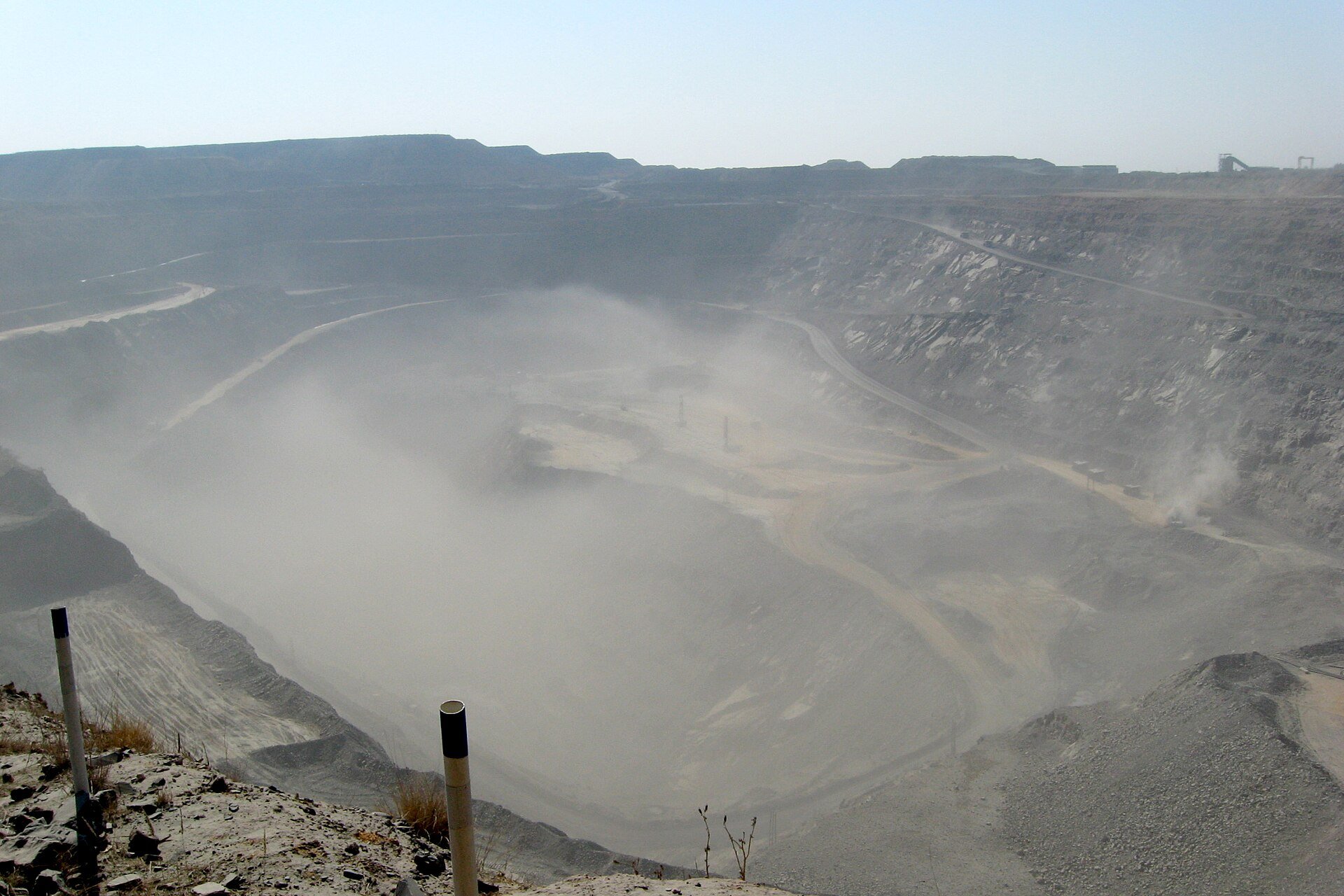
Output is rising while prices fall: De Beers’ average realised price was US$97 a carat in the first nine months of 2026, down 37%, and its rough sales were US$2.04 billion against US$2.41 billion a year earlier. Anglo American reported underlying EBITDA, a measure of operating profit, of US$119 million from De Beers’ Botswana operations in the first half of 2026, against US$227 million a year earlier.
A planned maintenance stop at Jwaneng in the fourth quarter of 2026 is expected to cut output sharply from third-quarter rates, Anglo American said on 20 October 2026. Third-quarter output was already 20% below the same period of 2025, at 4.83 million carats.
Anglo American owns 85% of De Beers and says it is committed to divesting the business, while the Government of Botswana holds the other 15%. Chief executive Duncan Wanblad said on 20 October 2026 that the company continues to work ‘towards a transaction in a challenging market’.
Mining MX, relaying Bloomberg, reported on 14 October 2026 that a group led by former De Beers chief executive Gareth Penny and including Namibia and Angola was named preferred bidder in July, with Anglo discussing a price of about US$1 billion. The report added that Botswana is likely to lift its holding from 15% to about 25%, but no agreement has been finalised, and Anglo, the group and the presidential office declined to comment.
Vice President Gaolathe said in September only that the state wanted ‘more than 15%’, Mining MX noted. Anglo American’s half-year report says there is ‘considerable uncertainty’ over the timing, terms, legal structure and regulatory approvals of any deal, and it did not treat De Beers as held for sale at 30 June 2026.
The state and De Beers have also fixed long-term terms, with BOPA, the government news agency, reporting on 3 August 2026 that their agreements feature a 25-year Debswana mining licence extension, a 10-year sales agreement and a Diamonds for Development Fund. Anglo American’s 2025 results record US$467 million of additional capital commitments linked to the extension of the mining licences.
Connected Coverage
Okavango Diamond Company and the Diamond Fund
Okavango Diamond Company (ODC) describes itself as wholly owned by the Government of Botswana, with access to 30% of Debswana’s run-of-mine production. ODC’s website says Debswana accounts for 98% of Botswana’s diamond production, and the Debswana website says its output is sold to De Beers and to ODC.
ODC’s own pages give two different annual sales figures, ‘in the region of $900 million per annum’ on the home page and ‘$500 million per annum’ on the About page, so neither can be treated as settled. Its board chairman is Yoram Dvash, Lipalesa Makepe is acting managing director and chief financial officer, and Charles Modingwa joined as chief sales and marketing officer in September 2026.
The Diamonds for Development Fund, meant to channel diamond wealth into new industries and jobs, received an initial US$75 million (P1 billion) from De Beers Group, the company said on 21 October 2026. Dr Akinwumi Adesina chairs it, and a 10-person independent board has been appointed.
Copper, Coal and Soda Ash Beyond Diamonds
Copper is the diversification story: Khoemacau, in which the mining group MMG holds a 55% controlling interest, produced 11,242 tonnes of copper in concentrate in the third quarter of 2026, 24% more than a year earlier. MMG cut its 2026 guidance to 43,000 to 48,000 tonnes from 48,000 to 53,000 tonnes, and plans an expansion to 130,000 tonnes a year with first concentrate expected in the first half of 2028.
The government counts the expansion as a diversification win, and the 2026/27 budget speech says it is expected to employ up to 5,500 people at peak construction in the coming financial year. Sandfire Resources owns 100% of the Motheo mine in the Kalahari Copper Belt, which produced 51,788 tonnes of contained copper in the year to 30 June 2026, with concentrate trucked to Walvis Bay in Namibia.
Coal still dominates power: a national power plan released on 5 October 2026 keeps the 132 MW Morupule A plant available until December 2029 and the 600 MW Morupule B plant until December 2046, Business Weekly reported. Coal accounted for about 97% of domestic electricity generation, the report said.
The 2026/27 budget sets aside US$170 million (P2.270 billion) for power imports by the Botswana Power Corporation (BPC), the national utility, and US$54.5 million (P730 million) for loan obligations to the Industrial and Commercial Bank of China, within an allocation that also honours commitments linked to the Morupule B power plant. It also commissions a study on unbundling BPC’s generation assets, and says the first 150 MW of the 600 MW Mmamabula coal plant is expected by December 2026.
Real value added in soda ash and salt fell 68.0% in the second quarter of 2026 because of a planned major maintenance shutdown at the Botash mine, Statistics Botswana said. Coal rose 27.8% and copper 4.0% on the same measure.
Who Owns What
Beef and Tourism Under Strain
Beef is anchored by the BMC, a parastatal established in 1965, whose website lists slaughter capacity of 143,000 at Lobatse, 83,000 at Francistown and 26,000 at Maun, with no unit stated. The budget speech credits it with clearing US$52 million (P698 million) of arrears and lifting Lobatse throughput by 22%, with revenue up 31% to US$77.7 million (P1.04 billion).
The foot-and-mouth outbreak has cut cattle sales to the BMC by 46.3% in the second quarter of 2026 and meat processing by 61.0%, Statistics Botswana said. Business Weekly quotes agricultural economist Patrick Malope as saying the outbreak could take 0.8% to 1% off GDP, and the government has committed about US$7.2 million (P97 million) to containment.
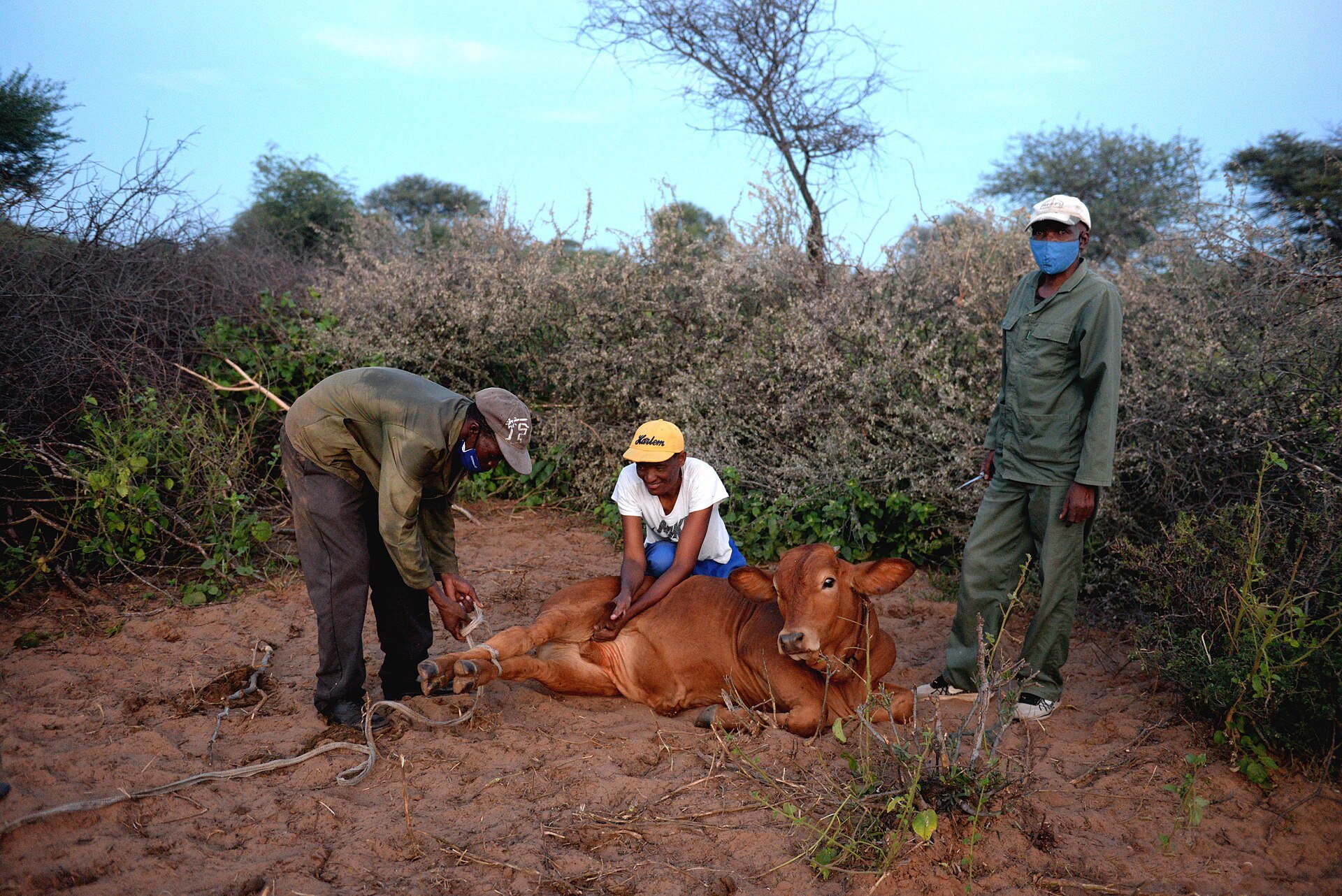
South Africa’s Agriculture Minister Willie Aucamp said protocols have been sent to Botswana and that FMD-free zones are one option for resuming imports, Business Weekly reported on 21 October 2026. Before the outbreak, the BMC’s dual-price system fetched up to US$3.06 (P41) a kilogramme of cold dressed weight on the domestic and non-EU market and up to US$4.33 (P58) for beef bound for the European Union.
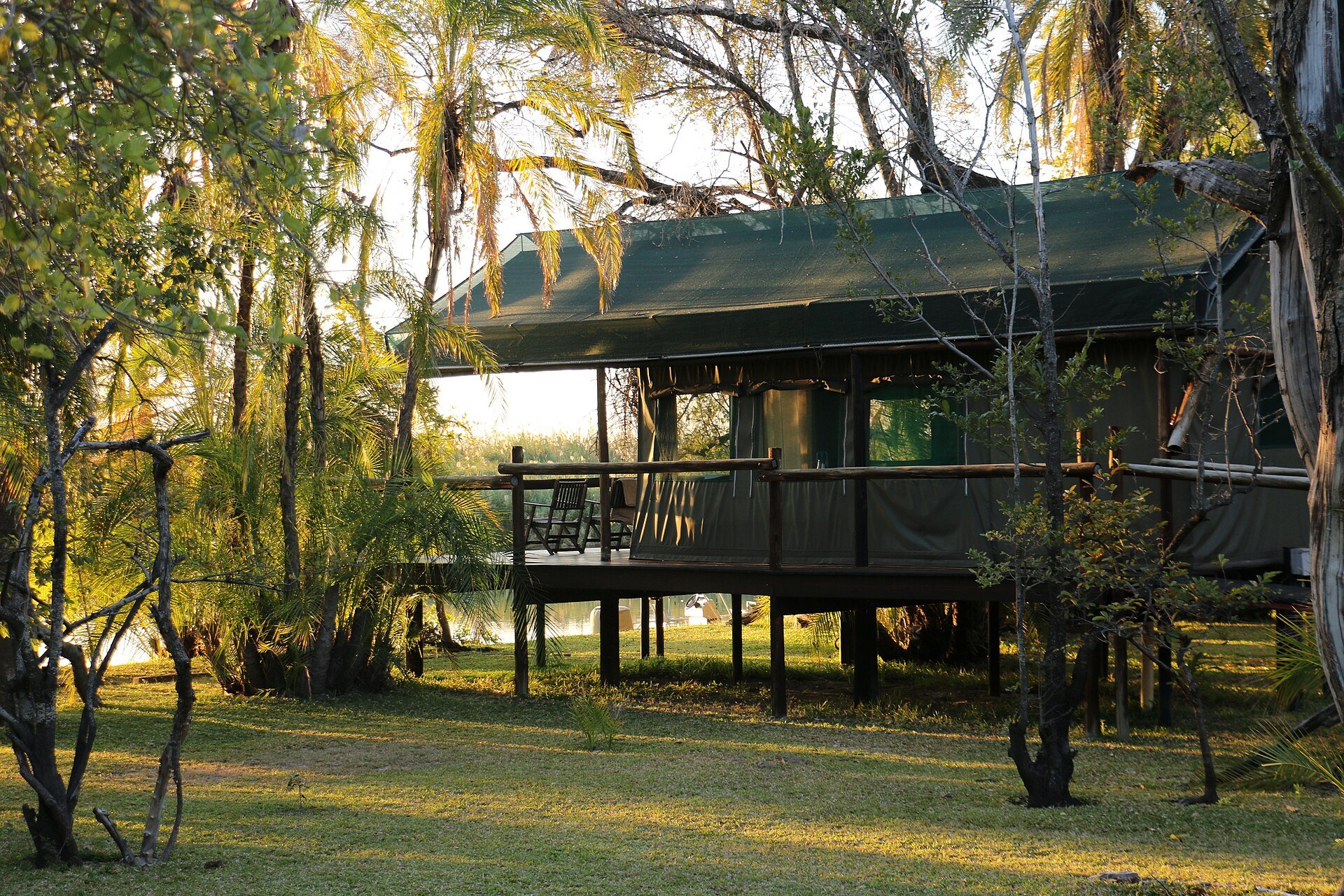
In tourism, the 2026/27 budget speech says the state allocated five sites and concession areas in Ngamiland and the Makgadikgadi National Park during 2025/26, drawing planned investment of US$27.0 million (P362 million) and more than 500 jobs. It also fast-tracked eleven lease renewals covering 27 lodges in Ngamiland, with investment potential of US$59.7 million (P800 million) and more than 1,500 existing jobs safeguarded.
State Companies and the Pension Funds
Botswana Telecommunications Corporation (BTC) is 54.16% government-owned, with Botswana Privatisation Asset Holdings listed at 51.00% and the Ministry of Transport and Communications at 3.16%, according to its integrated report for the year to 31 March 2026. BTC made a profit after tax of US$8.5 million (P113.3 million), down from US$15.4 million (P206.7 million), on revenue of US$110 million (P1.47 billion).
Public pension money sits beside the state in that shareholder list, since several Botswana Public Officers Pension Fund (BPOPF) accounts also hold BTC shares, the largest with 3.30%. BPOPF, which manages retirement savings for public servants, holds about 37.2% of Letshego, Business Weekly reported, and Sefalana’s Chauhan says it holds 49.4% of the retailer.
Debswana’s own pension fund bid for 50% of the life insurer Bona Life from Foudello, a company in which BPOPF holds a minority stake, but the Competition and Consumer Authority rejected the deal on 20 April 2026 over concentration concerns. A tribunal ordered a fresh review and said its ruling does not grant approval, Business Weekly reported on 13 October 2026.
The Botswana Development Corporation (BDC), the state investment agency, returned to a company-level profit of US$1.0 million (P14 million) in the year to June 2026 after a loss of US$12.8 million (P171 million), on revenue up 11% to US$36.2 million (P485 million), Mmegi reported. The corporation is now seeking buyers for its 100% stake in Lobatse Clay Works, which it values at about US$4.1 million (P55 million).
Air Botswana, the national airline, has put a right shape and size review out to tender under reference AB/295/2026, and the transport ministry’s development budget includes Air Botswana finance projects. The budget also describes a state-owned enterprise transformation agenda with a new governance and ownership framework to formalise oversight.
Banks, Shops, Families and the Stock Exchange
The Botswana Stock Exchange (BSE) lists 33 companies with a combined equity value of US$75.5 billion (P1.01 trillion) at 30 September 2026, up 62.3% in a year. Foreign companies account for US$71.0 billion (P950.4 billion) of that, so domestic companies are worth only US$4.55 billion (P60.9 billion).
The Domestic Company Index rose just 2.0% in the first nine months of 2026, while the Foreign Company Index rose 45.7%, with Anglo American up 48.4%. Among the weakest were Lucara, down 61.8%, Choppies, down 13.4%, and Letshego, down 6.7%.
Trading is thin and local: equity turnover was US$157 million (P2.1 billion) over nine months, and local institutions made up 92.6% of it. The most traded shares were FNB Botswana at US$25.1 million (P336.7 million), Sechaba Brewery Holdings at US$23.5 million (P314.3 million) and Sefalana at US$17.1 million (P229.3 million).
Absa Group owns 67.82% of Absa Bank Botswana, which made headline earnings of US$37.5 million (P502.5 million) in 2025, down 11.9%, on total assets of US$2.0 billion (P26.89 billion). Standard Chartered Botswana, which opened in Francistown in 1897 as the country’s first bank, lists 25% of its shares on the BSE and made a profit of US$9.7 million (P129.6 million) in the first half of 2026.
FNB Botswana is the most traded share, and its economist Gomolemo Basele raised the bank’s 2026 growth forecast for Botswana to 1.9% from 1.5% in September 2026, Business Weekly reported. The lender Letshego plans to raise about US$60 million (P800 million) through a rights offer of about 1.1 billion new shares, with BPOPF as underwriter for a 2% fee, and its circular shows holding-company borrowings falling from US$238 million (P3.19 billion) to about US$181 million (P2.42 billion), Business Weekly reported.
Sefalana, the listed retail and wholesale group, posted the highest revenue in its history, up 9% to US$904 million (P12.1 billion), in the year to 26 April 2026, but profit after tax fell to US$17.5 million (P234 million) from US$31.8 million (P426 million). Chauhan, who has run the group for 23 years, says he controls 5.8% and that BPOPF holds 49.4%, the Motor Vehicle Accident Fund 10% and another pension fund 9%.
Choppies, led by chief executive Ram Ottapathu, warned in March 2026 of lower profit, citing a weaker pula against the rand, reduced consumer spending linked to diamonds, the cost of leaving Zimbabwe and a new living wage of US$299 (P4,000) a month. Sechaba Brewery Holdings holds 49.9% of Kgalagadi Breweries and 49.9% of Coca-Cola Beverages Botswana, according to a 2022 Business Weekly report.
The best-known list of business names is dated: a 2018 Sunday Standard report said Forbes had found no Botswana billionaire, and named multimillionaires from Forbes’ 2017 list including Abdul Satar Dada of AIDC, Gulaam Hussain Abdoola of Turnstar, Chandrakanth Chauhan of Sefalana and Ramachandran Ottapathu of Choppies. That list is nine years old and should be read as history, not as a current ranking of who controls what.
In tourism, Business Weekly reported in January 2023 that the Competition and Consumer Authority directed a consortium that includes Danish billionaire Anders Holch Povlsen to cede 30% of shares to citizen operators after buying Abu Camp in the Okavango Delta. The same authority rejected the Debswana pension fund’s Bona Life bid on 20 April 2026, citing market concentration.
Dates to Watch
What It Means for US Readers
US investors can get exposure to Botswana through Anglo American’s De Beers business and the Botswana Stock Exchange, where a US$75.5 billion market value is mostly foreign companies and trading is thin and local. A change in who owns De Beers, or in the state’s 15% stake, would change who sits across the table from the government on diamond licences and sales.
For the diamond trade, including US jewellers, the signals to watch are rough prices, which fell 37% for De Beers in the first nine months of 2026, and the planned Jwaneng maintenance stop in the fourth quarter. Beef from Botswana is exposed to the foot-and-mouth outbreak, which cut cattle sales to the state meat company by 46.3% in the second quarter.
Travellers to Botswana’s lodges meet a state that is fast-tracking lease renewals, and the pula moves on a managed crawl against a basket of the rand and Special Drawing Rights rather than floating freely against the dollar. Lenders and bond investors will watch ratings of BBB- from S&P, with a negative outlook, and Baa2 from Moody’s, with a stable outlook.
What Is Not Known
Who will own De Beers, and whether Botswana’s 15% stake rises to about 25%, is not settled, since the report of a preferred bidder and a larger Botswana share comes from a single press report relayed by Mining MX, and the parties declined to comment. Anglo American’s half-year report itself says there is considerable uncertainty over the timing, terms, legal structure and regulatory approvals of any sale.
The true scale of Okavango Diamond Company’s sales is unclear, because its own website gives annual sales of both US$900 million and US$500 million. The effect of the Jwaneng maintenance stop on fourth-quarter output has not been quantified by Anglo American, which says only that output will fall substantially from third-quarter rates.
The cost and length of the foot-and-mouth outbreak are uncertain, with one economist estimating a hit of 0.8% to 1% of GDP while Statistics Botswana already shows cattle sales to the BMC down 46.3%. Public finances are also unsettled, since the budget projects debt above the 40% statutory ceiling and the Government Investment Account held only US$217 million (P2.91 billion) in November 2025.
Frequently Asked Questions
What drives the Botswana economy?
Public administration and defence (18.2% of GDP), trade (13.1%) and construction (12.2%) are the largest shares in the second quarter of 2026, ahead of mining (9.5%). Diamonds still swing growth: mining rose 81.7% that quarter while non-mining GDP fell 0.2%.
Who owns Debswana and De Beers?
Debswana is owned 50% by the Government of Botswana and 50% by De Beers. De Beers is 85% owned by Anglo American, which is selling it, and 15% by the Government of Botswana.
Who is Botswana’s finance minister?
Ndaba Gaolathe is both vice president and minister of finance as of October 2026. Duma Boko is president, and Lesego Moseki is governor of the Bank of Botswana.
What is the Bank of Botswana interest rate?
The Monetary Policy Rate is 5.5%, raised from 3.5% on 30 April 2026 and held on 27 August. Inflation was 7.8% in September 2026, above the 3% to 6% objective range.
Is De Beers for sale, and will Botswana buy more?
Anglo American says it is committed to divesting De Beers and is running a formal sales process. A press report relayed by Mining MX says Botswana may lift its 15% stake to about 25%, but no agreement is final.
How big is the Botswana Stock Exchange?
It lists 33 companies with an equity value of US$75.5 billion (P1.01 trillion) at 30 September 2026, but 94% of that is foreign companies. Domestic companies are worth about US$4.55 billion (P60.9 billion).
Is Botswana’s sovereign debt investment grade?
Yes, S&P rates it BBB-, the lowest investment-grade step, with a negative outlook, and Moody’s rates it Baa2 with a stable outlook. Both agencies cut the rating in 2026.
Sources: Ministry of Finance, 2026/27 Budget Speech, 9 February 2026; Bank of Botswana, Monetary Policy Committee decision, 30 April 2026; Bank of Botswana, Monetary Policy Committee decision, 27 August 2026; Bank of Botswana, inflation eased to 7.8 percent in September 2026, October 2026; Bank of Botswana, S&P Global Ratings maintains Botswana’s sovereign ratings, 11 September 2026; Bank of Botswana, S&P Global Ratings downgrades Botswana’s sovereign ratings, 13 March 2026; Bank of Botswana, Moody’s Botswana ratings, 25 September 2026; Bank of Botswana, Governor Moseki at the 2026 IMF and World Bank Annual Meetings, 23 October 2026; Bank of Botswana, foreign reserves, accessed October 2026; Bank of Botswana, Pula Fund, accessed October 2026; Bank of Botswana, exchange rates, 23 October 2026; Statistics Botswana, Gross Domestic Product, second quarter of 2026, 2026; Statistics Botswana, home page (2022 census count), accessed 26 October 2026; Anglo American, Q3 2026 Production Report, 20 October 2026; Anglo American, interim results 2026, 30 July 2026; Anglo American, full-year results 2025, 20 February 2026; De Beers Group, About us (ownership), accessed October 2026; De Beers Group, Diamonds for Development Fund receives initial funding, 21 October 2026; Debswana, Our Shareholders, accessed October 2026; Debswana, Executive Leadership, accessed October 2026; Okavango Diamond Company (home, About, board and management pages), accessed October 2026; Botswana Stock Exchange, market performance report, 1 January to 30 September 2026, October 2026; MMG, third quarter 2026 production report (Khoemacau), 14 October 2026; MMG, Khoemacau operation page, accessed October 2026; Sandfire Resources, June 2026 quarterly report (Motheo), 2026; Botswana Telecommunications Corporation, 2026 integrated report, year to 31 March 2026; Absa Bank Botswana, 2025 integrated report, 2025; Standard Chartered Botswana, unaudited abridged results, half year to 30 June 2026; Standard Chartered Botswana, About us, accessed October 2026; Botswana Meat Commission, home page, accessed October 2026; Air Botswana, tender notice AB/295/2026, 2026; BOPA (Daily News), De Beers output surges in 2026 first-half, 3 August 2026; Mmegi, IMF optimistic on Botswana rebound, 26 October 2026; Mmegi, Foreign reserves hit 23-month high, 14 October 2026; Mmegi, BDC sees traction in turnaround plan, 14 October 2026; Mmegi, BDC puts LCW up for partial, full sale, 26 October 2026; Business Weekly & Review, Botswana sets 2029, 2046 end dates for Morupule A and B, 15 October 2026; Business Weekly & Review, Letshego plans P1.1bn new shares to cut debt, 15 October 2026; Business Weekly & Review, Sefalana revenue hits record P12.1 billion, 9 August 2026; Business Weekly & Review, Sefalana’s P12bn business is largely owned by Batswana, Chauhan, 1 September 2026; Business Weekly & Review, FNBB lifts 2026 Botswana growth forecast to 1.9%, 14 September 2026; Business Weekly & Review, Choppies warns of profit drop, 19 March 2026; Business Weekly & Review, Choppies CEO warns overhead pressures will drive up product prices, 5 October 2026; Business Weekly & Review, FMD outbreak threatens to wipe up to 1% off Botswana’s GDP, 23 October 2026; Business Weekly & Review, FMD crisis: South Africa opens door to Botswana beef, 21 October 2026; Business Weekly & Review, Tribunal orders fresh review of Debswana Pension Fund-Bona Life deal, 13 October 2026; Business Weekly & Review, KBL and CCBB drive profits at Sechaba Breweries, 13 April 2022; Business Weekly & Review, Danish billionaire ordered to cede shares in Okavango lodges to citizens, 12 January 2023; Sunday Standard, Could Botswana’s billionaires please stand up and be counted, 14 January 2018; Mining MX (relaying Bloomberg), Botswana nears deal on bigger De Beers stake, 14 October 2026. Pula amounts are converted at the Bank of Botswana rate of 23 October 2026, about P13.39 to the US dollar.
This article was produced by The Rio Times’ automated newsroom system. How we use AI · Report an error · Editorial responsibility: Matthias Camenzind, Editor-in-Chief
Expat Guide to Botswana
What The Rio Times publishes for foreigners who live in or move to Botswana.
Understand Botswana