
Economy: Brazil
Tomatoes have become a small shopping shock in Brazil, and the bill is now part of the country’s inflation debate. Tomato prices have risen sharply this year, a survey covering the 27 state capitals found, published on 17 November 2026 by Conab, Brazil’s national food-supply agency, and Dieese, a labour-research institute.
Conab is a unit of Brazil’s agriculture ministry, and its survey of 17 November 2026 points to smaller harvests as the main cause. Brazil’s central bank said on 4 November 2026 that it held its benchmark rate at 13.75% a year, while the statistics institute IBGE said on 12 November 2026 that 12-month inflation was 4.63%, figures that investors abroad weigh.
Key Facts
- Who. Conab, the national food-supply agency, and Dieese, a labour-research institute, surveyed 27 state capitals.
- What. Tomato prices rose 181% in Florianópolis, 174% in Rio de Janeiro and 120% in Fortaleza.
- Why. Smaller harvests in Goiás, São Paulo and Minas Gerais, which grow about 70% of Brazil’s tomatoes.
- Next. The central bank’s rate committee, Copom, decides on Wednesday 9 December 2026.
- Power Index. Brazil ranks 1st of 14 in The Rio Times Latin America Power Index, with 74.2 points (November 2026 edition).
A vegetable on every Brazilian table has turned into a price signal, as smaller harvests meet an inflation rate already above the official ceiling.
Where This Comes From
On 4 November 2026 the Banco Central do Brasil, the central bank, said its rate committee Copom held the Selic benchmark rate at 13.75% a year after meeting on 3 and 4 November. On 12 November 2026 the statistics institute IBGE said the IPCA consumer price index rose 0.14% in October, after 0.82% in September.
IBGE added on 12 November 2026 that 12-month inflation stood at 4.63%, above the 4.5% ceiling of a target of 3% with a 1.5-point tolerance. The tomato survey of 17 November 2026 adds a shelf-level detail to that picture across the 27 state capitals.
Why It Matters
IBGE said on 12 November 2026 that food and beverages rose 1.04% in October, while food eaten at home rose 1.31%. Tomatoes are one item in that food index, and IBGE’s October release showed them up 19.57%.
Marco Antonio dos Santos, a meteorologist at the weather consultancy Rural Clima, said on 17 November 2026 that high prices could persist for tomatoes and for other vegetables. He said heavy rain and high temperatures are still forecast.
The October reading of 0.14% was below market forecasts of about 0.25% to 0.27%, IBGE’s release of 12 November 2026 showed. The tomato survey came five days later, so it is not yet in any official price index.
Live Market IntelligenceBrazil — Live Market Board
Rio Times · Live Market Intelligence
Brazil — Live Market Board
-1.32%
167,567.45
-1.32%
70,388.96
-1.15%
10,376.51
-0.96%
2,848,945
—
2,452.46
—
| Instrument | Last | Change | YoY | Prev. | High | Low | Volume |
|---|---|---|---|---|---|---|---|
| IBOV | 167,567.45 | -1.32% | +7.41% | 169,816.64 | 170,260 | 167,998 | — |
| USD/BRL | 5.83 | +0.91% | +9.10% | 5.78 | 5.84 | 5.76 | — |
| SELIC | 13.75% | — | — | — | — | — | |
| PETR4 | 42.85 | -2.57% | +31.34% | 43.98 | 44.10 | 42.52 | 17,811,000 |
| VALE3 | 59.20 | -1.89% | -9.18% | 60.34 | 60.04 | 58.79 | 16,133,100 |
| ITUB4 | 40.37 | -1.27% | +3.90% | 40.89 | 40.94 | 40.22 | 9,285,900 |
| BBDC4 | 14.29 | -0.83% | -25.20% | 14.41 | 14.52 | 14.19 | 19,927,300 |
| BBAS3 | 14.14 | -3.28% | -35.19% | 14.62 | 14.72 | 14.06 | 37,966,100 |
| B3SA3 | 14.10 | -3.75% | +0.21% | 14.65 | 14.79 | 13.98 | 42,157,900 |
| ABEV3 | 16.07 | +0.88% | +16.67% | 15.93 | 16.10 | 15.85 | 16,773,700 |
| WEGE3 | 51.39 | +0.47% | +18.97% | 51.15 | 51.99 | 51.16 | 3,747,700 |
| PRIO3 | 61.83 | -3.33% | +55.62% | 63.96 | 63.81 | 61.50 | 3,430,100 |
| SUZB3 | 55.64 | +0.45% | +14.18% | 55.39 | 56.46 | 55.09 | 2,840,400 |
| RENT3 | 29.74 | +0.27% | -30.70% | 29.66 | 30.24 | 29.46 | 7,677,200 |
| AZZA3 | 16.11 | +3.01% | -46.60% | 15.64 | 16.59 | 15.48 | 2,776,500 |
| CSNA3 | 3.79 | +0.53% | -53.25% | 3.77 | 3.88 | 3.73 | 9,755,500 |
| GGBR4 | 25.74 | +4.25% | +37.53% | 24.69 | 25.89 | 24.70 | 9,571,700 |
| ENEV3 | 26.06 | -2.36% | +35.51% | 26.69 | 27.03 | 25.95 | 7,633,300 |
Smaller Harvests Behind the Jump
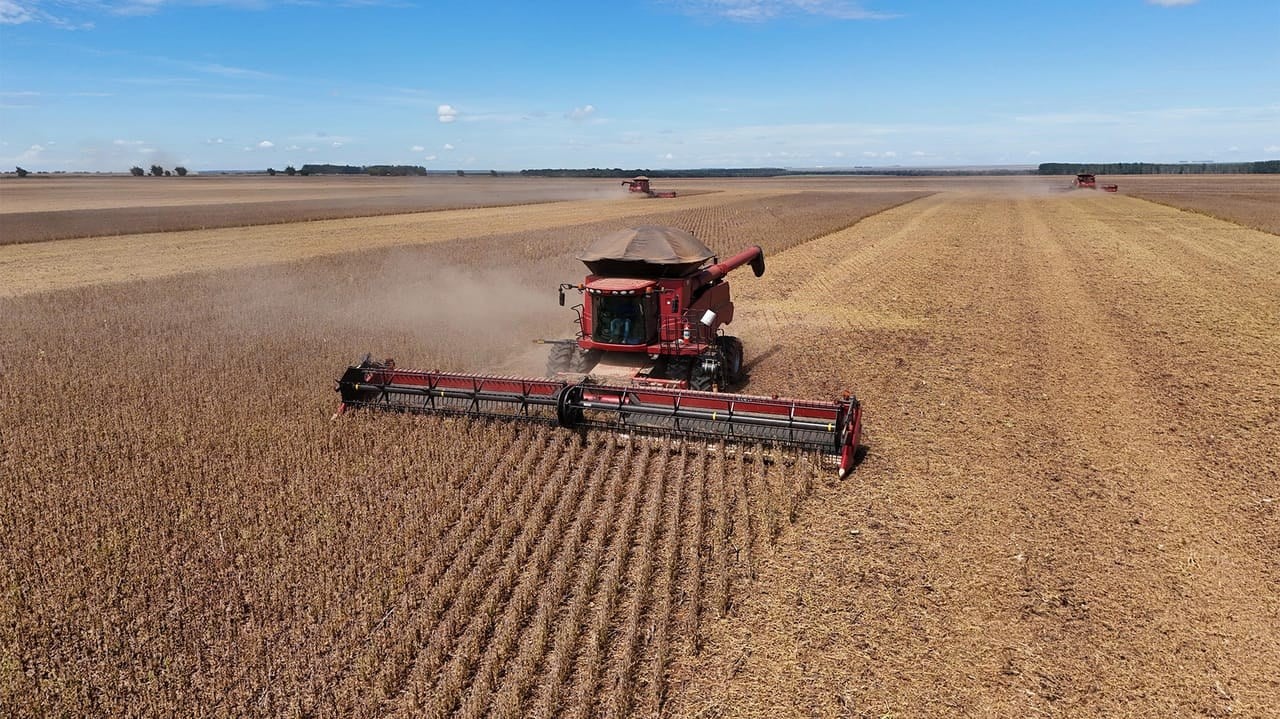
Conab and Dieese attributed the rise mainly to smaller harvests in Goiás, São Paulo and Minas Gerais, the three biggest producing states, in the survey of 17 November 2026. Together they grow about 70% of Brazil’s tomatoes, the survey summary says.
The Goiás state agriculture secretariat forecasts 1.3 million tonnes this year, down 18.5%, in figures cited with the survey. The São Paulo state agriculture secretariat reports table tomato output down 1.9% and tomatoes for industry down 15.5%.
Minas Gerais is forecast to see a 3.7% fall for the year, the figures cited with the survey show. Conab estimates national output at 4.3 million tonnes in 2026, down about 8% from roughly 4.7 million tonnes last year.
What to Watch
The central bank’s 2026 meeting calendar (Comunicado 43.383, a formal notice) sets the next Copom meeting for 8 and 9 December 2026, with the decision due on Wednesday 9 December. Copom held the Selic at 13.75% a year on 4 November 2026, the Banco Central do Brasil said.
The survey summary of 17 November 2026 says tomato output normally peaks in spring and summer, and that rain and heat are still forecast. It expects prices to stay high in the short and medium term.
What Is Not Known
The survey summary of 17 November 2026 gives no absolute price per kilo, in reais or US dollars, and no baseline dates for its percentage rises. The 181%, 174% and 120% figures for Florianópolis, Rio de Janeiro and Fortaleza are the survey’s reported increases only.
The weight of tomatoes in the IPCA is not known from the sources we used. None of the institutions says when prices will fall.
What It Means for You
IBGE put Brazil’s 12-month inflation at 4.63% on 12 November 2026, and the central bank holds its benchmark rate at 13.75% a year. Investors in Brazilian assets follow both numbers because they shape interest rates.
The next dated checkpoint is the Copom decision on Wednesday 9 December 2026, according to the Banco Central do Brasil calendar. Tomatoes are one item among many, and no source links them to that decision.
Related Coverage
For more on the rate outlook, read why Brazil says rate cuts hinge on a fiscal fix and how markets weigh a December rate hold. Our Brazil news hub carries the latest economy coverage.
Frequently Asked Questions
How much have tomato prices risen in Brazil?
Conab and Dieese reported on 17 November 2026 increases of 181% in Florianópolis, 174% in Rio de Janeiro and 120% in Fortaleza. The survey did not state baseline dates.
Why are Brazilian tomatoes more expensive?
Conab and Dieese pointed on 17 November 2026 to smaller harvests, mainly in Goiás, São Paulo and Minas Gerais. Conab estimates national output at 4.3 million tonnes in 2026, down about 8%.
Will tomato prices fall soon?
The survey summary of 17 November 2026 expects prices to stay high in the short and medium term. None of the institutions says when they will fall.
Do tomatoes drive Brazil’s interest rate decisions?
No source links tomatoes to the Copom decision due on Wednesday 9 December 2026. Tomatoes are one item in the food index, and their weight in the IPCA is not known from our sources.
Sources
Conab, national food-supply agency, survey with Dieese of 27 state capitals, 17 November 2026 · Dieese, labour-research institute, cost of basic food, 17 November 2026 · IBGE, statistics institute, IPCA consumer price index for October, 12 November 2026 · Banco Central do Brasil, Copom decisions and calendar, 4 November 2026
This article was produced by The Rio Times’ automated AI newsroom. Editorial responsibility: Matthias Camenzind, Publisher and Editor-in-Chief. The Rio Times also runs Ask Rio Times, which answers from 100,000+ of our own articles, the daily Latin America Power Map, and prediction-market odds on elections and markets.. How we use AI · Report an error
Brazil runoff, Sunday, October 25: Brazil runoff: date, poll closing times and when results start. Latest: Brazil runoff polls, Flávio 51%, Lula 49%.