
BOLIVIA · ANDEAN NEIGHBOURHOOD
Bolivia is a landlocked country that borders five states: Peru, Chile, Brazil, Paraguay and Argentina. Its sea access, gas customers and trade routes all run through them.
On 13 November 2026 Bolivia’s central bank, the Banco Central de Bolivia (BCB), began returning US$438 million in dollar cash to lenders (BCB press note NP 27/2026, 13 November 2026). The BCB says new dollar transfers abroad now run without restriction.
This guide explains each relationship in plain terms for readers in the United States. For the daily story, follow our Bolivia news page.
Key Facts
- Power Index Bolivia ranks 13th of 14 in The Rio Times Latin America Power Index, with 27.9 points (November 2026 edition).
- Borders Five land neighbours: Peru, Chile, Brazil, Paraguay and Argentina.
- Dollars The central bank is returning US$438 million in dollar cash to lenders by September 2027.
- IMF loan The International Monetary Fund approved a 36 month programme of about US$1.9 billion on 2 October 2026.
- Gas Brazil is the main buyer of Bolivian gas; sales to Argentina stopped in September 2024.
- Next date Friday 18 December 2026: the next dollar payment to lenders, US$43 million.
In Plain English
- BCB Banco Central de Bolivia, the central bank.
- YLB Yacimientos de Litio Bolivianos, the state lithium company.
- YPFB Yacimientos Petrolíferos Fiscales Bolivianos, the state gas company.
- ICJ International Court of Justice, the top court of the United Nations.
- Mercosur The South American trade bloc that Bolivia joined as a state party in 2024.
Chile
Chile is Bolivia’s oldest grievance and its newest opportunity. Bolivia lost its Pacific coast to Chile in the War of the Pacific, fought from 1879 to 1884, and a 1904 treaty fixed the border.
On 1 October 2018 the International Court of Justice (ICJ), the UN’s top court, ruled on Bolivia’s request. It found that Chile “did not undertake a legal obligation to negotiate a sovereign access to the Pacific Ocean” for Bolivia.
The Court added that this does not stop the two states continuing good-neighbourly dialogue on Bolivia’s landlocked situation. That dialogue has now reached presidential level.
Chilean President José Antonio Kast visited La Paz on Friday 16 October 2026, the first visit by a Chilean president in 71 years (Chilean and Bolivian presidency statements). He and Bolivia’s President Rodrigo Paz signed five documents.
The first sets a procedure to modernise Economic Complementation Agreement No. 22 (ACE-22), the trade pact between the two countries. The second starts studies for a fibre-optic corridor that would carry internet cables from Chile’s Arica and Parinacota region into Bolivia.
The third covers mining cooperation on geology data, critical minerals and mine closure. The fourth is a declaration to study a possible electricity interconnection, which does not create one.
The fifth is a joint presidential declaration on trade integration, port connectivity, free transit, and consular and migration cooperation. It backs the proposed reversal of the existing Sica Sica to Arica oil pipeline, which runs between a Bolivian highland town and the Chilean port of Arica, so that crude could flow from Chilean ports to Bolivia.
The sea question is not closed in Bolivian politics. At a press event after the meeting Paz said Bolivia’s maritime claim remains a “permanent and non-renounceable objective”, although the ICJ found in 2018 that Chile has no legal duty to negotiate sovereign access.
Peru
Peru offers Bolivia a second Pacific route without the sea dispute. Paz met Keiko Fujimori on 28 July 2026, the day she was sworn in as Peru’s president.
Paz said on 29 July that the Bolivia-Peru Binational Cabinet was reactivated. He also said Ilo, Peru’s southern Pacific port, is consolidating as an operating outlet for Bolivian trade.
He pushed the Huaqui rail project at the Desaguadero border crossing, which would link Bolivia to Peru’s Puno region. He said the Cobija-Extrema road, once built, would link northern Bolivia with Brazil and Peru and cut 350 km off the trip to Chancay, Peru’s new Pacific port.
Those are Paz’s statements, and no contract was announced at that meeting. The projects stay intentions until a contract or a budget line appears.
Brazil
Brazil is the main buyer of Bolivian gas and the neighbour with the most at stake. Brazilian President Luiz Inácio Lula da Silva, known as Lula, said on 16 March 2026 that Bolivia remains Brazil’s largest natural gas supplier.
The joint declaration of Paz and Lula that day said both sides would start technical work to enable a growing supply of Bolivian gas to Brazil. On 30 June 2026 Lula said the two governments decided to speed up talks between Petrobras, Brazil’s state-controlled oil company, and YPFB, Bolivia’s state gas company, on gas extraction.
Bolivia is also a pipeline bridge. A first test shipment of gas from Argentina’s Vaca Muerta shale field reached Brazil through Bolivian pipelines in April 2025.
Argentina
Argentina was once a gas customer and is now a possible energy partner. Bolivian gas sales to Argentina stopped in September 2024, after the last extension of the long-term supply contract expired.
Around 12 August 2026 Paz said he had talked with Argentina’s President Javier Milei and Paraguay’s President Santiago Peña about an energy “pool”. It would be supplied from the Bolivian Chaco, the south-eastern lowlands, and from Argentina.
Paz also said he proposed to Kast that Chile join. These are early talks, not a signed deal.
Argentina also matters for lithium. Tecpetrol, an Argentine energy company, is one of five firms with a lithium agreement with the state lithium company YLB.
Paraguay
Paraguay is Bolivia’s route to the Atlantic by river. Paz and Paraguay’s President Santiago Peña met on 29 June 2026 on the sidelines of the summit of Mercosur, the South American trade bloc, near Asunción.
They discussed an integration agenda with three items. These are the Paraguay-Paraná waterway, Urupabol, a bloc of Uruguay, Paraguay and Bolivia, and a bioceanic corridor.
The waterway, or hidrovia, is the river route to the Atlantic. The bioceanic corridor would link Paraguay to Chile through Bolivian territory.
Bolivia has been a state party, or full member state, of Mercosur since 7 August 2024 (Mercosur working group minutes). Adopting the bloc’s rules in full is still under way.
Bolivia also belongs to the Andean Community, a regional bloc with Colombia, Ecuador and Peru. That gives La Paz a seat in two regional groups at once.
Lithium and Gas: What Bolivia Sells and Needs
Lithium, the metal used in batteries, is central to Bolivia’s plans. The state lithium company YLB (Yacimientos de Litio Bolivianos) leads the effort at the Salar de Uyuni salt flat.
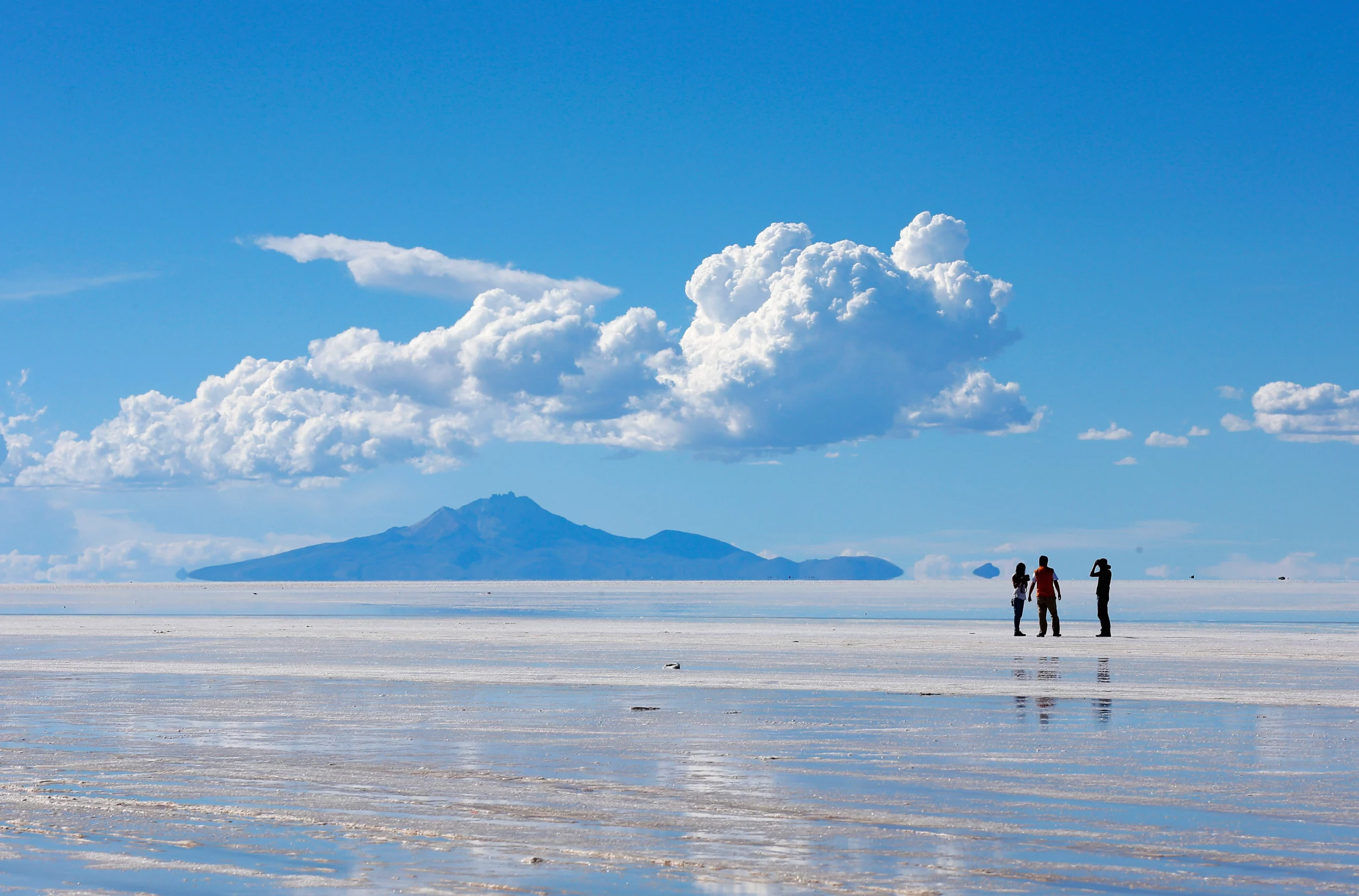
YLB said in answers published on 26 February 2026 that two contracts for lithium plants at the Salar de Uyuni were signed in late 2024 under the previous government. They are with CBC, a consortium based in Hong Kong, and Uranium One Group, a Russian company.
As of YLB’s statement of 26 February 2026, both had gone to the Legislative Assembly, Bolivia’s parliament, and had to be approved as law. Our lithium explainer covers the resource in more depth.
YLB also lists five agreements, with firms such as Geolith-Actaris of France, EAU Lithium of Australia and Germany, Eramet of France, Tecpetrol of Argentina and WaterCycle Technologies of the UK. Under President Paz no industrialisation contract has been signed, though a negotiation agreement has been signed with EAU Lithium (YLB, 26 February 2026).
Dollar Liquidity and the Central Bank
The central bank has lifted limits on new dollar operations. On Friday 13 November 2026 it announced that its board adopted Resolution 162/2026, which does two things (BCB press note NP 27/2026).
First, it creates “Cuentas Auxiliares de Liquidez”, or Auxiliary Liquidity Accounts, for all financial intermediation entities, meaning banks, credit unions and similar lenders. New dollar operations such as transfers abroad, cash movements and transfers between entities run “without any restriction”, which the BCB says “had been restricted in recent years”.
The BCB will publish the accounts’ combined balances on its website. Second, it returns the dollar cash that lenders held in their current and reserve accounts at the BCB, US$438 million as of 10 November 2026.
Why it matters: the BCB says all new dollar operations by lenders, including transfers abroad, now run without restriction (BCB press note NP 27/2026, 13 November 2026). The BCB says such operations had been restricted in recent years.
The schedule starts on 13 November 2026 and runs to the end of September 2027. On 13 November the BCB credited US$11 million for 35 entities that held up to US$1 million each, mainly serving people in rural areas and outer-city areas.
A second payment of US$43 million follows on Friday 18 December 2026 for 18 more entities holding under US$5 million. Payments on 30 April 2027 and 30 September 2027 together total US$384 million for the remaining 8 entities.
The BCB says this advances “full normalisation” of foreign-currency operations. Our report on the US$438 million repayment to banks has more detail.
The International Monetary Fund (IMF) backs the wider repair. Its staff announced an agreement on 29 July 2026, and its Executive Board approved a 36 month Extended Fund Facility, a multi-year loan programme, on 2 October 2026.
The facility is SDR 1.369 billion (about US$1.9 billion, 570% of Bolivia’s quota, its membership share in the IMF), with an immediate disbursement of SDR 156 million (about US$214 million). SDR means special drawing right, the IMF’s unit of account.
According to the IMF release of 2 October 2026, the measures include a market-determined exchange rate and phasing out remaining fuel subsidies through an automatic pricing mechanism. They also end new central bank financing of the budget and allow currency market intervention only in disorderly conditions.
The IMF projects gross international reserves of US$5,734 million for 2026 and US$7,297 million for 2027 (IMF, 2 October 2026). These are IMF projections, not results.
Ties With the United States
The United States is not a neighbour, but it matters to Bolivia’s politics. The US State Department announced visa restrictions on Bolivian officials on 28 September 2026, framing them as a defence against corruption and narcotrafficking.
President Rodrigo Paz took office on 8 November 2025. Other powers are active too, as our guide to foreign players in Bolivia explains.
What It Means for US Readers
Bolivia is on UTC-4 all year, so La Paz is one hour ahead of New York in winter. A noon announcement in La Paz therefore lands at 11 a.m. Eastern.
The BCB publishes press notes at bcb.gob.bo, and the next payment date is Friday 18 December 2026. You can compare Bolivia with its neighbours in The Rio Times Latin America Power Index.
For companies, the lithium contracts that still need legislative approval are the clearest place where Bolivian law could change the field. For readers tracking regional politics, the Chile talks show a thaw without a settlement on the sea.
What to Watch Next
Friday 18 December 2026 brings the BCB’s next payment of US$43 million to 18 entities (press note NP 27/2026). The following date is 30 April 2027, the first of two payments that total US$384 million with 30 September 2027.
Also watch whether the Legislative Assembly takes up the two lithium contracts. Watch too whether the Chile talks on the oil pipeline advance.
What Is Not Known
The state lithium company YLB says its agreements will be subject to a new lithium law, and we have not seen a published text. We could not confirm 2026 bilateral trade values with each neighbour.
Bolivia’s preliminary trade surplus was US$1,919 million in January to July 2026 (reported in early September 2026 by IBCE, Bolivia’s foreign trade institute, using preliminary data from the national statistics institute INE). Whether Bolivian gas exports will fall by 30% in 2026 is reported but not confirmed.
The energy pool with Argentina and Paraguay is at the stage of early talks. Paz has not announced a signed deal.
Frequently Asked Questions
Which countries border Bolivia?
Bolivia borders five countries: Peru, Chile, Brazil, Paraguay and Argentina. It is landlocked, so it relies on neighbours’ ports and pipelines.
Does Bolivia have access to the sea?
No, Bolivia lost its Pacific coast to Chile in the War of the Pacific, fought from 1879 to 1884. The ICJ ruled on 1 October 2018 that Chile has no legal obligation to negotiate sovereign access.
Who buys Bolivian gas?
Brazil is the main buyer, according to President Lula on 16 March 2026. Sales to Argentina stopped in September 2024.
What is the central bank returning to lenders?
The BCB is returning US$438 million in dollar cash, as of 10 November 2026, in payments through September 2027. The first payment of US$11 million was credited on 13 November 2026.
Is Bolivia in Mercosur?
Yes, Bolivia has been a state party of Mercosur since 7 August 2024. Adopting the bloc’s rules in full is still under way.
Sources: Banco Central de Bolivia, press note NP 27/2026, 13 November 2026; IMF, 2 October 2026; ICJ judgment, 1 October 2018. Further statements come from the US State Department (28 September 2026), the Chilean, Bolivian, Peruvian and Paraguayan presidencies, Mercosur and the state lithium company YLB (answers published 26 February 2026).
This article was produced by The Rio Times’ automated AI newsroom. Editorial responsibility: Matthias Camenzind, Publisher and Editor-in-Chief. The Rio Times also runs Ask Rio Times, which answers from 100,000+ of our own articles, the daily Latin America Power Map, and prediction-market odds on elections and markets.. How we use AI · Report an error
Expat Guide to Bolivia
What The Rio Times publishes for foreigners who live in or move to Bolivia.
Start here
- Best Places to Live in Bolivia for Expats in 2026
- Cost of Living La Paz 2026 — Budgets, Rent and Dollar Access
- Opening a Bank Account in Bolivia as a Foreigner
- Taxes in Bolivia for Expats: Territorial Income, Global Assets
City guides
Understand Bolivia