
COLOMBIA · RELIGION
Key Facts
- —What is happening Catholics are now about 60% of Colombian adults, and a growing share, led by people under 35, say they follow no religion (2024 survey).
- —Why it matters Church and state are in the news: a prayer segment at President Abelardo de la Espriella’s 7 August 2026 inauguration triggered a court order that a higher court later revoked.
- —The numbers Religion was very important to 63.7% of adults in 2023, down from 74.1% in 2019, and the state lists more than 12,000 registered faith communities.
- —Who is who President de la Espriella, a self-described Catholic, leads the state; Archbishop Francisco Javier Múnera Correa heads the Catholic bishops; Pope Leo XIV leads the church.
- —What to watch The Holy See announced a papal tour of Uruguay, Argentina and Peru from 6 to 17 November 2026, with no Colombian stop; Holy Week runs 21 to 28 March 2027.
- —Power Index Colombia ranks 6th of 14 in The Rio Times Latin America Power Index, with 51.9 points (October 2026 edition).
- —What it means for you US visitors should expect church-calendar crowds in Holy Week and note that the US advisory for Colombia stays at Level 3, Reconsider Travel.
Catholics are about 60% of Colombian adults, and evangelical churches are growing. Religion has also become a courtroom issue.
Colombia religion is shifting: Catholics are still the largest group, but fewer Colombians call themselves Catholic or say faith is very important. The change matters to US readers because it now shapes courts, ceremonies, holidays and travel plans.
About 60% of adults are Catholic in the latest independent survey, and one in three adults under 35 has no religion. Wider coverage sits on the Colombia page of The Rio Times and in the Colombia Explained guide.
Colombia Religion in Numbers
Pew Research Center surveyed Colombian adults in spring 2024 and found that 60% identify as Catholic. It published the result on 21 January 2026 alongside five other large Latin American countries.
Unaffiliated adults are now the second-largest group in Colombia and outnumber Protestants. Among adults under 35, 33% have no religion, against 10% of those aged 50 and older.
DANE, Colombia’s national statistics office, reached a higher Catholic share in its Political Culture Survey of 2021. It found 78.2% Catholic among adults, with 5.5% evangelical or Pentecostal and 4.1% other Protestant.
Another 7.5% told DANE they believe in a higher being but belong to no religion. Jehovah’s Witnesses were 0.7%, eastern non-Christian religions 0.8% and agnostics or atheists 0.4%.
The two surveys differ by 18 points on Catholics, and the sources checked do not explain the gap. A private poll by Cifras y Conceptos reported 67% Catholic, 16% non-Catholic Christian and 12% unaffiliated, El Tiempo wrote in April 2022.
DANE’s 2023 survey, with fieldwork from October to December 2023, asked how important religion is. It was very important to 63.7% of adults, down from 74.1% in 2019 and 67.0% in 2021.
In the same survey, family was very important to 96.9% of adults and politics to 16.8%. Only 4.4% said they belong to a religious group, down from 6.7% in 2019.
The Catholic Church and Its Leaders
The Catholic Church is the country’s largest religious body and keeps special arrangements under a concordat with the Vatican. These cover church marriages, chaplaincy services and exemption of clergy from compulsory military service, the US State Department reported for 2022.
Archbishop Francisco Javier Múnera Correa of Cartagena is president of the Colombian Episcopal Conference, the bishops’ national body. The conference website names him as its president in a report dated 19 October 2026.
Cardinal Luis José Rueda Aparicio, made a cardinal in 2023, was the only Colombian in the conclave that elected Pope Leo XIV. The cardinals chose the pope on 8 May 2025.
The Holy See announced on 5 August 2026 a papal tour of Uruguay, Argentina and Peru from 6 to 17 November. Colombia is not among the stops, and Publimetro reported that the Vatican has given no reason.
The last papal visit to Colombia was by Pope Francis in September 2017. In June 2026 the presidency of the bishops’ conference met Leo XIV in Rome, Publimetro reported.

Evangelical and Protestant Churches
Evangelical and Pentecostal churches dominate new registrations of religious groups. The Interior Ministry reported 10,081 recognised religious organisations at the end of 2022, up from 8,214 at the end of 2020.
In 2022 the ministry received 1,095 applications and approved 788, and 99.5% of applications came from evangelical Christian churches. Its own page now speaks of more than 12,000 registered faith communities.
DANE counted evangelical and Pentecostal believers at 5.5% of adults in 2021, and other Protestants at 4.1%. Pew’s published text puts unaffiliated adults above Protestants and gives no separate Protestant figure for Colombia.
Other Faiths, Indigenous and Afro-Colombian Traditions
Small communities include Jehovah’s Witnesses and followers of eastern religions such as Islam and Buddhism. A 1997 public law agreement recognises marriages in the Jewish community and 13 non-Catholic Christian denominations.
Indigenous peoples keep their own spiritual systems on legally recognised reserves. A 1998 Constitutional Court ruling lets Indigenous authorities bar non-traditional religions there, the State Department said.
In the Afro-Colombian community of San Basilio de Palenque, funeral rituals with African roots are part of daily life. UNESCO inscribed the Palenque cultural space in 2008, covering its religious, musical, medical and oral practices.
The Colombia population guide covers ethnic groups and regions in detail. The Colombia culture guide covers music, festivals and art.
Church, State and the Law
Article 19 of the 1991 Constitution guarantees freedom of religion and says all faiths and churches are equally free before the law. The preamble still invokes the protection of God.
Statutory Law 133 of 23 May 1994 says no church is or will be official or state-run. It adds that the state is not atheist, agnostic or indifferent to religious feeling.
In Sentence C-350 of 4 August 1994 the Constitutional Court struck down the yearly renewal of Colombia’s consecration to the Sacred Heart. It called Colombia a secular and pluralist state, yet kept the Sacred Heart holiday under Law 51 of 1983.
Article 68 says no one can be forced to receive religious instruction in state schools. Article 42 gives religious marriages civil effects within limits set by statute.
The Interior Ministry’s Directorate of Religious Affairs registers faith groups and runs a religious freedom policy based on Decree 437 of 2018. It also hosts interfaith dialogue and peacebuilding forums.
In 2022 the Defense Ministry approved 124 of 209 religious conscientious objector applications, the State Department said. The Foreign Ministry processed 1,587 missionary visa applications and rejected 47 for documentation problems.
Who holds power is covered in the Colombia politics guide, and foreign alliances in the Colombia geopolitics guide. Economic actors are in the Colombia economy guide.
The Inauguration Row of August 2026
Abelardo de la Espriella took office as president on Friday, 7 August 2026, at the Arena USC in Cali. The National Electoral Council had handed him his credential on Thursday, 25 June 2026, Valora Analítik reported.
Catholic clergy, an evangelical pastor and a rabbi took part in an invocation, Infobae and El Colombiano reported. A replica of the Virgin of Fátima stood beside the stage, and sacred music played between speeches.
Citizen Omar Alberto Franco Becerra filed a tutela, a fast rights claim, saying the ceremony violated his freedom of conscience and worship. A Bogotá labour court, the Juzgado Quinto Laboral del Circuito, found the state’s religious neutrality breached.
Under that ruling the president was to apologise on radio and television by 30 September 2026 and issue a directive on neutrality. Senate President Honorio Henríquez was to apologise in plenary session, El Colombiano reported.
On Sunday, 30 August 2026, De la Espriella told the nation he is Catholic and respects the separation of church and state. He apologised as head of state if anyone was offended, then closed with a blessing and “Viva Cristo Rey”, Infobae reported.
Political adviser Carlos Suárez, who holds no official post, said an appeal would follow and hoped the Constitutional Court would review it. He also said the government wants tutelas against the president moved back to the Council of State, which is only an intention.
The Tribunal Superior de Bogotá revoked the lower court’s decision, El Universal reported in late September 2026. Magistrates Marleny Rueda Olarte, Hugo Alexander Ríos and Manuel Eduardo Serrano said the joint session was not convened to endorse any religion.
They noted that several faiths took part and that the Virgin image, the song and the prayers did not undermine secularism. The president had sworn before God to uphold the Constitution, so the court saw it as consistent to invoke God afterwards.
Festivals and Daily Life
Holy Week is the main religious festival, and it runs from 21 to 28 March 2027, ending on Easter Sunday. Law 51 of 1983 sets rest days for some Catholic feasts, so check the official holiday calendar before booking.
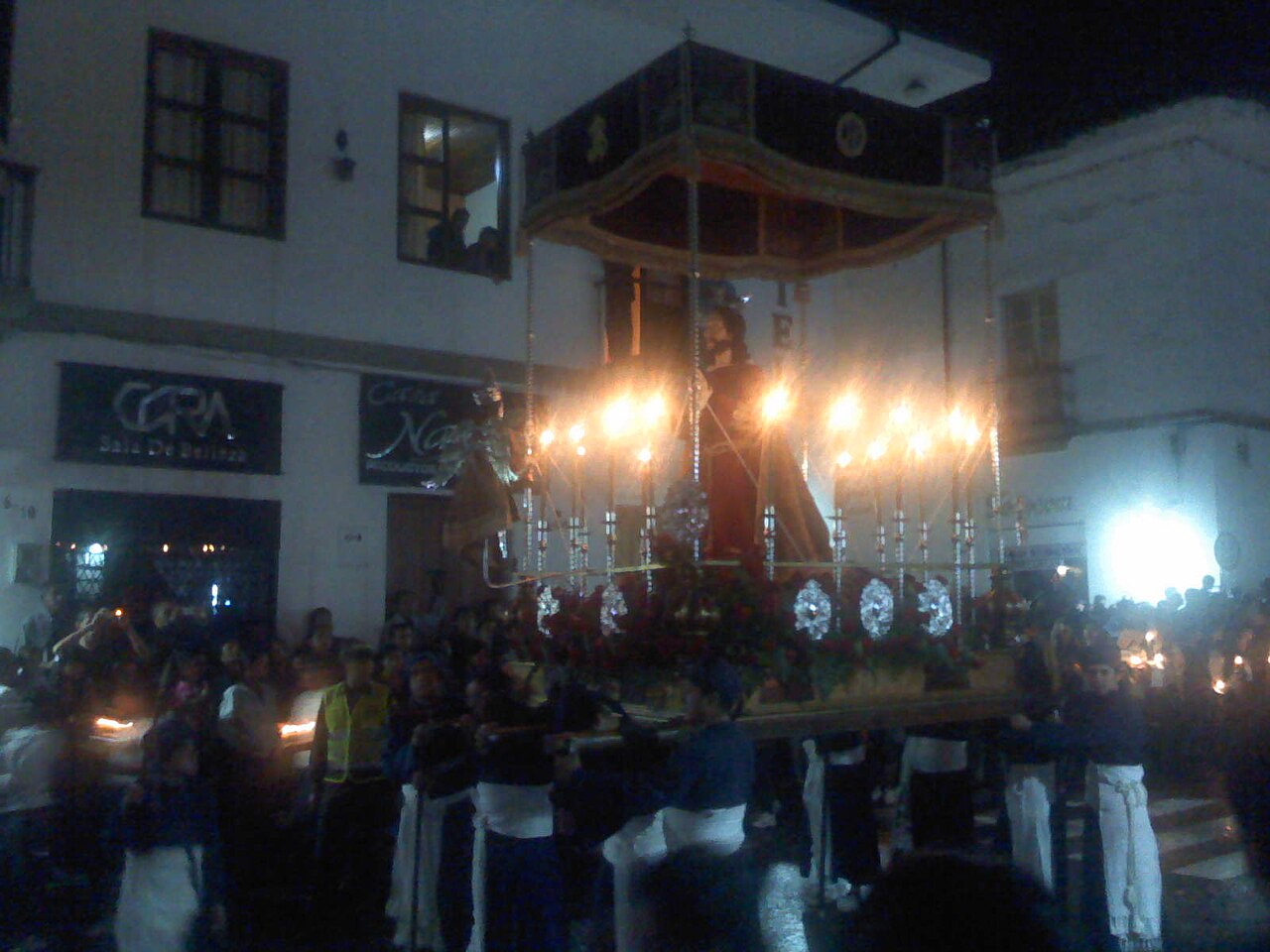
UNESCO inscribed the Holy Week processions of Popayán in 2009. Five processions run from Tuesday to Saturday before Easter, between 8 p.m. and 11 p.m., along a route of about two kilometres.
Each procession carries flower-decked wooden statues, many from the late 18th century, on floats through the town centre. Local residents organise the tradition through a general assembly, UNESCO says.
The Salt Cathedral of Zipaquirá lies about 180 metres underground in Cundinamarca. Its official site lists daily visiting hours of 9:00 a.m. to 4:40 p.m. and guided tours.
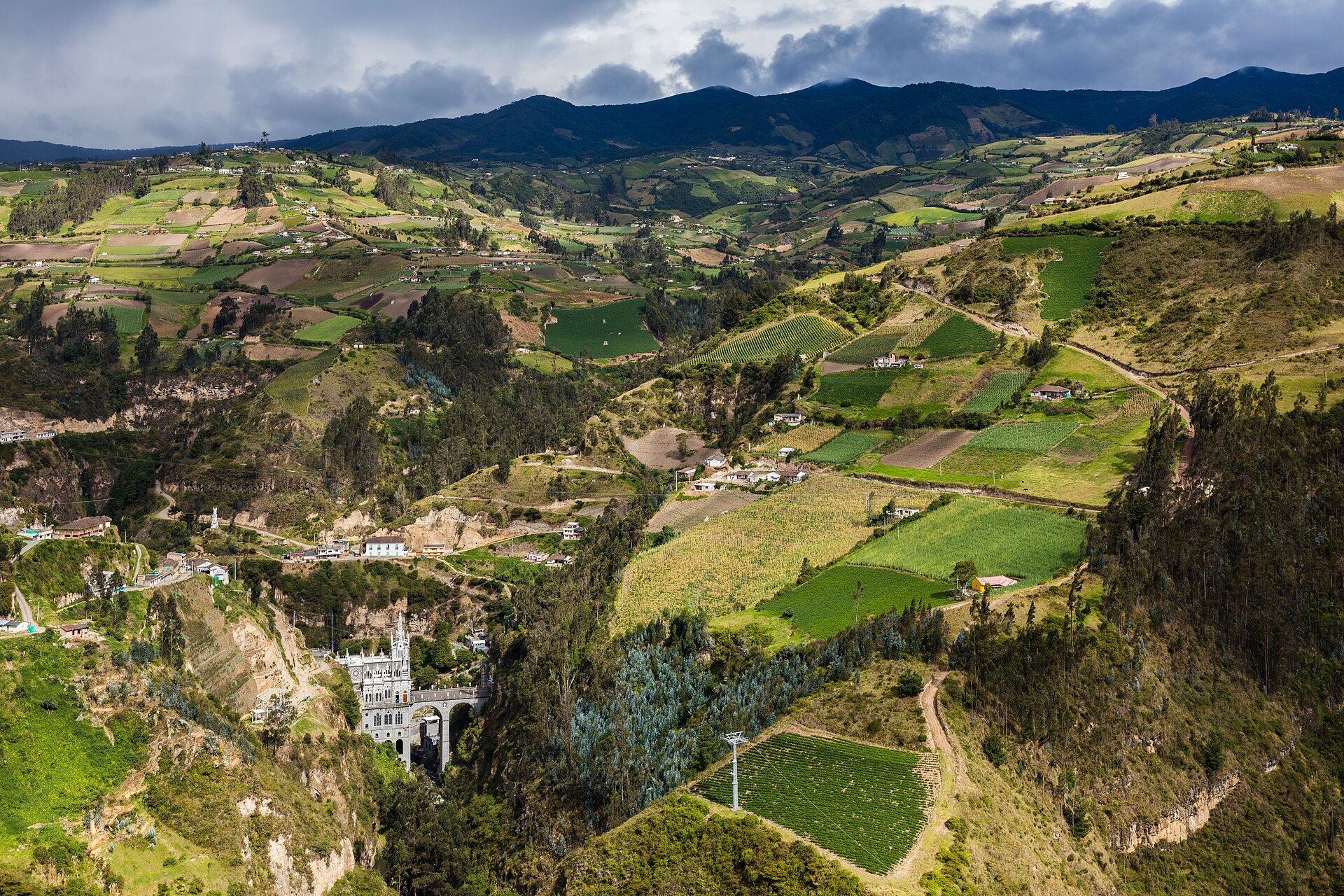
Religion was very important to 63.7% of adults in 2023, so saints’ days, church weddings and prayer still shape family life. The Las Lajas shrine near Ipiales stands in a canyon in the Nariño highlands, close to the Ecuador border.
Faith, Armed Groups and Peace
Armed groups have threatened clergy in parts of the country. In 2022 prosecutors investigated three homicides of religious leaders and 22 threat cases, the State Department reported.
Over 2,000 northern churches cancelled services on 8 May 2022 amid threats by the Clan del Golfo gang, Open Doors said. Armed groups threatened Bishop Rubén Darío Jaramillo Montoya of Buenaventura on 8 February 2022 after he warned about security.
Leaders also said the ELN, a guerrilla group, hindered Catholic Church-led peace and reconciliation programmes in rural areas. These are 2022 figures, and the sources checked give no newer national count.
What It Means for US Readers
US travellers can visit churches, the Salt Cathedral and Bogotá’s historic centre freely, because Article 19 guarantees worship. The State Department keeps Colombia at Level 3, Reconsider Travel, citing crime, terrorism, civil unrest and kidnapping.
The advisory lists Arauca, Cauca (excluding Popayán), Valle del Cauca (excluding Cali) and Norte de Santander as Do Not Travel areas. It adds that demonstrations can close roads and coincide with holidays.
Holy Week brings the heaviest church-calendar crowds, so book Popayán and Bogotá lodging early. The Bogotá city guide covers the capital’s historic centre.
Missionaries from US churches need visas, and the Foreign Ministry processed 1,587 applications in 2022. One religious group said more than 60 missionaries did not have visas renewed.
For US policy watchers, the August row shows that Colombian courts police official religious displays, even under a self-described Catholic president. The tribunal’s late September 2026 revocation shows that the outcome can still change on appeal.
What Is Not Known
No single count of religious affiliation exists: DANE’s 2021 survey and Pew’s 2024 survey differ by 18 points on Catholics. The sources checked do not explain why, and Pew’s text gives no Colombian Protestant percentage.
The Interior Ministry says it has more than 12,000 registered faith communities, but the pages checked give no split by denomination. The 99.5% evangelical share covers 2022 applications only.
The reports checked do not say whether the tribunal also lifted the order addressed to the president himself. They also differ on whether the clergy at the ceremony were priests or bishops.
No verified seat count for Christian-aligned parties in Congress after the 8 March 2026 elections was found. Attendance at services is not published in the sources checked.
The Holy See has given no reason why Colombia is absent from the November 2026 tour. It has also announced no date for a papal visit to Colombia.
Frequently Asked Questions
What is the main religion in Colombia?
Catholicism is the largest, at 60% of adults in Pew’s 2024 survey and 78.2% in DANE’s 2021 survey. Unaffiliated adults are the second-largest group in Pew’s survey, ahead of Protestants.
Does Colombia have an official religion?
Colombia has no official religion under Law 133 of 1994. The Constitutional Court called the state secular and pluralist in 1994.
How religious are Colombians?
Religion was very important to 63.7% of adults in DANE’s 2023 survey, down from 74.1% in 2019. Family ranked higher, at 96.9%.
Is Colombia still a Catholic country?
Mostly, but the share is falling, and 33% of adults under 35 have no religion in Pew’s 2024 survey. Evangelical churches dominate new registrations of religious groups.
When is Holy Week in Colombia in 2027?
Easter is Sunday, 28 March 2027, so Holy Week runs from 21 to 28 March. Popayán holds its UNESCO-listed processions from the Tuesday to the Saturday before Easter.
Is it safe for US visitors to visit religious sites in Colombia?
Major sites such as the Salt Cathedral keep daily hours, but the State Department rates Colombia Level 3, Reconsider Travel. Cauca outside Popayán is a Do Not Travel area, so check conditions before any trip.
Sources: Pew Research Center, religious affiliation in Latin America, 21 January 2026; DANE, Political Culture Survey 2021; DANE, Political Culture Survey 2023 bulletin; El Tiempo, religious trends in Colombia; Constitution of Colombia 1991, Articles 18, 19, 42 and 68; Foreign Ministry normograma, Law 133 of 1994; Constitutional Court, Sentence C-350 of 1994; US State Department, 2022 religious freedom report, Colombia; Interior Ministry, Directorate of Religious Affairs; Colombian Episcopal Conference; Vanguardia, Cardinal Rueda in the conclave; Comboni Missionaries, Vatican tour announcement; Publimetro, Pope Leo XIV tour; Valora Analítik, presidential credential; Infobae, apology of 30 August 2026; Infobae, appeal plans; El Colombiano, tutela ruling; El Universal, Tribunal Superior ruling; UNESCO, Holy Week processions in Popayán; UNESCO, Palenque de San Basilio; Salt Cathedral of Zipaquirá; US State Department, Colombia travel advisory (all accessed 20 October 2026).
This article was produced by The Rio Times’ automated newsroom system. How we use AI · Report an error · Editorial responsibility: Matthias Camenzind, Editor-in-Chief
Expat Guide to Colombia
What The Rio Times publishes for foreigners who live in or move to Colombia.
Start here
- Colombia SIM Card and Internet for Foreigners in 2026
- Colombia Rent Increase Limit Is 5.10% in 2026
- Bancolombia Explained, Colombia's Largest Bank in 2026
- Cost of Living in Colombia for Expats in 2026: Rent, Transport and Health in Five Cities
City guides
Medellín, Bogotá, Cartagena, Cali
Coming up in Colombia
- Fonseca El Campín Concert Set for 24 October 2026 in Colombia 24 Oct
- Ryan Castro El Campín Halloween Show Set for 31 October in Colombia 31 Oct
- Los Tigres del Norte Play Bogotá's El Campín Stadium on 7 November 7 Nov
- Cartagena Independence Festivities: 11 to 16 November 2026 11 Nov
Understand Colombia