
COLOMBIA · HISTORY
Key Facts
- —The basics Colombia history runs from the Muisca and San Agustín cultures through Spanish rule from 1525 and independence, secured at Boyacá on 7 August 1819, to a nation of 53.4 million people in 2026.
- —Why it matters The 1948 killing of Liberal leader Jorge Eliécer Gaitán, decades of guerrilla war and the 2016 FARC peace deal still shape security, drug policy and ties with Washington as of October 2026.
- —The numbers Armed conflict killed at least 450,664 people from 1985 to 2018, and at least 8.3 million hectares of land had been abandoned or seized by 2013; in 1903 the United States paid newly independent Panama US$10 million for a canal strip.
- —Who is who Simón Bolívar and Francisco de Paula Santander led the independence armies; Gustavo Petro, a former M-19 guerrilla, became the first elected left-wing president in 2022; conservative lawyer Abelardo de la Espriella has governed since Friday, 7 August 2026.
- —What to watch Employers, unions and the government opened talks on the 2027 minimum wage on 1 October, and the government must issue a decree by 30 December 2026 if they fail to agree.
- —Power Index Colombia ranks 6th of 14 in The Rio Times Latin America Power Index, with 51.9 points (October 2026 edition).
- —Prediction markets Kalshi gives a 15.0% chance that Colombia’s 2027 minimum wage rise beats December 2026 inflation by more than 4.00 percentage points (15 October, 8:01 a.m. ET).
- —What it means for you US travellers meet this past in Cartagena’s Spanish forts and Bogotá’s Gold Museum, while US investors and policymakers watch a major non-NATO ally that Washington faulted on drug control in September 2026.
Colombia history runs from Muisca gold and Spanish forts to guerrilla war and a 2016 peace deal. Here are the turning points a newcomer needs, up to the change of government in 2026.
Colombia history stretches from the Muisca and San Agustín cultures through nearly three centuries of Spanish rule to independence in 1819. Civil wars, a long guerrilla conflict and a 2016 peace deal followed, shaping a nation of 53.4 million people in 2026.
For US readers, this past explains today’s debates over drugs, security, land and ties with Washington. This guide walks through the turning points, from Muisca gold to the conservative government in office as of October 2026.
Before the Spanish, Muisca Gold and San Agustín Stones
People lived in the lands that became Colombia for thousands of years before Europeans arrived. Their societies ranged from the Zenú goldsmiths of the Caribbean lowlands to chiefdoms in the Andes.
In the highlands around Bogotá lived the Muisca, whose territory there was known as Bacatá. Its leader, the Zipa, ruled the region when the Spanish arrived in 1537.
On Lake Guatavita, a new Muisca chief covered in gold sailed out on a raft to be proclaimed. That ritual gave rise to the Spanish legend of El Dorado, a city made of gold.
The Gold Museum in Bogotá, founded by the central bank in 1939, shows a gold raft depicting the ceremony. Its more than 34,000 pieces also include Quimbaya and Zenú goldwork from the Andes and the Caribbean.
Farther south, in today’s Huila department, a culture flourished from the 1st to the 8th century and carved stone statues. UNESCO, the UN cultural agency, listed San Agustín Archaeological Park as a World Heritage site in 1995.
UNESCO calls the park the largest group of religious monuments and megalithic sculptures in South America. A third of the 600 known San Agustín statues stand inside its boundaries.

Spanish Conquest and the Colonial Era
Rodrigo de Bastidas, a Spaniard from Seville, founded Santa Marta on the Caribbean coast on 29 July 1525. It is Colombia’s oldest city and marked its 500th anniversary in 2025.
Gonzalo Jiménez de Quesada led Spanish troops up the Magdalena River into the Muisca highlands in 1537. On 6 August 1538 he set up the camp that became Santafé, today’s Bogotá, formally founded in April 1539.
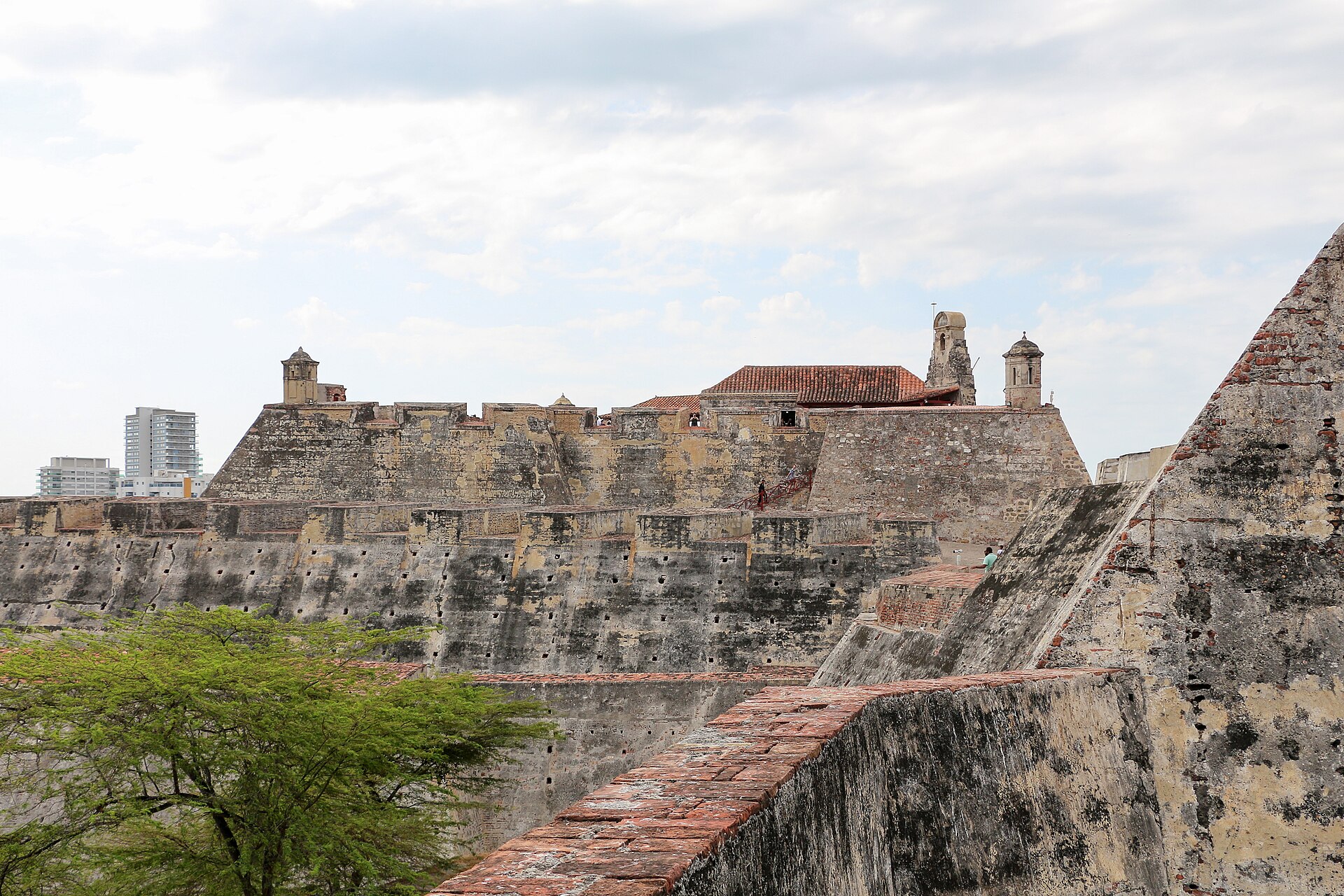
Cartagena, protected by fortifications the Spanish built from 1586, became an essential link on Spain’s West Indies trade route. UNESCO has listed its port, fortresses and monuments as a World Heritage site since 1984.
In colonial Cartagena, the Getsemaní quarter housed the artisans and slaves whose labour fuelled much of the city’s economy. Escaped slaves founded walled refuges called palenques in the 17th century.
Only one, San Basilio de Palenque, southeast of Cartagena, survives today, with about 3,500 inhabitants. Its palenquero language, with Spanish vocabulary and Bantu grammar, is the only creole of its kind in Latin America.
UNESCO inscribed the cultural space of Palenque on its intangible heritage list in 2008, after first proclaiming it in 2005. Many of its musical and oral traditions have African roots.
Independence, Bolívar and Gran Colombia
In 1810, Santafé was the capital of the Viceroyalty of New Granada, the Spanish colonial government of the region. On Friday, 20 July 1810, a market day, a quarrel over a borrowed flower vase sparked a revolt.
The Spanish merchant José González Llorente had refused to lend the vase, and passers-by joined the shouting. Criollos, people of Spanish descent born in the Americas, turned the brawl into a challenge to royal authority.
Colombians still celebrate 20 July as Independence Day, with military parades in many cities. The struggle against Spanish forces lasted until 1819, with battles across the territory.
Simón Bolívar and Francisco de Paula Santander played crucial roles, and the best-remembered victory came at Boyacá on 7 August 1819. The US State Department notes that Colombia had effectively achieved independence by 1819.
The United States recognized the new republic on 19 June 1822, when President James Monroe received its envoy, Manuel Torres. The first US consulates, in Cartagena and Santa Marta, and a US mission in Bogotá opened in 1823.
The new state, often called Gran Colombia, covered today’s Colombia, Venezuela, Ecuador and Panama. Ecuador and Venezuela left the federation in 1830, and the remaining core took the name New Granada.
Civil Wars, a New Constitution and the Loss of Panama
Two parties, the Liberals and the Conservatives, dominated politics for more than a century and often fought each other in arms. The country was renamed the Granadine Confederation and then, from 1863, the United States of Colombia.
In 1886 it became the Republic of Colombia under a new constitution. That charter lasted more than a century, until a constituent assembly replaced it in 1991.
Party rivalry flared again in the Thousand Days’ War, which began on 17 October 1899 and ended on 21 November 1902. Estimates of the dead range from about 11,000 to 100,000, and no firm figure exists.
One peace accord was ratified aboard the USS Wisconsin, a US warship guarding American interests in Panama, then a Colombian province. Colombia’s Congress then rejected a treaty letting the United States build a canal there.
President Theodore Roosevelt sent warships to Panama City and Colón, and Panama declared independence on 3 November 1903. The new republic granted Washington a canal strip for a one-time payment of US$10 million.
Gaitán, La Violencia and the National Front
On Friday, 9 April 1948, the Liberal leader Jorge Eliécer Gaitán was shot dead in central Bogotá. His killer, Juan Roa Sierra, was lynched by an angry crowd, and the riots that followed became known as the Bogotazo.
The killing marked a turning point in La Violencia, years of bloodshed between Liberal and Conservative supporters. For most of the next decade, Congress was closed and the country was governed by decree rather than by law.
General Gustavo Rojas Pinilla ruled as a dictator from 1953 to 1957 but failed to reconcile the two parties. Their leaders then formed the National Front, a power-sharing pact that ran from 1958 to 1974.
Under the pact, Liberals and Conservatives alternated the presidency every four years, shutting out all other parties for 16 years. A 1957 plebiscite launched the arrangement, and it was the first national vote in which women took part.
The National Centre for Historical Memory, a state body, says the pact brought relative peace but showed a deep fear of democracy. Parties outside the pact were shut out, one of the loose ends that fed the guerrilla wars to come.
Guerrillas, Cartels and the 1991 Constitution
In 1964 the army bombed Marquetalia, an enclave where peasants who had been Liberal partisans during La Violencia still held arms. Those fighters, now guided by the Communist Party, officially founded the FARC, the Revolutionary Armed Forces of Colombia, in 1966.
The ELN, or National Liberation Army, emerged in the mid-1960s among students and professionals inspired by Che Guevara. The urban M-19 appeared in the mid-1970s, citing alleged fraud against Rojas Pinilla in the 1970 election.
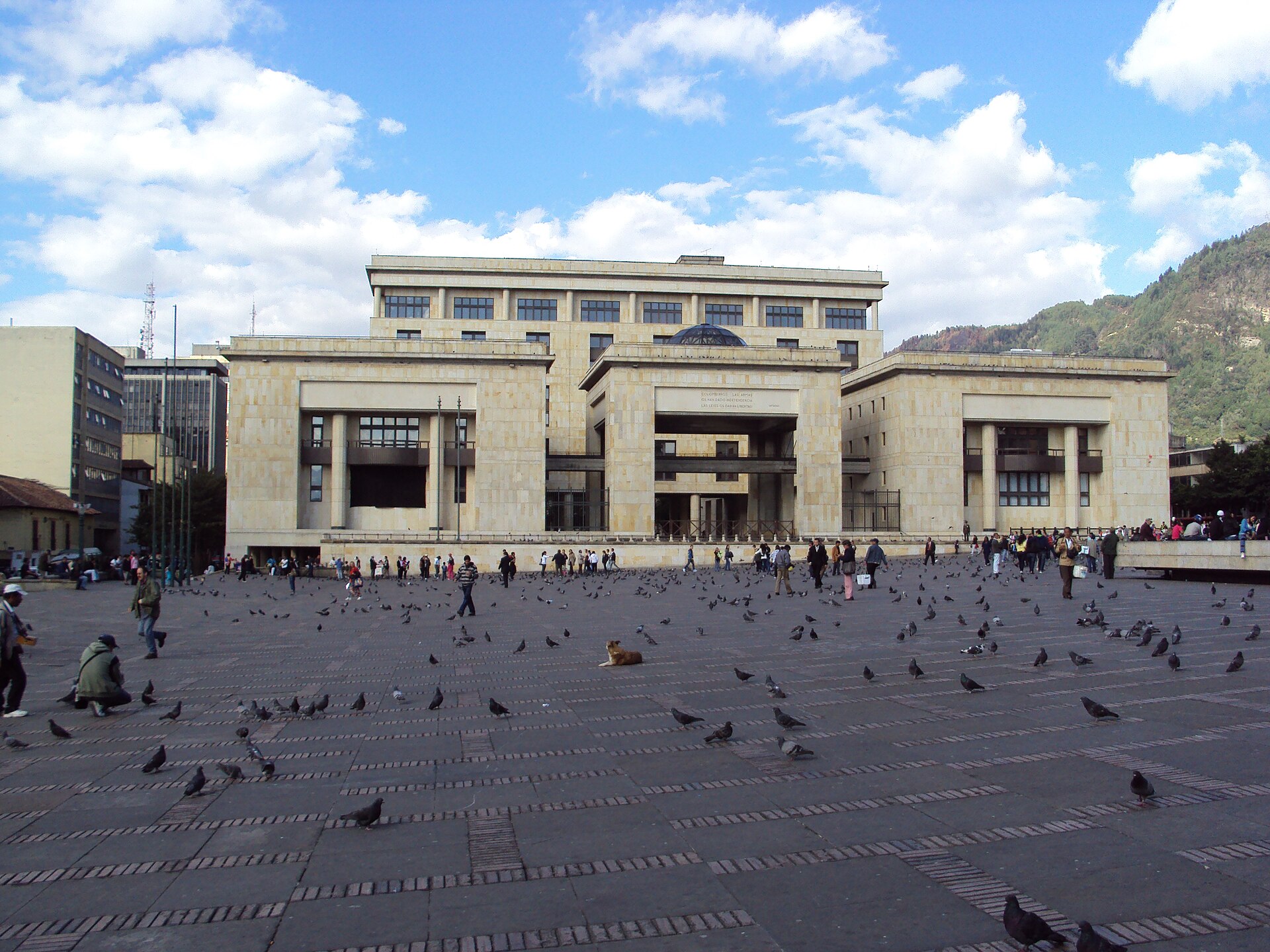
A first wave of conflict violence ran from 1982 to 1995 as the guerrillas expanded, amid violence driven by drug trafficking. In 1985 the M-19 stormed the Palace of Justice in Bogotá, and the siege and army counterattack left high court magistrates dead.
Pablo Escobar, boss of the Medellín cartel, spread terror across Colombia before a police search unit traced his phone calls. He died on a Medellín rooftop on 2 December 1993.
Student activists pushed for a new charter, and a constituent assembly was installed on 5 February 1991. The demobilised M-19 took part, and Antonio Navarro Wolf of the M-19 was one of the assembly’s three presidents.
The assembly signed the new constitution on 4 July 1991, replacing the charter of 1886. From 1940 until then, Colombia had lived almost constantly under states of siege that suspended rights.
Paramilitaries, Plan Colombia and the 2016 Peace Deal
Paramilitary groups, including the AUC, or United Self-Defence Forces of Colombia, relied on massacres, disappearances and land seizures. A 2005 law called Justice and Peace set the terms for AUC fighters to demobilise.
During failed peace talks known as El Caguán, the government demilitarised 42,000 square kilometres, an area larger than Maryland. At the same time it rebuilt the army through Plan Colombia, a US-backed programme designed to curb cocaine.
The memory centre found that 60% of Plan Colombia’s resources went to strengthening the armed forces. Helicopters, intelligence, combat aircraft and a doubling of troop numbers formed the base of a new war plan.
President Juan Manuel Santos, a former defence minister, opened formal peace talks with the FARC in 2012. Voters narrowly rejected the first agreement in a plebiscite on Sunday, 2 October 2016, by 50.21% to 49.78%.
The two sides signed a revised deal on 24 November 2016, and Congress ratified it a week later. Santos received the Nobel Peace Prize that year for his efforts to end a war of more than 50 years.
The Truth Commission set up under the deal found that at least 450,664 people died in the conflict from 1985 to 2018. Its June 2022 final report also counted 121,768 forced disappearances from 1985 to 2016 and 7,752,964 people displaced through 2019.
In 2022 Gustavo Petro, a former member of the M-19 and ex-mayor of Bogotá, became Colombia’s first elected left-wing president. In the runoff on Sunday, 21 June 2026, conservative lawyer Abelardo de la Espriella beat left-wing candidate Iván Cepeda.
The final count gave De la Espriella 49.66% against 48.70%, a gap of 251,854 votes. The 48-year-old took office in Cali on Friday, 7 August 2026, and a profile of the president has more.
How Colombia History Shapes the Country Today
A 2011 victims’ law made 9 April, the anniversary of Gaitán’s death, the National Day of Memory and Solidarity with Victims. The National Police describes more than nine million Colombians as direct victims of the armed conflict.
Land remains a central grievance: in 2013 the memory centre estimated at least 8.3 million hectares had been abandoned or seized. That is about 20.5 million acres, roughly the size of South Carolina.
The centre says those seizures hit Indigenous and Afro-Colombian communities with collective land titles especially hard. Their regions and numbers are set out in the guide to Colombia’s population and ethnic groups.
Bogotá, the old colonial capital, still concentrates political and economic power, as the guide to who dominates Colombia shows. Medellín, once Escobar’s base, now draws newcomers, and the Medellín city page explains life there.
Washington’s role runs through the story, from Panama in 1903 to Plan Colombia. On 15 September 2026, President Donald Trump listed Colombia among four countries that had failed demonstrably on counternarcotics obligations.
Colombia’s weight among its neighbours is explained in the guide to Colombia’s role in Latin America. Daily news from the country is collected on the Rio Times Colombia page.
What It Means for US Readers
Travellers can see this history in Cartagena’s Spanish forts, the Gold Museum in Bogotá and the stone statues of San Agustín. The Cartagena and Bogotá city pages cover practical life, and the guide to Colombian traditions explains the holidays.
The United States designated Colombia a major non-NATO ally in 2022, building on decades of security ties since Plan Colombia. Yet the September 2026 drug determination shows that coca and cocaine remain a source of friction.
Colombia sits in the group closer to Washington on The Rio Times Latin America Power Index, which ranks regional powers. For investors, the legacies of land disputes and armed groups still shape security risk in rural areas.
What Prediction Markets Say
Kalshi, a US exchange regulated by the Commodity Futures Trading Commission, lists bets on Colombia’s 2027 minimum wage rise minus inflation. The bet that the gap tops 4.00 percentage points traded at 15.0% on 15 October at 8:01 a.m. ET.
About 123,000 contracts had changed hands by then, and the price was unchanged from the previous day. The market settles on the 2027 increase minus December 2026 annual inflation as measured by DANE, the statistics office.
Government, employer and union delegates held their first session on the 2027 wage on 1 October 2026. If they cannot agree, the government has until 30 December to set it by decree.
For 2026, Decree 1469 of 2025 raised the minimum wage by 23%. The Council of State, the top administrative court, lifted a suspension of that decree in July 2026.
Annual inflation stood at 6.29% in September 2026, according to DANE. These are bets on a political decision, not forecasts by the government or the central bank.
Why we show this: prediction markets turn real-money bets into a live probability that moves within minutes of the news, which is why investors, campaigns and newsrooms in the United States now follow them closely. We show them next to polls and official results, never instead of them.
What Is Not Known
No reliable count exists of how many people lived in the territory before the Spanish arrived. Who fired the shots that killed Pablo Escobar in 1993 is also still debated.
The Truth Commission warned that, with underreporting, the conflict’s death toll could reach about 800,000. The fate of many of the disappeared remains unknown.
Gaitán’s killer was lynched before he could be questioned, and whether anyone else ordered the killing is still disputed. The size of the 2027 minimum wage rise will not be known until late December 2026.
Frequently Asked Questions
When did Colombia become independent?
A revolt in Santafé, now Bogotá, on 20 July 1810 began the break with Spain and is celebrated as Independence Day. Victory at the Battle of Boyacá on 7 August 1819 effectively secured independence.
Why did Panama separate from Colombia?
Colombia’s Congress rejected a treaty for a US canal, and President Theodore Roosevelt sent warships to support Panamanian independence. Panama declared independence on 3 November 1903 and granted the United States a canal strip for US$10 million.
What was the Bogotazo?
It was the wave of riots in Bogotá after Liberal leader Jorge Eliécer Gaitán was shot dead on 9 April 1948. The date marked a turning point in La Violencia and is now the National Day of Memory and Solidarity with Victims.
How many people died in Colombia’s armed conflict?
The Truth Commission found that at least 450,664 people were killed between 1985 and 2018. It warned that, counting underreporting, the true toll could reach about 800,000.
What was the 2016 peace deal?
It was the agreement between President Juan Manuel Santos’s government and the FARC, signed in revised form on 24 November 2016. Voters had rejected the first version by 50.21% to 49.78% in a plebiscite on 2 October 2016.
Who is the president of Colombia in 2026?
Abelardo de la Espriella, a conservative lawyer, took office on 7 August 2026, succeeding Gustavo Petro. He won the runoff on 21 June 2026 with 49.66% of valid votes in the final count.
Sources: US Department of State, Office of the Historian, Colombia country history; US Department of State, Office of the Historian, Building the Panama Canal, 1903-1914; UNESCO, San Agustín Archaeological Park; UNESCO, Port, Fortresses and Group of Monuments, Cartagena; UNESCO, Cultural space of Palenque de San Basilio; Alcaldía de Bogotá, 20 July and the independence; Alcaldía de Bogotá, 9 April; Policía Nacional de Colombia, National Day of Memory and Solidarity with Victims; Centro Nacional de Memoria Histórica, ¡Basta Ya! (2013); DANE, population projections 2018-2070; DANE, consumer price index, September 2026; Norwegian Nobel Committee, Juan Manuel Santos facts; Federal Register, Designation of Colombia as a Major Non-NATO Ally; The White House, 2027 Majors List; The Rio Times Latin America Power Index; El Tiempo, Truth Commission figures; El Heraldo, 2016 plebiscite; El Heraldo, the 1991 constituent assembly; Radio Nacional de Colombia, Thousand Days’ War; Radio Nacional de Colombia, the National Front; Noticias RCN, Santa Marta at 500; Portafolio, founding of Bogotá; Canal Trece, Bacatá and the founding of Bogotá; Voz de América, the Gold Museum; Publimetro, death of Pablo Escobar; Portafolio, Gustavo Petro profile; Forbes Colombia, 2026 runoff; Noticias Caracol, final runoff count; Noticias RCN, CNE declares the 2026 result; El Universal, the 1991 assembly’s presidents; Semana, the operation against Pablo Escobar; Blu Radio, Decree 1469 of 2025; Vanguardia, 7 August 2026 inauguration; La República, 2026 minimum wage decree; Portafolio, 2027 minimum wage talks; Kalshi market data from its public API (all accessed 15 October 2026).
This article was produced by The Rio Times’ automated newsroom system. How we use AI · Report an error · Editorial responsibility: Matthias Camenzind, Editor-in-Chief
Expat Guide to Colombia
What The Rio Times publishes for foreigners who live in or move to Colombia.
Start here
- Colombia SIM Card and Internet for Foreigners in 2026
- Colombia Rent Increase Limit Is 5.10% in 2026
- Bancolombia Explained, Colombia's Largest Bank in 2026
- Cost of Living in Colombia for Expats in 2026: Rent, Transport and Health in Five Cities
City guides
Medellín, Bogotá, Cartagena, Cali
Coming up in Colombia
- JetBlue Cali Flights From Fort Lauderdale Start 15 October 15 Oct
- Bad Gyal Bogotá Concert Brings Más Cara Tour to Colombia on 18 October 18 Oct
- Fonseca El Campín Concert Set for 24 October 2026 in Colombia 24 Oct
- Ryan Castro El Campín Halloween Show Set for 31 October in Colombia 31 Oct
Understand Colombia