
COLOMBIA · CÚCUTA
Key Facts
- The country Colombia, led by conservative President Abelardo de la Espriella, shares a long border with Venezuela.
- Power Index Colombia ranks 6th of 14 in The Rio Times Latin America Power Index, with 51.9 points (October 2026 edition).
- What happened On Thursday 29 October 2026 the president ordered the temporary militarization of the border city Cúcuta.
- What starts next An army and police campaign called Esparta, plus an urban security team, begins on Tuesday 3 November.
- The legal basis No decree is public; the president’s constitutional powers over public order and the armed forces apply.
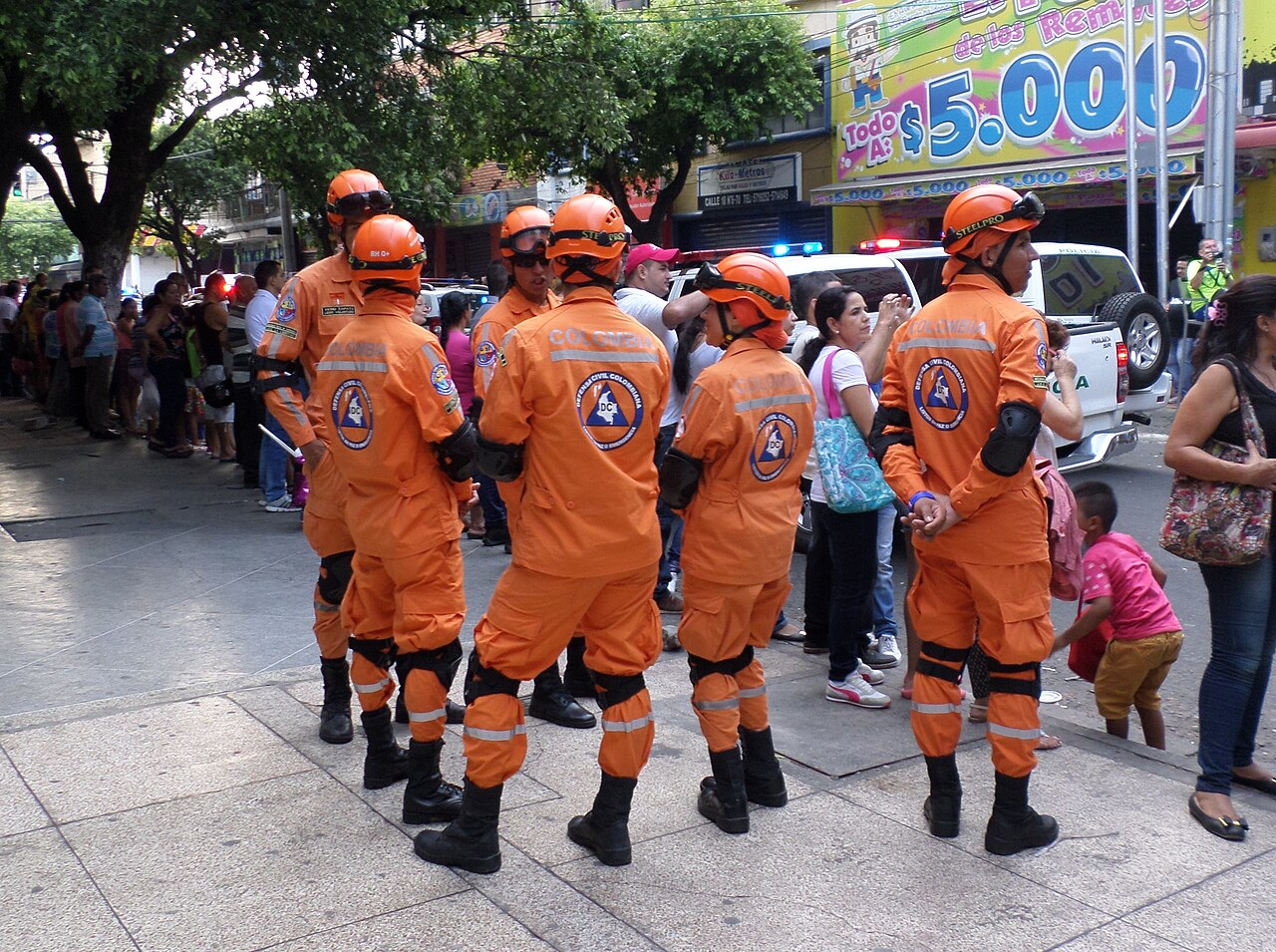
Cúcuta militarization became official policy on Thursday 29 October 2026, when President Abelardo de la Espriella sent the army into this border city. He gave no troop numbers or map, and no decree is public.
US readers should care because Cúcuta is the main crossing to Venezuela, a route for trade, migrants and armed groups. The order follows a political killing on Monday 26 October and an explosive attack on Tuesday 27 October.
In Plain English
Militarization means the army, and not only the police, takes a visible lead in keeping order. The president calls the step temporary, lasting only while public order is stabilised.
Cúcuta is the capital of Norte de Santander, a Colombian department (the equivalent of a state) on the Venezuelan border. BOSUR is the Urban Security Operational Bloc, a tactical team the president created to pursue criminal networks in cities.
What Happened
President de la Espriella spoke to the media on Thursday 29 October with the military high command beside him. He said he had ordered the Defence Minister and security chiefs to carry out the Cúcuta militarization immediately.
The army will reinforce its presence in coordination with the National Police, he said, to confront criminal and narcoterrorist groups. On Tuesday 3 November a military and police campaign called Esparta and the BOSUR team begin work in the city.
He listed their aims as recovering territorial control, dismantling criminal structures and hitting their finances. He also said he would travel to Cúcuta next week to check progress.
The trigger was the killing of mayoral hopeful Miguel Castellanos on Monday 26 October, as our report on the killing covered. A blast in El Escobal on Tuesday 27 October then wounded police officers and civilians, as our explosion report describes.
Why It Matters
The target area is the city of Cúcuta, which sits beside the main bridge to Venezuela. The announcement came with no map, so the zone’s boundaries are not defined.
The legal basis for the Cúcuta militarization is Article 189 of the Constitution, which makes the president armed forces commander and keeper of order. Article 296 adds that his public-order orders override those of governors and mayors.
No state of exception, the emergency regime that widens a president’s powers, was announced. The president described the army as acting in coordination with the National Police.
It is the second city in five weeks to get more soldiers, after Santa Marta, which our report on the armed group there covers. He has also said parts of Bogotá need military control, a plan we described in our report on troops for Bogotá.
Cúcuta has seen this before: a truck bomb wounded 11 people on Saturday 1 August 2026, and the military sent about 250 extra soldiers. The military command blamed the ELN, a leftist guerrilla group.
What It Means for You
If you plan to visit Cúcuta or cross to Venezuela, expect a heavier military presence and read the US State Department’s Colombia travel advisory first. Nothing in the announcement closes the border or the bridge.
For US policy, the Cúcuta militarization tests a conservative government that has now turned to troops in two cities. Companies with staff or cargo on the Cúcuta route should ask local partners about delays.
What Is Not Known
The government has published no troop numbers or decree text for the Cúcuta militarization. On 1 August the military command gave a figure of about 250 extra soldiers, so a number may follow.
The government has not named the legal provision it relies on, so the constitutional articles above are our reading of the president’s powers. It is also unclear whether residents will face checkpoints or curfews.
No boundary has been given for the Cúcuta militarization, and the end date is unknown. No group has claimed the explosion of 27 October.
More: Colombia news in English, every day from The Rio Times.
Frequently Asked Questions
What is the Cúcuta militarization?
On Thursday 29 October 2026 President de la Espriella ordered the immediate, temporary militarization of Cúcuta, with the army working alongside the police. An army and police campaign called Esparta starts on 3 November.
How many soldiers are going to Cúcuta?
No number has been published for this order. In August the military command sent about 250 extra soldiers after a truck bomb, but that is a different deployment.
Is there a decree or a state of emergency?
No decree text has been made public, and no state of exception was announced. The president’s constitutional powers over public order and the armed forces are the apparent basis, though the government has not named an article.
Sources: Constitución Política de Colombia, Articles 189 and 296 (Senate of the Republic), 1991; Comando General de las Fuerzas Militares, statement on the reinforcement of Cúcuta, 1 August 2026, 1 August 2026; President Abelardo de la Espriella, public statement on Cúcuta, 29 October 2026 (Presidency of Colombia), 29 October 2026.
This article was produced by The Rio Times’ automated newsroom system. How we use AI · Report an error · Editorial responsibility: Matthias Camenzind, Editor-in-Chief