What Is Ecopetrol? Colombia’s State Oil Giant, Its Numbers and Its New Boss

COMPANIES · COLOMBIA
Key Facts
- —The country Colombia is Latin America’s third most populous nation and a mid-sized oil producer. Oil and oil products remain its biggest export, and the state oil company is its largest business.
- —What it is Ecopetrol, a state-controlled group that pumps, pipes and refines most of Colombia’s oil. It also controls ISA, a regional power-transmission company.
- —Size Second-quarter 2026 revenue of 40.2 trillion pesos (about US$12.2 billion) and net profit of 6.06 trillion pesos (about US$1.84 billion). Output averaged 705,800 barrels of oil equivalent a day.
- —Ownership The Colombian state holds 88.49 percent. The rest trades in Bogotá and, as American depositary shares, in New York under the ticker EC.
- —Why it matters It paid the Colombian state 34.6 trillion pesos (about US$10.5 billion) in dividends, taxes and royalties in 2025. Its results move the budget, the peso and the Bogotá stock market.
- —The catch Production is falling, reserves cover about seven years of output, and the chief executive changes with the government. A new boss was chosen on 24 September 2026.
What is Ecopetrol, who controls it and why a change of government in Bogotá reshapes it overnight: a plain-English guide to Colombia’s state oil company, with its latest reported numbers.
Ecopetrol is the single company that most shapes Colombia’s public finances, its fuel supply and its energy debate. For a foreign investor, supplier or reader, it is also the clearest window into how Colombian politics reaches into the economy.
As of 24 September 2026, the group is in the middle of its third leadership change in two months. On that date its board chose Joaquín Gutiérrez Caballero as president. He is a close ally of President Abelardo de la Espriella, who took office on 7 August promising to revive oil and gas.
All peso figures below are converted at about 3,300 pesos to the US dollar, the late-September 2026 rate. The exchange rate moves, so treat the dollar amounts as a guide rather than an exact value.
What the company does
Ecopetrol began as a fully state-owned company in 1951. Since a 2006 law, Law 1118, it has been a mixed-economy company with private shareholders. It is headquartered in Bogotá and employs more than 19,000 people across the group.
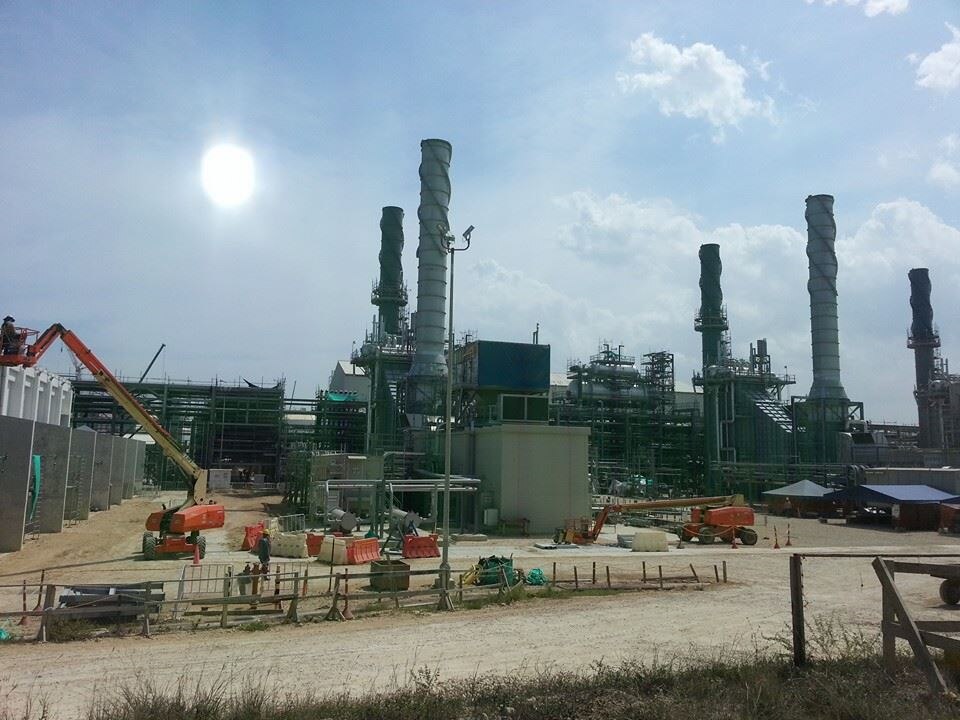
Its business runs along the whole oil chain. Upstream, it explores for and produces crude oil and gas, mostly in Colombia. Its subsidiary Hocol runs part of that work, including gas fields on the Caribbean coast.
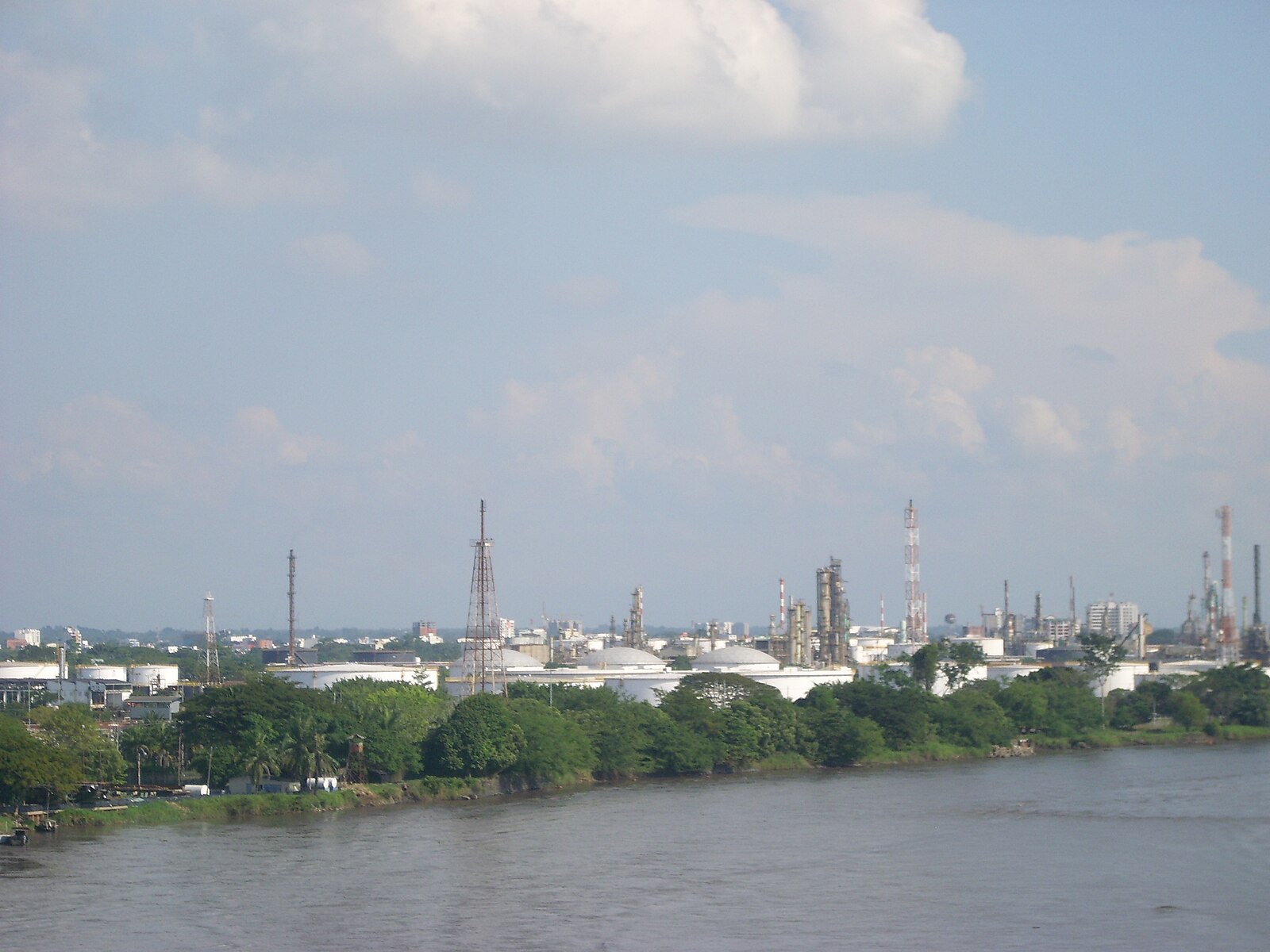
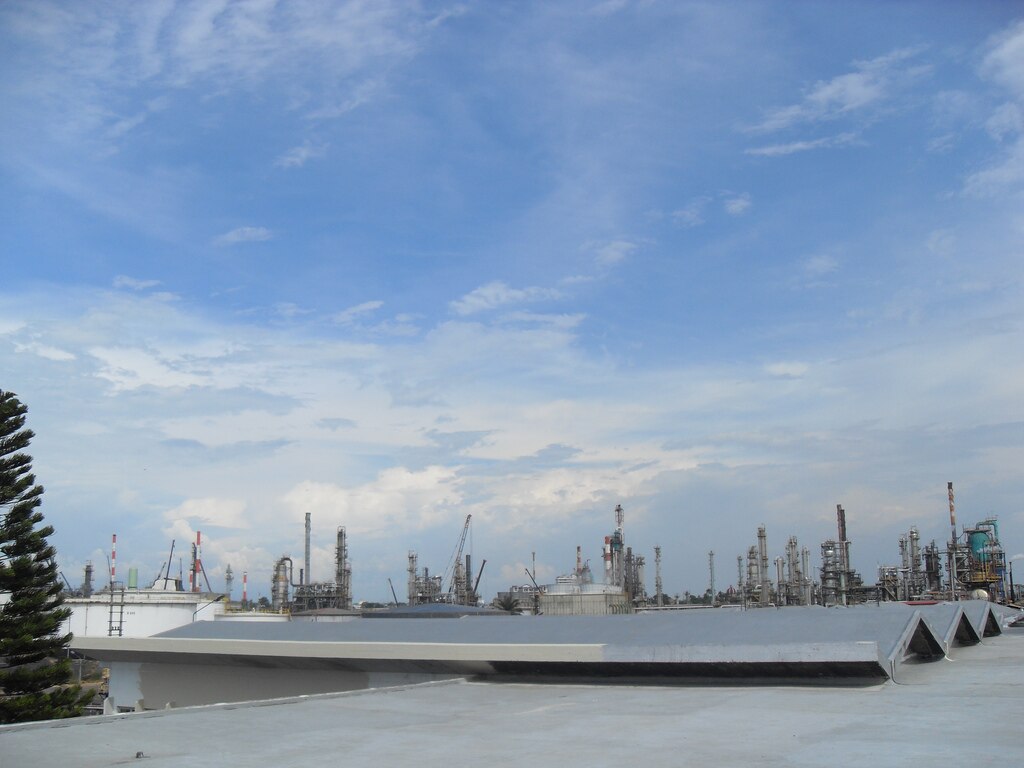
Midstream, its pipelines moved about 1.1 million barrels a day in the second quarter of 2026. Downstream, it owns Colombia’s two big refineries, at Barrancabermeja on the Magdalena River and at Cartagena on the Caribbean. Together they processed 438,500 barrels a day in the same quarter.
The fourth leg is electricity. Ecopetrol holds 51.4 percent of ISA, which operates power lines and toll roads in several Latin American countries. ISA’s network covered 50,564 kilometres of transmission lines at the end of 2025.
Outside Colombia, the group drills in the Permian Basin in the United States, where it has a joint venture with Occidental Petroleum. Its 2026 plan also lists exploration interests in the Gulf of Mexico, Brazil and Mexico.
How it makes money
The core earner is crude oil sold at or near the Brent benchmark price. When Brent rises, Ecopetrol’s profit rises much faster, because most of its costs stay the same. That is the main reason its results swing so sharply from year to year.
Refining adds a second, partly independent source of profit. When the gap between crude prices and fuel prices widens, the Barrancabermeja and Cartagena plants earn more. In the second quarter of 2026, refining margins were strong at the same time as oil prices.
Pipelines and ISA’s power lines bring steadier income. Their fees are largely regulated, so they cushion the group when oil prices fall. That mix is why Ecopetrol describes itself as an energy group rather than a pure oil producer.
One quirk matters for anyone reading the accounts. Colombia caps local fuel prices through a stabilisation fund known by its Spanish initials, FEPC. When world prices are higher than the local price, the state owes Ecopetrol the difference. At the end of June 2026 that receivable stood at 8.0 trillion pesos (about US$2.4 billion).
Live Company IntelligenceEcopetrol SA ADR — the full investor dossier
Wall Street view
Valuation & profitability
Price & risk
$8.1652-wk high
$18.38
Revenue trend · 6y
Ownership
Dividend
The numbers
The latest reported period is the second quarter of 2026, published on 3 August 2026. Revenue rose 35 percent from a year earlier to 40.2 trillion pesos (about US$12.2 billion). Net profit rose 235 percent to 6.06 trillion pesos (about US$1.84 billion).
EBITDA, a measure of operating cash earnings before interest, tax and depreciation, rose 59 percent to 17.7 trillion pesos (about US$5.4 billion). That put the EBITDA margin at 44.0 percent. Brent averaged about US$97 a barrel in the quarter, against US$67 a year earlier.
For the first half of 2026, revenue reached 68.8 trillion pesos (about US$20.9 billion). Net profit was 8.95 trillion pesos (about US$2.7 billion), up 81 percent. The company paid 5.0 trillion pesos (about US$1.5 billion) in dividends during the half.
The weak spot is volume. Production averaged 705,800 barrels of oil equivalent a day in the second quarter, down 6.6 percent. Of that, 560,800 barrels were crude and 145,100 were gas and gas liquids. The 2026 plan had targeted 730,000 to 740,000 barrels a day.
For the full year 2025, net profit was about 9.0 trillion pesos (about US$2.7 billion), down nearly 40 percent from 2024. Output averaged 745,300 barrels of oil equivalent a day. The board proposed a dividend of 110 pesos a share (about US$0.03), half of the year’s profit.
Proved reserves stood at 1.94 billion barrels of oil equivalent at the end of 2025. The company replaced 121 percent of what it produced that year. At 2025 production rates, those reserves would last roughly seven years.
Debt is moderate for now. Gross debt stood at 2.0 times annual EBITDA at the end of June 2026, and cash at 11.3 trillion pesos (about US$3.4 billion). Investment in the first half came to 10.9 trillion pesos (about US$3.3 billion).
Ownership and governance
The Colombian state, which company filings call “the Nation”, owns 88.49 percent of the shares. The filings also state that the Nation does not guarantee Ecopetrol’s bonds. In practice, the finance ministry votes the state’s stake at shareholder meetings.
That stake decides who sits on the nine-member board, and the board chooses the president. So when Colombia changes government, Ecopetrol’s leadership usually follows within months. The 2026 transition shows how fast that can happen.
Ricardo Roa, the manager of Gustavo Petro’s 2022 presidential campaign, ran the company under Petro. Prosecutors charged him on 11 March 2026 with influence peddling by a public servant, linked to the purchase of a Bogotá penthouse. They allege he helped a businessman win work at Hocol in return for favourable terms on the flat.
Roa’s defence says the flat was bought lawfully with his own money and a bank loan. The accusation hearing was postponed to 25 November 2026 after his lawyers asked for the process to be annulled. A separate case concerns alleged breaches of campaign-finance limits in Petro’s 2022 campaign. He has pleaded not guilty and has not been convicted in either case.
Roa left the presidency on 30 July 2026. Juan Carlos Hurtado Parra, the head of the hydrocarbons business, who had already stood in for him from April, served as acting president until he left on 15 September under an agreed retirement plan. Alfonso Camilo Barco Muñoz, the vice-president for corporate finance, then became acting president.
A shareholders’ meeting installed a new board in September, chaired by Carlos Augusto Suárez Rojas. On 24 September that board picked Joaquín Gutiérrez Caballero as president. He managed Abelardo de la Espriella’s presidential campaign and worked at the president’s law firm from 2006 to 2009.
Gutiérrez is a business administration graduate of Universidad del Norte in Barranquilla, with a background in property and health businesses. Colombian media, including Infobae, noted that he has no previous experience in the oil and gas industry.
Why it matters for the region
Ecopetrol is the centre of one of Latin America’s sharpest energy-policy experiments. Under Petro, from 2022 to 2026, the government stopped signing new oil and gas exploration contracts. It argued that Colombia should move away from fossil fuels.
The same policy reached the company’s foreign plans. On 31 July 2024 Petro blocked a deal to buy a stake in Permian assets that Occidental was acquiring from CrownRock, although the board had approved it. In 2025 he pressed Ecopetrol to sell its existing Permian venture with Occidental.
Meanwhile, domestic gas ran short. Imports rose to 31 percent of Colombian gas consumption in 2025, from 3 percent in 2023, according to OilPrice.com. Start-up of the large offshore Sirius gas field could slip to 2031, according to August 2026 reports.
De la Espriella has reversed the direction. In his inauguration speech on 7 August 2026 he pledged to revive oil and gas, allow fracking under strict standards and restore Ecopetrol. Choosing his own campaign manager to run the company signals that the new line will be set from the presidency.
The energy transition has not disappeared from the books. Ecopetrol reported 950.6 megawatts of renewable capacity integrated by 2025, and methane emissions 46 percent below 2019. Still, the 2026 investment plan puts about 70 percent of spending into oil and gas and about 3 percent into renewable energy and energy efficiency.
For neighbours, Ecopetrol is also a regional buyer and bidder. It controls transmission lines far beyond Colombia through ISA. Its moves in Brazil, Mexico and the United States make it one of the few Latin American state oil companies with a real international footprint.
Risks
The first risk is the oil price. The second-quarter jump came from a Brent rally, not from pumping more. The company’s own 2026 budget assumed Brent at US$60, far below second-quarter prices, so a fall would hit profit quickly.
The second is declining output and short reserves. Production is running below the company’s own target. Reversing that needs new discoveries, possibly fracking and offshore gas, all of which take years and face local opposition.
The third is governance. Four people have run Ecopetrol or been chosen to run it, permanent or acting, since April 2026. Investors in the New York shares watch whether the new management respects the minority shareholders and the board’s independence.
The fourth is the state’s own finances. The government relies on Ecopetrol’s dividends, and it owes the company money through the fuel fund. That two-way dependence can push the company to pay out cash it might otherwise invest.
What to watch
First, Gutiérrez’s start and his first management appointments. The composition of the vice-presidencies and subsidiary boards will show whether he builds a technical team or a political one.
Second, the third-quarter 2026 results, normally published in November. The key numbers are production against the 730,000 to 740,000 barrel target, the size of the fuel-fund receivable and the dividend outlook.
Third, the 2027 investment plan. Last year’s plan was published on 28 November 2025, with 22 to 27 trillion pesos (about US$6.7 to 8.2 billion) for 2026. Any shift of money toward exploration or fracking will appear there first.
Fourth, the courts. Roa’s accusation hearing is scheduled for 25 November 2026. Its outcome will not change Ecopetrol’s accounts, but it keeps the Petro-era management in the headlines.
Connected Coverage
Colombia Explained: The Country, Its Politics, Its Economy and What to Watch
Colombia’s Ecopetrol Profit Soars 235% to US$1.88 Billion in Q2
Colombia Formally Charges the Man Who Ran Its State Oil Company Until Last Month
Ecopetrol CrownRock: The Permian Deal Petro Killed
Ecopetrol Sirius Gas Field: Startup Could Slip to 2031 as Colombia’s Gas Crunch Looms
What Is Not Known
What Gutiérrez will do. He had not taken office or published a plan as of 24 September 2026. Whether he keeps the dividend policy, pushes fracking or revives foreign acquisitions is still open.
The future of the Permian venture. Petro asked for it to be sold, yet the company’s 2026 plan still listed drilling in the Permian. No sale has been announced, and the new government has not said what it wants.
How long the oil price holds. The second-quarter profit rests on Brent near US$97. Forecasts for 2027 differ widely, and Ecopetrol’s own planning price was far lower.
The outcome of the Roa cases. Both are pending, the defence has contested the process, and no court has ruled on the substance.
Sources: Ecopetrol results, investment plan and US SEC filings, plus Colombian press reports on the leadership change and the Roa case. All accessed 24 September 2026.
- Ecopetrol — Form 6-K, second-quarter 2026 results (3 August 2026)
- Ecopetrol — Form 20-F annual report for 2025 (30 April 2026)
- Ecopetrol — 2026 investment plan (28 November 2025)
- US SEC — Ecopetrol prospectus supplement stating state ownership
- Infobae — Joaquín Gutiérrez chosen as Ecopetrol president (24 September 2026)
- El Heraldo — Alfonso Camilo Barco named acting president (15 September 2026)
- Infobae — Roa accusation hearing postponed (20 August 2026)
More: Colombia news in English, every day from The Rio Times.
Frequently Asked Questions
Who owns Ecopetrol?
The Colombian state owns 88.49 percent. The remaining shares trade on the Bogotá stock exchange and as American depositary shares on the New York Stock Exchange under the ticker EC.
Who runs Ecopetrol now?
On 24 September 2026 the board chose Joaquín Gutiérrez Caballero, President Abelardo de la Espriella’s campaign manager, as president. Until he takes office, Alfonso Camilo Barco Muñoz is acting president.
How much did Ecopetrol earn in its latest quarter?
In the second quarter of 2026 it reported net profit of 6.06 trillion pesos, about US$1.84 billion, up 235 percent. Revenue rose 35 percent to 40.2 trillion pesos, about US$12.2 billion.
Why did Ecopetrol’s former chief leave?
Ricardo Roa left on 30 July 2026. Prosecutors had charged him in March 2026 with influence peddling over a Bogotá penthouse. His defence says the purchase was lawful, and he has not been convicted.
Is Ecopetrol’s oil production growing?
No. Output averaged 705,800 barrels of oil equivalent a day in the second quarter of 2026, down 6.6 percent and below the 2026 target of 730,000 to 740,000.
This article was produced by The Rio Times’ automated newsroom system. How we use AI · Report an error · Editorial responsibility: Matthias Camenzind, Editor-in-Chief
LatAm Markets: Live Signals → — real-time movers, turnover leaders and FX across Latin America.