Uruguay Politics Explained, Who Holds Power in 2026
URUGUAY · POLITICS
Key Facts
- —The country Uruguay is a small South American democracy between Argentina and Brazil, run as a presidential republic where one ticket of president and vice president serves five years.
- —Head of state President Yamandú Orsi of the left-wing Frente Amplio, a former history teacher, has governed since 1 March 2025, with Vice President Carolina Cosse beside him.
- —Parliament After the 2024 election the Frente Amplio holds 16 of 30 Senate seats but 48 of 99 seats among deputies, two short of a majority there.
- —Opposition The National Party holds 29 seats among deputies and 9 in the Senate, and the Colorado Party holds 17 and 5, as of the 2024 results.
- —Public mood A Cifra poll published on 15 October 2026 found 24% approving of Orsi’s work and 57% disapproving.
- —Power Index Uruguay ranks 7th of 14 in The Rio Times Latin America Power Index, with 45.9 points (October 2026 edition).
- —Still open Parliament had not agreed on the posts at the prosecution service, the audit court and the electoral court as of late October 2026.
Uruguay politics is the story of a left-wing government with a Senate majority but no majority in the lower house. US readers should care: this steady democracy announced a US$5.7 billion data-centre plan and expects Pope Leo XIV in early November 2026.

How Uruguay Politics Works
Uruguay is a presidential republic, and voters pick a president and vice president on one ticket for a five-year term. The Corte Electoral, the country’s electoral court, ran the first round on 27 October 2024 and a runoff on 24 November 2024.
Yamandú Orsi and Carolina Cosse of the Frente Amplio won that runoff against the ticket of Álvaro Delgado and Valeria Ripoll. They took office on 1 March 2025, and the next national vote is not due until late 2029.
Departmental and municipal elections followed on 11 May 2025, so local governments run on their own calendar. Each of the country’s 19 departments has an elected mayor, called an intendente.
Orsi was born on 13 June 1967 in Canelones and trained as a history teacher. He later served as the intendente of Canelones department.
He rose through the Movimiento de Participación Popular, known as the MPP, a faction inside the Frente Amplio.
The Frente Amplio, or Broad Front, is a coalition of left and centre-left groups that has governed since 1 March 2025.
Public support for the government has slipped. A Cifra poll published on 15 October 2026 found 24% approving of Orsi’s performance, 57% disapproving, 13% neutral and 6% with no opinion.
Cifra surveyed people from 30 September to 12 October 2026, according to Montevideo Portal. Only 49% of those who voted for the Frente Amplio in 2024 approve of Orsi, while 28% disapprove.
President Orsi, His Inner Circle and the Cabinet
The president’s closest aide is Alejandro Sánchez, the Secretary of the Presidency, who answers for the government on security and energy in public debates. Jorge Díaz is the deputy secretary, and Diego Pastorín is the director general of the Presidency, according to the Presidency’s own structure page.
The Office of Planning and Budget, which sits inside the Presidency, lists Rodrigo Arim. Vice President Carolina Cosse, an engineer, made an official visit to Hong Kong in September 2026, according to the foreign ministry’s consulate page.
These ministers carry most of the weight in Uruguay politics, and each held the post in October 2026, according to the ministry’s own pages:
- Gabriel Oddone, Economy and Finance: he holds the budget. The ministry’s dashboard shows a central-government deficit of 3.6% of GDP in August 2026 and net debt of 55.8% of GDP in December 2025.
- Carlos Negro, Interior: he runs the police. On 22 October 2026 he told the Chamber of Deputies’ security committee that homicides rose in the third quarter.
- Sandra Lazo, Defence: she heads the armed forces’ ministry. On 14 October 2026 she opened a training exercise on a treaty against nuclear terrorism.
- Mario Lubetkin, Foreign Affairs: he met Qatar’s minister of state on 1 October 2026. He is also preparing the Pope’s visit planned for 6 to 8 November 2026.
- Fernanda Cardona, Industry, Energy and Mining: she spoke at the anniversary of the state power company UTE on 23 October 2026. Her ministry announced the US$5.7 billion data-centre plan.
- Cristina Lustemberg, Public Health, and Juan Castillo, Labour and Social Security, both appeared in official ministry news in September and October 2026.
- Edgardo Ortuño, Environment, and Education and Culture Minister José Carlos Mahía complete the group that most often appears in the news.
Parliament and the Frente Amplio’s Narrow Majority
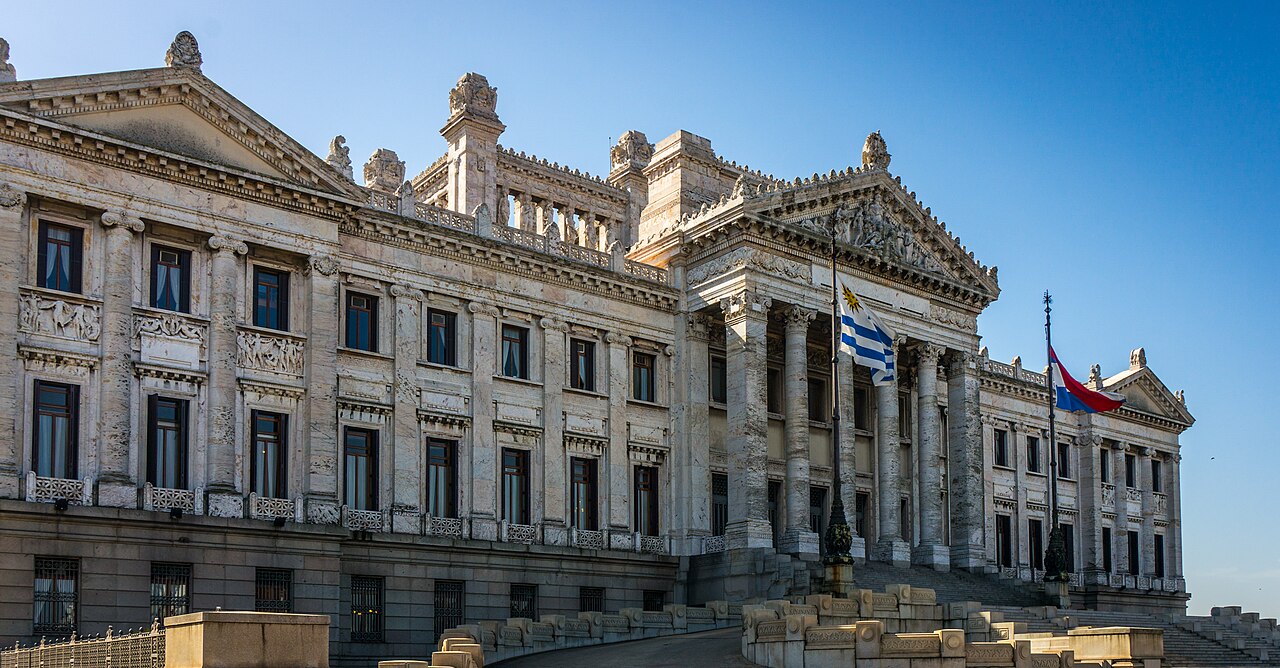
Parliament has two chambers, 30 senators and 99 deputies, and both sit together as the General Assembly. The Corte Electoral’s 2024 records give the Frente Amplio 16 Senate seats and 48 seats among deputies.
The National Party holds 9 Senate seats and 29 among deputies, and the Colorado Party holds 5 and 17. Cabildo Abierto and Identidad Soberana have two deputies each, and the Partido Independiente has one, according to the national statistics institute.
The Frente Amplio therefore controls the Senate but is two seats short of the 50 it needs among deputies. That arithmetic makes small parties and individual deputies decisive in close votes in Uruguay politics.
Senator Daniel Caggiani is the Frente Amplio’s main negotiator in these talks. Senator Javier García of the National Party has been his counterpart in those talks, according to Subrayado, a Montevideo television news service.
The sharpest fight in October 2026 concerns Cardama, a shipyard. It sold Uruguay two ocean patrol vessels under former president Luis Lacalle Pou.
The Orsi government later rescinded that contract, and a parliamentary inquiry created in February 2026 examines both the purchase and the rescission.
The Opposition, Blancos, Colorados and Smaller Parties
The National Party, nicknamed the blancos, is the largest opposition force, and Álvaro Delgado was its candidate in the 2024 runoff. Its senators include Javier García and Sebastián Da Silva.
Both took part in the October 2026 fight over the control bodies and the Cardama case.
On 23 October 2026 Da Silva presented a bill to ban new data centres over the Guaraní and Raigón aquifers, according to Subrayado. His bill turns a foreign-investment topic into a domestic fight.
In Uruguay politics the Colorado Party is the second opposition force. Deputy Gabriel Gurméndez challenged Interior Minister Carlos Negro in Parliament on 22 October 2026.
He said Orsi should take charge of the response to crime.
Former president Julio María Sanguinetti is a Colorado elder. In October 2026 he spoke about Cuba and Venezuela and distanced himself from the Frente Amplio’s line.
The two traditional parties governed together under Lacalle Pou until March 2025.
García said neither party wants to replace Mónica Ferrero as acting prosecutor general, according to Subrayado on 20 October 2026. Cabildo Abierto is a small party with two deputies, and Identidad Soberana, led by Gustavo Salle, won two seats in 2024.
The Military and the Security Forces
The armed forces answer to the president through Defence Minister Sandra Lazo. The Estado Mayor de la Defensa, or Esmade, is the joint staff that coordinates the army, navy and air force.
On 22 October 2026 Orsi led a ceremony for Esmade’s 16th anniversary. Its chief, Air Force General Rodolfo Pereyra, said he would leave the post in about three months.
Pereyra said soldiers still face insults as heirs of a history in which they took no part. He was referring to the 1973 to 1985 dictatorship, which still shapes civil-military relations.
The police fall under Interior Minister Carlos Negro, and crime is the government’s weakest point.
Negro told deputies on 22 October 2026 that 1,500 officers have joined since the government began. Another 1,500 will be on the streets from March 2027.
He announced a recruitment call for 1,000 more officers for Montevideo in November 2026. He also said 35 leaders of drug-trafficking gangs have been jailed since the government took office.
Orsi himself said in October 2026 that violence is growing and that organised crime has become much more violent, according to Subrayado. Negro blames mostly fights between gangs for the rise in homicides.
Courts, Prosecutors and Watchdog Bodies
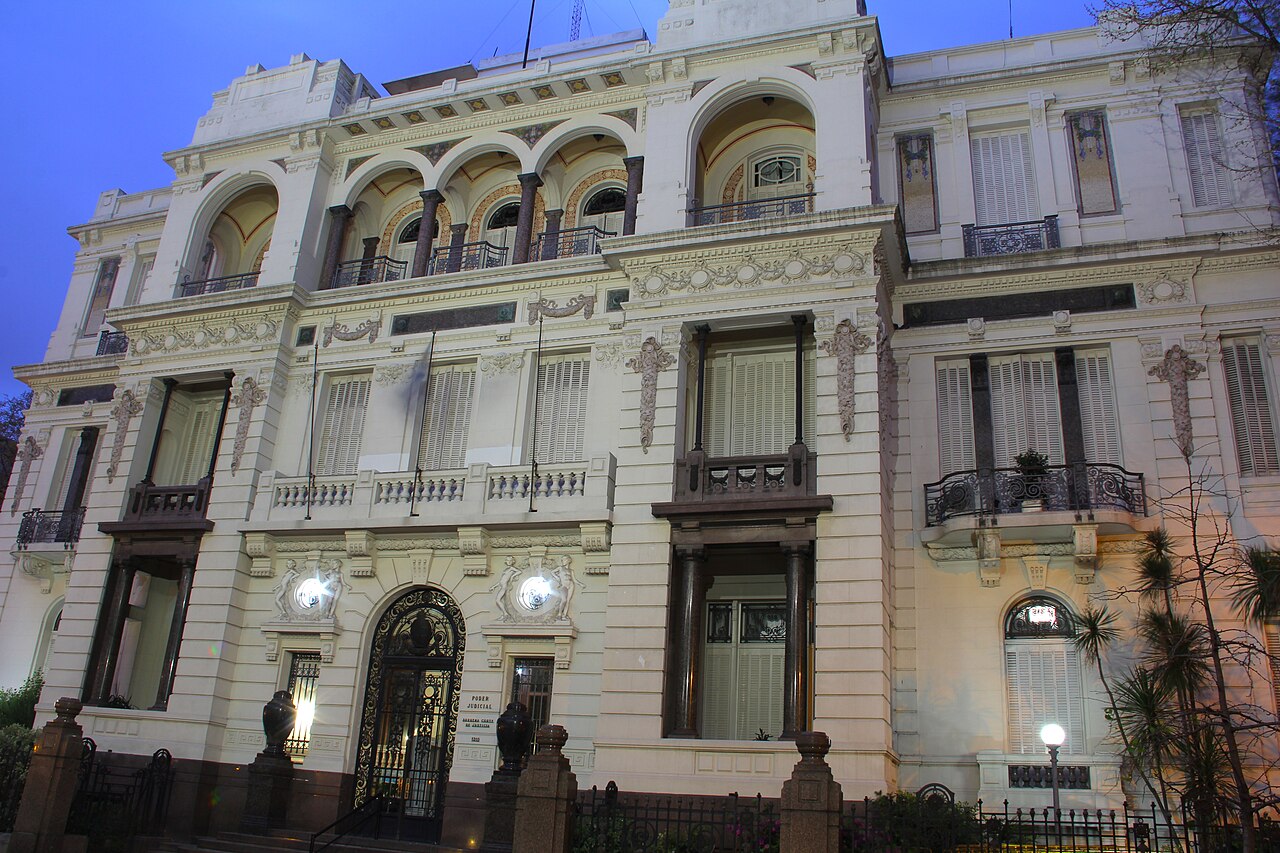
The Supreme Court of Justice, the country’s top court, has five members and sits in the Palacio Piria in Montevideo.
Doris Morales is its president. The other members are John Pérez Brignani, Bernadette Minvielle, Julio Posada and Álvaro França, according to the judiciary’s own site.
The judiciary’s news page shows Morales receiving foreign judicial delegations in September 2026. The court is separate from the government and from Parliament.
The prosecution service, the Fiscalía General de la Nación, is led by Mónica Ferrero as acting prosecutor general. The Frente Amplio wants a new election of the post, while the opposition parties want Ferrero to stay, according to Subrayado on 20 October 2026.
Orsi said on Monday 19 October 2026 that renewing the Fiscalía is less urgent than renewing the Tribunal de Cuentas and the Corte Electoral. The Tribunal de Cuentas is the state audit court, and the Corte Electoral runs and certifies elections.
Caggiani said a deal on all three would come in the next few weeks. García said Caggiani had offered to restart talks without the Fiscalía, which the National and Colorado parties would not accept.
Departmental Governors and Local Power
Uruguay has 19 departments, and each is run by an intendente who is elected for five years. The mayors meet in the Congreso Nacional de Intendentes, which Carlos Enciso, the intendente of Florida, chairs as of 22 October 2026.
On 22 October 2026 the mayors voted unanimously to ask the national government for a one-month extension of the Uruguay Impulsa jobs programme. The programme gives temporary work and training to 5,524 people from vulnerable backgrounds.
The national government pays 80% of the participants’ pay and the departments pay 20%, according to Subrayado. That split shows how much local governments depend on money from Montevideo.
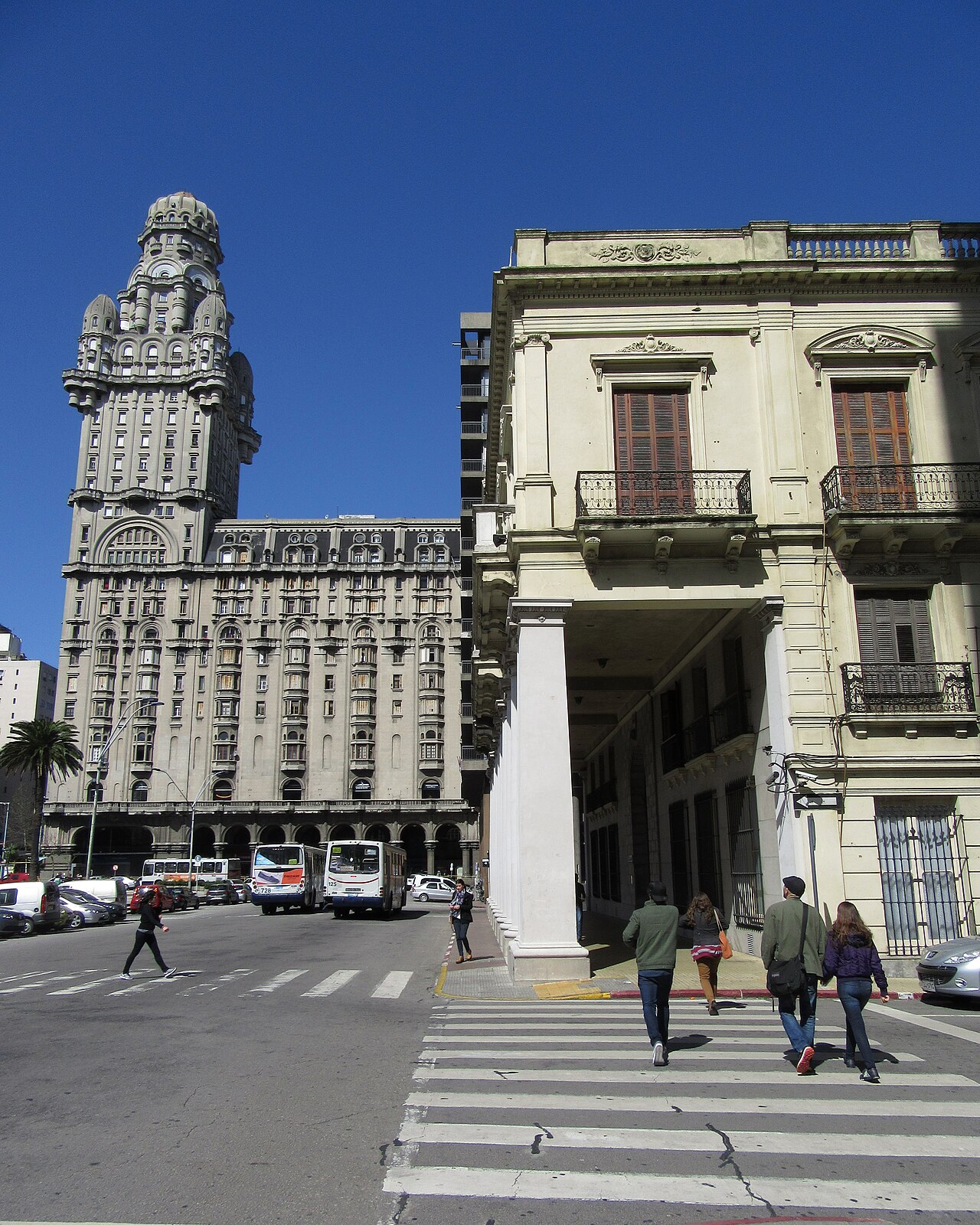
Montevideo, the capital, is run by Mario Bergara of the Frente Amplio, a former senator who took office as intendente in July 2025.
Rising Figures to Watch
Alejandro Sánchez is the best-placed insider because he answers for the president on security and energy. On 21 October 2026 he defended the Solaria deal as a good business for the country and for UTE.
Daniel Caggiani is the Frente Amplio’s voice in the Senate and its negotiator on the control bodies. He said on 20 October 2026 that the talks would be settled in the coming weeks.
On the opposition side, Sebastián Da Silva uses bills to set the agenda, and Gabriel Gurméndez presses the government on crime.
Gabriel Oddone matters because he combines budget control with the pension reform that the cabinet sent to Parliament in October 2026. The bill would allow retirement at 60 for workers with 30 years of service, according to the ministry’s release of 12 October 2026.
What It Means for US Readers
Uruguay politics offers predictability: power is shared, the courts are separate and the next national election is three years away. That stability supports the US$5.7 billion investment in a data-centre technology park that the industry ministry announced in October 2026.
The aquifer bill by Senator Da Silva shows that the project can still face political limits. Investors can read more in our guides to Uruguay’s economy and Uruguay’s geopolitics, and in The Rio Times Latin America Power Index.
Pope Leo XIV, the first US-born pope, is expected in Uruguay from 6 to 8 November 2026, with a stop in Paysandú on 7 November. Travellers should note that the government itself says homicides rose in the third quarter of 2026.
The pension bill tests fiscal discipline, since the central government ran a deficit of 3.6% of GDP in August 2026. Weak approval ratings do not change policy by themselves, because the president serves a fixed term.
What Is Not Known
It is not known whether prosecutors will open a criminal case over the Cardama navy contract. It is also not known how or when Uruguay politics will settle the leadership of the prosecution service, the audit court and the electoral court.
The successor to Esmade chief Rodolfo Pereyra, who plans to leave in about three months, has not been announced. It is also unclear whether the retirement-at-60 bill will pass in its current form.
No source says whether approval for Orsi has reached its low point. The Cifra poll does not give a margin of error in the published summaries.
Frequently Asked Questions
Who is the president of Uruguay in 2026?
Yamandú Orsi of the Frente Amplio has been president since 1 March 2025. Carolina Cosse is his vice president.
Which party controls Uruguay’s Parliament?
The Frente Amplio holds 16 of 30 Senate seats but 48 of 99 seats among deputies, two short of a majority. Uruguay politics therefore depends on deals with opposition parties.
Who leads the opposition in Uruguay?
The National Party, whose 2024 candidate was Álvaro Delgado, and the Colorado Party are the two main opposition forces. They governed together under Luis Lacalle Pou until March 2025.
Who heads Uruguay’s Supreme Court?
Doris Morales is president of the five-member Supreme Court of Justice, according to the judiciary’s website in October 2026. The court sits in the Palacio Piria in Montevideo.
How popular is President Orsi?
A Cifra poll published on 15 October 2026 found 24% approving and 57% disapproving of his performance. Among people who voted for the Frente Amplio in 2024, 49% approve.
When is Uruguay’s next presidential election?
The current legislative period runs from 2025 to 2030, so the next national election is due in late 2029. Departmental elections were held on 11 May 2025.
Sources: Presidencia de la República, structure of the Presidency, 2026-10-24; Presidencia de la República, biography of Yamandú Orsi, 2025-03-01; Corte Electoral, proclamation of senators and deputies 2025-2030, 2025-02-10; Corte Electoral, elections of the 2024-2025 period, 2025-05-30; Ministerio de Economía y Finanzas, fiscal data and news, 2026-10-23; Ministerio de Defensa Nacional, news, 2026-10-15; Ministerio de Relaciones Exteriores, news, 2026-10-05; Ministerio de Industria, Energía y Minería, news, 2026-10-23; Ministerio de Economía y Finanzas, retirement-at-60 bill, 2026-10-12; Ministerio de Trabajo y Seguridad Social, news, 2026-10-21; Ministerio de Salud Pública, news, 2026-09-28; Ministerio de Ambiente, news, 2026-10-07; Poder Judicial, members of the Supreme Court of Justice, 2026-10-24; Poder Judicial, institutional news, 2026-09-28; Consulado General en Hong Kong, official visit of the Vice President, 2026-09-22; Montevideo Portal, Cifra poll on Orsi’s approval, 2026-10-15; Subrayado, dispute over control bodies and the prosecution service, 2026-10-20; Subrayado, Esmade chief at the 16th anniversary, 2026-10-22; Subrayado, Interior Minister Negro before the security committee, 2026-10-22; Subrayado, mayors ask to extend Uruguay Impulsa, 2026-10-22; Instituto Nacional de Estadística, seats in the Chamber of Representatives 2024, 2025-01-01; Subrayado, Da Silva bill on data centres and aquifers, 2026-10-23; Subrayado, Sánchez on Solaria and homicides, 2026-10-21; Montevideo Portal, parliamentary inquiry into Cardama, 2026-02-23.
This article was produced by The Rio Times’ automated newsroom system. How we use AI · Report an error · Editorial responsibility: Matthias Camenzind, Editor-in-Chief
Expat Guide to Uruguay
What The Rio Times publishes for foreigners who live in or move to Uruguay.
Start here
- Best Places to Live in Uruguay for Expats 2026, Ranked
- Cost of Living Punta del Este 2026: Half Again Above Montevideo
- Uruguay vs Paraguay for Expats in 2026: Cheap Living or a Tax Holiday
- Uruguay Residency Visa Rules and the 12 Percent Tax on Foreign Income
City guides
Coming up in Uruguay
- La Delio Valdez in Montevideo, Uruguay: Argentine Cumbia Orchestra Plays Teatro de Verano on 24 October 24 Oct
- Camilo in Montevideo, Uruguay: Colombia's Pop Star at the Antel Arena on October 28, 2026 28 Oct
- Antel Campus Party Hits Montevideo, Uruguay 30–31 Oct 30 Oct
- Soy Luna Plays Montevideo on 17 November 2026 17 Nov
Understand Uruguay
Rotate for Best Experience
This report is optimized for landscape viewing. Rotate your phone for the full experience.
You've reached your free article limit
Subscribe to The Rio Times for unlimited access to our news, expat and nomad guides and market intelligence on Latin America and Africa.
Expat Guide to Uruguay
What The Rio Times publishes for foreigners who live in or move to Uruguay.
Start here
- Best Places to Live in Uruguay for Expats 2026, Ranked
- Cost of Living Punta del Este 2026: Half Again Above Montevideo
- Uruguay vs Paraguay for Expats in 2026: Cheap Living or a Tax Holiday
- Uruguay Residency Visa Rules and the 12 Percent Tax on Foreign Income
City guides
Coming up in Uruguay
- La Delio Valdez in Montevideo, Uruguay: Argentine Cumbia Orchestra Plays Teatro de Verano on 24 October 24 Oct
- Camilo in Montevideo, Uruguay: Colombia's Pop Star at the Antel Arena on October 28, 2026 28 Oct
- Antel Campus Party Hits Montevideo, Uruguay 30–31 Oct 30 Oct
- Soy Luna Plays Montevideo on 17 November 2026 17 Nov
Understand Uruguay