Uruguay in Latin America, Its Role, Weight and Alliances

URUGUAY · LATIN AMERICA
Key Facts
- —The basics Uruguay, a South American country of about 3.4 million people between Argentina and Brazil, is a founding member of Mercosur and holds the rotating chairs of both Mercosur and CELAC as of October 2026.
- —Why it matters Uruguay chairs Mercosur until December 2026 while the interim EU trade deal runs in provisional application, and it sells 26% of its exports to China while the United States ranks only fourth.
- —The numbers Uruguay’s economy produced about US$85.3 billion in 2025, roughly 1.2% of Latin American output, and its income of US$25,216 per person is more than double the regional average of US$11,095.
- —Who is who President Yamandú Orsi of the centre-left Broad Front leads Uruguay, Foreign Minister Mario Lubetkin runs its diplomacy, and the neighbours that matter most are Argentina’s Javier Milei and Brazil’s Luiz Inácio Lula da Silva.
- —What to watch Uruguay hosts a first Mercosur-EU business forum in Maldonado on 2 December 2026 and the Mercosur ministerial council on 3 and 4 December, while the date of the leaders’ summit remains unannounced.
- —Power Index Uruguay ranks 7th of 14 in The Rio Times Latin America Power Index, with 45.9 points (October 2026 edition).
- —What it means for you US exporters face growing European competition in Uruguay now that the EU trade deal applies, while US investors meet a small economy forecast to grow only 1.3% in 2026.
Uruguay is the second-smallest country in South America, yet it holds the rotating chairs of Mercosur and CELAC in 2026. This guide maps its weight, its blocs, its trade talks and its two giant neighbours as of October 2026.
The Uruguay continent answer is South America, where this country of about 3.4 million people sits between Argentina and Brazil. Politically, Uruguay belongs to Latin America, and in 2026 it chairs two of the region’s main bodies.
That gives a small state a real say on trade with Europe, China and its giant neighbours. For US readers, Uruguay matters as a market, a farm supplier and a country that trades with every major power.
The Uruguay Continent Question, Answered
Uruguay lies in South America, between Argentina to the west and Brazil to the north and northeast. It covers 176,215 square kilometres, about 68,000 square miles, World Bank data show for 2024.
That makes it the second-smallest sovereign state in South America, after Suriname with 163,820 square kilometres. Guyana, at 214,970 square kilometres, is next in size, World Bank figures show.
For a full country profile, see Uruguay Explained, and for its borders, the guide to Uruguay and its Southern Cone neighbours. Daily news is collected on The Rio Times Uruguay page.
Uruguay’s Weight in Population and Economy
Uruguay’s national statistics institute published a preliminary 2023 census count of 3,444,263 people on Monday, 27 November 2023. That was only about 1% above the 2011 count, and 96% of residents live in urban areas.
The World Bank puts the 2025 population at 3,384,688, about 0.5% of the 666.6 million people in Latin America and the Caribbean. Roughly one in every 200 people in the region lives in Uruguay.
The World Bank series has barely moved, from 3,388,081 in 2023 to 3,384,688 in 2025. The 2023 census report said migration alone kept the population growing.
The World Bank estimates Uruguay’s 2025 output at US$85.3 billion, about 1.2% of the region’s US$7.40 trillion. Output per person was US$25,216, more than twice the regional average of US$11,095.
Growth was 1.8% in 2025, below the regional 2.3%, World Bank data show. The International Monetary Fund (IMF) projects in its October 2026 outlook that Uruguay will grow 1.3% in 2026 and 2.4% in 2027.
The same outlook expects consumer prices to rise 4.0% in 2026 and gross public debt to reach 67.7% of output. For who runs the economy, see Uruguay Economy 2026, Who Runs It and How.
Uruguay XXI, the state export and investment agency, says goods exports reached US$13.49 billion in 2025, the highest in a decade. Beef brought in US$2.68 billion, pulp US$2.31 billion and soybeans US$1.42 billion.

Mercosur, the Bloc Uruguay Helped Found and Now Chairs
Mercosur, the Southern Common Market, was founded in 1991 by Argentina, Brazil, Paraguay and Uruguay, the bloc’s website says. Bolivia joined later, while Venezuela remains suspended from its rights and obligations.
Montevideo hosts the bloc’s secretariat in the Edificio Mercosur, under a headquarters agreement signed on 10 December 1998. Uruguay’s government approved the agreement in February 1999, Uruguayan legal records show.
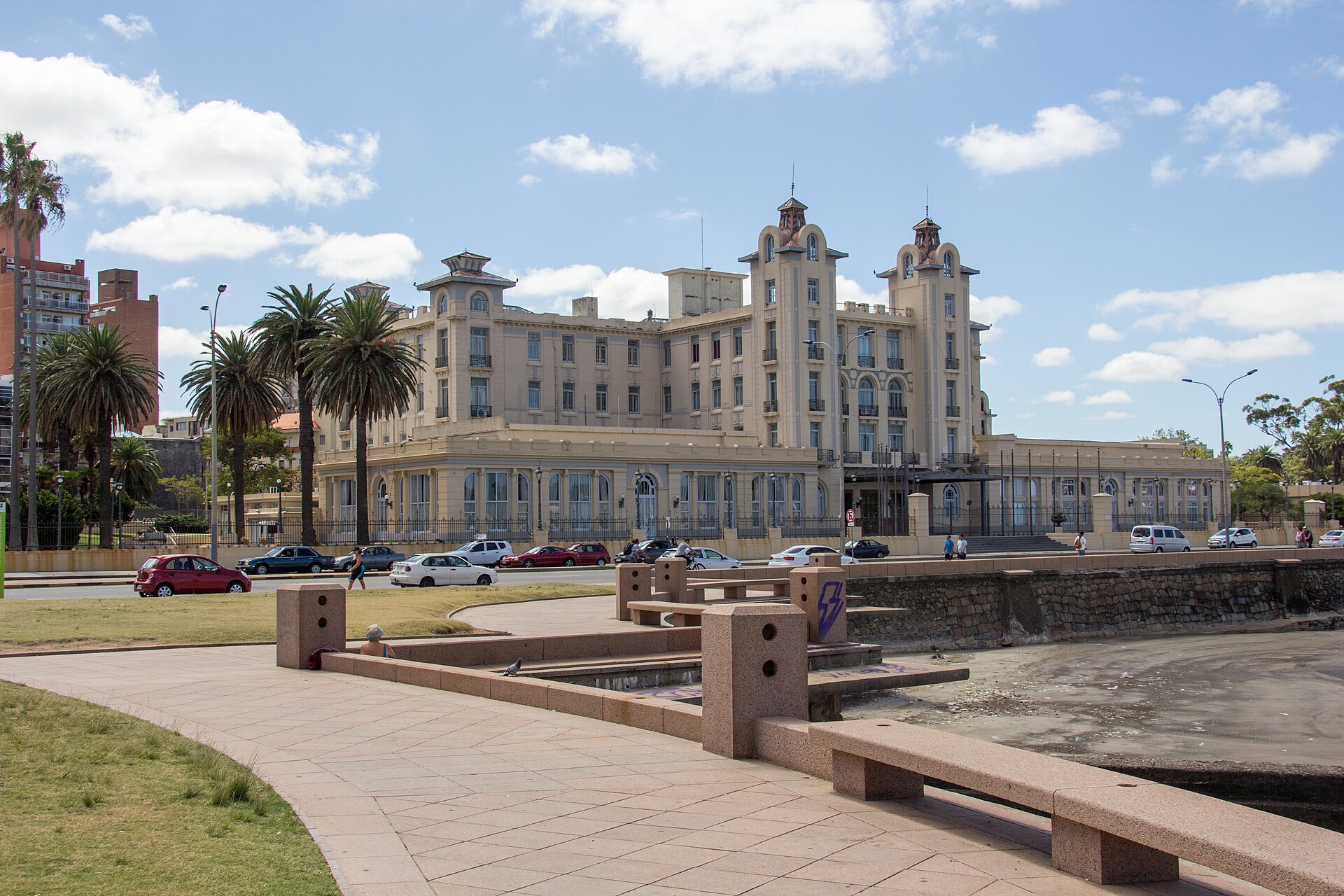
Uruguay took over the rotating chair from Paraguay on Tuesday, 30 June 2026, at the bloc’s 68th summit. The chair runs until December 2026, and Uruguay will host the next ministerial council and leaders’ summit.
Foreign Minister Mario Lubetkin said the chair would focus on implementing the EU deal and widening its benefits for exporters. He also listed talks with Canada, the United Arab Emirates, India, Vietnam and Japan, plus exchanges with China.
The 30 June communique of the Mercosur presidents recorded the interim EU agreement as in provisional application since 1 May 2026. It also noted that Brazil and Uruguay had approved the free trade deal with the EFTA group, which includes Norway and Switzerland.
Uruguay has long chafed at the rule that members negotiate trade deals together. In March 2026, Orsi told Argentina’s Radio Mitre he backed President Javier Milei’s call to loosen Mercosur’s obligations.
Lubetkin wants Mercosur’s EU export quotas shared by each country’s historical trade flows, with weight for economic size. The first council meeting of the interim agreement is planned for December 2026.
CELAC and the OAS, Uruguay’s Diplomatic Platforms
CELAC, the Community of Latin American and Caribbean States, is a forum of 33 countries without the United States or Canada. Uruguay took over its rotating presidency on Saturday, 21 March 2026, at a summit in Bogotá.
Orsi gave the speech, and Uruguay’s priorities include food security, energy transition, disaster risk, higher education and organised crime. It also seeks joint regional support for a UN secretary-general candidate from a CELAC country.
In November 2025 Lubetkin said Uruguay’s presidency would oversee the CELAC-EU joint work plan and make regional peace a priority. The plan builds on a roadmap that the Santa Marta summit moved forward.
A test of that approach came on Saturday, 3 January 2026, when US forces captured Nicolás Maduro in Venezuela. Uruguay’s foreign ministry said it rejected the military intervention, citing international law and the UN Charter.
Orsi said on 4 January that Uruguay would push for a peaceful solution in CELAC and the OAS. He added that Uruguay joined a declaration promoted by Spain, Colombia, Brazil, Chile and Mexico.
Uruguay is a member of the Organization of American States (OAS), the Washington-based body that includes the United States. Uruguayan former foreign minister Luis Almagro led it as secretary-general from 26 May 2015.
Surinamese diplomat Albert Ramdin succeeded him when his five-year mandate began on 26 May 2025, after an election on 10 March 2025. Uruguay backed Ramdin on 4 March 2025 in a joint declaration with Brazil, Chile, Colombia and Bolivia.
Lubetkin said in January 2026 that Uruguay had not recognised Maduro’s authorities since Venezuela’s July 2024 election. He added that Uruguay does not recognise acting president Delcy Rodríguez either.
Trade Talks With the EU, China and Asia
The EU-Mercosur interim trade agreement was signed on Saturday, 17 January 2026, in Asunción, the Mercosur presidents’ communique says. Uruguay’s Chamber of Deputies approved the ratification bill on Thursday, 26 February 2026, by 91 votes of 93.
The European Commission said on 23 March 2026 that Argentina, Brazil and Uruguay had finished their ratification steps. The interim agreement therefore applied provisionally from Friday, 1 May 2026, while the EU completes its own democratic procedures.
Lubetkin called the moment a unique strategic opportunity and plans a Mercosur-EU business forum in Maldonado on 2 December 2026. A Rio Times report on the deal’s first months covers the Brussels side.
Lubetkin said on 8 July 2026, Ámbito reported, that Uruguay would turn to other markets if EU ratification stalls. He said Mercosur’s side was finished and the pending step was in Europe.
China is Uruguay’s biggest export market, buying US$3.49 billion, or 26% of goods exports, in 2025. About 86% of Uruguay’s soybean exports went to China that year, the presidency said.
Orsi met President Xi Jinping in Beijing on Tuesday, 3 February 2026, the 38th anniversary of diplomatic ties. The governments signed memoranda on investment, science, fisheries and a joint soybean laboratory.
Orsi’s government has not pursued predecessor Luis Lacalle Pou’s push for a China trade deal, announced in July 2022. Orsi said in November 2024 that a free trade deal with China was very far off, Infobae reported.
Uruguay’s Mercosur programme includes exchanges between the bloc and China. Brazil’s President Lula urged the bloc on 30 June to open China talks soon, Agência Brasil and BAE Negocios reported.
Uruguay has a China beef quota of about 324,000 tonnes, its presidency says. On Monday, 21 September 2026, Lula said Uruguay had authorised Brazil to use its surplus beef quota, which needs Beijing’s approval.
On 21 November 2025, Uruguay won the approval of all members of the Trans-Pacific trade pact, CPTPP, to begin its accession talks. A working group will set the conditions, and officials said the process would require many negotiations.
Argentina and Brazil, the Giant Neighbours
Argentina and Uruguay share the River Plate and the Uruguay River, and joint commissions manage both waters. The commission for the Uruguay River, CARU, was set up by a 1975 statute, the International Court of Justice notes.
Their best-known clash was the Botnia pulp mill at Fray Bentos, which Argentina took to the International Court of Justice (ICJ). On 20 April 2010 the court found that Uruguay broke procedural duties but had not breached its substantive duties.
A newer test is HIF Global’s planned US$5.4 billion green hydrogen project in Paysandú, on the Uruguay River. Entre Ríos Governor Rogelio Frigerio and Argentine lawmakers led by deputy Guillermo Michel have objected to the plant.
A federal court in Concepción del Uruguay asked CARU in April 2026 whether the project had been formally notified to it. Uruguay’s presidency said on 12 May 2026 that it was studying alternative sites for the plant.
Uruguay said it will notify CARU under articles 7 to 13 of the 1975 statute once the site is final. Those are the articles the ICJ found Uruguay had breached in 2010.
Dredging also tested the relationship, as the River Plate commission, CARP, called a new international tender in January 2026. It awarded the five-year contract to the Belgian firm Jan De Nul on Wednesday, 1 July 2026, Uruguay’s foreign ministry said.
The two governments held a second round of talks on the plant in May 2026, after a first in November 2025. Both foreign ministers called the dialogue fluid and transparent, the Uruguayan presidency said.
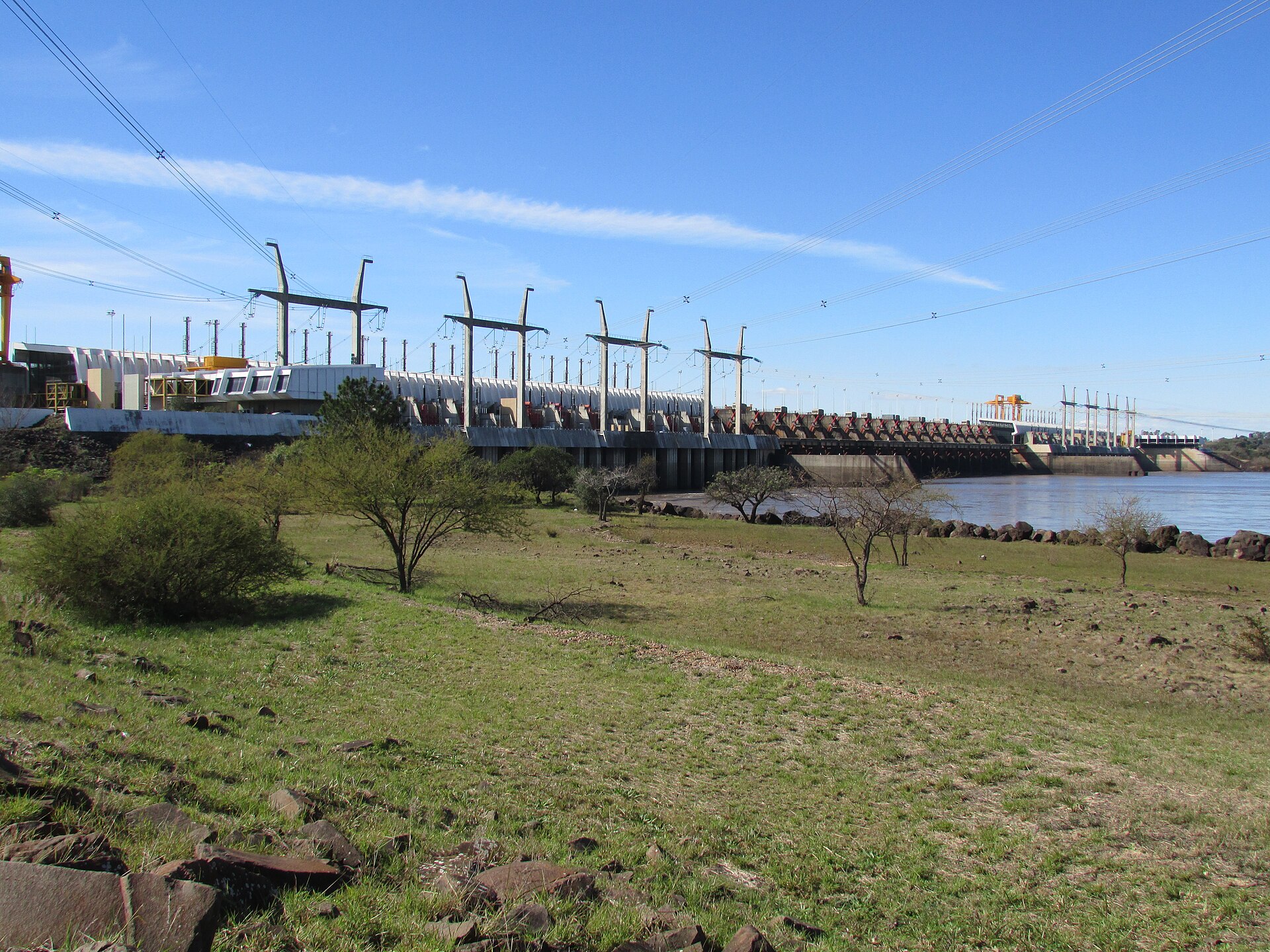
The Salto Grande dam, upstream of Salto and Concordia, is run jointly through a commission created under a 1946 convention. Its power feeds the interconnected grids of both nations, the commission says.
Brazil is Uruguay’s second-largest export market, though sales there fell 15% in 2025, Uruguay XXI data show. Lula and Orsi met in New York on Monday, 21 September 2026, to discuss infrastructure and farm trade.
Lula wrote on X that they would meet again soon on integration projects, including a bridge over the Jaguarão River. He also said he wanted to learn from Uruguay’s regulation of online betting.
How Uruguay Compares With Its Peers
Among seven countries compared, Uruguay has the smallest population and highest income per person, World Bank data for 2025 show. The list below gives population, output and income per person for each.
- Uruguay: 3.38 million people, US$85.3 billion output, US$25,216 per person.
- Costa Rica: 5.15 million people, US$102.9 billion output, US$19,970 per person.
- Panama: 4.57 million people, US$90.5 billion output, US$19,790 per person.
- Chile: 19.86 million people, US$357.4 billion output, US$17,995 per person.
- Argentina: 45.85 million people, US$683.1 billion output, US$14,898 per person.
- Brazil: 212.81 million people, US$2.28 trillion output, US$10,713 per person.
- Paraguay: 7.01 million people, US$49.3 billion output, US$7,027 per person.
Brazil’s economy is about 27 times larger than Uruguay’s, and Argentina’s about eight times larger. Brazil has about 63 times as many people, and Argentina about 14 times as many.
The IMF’s October 2026 outlook puts Uruguay’s public debt at 67.7% of output in 2026, above Chile’s 42.8% and Paraguay’s 36.6%. That is below Argentina’s 69.3% and Brazil’s 97.0%.
The same outlook sees Uruguay growing 1.3% in 2026, against 4.5% for Paraguay, 3.3% for Costa Rica and 0.6% for Chile. Only Chile’s forecast is lower among these seven countries.
The Rio Times Latin America Power Index ranks Uruguay seventh of 14 countries in its October 2026 edition. It places Uruguay in the Hedging group, defined as being in both the Washington and Beijing camps or neither.
Brazil ranks first, Chile third, Argentina fourth, Costa Rica ninth, Paraguay tenth and Panama eleventh. Uruguay’s strongest pillar is state capacity and security, at 87.9 out of 100, while economic relationships score 27.1.
Future resources score 22.6, the lowest of its six pillars. The full ranking and all six pillar scores are on the Latin America Power Map.
What It Means for US Readers
US exporters face growing European competition in Uruguay now that the EU trade deal applies provisionally. The United States ranked fourth among Uruguay’s export destinations in 2025, behind China, Brazil and the EU, Uruguay XXI says.
On Venezuela, Uruguay rejected the January 2026 military intervention, so Montevideo and Washington differ on that case. Trade shows no strain so far, with Uruguayan sales to the United States up nearly 30% in 2025.
For investors, the Power Index scores Uruguay highest on state capacity and security, but the IMF forecasts only 1.3% growth in 2026. Investors should also watch beef and soybean exports, which together brought in about US$4.1 billion in 2025.
For practical steps, see the guide to investing in Uruguay as a foreigner and the guide to moving to Uruguay. City details are on the Montevideo expat page and in the guide to what to do in Montevideo in October 2026.
What Is Not Known
Uruguay’s presidency has dated the 2 December business forum and the 3 and 4 December ministerial council, but not the leaders’ summit. The summit venue has not been confirmed either.
Lubetkin said on 8 July 2026 he did not know whether the European Parliament would ratify the deal in 2027 or 2028. It is also unconfirmed whether China will allow Brazil to use Uruguay’s surplus beef quota.
Industry sources told the South China Morning Post and Brazilian press on 30 September 2026 that Beijing had not agreed. No end date exists for Uruguay’s CPTPP accession talks, which began in November 2025.
This guide could not read the central bank’s latest national accounts, so 2026 growth rests on IMF forecasts. The 2023 census figure is a preliminary count, and final totals may differ slightly.
Frequently Asked Questions
What continent is Uruguay in?
Uruguay is in South America, between Argentina and Brazil on the Atlantic coast. Politically, it is part of Latin America.
Is Uruguay a member of Mercosur?
Yes, Uruguay is a founding member of Mercosur and hosts its secretariat in Montevideo. It has chaired the bloc since 30 June 2026 and holds the chair until December.
How big are Uruguay’s population and economy?
Uruguay had 3,384,688 people in 2025, about 0.5% of Latin America and the Caribbean, World Bank data show. Its economy produced US$85.3 billion, about 1.2% of the regional total.
What is Uruguay’s role in CELAC and the OAS?
Uruguay has held the rotating presidency of CELAC since 21 March 2026. It is also an OAS member, and Uruguayan Luis Almagro led the body from 2015 to 2025.
Does Uruguay trade more with China or the United States?
China bought 26% of Uruguay’s goods exports in 2025, worth US$3.49 billion, while the United States ranked fourth. Brazil ranked second and the EU third.
Does Uruguay have a trade deal with the European Union?
Yes, the EU-Mercosur interim trade agreement has applied provisionally since 1 May 2026. Uruguay was one of three Mercosur states that had finished ratification by 23 March 2026.
Sources: World Bank, Uruguay and regional data, 2025; IMF, World Economic Outlook database, October 2026; Uruguay presidency, 2023 census count; Uruguay presidency, Uruguay XXI 2025 exports; Uruguay presidency, Orsi and Xi Jinping, 3 February 2026; Uruguay presidency, Lubetkin on the Mercosur chair; Uruguay presidency, 68th Mercosur summit; Uruguay presidency, Mercosur-EU business forum; Mercosur presidents, joint communique, 30 June 2026; Mercosur, about the bloc; Uruguay, resolution 81/999 on the Mercosur secretariat headquarters; European Commission, provisional application from 1 May 2026; Uruguay foreign ministry, CELAC presidency; Uruguay foreign ministry, CELAC-EU summit; Uruguay foreign ministry, CPTPP accession; Organization of American States, secretary-general; International Court of Justice, Pulp Mills case; Salto Grande Joint Technical Commission; Ambito, Lubetkin on EU ratification, 8 July 2026; Montevideo Portal, EU agreement vote; Montevideo Portal, Orsi and Lubetkin on Venezuela; Montevideo Portal, Mercosur chair and China dialogue; Montevideo Portal, Uruguay backs Ramdin for the OAS, 4 March 2025; Jornal de Brasília, joint declaration for Ramdin; El Nuevo Diario, Lubetkin on recognition of Venezuela, 9 January 2026; El Observador, Lubetkin on Mercosur priorities, 29 June 2026; eleconomista.com.ar, Orsi backs Milei on Mercosur flexibility; El Observador, River Plate dredging tender; Infobae, Uruguay and a bilateral China deal, May 2025; Ultima Hora, Lacalle Pou announces China talks, 2022; Agência Brasil, Lula on Mercosur and China, 30 June 2026; BAE Negocios, Lula on a Mercosur-China deal; Canal Rural, Lula and Orsi in New York; Diario do Comercio, Uruguayan beef quota; SBT News, Lula and Orsi, 21 September 2026; S&P Global, Uruguay beef quota, 22 September 2026; South China Morning Post, China and Uruguay’s quota, 1 October 2026; Reuters via CNN Brasil, 30 September 2026; MercoPress, HIF Global plant dispute; Ambito, Argentine court request to CARU; La Capital, Argentine court and CARU, April 2026; Uruguay presidency, second binational meeting on the hydrogen plant, 12 May 2026; Uruguay foreign ministry, CARP dredging award, 2 July 2026; population and output comparisons use World Bank 2025 data (all accessed 16 October 2026).
Editorial responsibility: Matthias Camenzind, Editor-in-Chief · Editorial standards · Report an error
Expat Guide to Uruguay
What The Rio Times publishes for foreigners who live in or move to Uruguay.
Start here
- Cost of Living Punta del Este 2026: Half Again Above Montevideo
- Uruguay vs Paraguay for Expats in 2026: Cheap Living or a Tax Holiday
- Uruguay Residency Visa Rules and the 12 Percent Tax on Foreign Income
- Opening a Bank Account in Uruguay as a Foreigner
City guides
Coming up in Uruguay
- Milongas Extremas Zitarrosa Tribute Set for 22 October 2026 in Uruguay 22 Oct
- La Delio Valdez in Montevideo, Uruguay: Argentine Cumbia Orchestra Plays Teatro de Verano on 24 October 24 Oct
- Camilo in Montevideo, Uruguay: Colombia's Pop Star at the Antel Arena on October 28, 2026 28 Oct
- Antel Campus Party Hits Montevideo, Uruguay 30–31 Oct 30 Oct
Understand Uruguay