Buying Property in Uruguay as a Foreigner 2026: No Restrictions, One Myth
URUGUAY · EXPAT GUIDE
Key Facts
- —Who may buy Any foreigner, with no residency, no local partner and no prior authorisation for urban property.
- —The exception Rural land and farming operations are separately regulated, and buying through a company is treated differently.
- —Transfer tax Two percent each for buyer and seller, charged on cadastral value rather than the price.
- —All-in buying costs Roughly seven and a half to nine percent of the price, including agent and notary fees.
- —Capital gains Twelve percent on the computable gain, withheld by the notary, with no exemption for foreigners.
- —The catch A widely copied claim that foreigners are exempt from that tax is simply wrong.
Uruguay is the rare Latin American country that puts almost no restriction on a foreign buyer. The tax side is where the bad information lives.
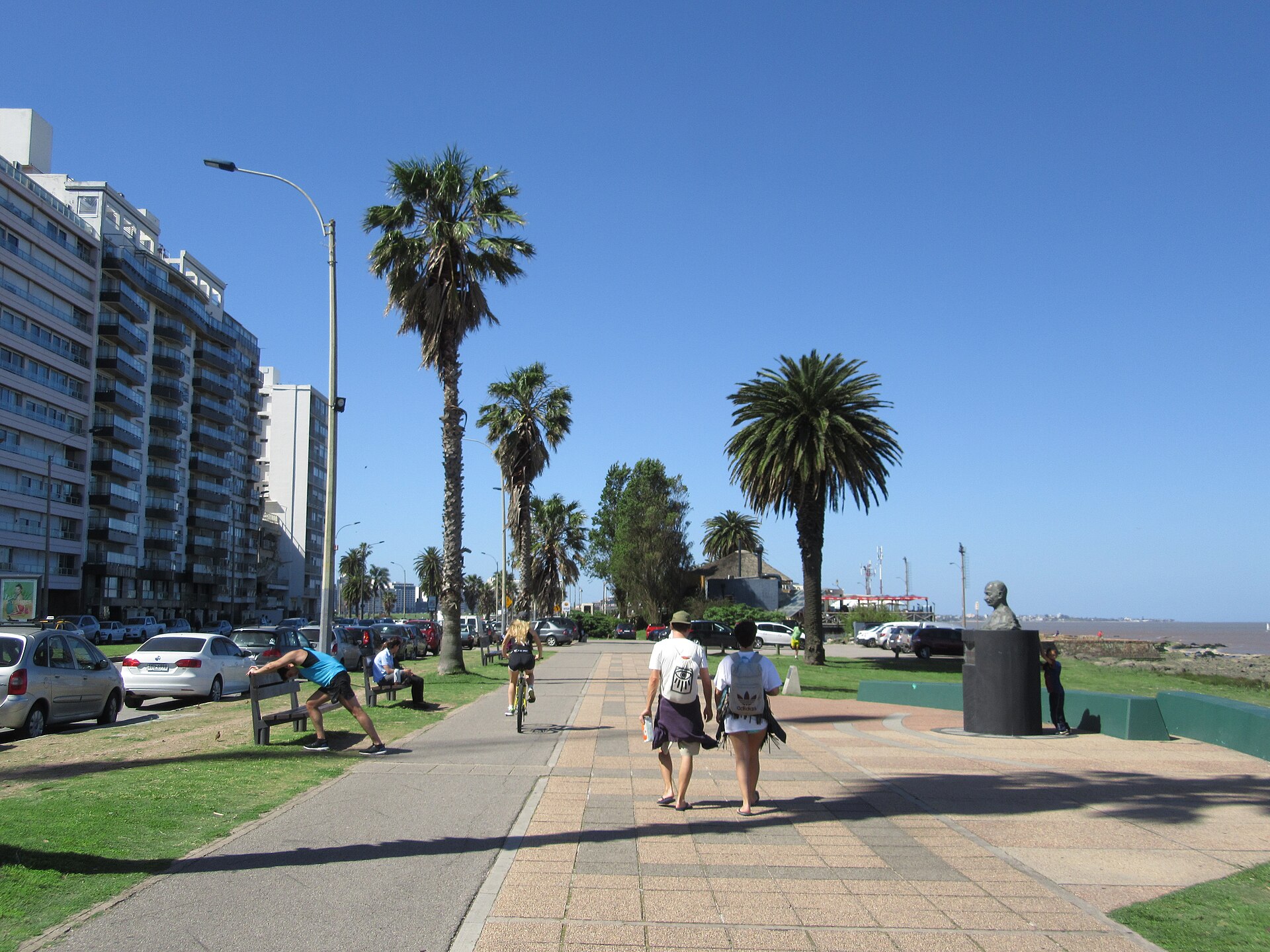
Uruguay does something unusual in Latin America. It lets a foreigner buy urban property on exactly the same terms as a citizen.
There is no residency requirement, no local partner and no prior authorisation. The equal-treatment law says foreign and domestic investment are treated alike.
There is also no coastal restriction and no border zone. Anyone applying Brazilian or Mexican assumptions here will be looking for a rule that does not exist.
The One Real Exception
Rural land is different. A separate law regulates ownership of farmland and agricultural operations by certain companies, entities and structures.
A natural person and a company are not assessed the same way. Buying a farm, or buying through any entity, needs specific legal and notarial review first.
For a flat in Montevideo or a house in Punta del Este, none of that applies. The urban market is genuinely open.
You will be asked for a valid passport and a police clearance certificate. You must also document the source of the funds.
You do not need your own tax number for every purchase. The notary files the revenue forms.
What Buying Costs
The agent takes three percent, and both buyer and seller pay it separately. Value added tax at twenty-two percent sits on top of that.
The notary costs about three percent of the price plus the same tax. The buyer chooses the notary and the buyer pays.
Transfer tax is two percent each for buyer and seller. This is the number most guides get wrong.
It is charged on the cadastral value, not the sale price. Cadastral values in Uruguay run well below market, so the real burden is far lower than the headline.
Registry certificates and title registration add US$200 to US$500 in total. Registration itself takes thirty to sixty days.
Put it together and a buyer should budget roughly seven and a half to nine percent of the price. The spread depends on how far the cadastral value sits below market.

What You Pay Every Year
The departmental property tax in Montevideo is progressive by value band. Rates run from 0.18% to 1.80% of the assessed value.
Since 2024 about seventy percent of properties qualify for a reduced rate. It is payable in three instalments, on 10 March, 10 July and 10 November.
Paying the whole amount in March avoids the inflation adjustment applied to the later two. That is a real saving, not a rounding.
Retirees and pensioners can obtain a fifty or hundred percent exemption depending on assessed value. The ceilings are updated annually by decree.
A separate national education levy applies to property as well. It is deductible against rental income for non-resident income tax.
The Wealth Tax
Uruguay taxes net wealth and property counts towards it. The threshold for an individual is 6,653,000 pesos, about US$165,423.
For a family unit filing together it doubles, to 13,306,000 pesos or roughly US$330,847. Those are the figures for the 2025 tax year, declared in 2026.
The rate scale above the threshold could not be confirmed from a primary source. Ask a Uruguayan accountant before you assume a number.
The Myth About Capital Gains
Search in English and you will find the claim that foreigners are exempt from capital gains tax here. It appears on professional-looking sites and it is not true.
A non-resident selling Uruguayan property pays non-resident income tax on the gain. That mirrors what a resident pays.
The rate is twelve percent on the computable gain. The notary handling the deed is the withholding agent.
That means the tax is deducted and remitted before you see the proceeds. No arrangement between buyer and seller avoids it.
How the Gain Is Calculated
Property bought before 1 July 2007 may use a simplified basis. Computable income is fifteen percent of the higher of sale price or assessed value.
That works out at an effective 1.8% of the sale price. It is a genuine shortcut and it is closed to almost every foreign buyer today.
Property bought on or after 1 July 2007 uses the real basis only. You take the higher of sale price or assessed value, then deduct the inflation-adjusted cost.
The acquisition value is indexed by the change in the indexed unit between purchase and sale. Your own transfer tax and documented improvements also come off.
Labour costs on improvements only count if the construction levy was settled and paid. Keep the paperwork.
The Residence Exemption
There is an exemption for a principal residence, and all four conditions must hold at once. The property sold must be valued at no more than 1,200,000 indexed units, about US$198,198.
At least half the proceeds must go into a new permanent home. No more than twelve months may pass between the sale and the purchase.
The new home must be valued at no more than 1,800,000 indexed units, roughly US$297,297. Both properties must be permanent residences.
Even when every condition is met, the notary withholds anyway. You then claim the money back from the revenue service.
Two Things to Check
Ask your notary to confirm in writing that no restriction applies to your specific plot. The absence of a coastal rule is inferred from the equal-treatment law rather than stated by any official page.
And treat any English-language source claiming a foreigner exemption from capital gains as unreliable on everything else. It is the clearest marker of copied content in Uruguay property writing.
More: Expat guides, every day from The Rio Times.
Frequently Asked Questions
Can a foreigner buy property in Uruguay?
Yes, freely, for urban property. No residency, local partner or prior authorisation is required, and there is no coastal or border restriction. Rural land is separately regulated.
What does buying cost?
Roughly seven and a half to nine percent of the price. That is three percent agent, about three percent notary, value added tax on both, two percent transfer tax on cadastral value and US$200 to US$500 in registry fees.
Do foreigners pay capital gains tax in Uruguay?
Yes. A non-resident pays twelve percent on the computable gain, withheld by the notary. The widely repeated claim that foreigners are exempt is false.
What is the annual property tax?
In Montevideo it is progressive from 0.18% to 1.80% of assessed value, in three instalments. Paying in full in March avoids the inflation adjustment on the later two.
Is there a wealth tax?
Yes. The threshold is 6,653,000 pesos, about US$165,423, for an individual and double that for a family unit filing together.
Sources: Ley 16.906, Ley 18.092, the Direccion General Impositiva, Decreto 334/025, the Intendencia de Montevideo, Banco Central del Uruguay exchange and index values for 14 September 2026, and published notarial cost schedules.
This article was produced by The Rio Times’ automated newsroom system. How we use AI · Report an error
Read More from The Rio Times