Trinidad and Tobago Economy Braces as Gas Output Falls 4.5 Percent
Economy · Trinidad and Tobago
—The stakes. Trinidad and Tobago’s gas-dependent industrial economy is running below installed LNG and petrochemical capacity because domestic fields are maturing.
—The date. Preliminary January to March 2026 natural gas output averaged about 2,427 million standard cubic feet per day, down roughly 4.5% from the 2025 average.
—The lifeline. The Dragon gas field in Venezuelan waters holds about 4 trillion cubic feet and could supply up to 350 million cubic feet per day to Trinidad.
—The bottleneck. Trinidad received two US general licences in February 2026 covering Dragon and Manakin-Cocuina, giving Shell and the National Gas Company a structured legal framework. The remaining obstacles are commercial and Venezuelan-side.
—The investor lens. Foreign exchange shortages and feed gas curtailments threaten the Caribbean’s most industrialised economy and its Atlantic LNG plant.
Trinidad and Tobago is not facing a sudden collapse but a slow squeeze. The gas that built Latin America’s largest LNG export industry is now harder to secure at home, pushing every new project and investment decision toward Venezuelan gas and US licence politics.
A Gas Economy Running Below Its Installed Power
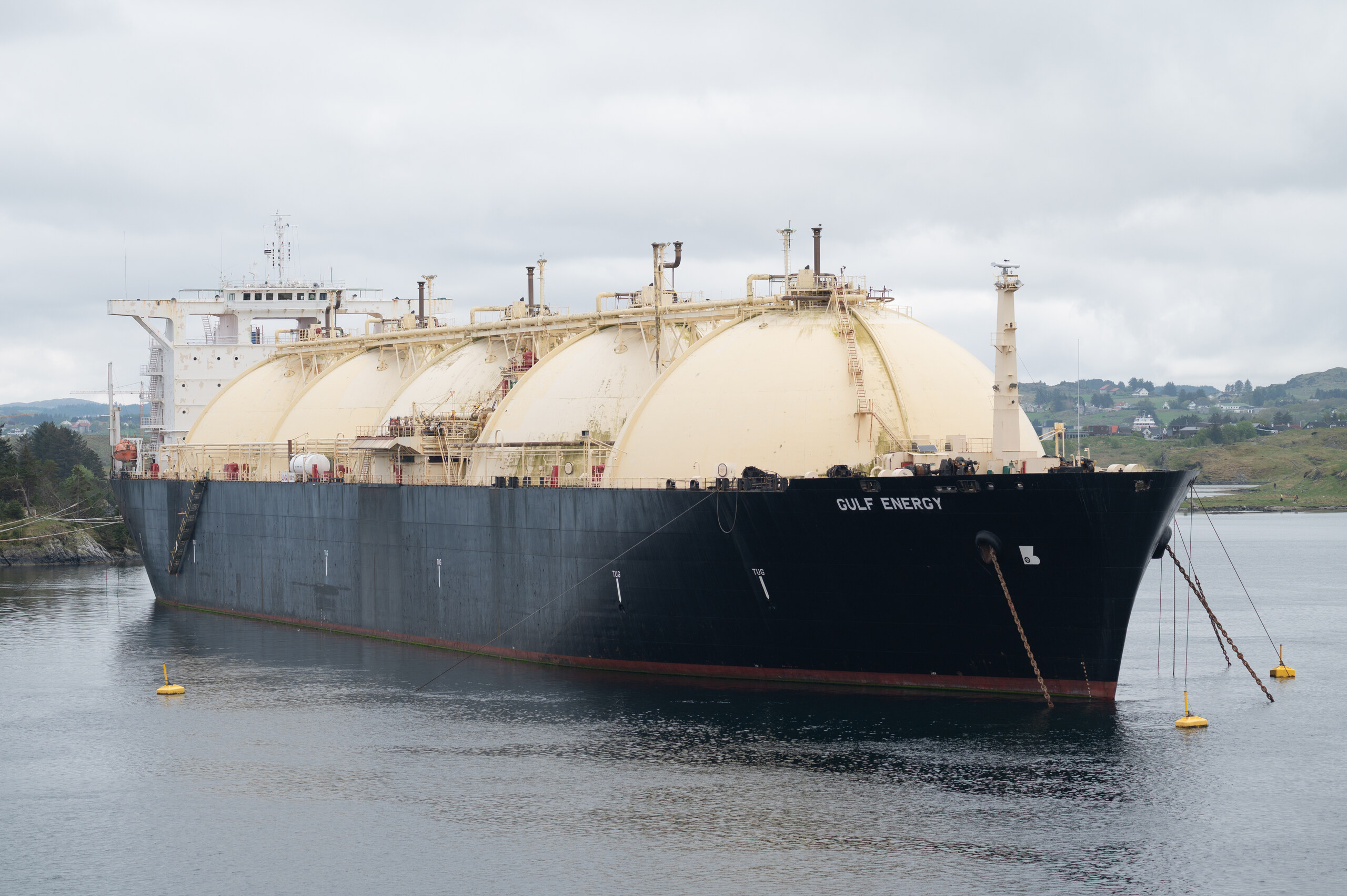
Trinidad and Tobago operates one of the most developed gas-based industrial systems in the Americas. Atlantic LNG has a nameplate capacity of about 12 million tonnes a year, against roughly 9 million tonnes actually exported in 2025.
Actual natural gas production in 2024 averaged 2,539 million standard cubic feet per day. In 2025 that figure rose only marginally to 2,541 MMscf/d.
Early 2026 data shows renewed pressure. Production averaged about 2,427 MMscf/d from January through March.
That preliminary figure sits about 4.5% below the 2025 annual average. Monthly readings were 2,443 MMscf/d in January, 2,469 MMscf/d in February and 2,368 MMscf/d in March.
Energy analysts caution that three months of data do not define a full year. But the direction is familiar for a nation that has struggled to keep gas output above 3 billion cubic feet per day.
Atlantic LNG and the Feed Gas Problem
Atlantic LNG is the primary outlet for Trinidad’s gas exports. The plant groups multiple liquefaction trains, and its utilisation depends heavily on domestic feed gas.
The Ministry of Energy and Energy Industries reported total LNG production of 17,594,130 cubic metres for 2025, up 5.8 percent on 2024. That volume reflects monthly output across Train 2, Train 3 and Train 4.
Feed gas shortages have caused recurring setbacks for Atlantic LNG. Commentary on the Dragon field notes that Venezuelan gas was expected to supply Atlantic LNG from 2026.
Trinidad remains Latin America’s largest LNG exporter by installed capacity. But actual gas production has sat just below 3 bcf/d, leaving processing capacity underused.
The gap between plant capacity and available gas is not a demand problem. It is an upstream supply problem now shaping national energy policy.
Liquids and Petrochemicals Feel the Same Constraint
The gas shortage reaches beyond LNG. Trinidad’s ammonia and methanol plants depend on the same domestic gas pool.
Ministry figures put condensate output at 8,257 barrels per day over the first eleven months of 2025, against 7,117 for full-year 2024. That was up from 16,086 bpd in 2024, an increase of 7.7%.
Atlantic LNG’s liquids equivalent output rose sharply within that data. It increased from 5,787 bpd in 2024 to 7,472 bpd in 2025, a jump of 29.1%.
Those gains reflect improved feedstock use in a specific period rather than a structural solution. Petrochemical plants have still faced curtailments and intermittent shutdowns in recent years.
Reuters has described Trinidad as reliant on gas for income-generating industries ranging from LNG to petrochemicals. That reliance has become a vulnerability as upstream supply flattens.
Maturing Fields and the Strategic Shortfall
Trinidad’s core gas fields are aging. New domestic projects have helped slow the decline but not reverse it.
Industry commentary now frames the domestic gas shortage as threatening LNG production and regional energy security. This marks a shift from commercial concern to strategic risk.
Reuters has stated that given limited reserves and production capacity, Trinidad relies on Venezuelan gas to support its income-generating industries. The phrasing signals that domestic fields alone cannot sustain the industrial base.
Shell’s Manatee project on Trinidad’s side of the maritime border could help. Combined with Dragon, projections point to about 1 bcf/d of additional gas.
That combined volume would be meaningful against current output near 2.5 bcf/d. But it also underscores how much new supply is needed simply to keep existing plants fed.
Dragon Field and the Venezuelan Gas Hopes
The Dragon gas field lies in Venezuelan territorial waters near the maritime border with Trinidad and Tobago. It has become the most important external supply option for Trinidad’s gas economy.
Estimated reserves stand at about 4 trillion cubic feet. Earlier Reuters reporting cited 4.2 trillion cubic feet, while later official communications generally refer to over 4 tcf.
Prime Minister Keith Rowley said in January 2023 that Trinidad anticipated accessing 350 million cubic feet per day from Dragon once developed. Initial output plans were later cited at about 200 million cubic feet per day.
The Government of Venezuela issued a 30-year exploration and production licence for Dragon in December 2023. The licence went to Shell PLC and Trinidad’s National Gas Company, known as NGC.
Dragon plus Manatee could deliver a combined 1 bcf/d to Trinidad and Atlantic LNG. But Dragon cannot move forward without a stable US licencing framework.
US Sanctions Licences and Legal Whiplash
US sanctions on Venezuela have made Dragon a moving target. Trinidad secured early relief, but that relief has not been consistent.
In April 2025, Trinidad said US licences for Venezuela gas projects had been revoked. The announcement created immediate uncertainty for Shell and NGC.
By October 2025, Shell received a US green light to resume work on the Trinidad-Venezuela gas deal. Each shift changes the risk calculation for investors.
ICIS reported in January 2026 that Trinidad’s access to Venezuelan gas via Dragon remained unclear following US action in Venezuela. The phrase captures the project’s stop-start rhythm.
For Trinidad, each licensing gap delays feed gas that Atlantic LNG and petrochemical plants were expected to receive from 2026.
The New Government’s Energy Policy Signals
The political leadership facing these constraints must balance urgent gas needs with long-term energy security. The Dragon project remains central to that policy.
Trinidad has consistently sought US extensions for Shell’s gas project in Venezuela. A February 2025 Reuters report said Trinidad would seek an extension before sanctioning the project.
Official statements frame Dragon as essential for national gas supply and industrial continuity. The government’s role is to secure sanctions relief and maintain the Venezuelan licence.
Domestic policy has also focused on monitoring monthly production data. The Ministry of Energy and Energy Industries publishes consolidated bulletins that track gas and LNG output.
Those bulletins show a government trying to manage a declining resource base through data transparency and external gas diplomacy.
Foreign Exchange Shortages and Investor Risk
Trinidad’s energy sector generates much of the country’s foreign exchange. Weak gas output therefore feeds directly into currency availability.
The economy depends on LNG and petrochemical exports to earn US dollars. When plants run below capacity, the supply of foreign exchange tightens.
Reports of foreign exchange shortages have made operations harder for importers and investors. The shortage is not a standalone crisis but a symptom of lower energy earnings.
For foreign investors, the operating environment includes both energy policy risk and currency access risk. Gas project delays amplify both.
Trinidad’s industrial base remains the most advanced in the Caribbean. But that base rests on a gas system that is now structurally constrained.
What It Means for LNG Buyers and Partners
Atlantic LNG’s customers are watching feed gas availability closely. Undersupplied trains mean less reliable cargo schedules.
The plant’s installed capacity far exceeds current gas supply. That gap makes Trinidad a less predictable LNG supplier than its capacity figures suggest.
Dragon gas could restore utilisation and long-term contract confidence. With the February 2026 licences in place, the open questions are commercial terms and conditions attached on the Venezuelan side.
Without new gas, Atlantic LNG will continue to run intermittently below nameplate capacity. Buyers may begin pricing that reliability risk into their contracts.
The same logic applies to Shell and NGC, whose Dragon investment cannot proceed under constant legal uncertainty.
Petrochemical Investors Face a Slower Decline
Ammonia and methanol producers in Trinidad have survived past gas curtailments. But each curtailment shortens their operational runway.
The 2025 NGL production increase shows plants can perform when feed gas improves. That improvement, however, did not come from a permanent supply solution.
Without Dragon or another major upstream addition, petrochemical margins will depend on securing limited domestic gas. Larger integrated players may shift capital elsewhere.
Trinidad’s chemicals sector is still a major regional employer and exporter. Its stability matters for local employment and foreign exchange.
Investors should treat the sector as cash-generative in the short term but structurally challenged over a multi-year horizon.
Caribbean Industrial Leadership and the Regional Stakes
Trinidad and Tobago stands apart in the Caribbean for its energy-intensive industrial economy. No other island state has comparable LNG and petrochemical capacity.
That leadership position makes the gas decline a regional concern. Energy security commentary has linked Trinidad’s shortage to wider Caribbean stability.
Regional buyers depend on Trinidad for fuels and petrochemical products. A weaker Trinidadian energy sector raises costs across the Caribbean.
The Dragon project therefore carries weight beyond Trinidad’s own economy. It is a test of whether a gas-dependent Caribbean state can secure cross-border supply under US sanctions policy.
If Dragon stalls repeatedly, Trinidad’s role as the Caribbean’s industrial anchor will erode gradually rather than collapse suddenly.
The Investor Read on a Gas Nation Running Low on Easy Gas
Trinidad is not running out of gas in absolute terms. It is running out of easy, dependable gas from mature domestic fields.
The country has enough reserves in projects like Manatee and access to Dragon. But converting those resources into feed gas requires licences, investment and time.
Early 2026 production of about 2,427 MMscf/d suggests the old infrastructure is underperforming while new supply is not yet online. That gap is the core risk for investors.
Foreign exchange shortages and petrochemical curtailments are secondary effects of the same problem. Solving the gas supply issue would ease both.
For investors in the Caribbean’s industrial economy, the next chapter depends on whether Dragon moves from licence to production before the domestic decline accelerates.
The Big Picture
Latest developments
- Trinidad and Tobago: Nearly Three in Four Traced Crime Guns Came Through the US — 4 October 2026
- Trinidad Cabinet Realignment Moves Housing Schemes — 3 October 2026
- Trinidad and Tobago House Votes to Raise Drinking Age — 2 October 2026
- Trinidad Carnival 2027 Is Set for 8 and 9 February — 1 October 2026
This article was produced by The Rio Times’ automated newsroom system. How we use AI · Report an error · Editorial responsibility: Matthias Camenzind, Editor-in-Chief
LatAm Markets: Live Signals → — real-time movers, turnover leaders and FX across Latin America.
Expat Guide to Trinidad and Tobago
What The Rio Times publishes for foreigners who live in or move to Trinidad and Tobago.
Start here
- Moving to Trinidad and Tobago 2026, Step by Step
- Moving to Trinidad and Tobago: Visas, Costs, Work Permits and Daily Life
- Healthcare in Trinidad and Tobago for Expats: Hospitals, Insurance and Costs
- Trinidad and Tobago Taxes for Foreign Residents: 25% Above US$13,200 Allowance, 30% Above US$147,000
Coming up in Trinidad and Tobago
Understand Trinidad and Tobago