Aid Cuts Are Closing Sudan’s Clinics, and MSF Warns the Health System Is Near Collapse
SUDAN · HUMANITARIAN
Key Facts
- —The warning Médecins Sans Frontières says Sudan’s health system is nearing collapse, as international funding cuts force dozens of clinics to close and push patients onto the few hospitals still open.
- —The need More than 33 million people in Sudan now require medical assistance, according to AllAfrica’s account of the MSF warning, in a war between the national army and the paramilitary Rapid Support Forces now in its third year.
- —The money The closure of the US aid agency USAID ended funding to many organisations working in Sudan in June 2026, and European governments have also cut assistance. The UN’s US$2.87 billion response plan for Sudan is barely 41 percent funded.
- —On the ground Maternity and surgical wards have shut in some displacement camps, and admissions at MSF-supported facilities in Central Darfur jumped 22.5 percent in the first four months of 2026 as other providers closed.
- —The ask MSF is urging leaders gathering at the UN General Assembly in New York to protect funding for essential health services in Sudan and to finance facilities at risk of immediate closure.
This story is part of our coverage of the Sudan war. Who is fighting, who backs whom and the humanitarian situation are explained in our dossier.
Dried-up funding is forcing medical facilities across Sudan to close, collapsing an already fragile health system and overwhelming the hospitals that remain, Médecins Sans Frontières warned on Monday. The medical charity says more than 33 million people need medical assistance in a country where war, hunger and now austerity are compounding each other.
What MSF said
In a statement issued on September 8, Médecins Sans Frontières — known internationally as Doctors Without Borders — said that medical facilities across Sudan are closing for lack of funding, and that the closures are collapsing a health system already shattered by the war between the Sudanese Armed Forces and the paramilitary Rapid Support Forces, which began in April 2023.
“War is driving Sudan’s needs; funding cuts are shrinking the response,” said Muhammad Ibrahim, MSF’s head of mission in Sudan. “MSF’s work in Sudan is privately funded. But when funding disappears from other health services, clinics close, patients have fewer places to go, and pressure shifts to the facilities that remain, including ours.”
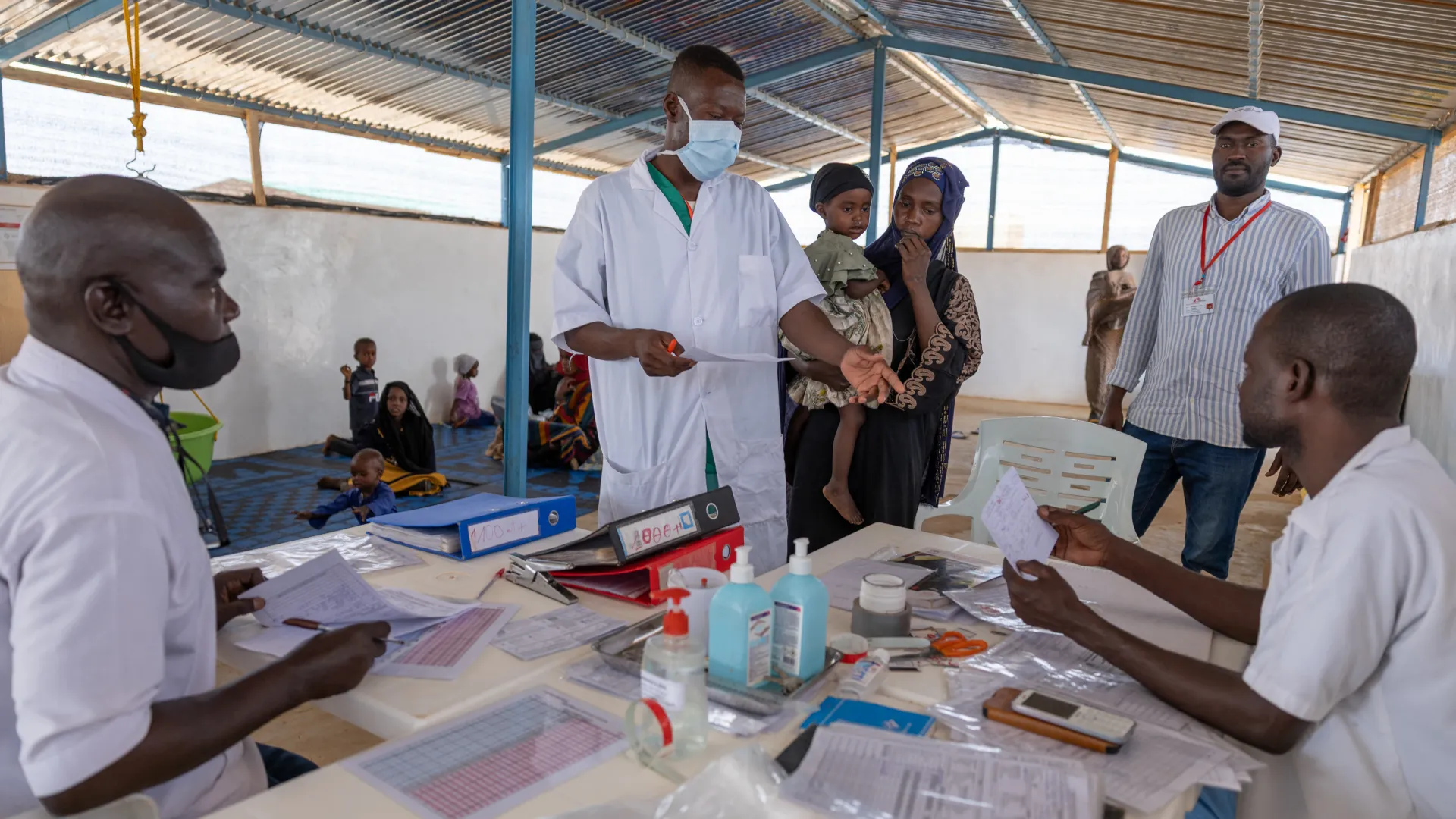
AllAfrica, reporting the warning on September 9, said dozens of health facilities have closed and that the centres still functioning are seeing a sharp rise in admissions. In some displacement camps, maternity and surgical services have shut down entirely, forcing patients to travel long distances for treatment.
How the closures look on the ground
Between January and April 2026, admissions to MSF-supported facilities in Zalingei and Rokero, in Central Darfur, rose 22.5 percent compared with the same period a year earlier. In May, 45 general health centres in Central Darfur stopped receiving support because the organisation funding them ran out of money.
In Gedaref state, near the Ethiopian border, the sudden departure of a humanitarian organisation in June closed the maternity and surgical wards of the Tanedba camp, which shelters 18,400 refugees. Pregnant women who need caesarean sections now face three-hour journeys to the nearest city. Around Um Rakuba camp, home to about 17,000 refugees, the number of aid organisations has fallen from 35 to fewer than ten in five years.
In Tawila, North Darfur, where hundreds of thousands of people have fled mass violence around El Fasher, MSF runs the only 200-bed hospital in the area. In August its teams admitted 191 severely malnourished children under five to the inpatient feeding centre there, and nearly 22 percent of them also tested positive for malaria.
The numbers behind the crisis
The UN expects 825,000 Sudanese children under five to suffer severe acute malnutrition, and 19.5 million people faced crisis-level hunger earlier this year. The World Health Organization estimates that 37 percent of Sudan’s health facilities are completely out of service. Against that, the UN’s US$2.87 billion humanitarian response plan for the country is barely 41 percent funded.
MSF’s warning adds to a cascade of distress signals from the country. We reported this week on the more than 11,000 people now registered missing in Sudan, and on the US senators seeking to cut the war’s financing from gold and gum arabic exports.
Why the money ran out
After the US government announced the closure of USAID in 2025, its funding to many organisations working in Sudan ended in June 2026. The United States remains the largest donor to Sudan through UN channels, but many existing healthcare providers have been unable to find alternative funding, and several European governments have reduced their assistance at the same time.
MSF itself does not take US government money and says it is not directly financially affected. Its argument is that the system around it is failing: when a clinic that vaccinates children or runs a maternity ward closes, its patients do not disappear — they travel further, arrive sicker, and crowd into whatever is left.
The appeal to New York
The statement is timed to the opening of the UN General Assembly, where world leaders gather this month. MSF is asking governments and institutional donors to protect funding for essential health services in Sudan and to provide flexible transitional financing where facilities are at risk of immediate closure.
“Donors must protect essential health services and provide sustained, flexible funding to organisations that depend on it,” Ibrahim said. Whether that appeal is heard in New York will help decide how much of Sudan’s health system is still standing when the war eventually ends.
This report is based on the Médecins Sans Frontières statement of September 8, AllAfrica’s report of September 9, and BBC Africa’s coverage of the warning.
Frequently Asked Questions
What did MSF warn about Sudan?
That the country’s health system is nearing collapse, as international funding cuts force medical facilities to close and overwhelm the hospitals that remain open.
Why are clinics in Sudan closing?
The closure of the US aid agency USAID ended funding to many organisations working in Sudan in June 2026, and European governments have also cut aid. Providers that cannot find replacement funding are shutting facilities.
How many people in Sudan need medical help?
More than 33 million, according to AllAfrica’s account of the MSF warning. The UN also expects 825,000 children under five to suffer severe acute malnutrition.
Is MSF itself running out of money?
No. MSF says its Sudan work is privately funded and it is not directly affected by government cuts. Its warning concerns the collapse of services around it, which shifts patients onto its facilities.
What is MSF asking for?
It wants leaders at the UN General Assembly to protect funding for essential health services in Sudan and to provide flexible transitional financing for facilities at risk of immediate closure.
Connected Coverage
We have also reported on the more than 11,000 people registered missing in Sudan and on the US Senate push to cut the war off from gold and gum arabic money. Follow the region on our Eastern Africa hub.
This article was produced by The Rio Times’ automated newsroom system. How we use AI · Report an error · Editorial responsibility: Matthias Camenzind, Editor-in-Chief
Horn of Africa and the Red Sea
- Horn of Africa 2026: Why It Matters and Who Backs Whom
- Ethiopia’s Neighbors Explained, Ports, Eritrea, Somalia
- Eritrea Explained 2026, a Red Sea Country Guide
- Somalia Explained: Al-Shabaab, Somaliland, the Ports and the Fight Over a 2026 Vote