Africa Explained: South Africa
South Africa is the economic and diplomatic hub of southern Africa, yet in 2026 it is also a country under strain. It runs a coalition government, faces a 30% US tariff on most goods and was kept out of this year’s Group of 20 (G20) talks.
Key Facts
- Who: President Cyril Ramaphosa was named interim chair of the Southern African Development Community (SADC) in November 2025.
- Economy: Official unemployment reached 33.6% in the second quarter of 2026, up from 32.7%.
- Money: The South African Reserve Bank, the central bank, raised its benchmark repo rate to 7.25% on 23 September 2026.
- Trade: US duty-free trade programme AGOA (African Growth and Opportunity Act) is renewed, but its end date is unsettled.
- Next: Third-quarter unemployment data, October inflation and a Reserve Bank rate decision are due in the coming weeks.
A plain guide to what South Africa does for Africa, what holds it back, and what US readers and investors should watch next.
Why South Africa Matters to Africa and to US Readers
South Africa is one of the continent’s largest economies, with deep mining, car-making, banking and shipping sectors. Its ports, power grid and banks also serve neighbouring countries.
That role comes with duties and risks. When South Africa’s power grid, ports or politics wobble, neighbours that depend on its rail lines, ports and electricity feel it too.
Industry, Mining and the Continental Hub
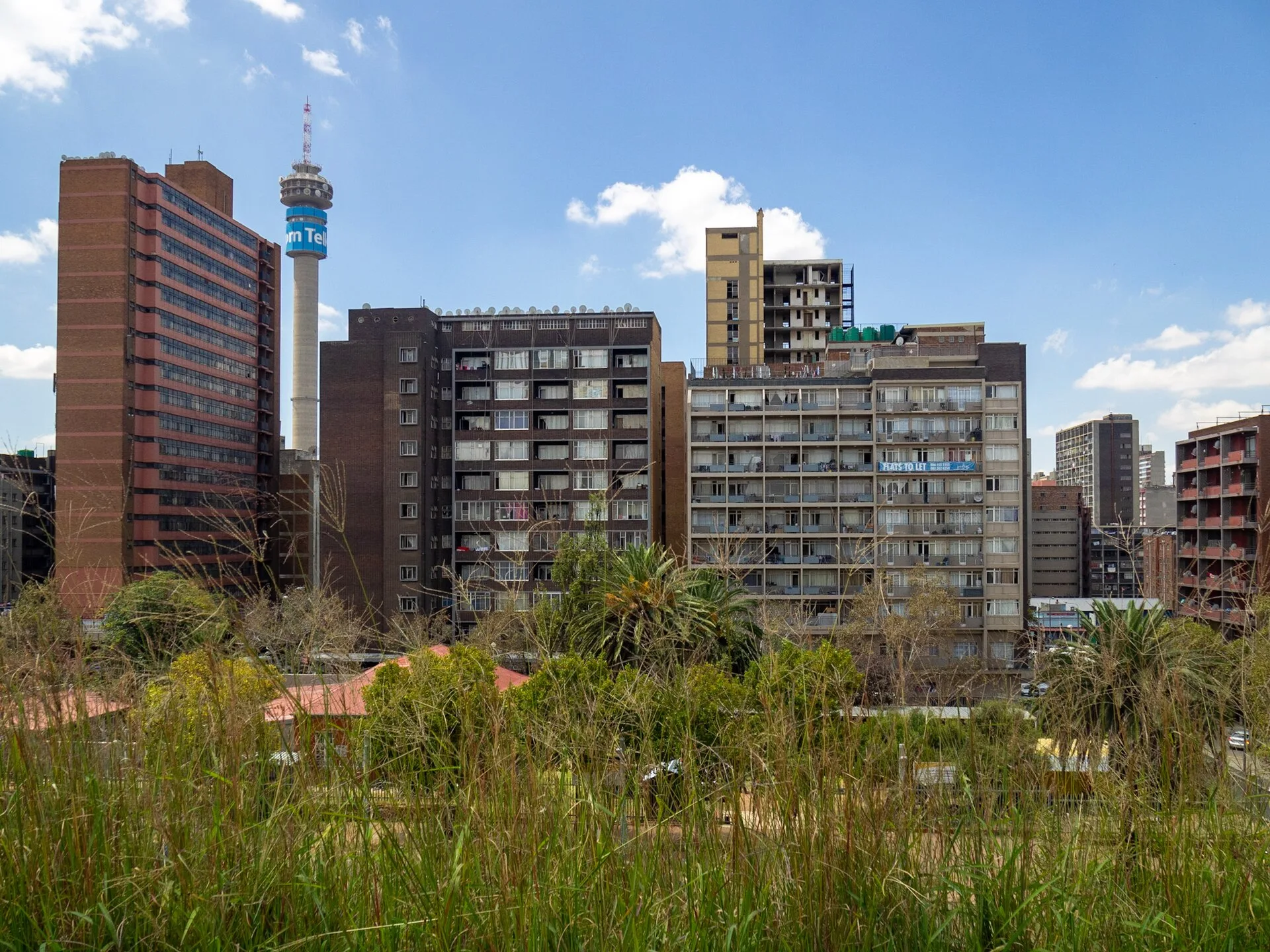
The country’s industrial base stretches from platinum and gold mining to vehicle plants and food processing, and its financial sector in Johannesburg handles banking and listed investment. That sector also includes crypto firms, as in our report on a South African bitcoin firm that lost four of its six directors.
We do not rank it against Nigeria or Egypt here, because the ranking changes with the exchange rate and the year. What is clear is that few African countries combine heavy industry, deep capital markets and large ports in one place.
The G20, BRICS and the Rift With Washington
South Africa held the G20 presidency in 2025 and hosted the summit in Johannesburg, the first on African soil. The United States then took over the presidency and said South Africa would not be invited to its 2026 meetings.
Finance Minister Enoch Godongwana has said Washington did not accredit South Africa for G20 finance talks. The South African government in Pretoria calls this a temporary setback and expects to return when the United Kingdom takes over the presidency.
South Africa is a member of BRICS, a group of emerging economies that began with Brazil, Russia, India and China and has since grown. It uses that platform to argue for a bigger voice for developing countries in global institutions.
For US readers, the two roles pull in different directions. Washington is a key market and investor, while BRICS gives Pretoria options beyond the West.
SADC and African Union Leadership
The Southern African Development Community (SADC) is a 16-member regional bloc that covers trade, power and security. On 7 November 2025 its leaders met in an extraordinary virtual summit after Madagascar gave up the chair following political upheaval there.
President Ramaphosa was elected interim chair, a role the summit said should run until August 2026. We could not confirm who chairs the bloc today, so this article does not name a current chair.
South Africa also sits at the centre of African Union (AU) diplomacy, the continental body based in Addis Ababa. Pretoria has long taken part in AU peace efforts, though its record on each crisis is debated.
The Government of National Unity
After the May 2024 election, the African National Congress (ANC), which has governed since 1994, lost its outright majority. On 14 June 2024 it formed a Government of National Unity (GNU) with the Democratic Alliance (DA), until then the main opposition, plus the Inkatha Freedom Party and the Patriotic Alliance, both smaller parties.
The coalition has survived into its third year, with Ramaphosa still president. Critics inside and outside it, including the smaller party ActionSA, say it has delivered too little.
Local government elections were held on Wednesday 4 November 2026. We have not confirmed the final results of these local elections, so we do not publish vote shares here.
The Rand and the Reserve Bank
The South African Reserve Bank (SARB), the central bank, sets the repo rate, the benchmark borrowing cost for banks, which also steers the rand, the national currency. On 23 September 2026 it raised the rate by 25 basis points (0.25 percentage points) to 7.25%, and the prime lending rate, which banks charge customers, rose to 10.75%.
The bank now expects growth of 1.2% in 2026. Inflation was 5% in June and 4.4% in August, according to the Reserve Bank’s September statement.
Investors also watch credit ratings from agencies such as Fitch, S&P Global and Moody’s, where Fitch upgraded South Africa to BB (below investment grade) in June 2026 with a stable outlook. S&P did the same in November 2025 with a positive outlook, and Moody’s is reported to have a positive outlook too.
Upgrades matter because they lower the government’s borrowing costs. Further upgrades depend on debt, growth and the performance of state companies.
Power Cuts, Ports and Rail
Load-shedding, the planned nationwide blackouts, has eased sharply. Eskom, the state power company, said in April 2026 that it expected none through the winter.
The risk has not gone away, because new generation and grid expansion are still needed. Reform of electricity markets and pricing is also still under way.
Transnet, the state rail and port company, is the other bottleneck. National Treasury, the finance ministry, says in its 2026 budget document that Transnet continued to fall short of its operational and financial targets.
Slow trains and ports raise costs for miners and farmers. They also hold up goods bound for landlocked neighbours across the region.
Trade With the United States and AGOA
The African Growth and Opportunity Act (AGOA) gives eligible African countries duty-free access to the US market on hundreds of product lines. It lapsed on 30 September 2025 and was later renewed with retroactive effect.
Several law-firm and trade-press reports say the renewal runs to 31 December 2026, and South Africa remains eligible for now. Some reports say a later funding law moved the end date to December 2028, but we have not seen the statute, so treat the end date as open.
Eligibility is reviewed every year by the US administration, and the result of this year’s review is the next thing to watch. Separately, South Africa has faced a 30% US tariff on most goods since August 2025.
Exporters selling into the US feel that gap most. The two governments have also clashed over the G20.
What Investors Are Watching
Data is due in the coming weeks. It starts with third-quarter unemployment from Statistics South Africa, the national statistics agency, where the previous reading was 33.6%.
October consumer price inflation follows. The Reserve Bank then holds its next rate decision, from a starting point of 7.25%.
Rating reviews and the AGOA eligibility decision are also pending. Longer term, investors track whether the coalition holds together, whether Transnet recovers and whether growth moves above the 1.2% the Reserve Bank expects for 2026.
What It Means for You
If you invest in South Africa through US-listed funds or the Johannesburg exchange, rates, ratings and trade rules matter more than the daily headlines. A higher repo rate supports the rand but squeezes households and companies that borrow locally.
If you travel or do business there, including for the Cape Town Sevens rugby weekend on 5 and 6 December, the power cuts that dominated recent years have eased, but ports and rail still slow freight. Our South Africa history explainer explains how today’s political system took shape.
What Is Not Known
We could not confirm the final results of the 4 November local elections, the current SADC chair, or whether AGOA now runs to 2026 or 2028. We also could not confirm the dates of the next rating reviews.
We do not know how Washington will treat South Africa’s AGOA eligibility. Nor do we know whether the 30% tariff will change.
Frequently Asked Questions
What is South Africa’s role in Africa?
South Africa is a major economic hub, with large mining, manufacturing and financial sectors, and a leading voice in the African Union and the Southern African Development Community. Its power, port and rail problems also affect neighbouring economies.
Is South Africa still in the G20?
Yes, it remains a member. The United States, which holds the 2026 presidency, has not invited it to the 2026 meetings, and the South African government expects to return when the United Kingdom takes over.
Does South Africa still have duty-free access to the US under AGOA?
For now, yes. The programme was renewed after it lapsed in September 2025, but the end date and the annual eligibility review are not settled.
What is South Africa’s interest rate?
The Reserve Bank’s repo rate is 7.25% after a 25 basis point rise on 23 September 2026. The next decision is due in the coming weeks.
Who governs South Africa?
A Government of National Unity formed on 14 June 2024, led by President Cyril Ramaphosa of the African National Congress. It includes the Democratic Alliance and other parties.
Sources
South African Reserve Bank monetary policy statements (resbank.co.za); Statistics South Africa labour force survey, Q2 2026 (statssa.gov.za); National Treasury 2026 Budget Review (treasury.gov.za); SADC communique of the extraordinary summit, 7 November 2025 (sadc.int); Independent Electoral Commission election timetable (elections.org.za); US Trade Representative AGOA page (ustr.gov); BRICS and G20 member statements. Read on 8 November 2026.
This article was produced by The Rio Times’ automated AI newsroom. Editorial responsibility: Matthias Camenzind, Publisher and Editor-in-Chief. How we use AI · Report an error