South Africa History Explained, From Origins to 2026

GUIDES · SOUTH AFRICA
Key Facts
- —Where it sits South Africa lies at the southern tip of Africa. Ancestors of its people lived there for some 3.3 million years, the government’s official guide says.
- —Colonial start The Dutch East India Company set up a supply station at Table Bay in 1652. Britain took the Cape in 1795 and again in 1806.
- —Apartheid The National Party won power in 1948 and built apartheid. It ended with the first democratic election on Wednesday, 27 April 1994.
- —Democracy The 1996 Constitution took effect on 4 February 1997. The ANC lost its national majority in the election of 29 May 2024.
- —In October 2026 President Cyril Ramaphosa leads a coalition. Local elections are set for Wednesday, 4 November 2026, and unemployment stood at 33.6% in the second quarter of 2026.
- —Latest milestone South African jurist Navi Pillay won the 2026 Nobel Peace Prize, announced on 9 October 2026.
South Africa history runs from ancient human ancestors to a young democracy still settling its colonial and apartheid past. This guide follows that story from the first hunter-gatherers to the coalition politics of October 2026.
For a US reader, it explains why race, land, mining and trade with Washington still shape the country’s choices.
Before Europe: Ancestors, Herders and Kingdoms
The government’s official guide says people have lived at Africa’s southern tip for more than 100,000 years. Their ancestors were there for some 3.3 million years.
That deep record is why South Africa matters to the study of human origins.
About 2,000 years ago, two groups dominated the land. The Khoekhoen were herders who settled mostly along the coast.
The San were hunter-gatherers spread across the region.
At about the same time, Bantu-speaking farmers who also kept cattle began arriving from the north. They spread from the eastern lowlands to the Highveld, the high inland plateau.
Archaeological sites show they built complex political and material cultures.
The best known is Mapungubwe. UNESCO, the United Nations cultural agency, calls it the first indigenous kingdom in southern Africa, rising between 900 and 1300 AD.
It became a World Heritage Site in 2003.
The Cape Colony and the Frontier, 1652 to 1866
The Dutch East India Company, a trading firm, set up the first European settlement at Table Bay in 1652. Its job was to supply passing ships with fresh food.
Dutch farmers soon settled and the colony grew fast.
Slavery arrived almost at once. Shortly after the colony began, the company imported enslaved people from East Africa, Madagascar and the East Indies.
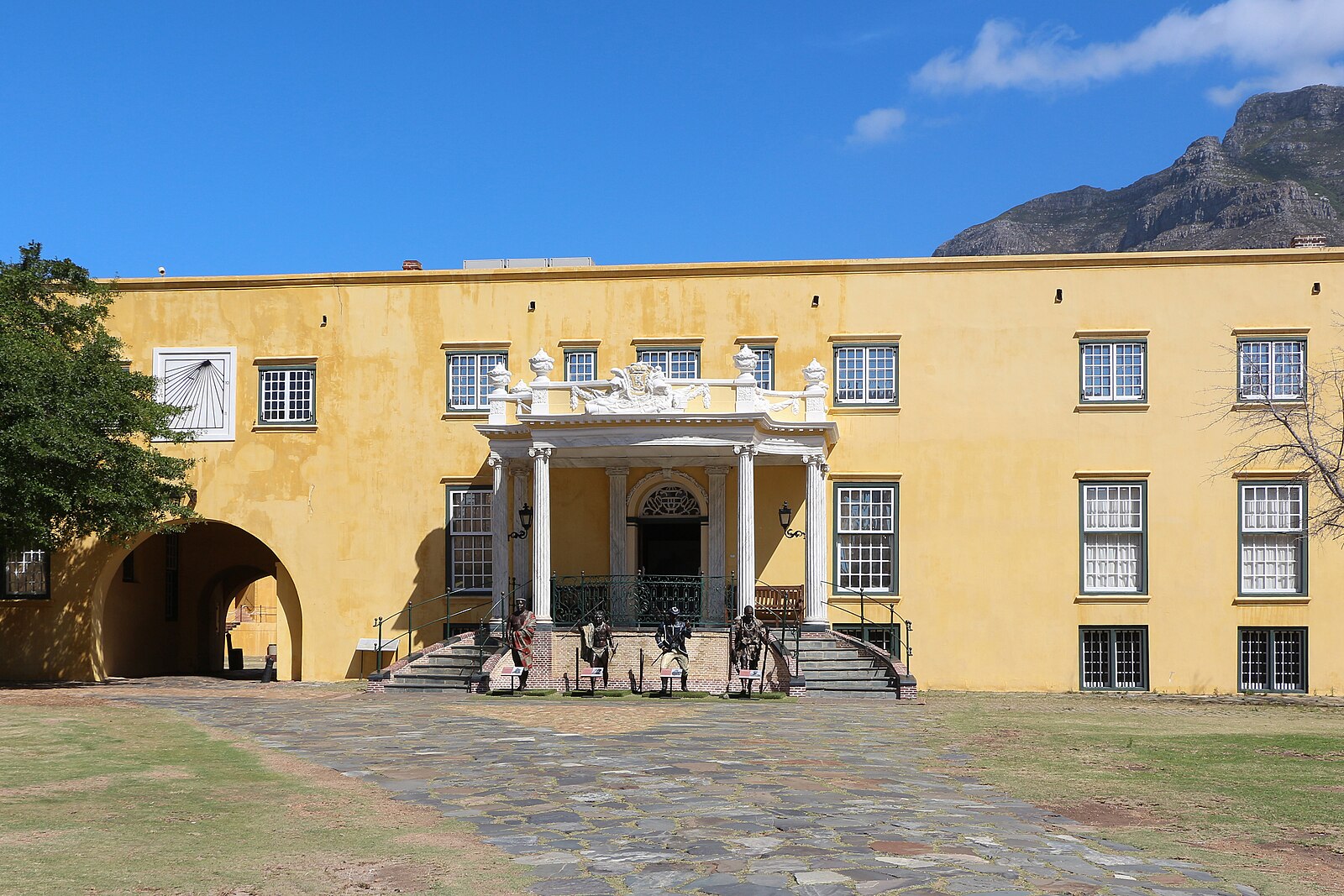
From the 1770s, colonists moving east met isiXhosa-speaking chiefdoms some 800 kilometres from Cape Town. About a century of intermittent frontier war followed.
The colonists gradually gained the upper hand.
Britain occupied the Cape in 1795 to guard the sea route to Asia against France. It took the Cape again in 1806 and abolished slavery there in 1838.
About 4,500 British settlers landed at Algoa Bay, now Nelson Mandela Bay, in 1820.
In the 1820s the Zulu leader Shaka built a powerful kingdom across the south-east. The upheaval that followed reshaped the interior, and Moshoeshoe built the state that became Lesotho.
From the 1830s, Afrikaner farmers called Voortrekkers moved inland, protesting British colonial rule.
On 16 December 1838, about 470 Voortrekkers defeated some 10,000 Zulu troops, the government says. More than 3,000 Zulus died.
Apartheid governments marked the date as the Day of the Vow, and democratic South Africa renamed it the Day of Reconciliation.
Diamonds, Gold and War, 1867 to 1910
The Voortrekkers founded two inland republics, the South African Republic (Transvaal) and the Orange Free State. Then the ground changed everything.
Diamonds were found near Kimberley in 1867.
Gold followed on the Witwatersrand, around modern Johannesburg, in 1886. The government’s guide calls it a turning point in South Africa’s history.
By the mid-20th century the country was also the world’s leading diamond producer, the guide says.
Britain used the voting rights of English-speaking miners as a pretext for war with both republics in 1899. The South African War, also called the Anglo-Boer War, was Britain’s bloodiest and costliest war between 1815 and 1915.
Britain lost more than 22,000 men and the Boers more than 34,000 people.
More than 15,000 black South Africans were also killed. In 1910 the Cape, Natal, Transvaal and Free State were joined as the Union of South Africa.
Union, Segregation and the Rise of Apartheid, 1910 to 1960
The government’s own history calls the Union “essentially a white union”. Black South Africans were shut out of power.
The African National Congress (ANC) was founded on 8 January 1912 to protest that exclusion.
The South African Communist Party was formed in 1921. More discriminatory laws followed, while Afrikaner nationalism grew during the global recession.
In 1943 the ANC Youth League launched, giving rise to leaders such as Nelson Mandela, Oliver Tambo and Walter Sisulu.
In 1948 the pro-Afrikaner National Party won power with the ideology of apartheid. The official guide describes it as stricter and more authoritarian than earlier segregation.
Pass laws forced black South Africans to carry documents proving they could enter “white areas”.
On 9 August 1956, women marched in a national protest against the pass laws, now marked as National Women’s Day. In December 1956 police arrested Mandela and many others.
That swoop led to the Treason Trial, which ended in acquittals in 1961.
Resistance, Repression and Isolation, 1960 to 1989
On Monday, 21 March 1960, police opened fire on a crowd protesting the pass laws at Sharpeville. Sixty-nine people were killed and 180 wounded.
The date is now Human Rights Day.
The shooting led to the country’s first state of emergency. On 8 April 1960 the government banned the ANC and the Pan Africanist Congress (PAC), a rival liberation movement.
In 1960 the ANC’s leader, Albert Lutuli, won the Nobel Peace Prize for his non-violent struggle against apartheid. He received it a year later.
Mandela was arrested in 1962 and later tried with other leaders in the Rivonia Trial. On 12 June 1964 he and seven co-accused were sentenced to life imprisonment.
Mandela was sent to Robben Island, a prison off Cape Town.
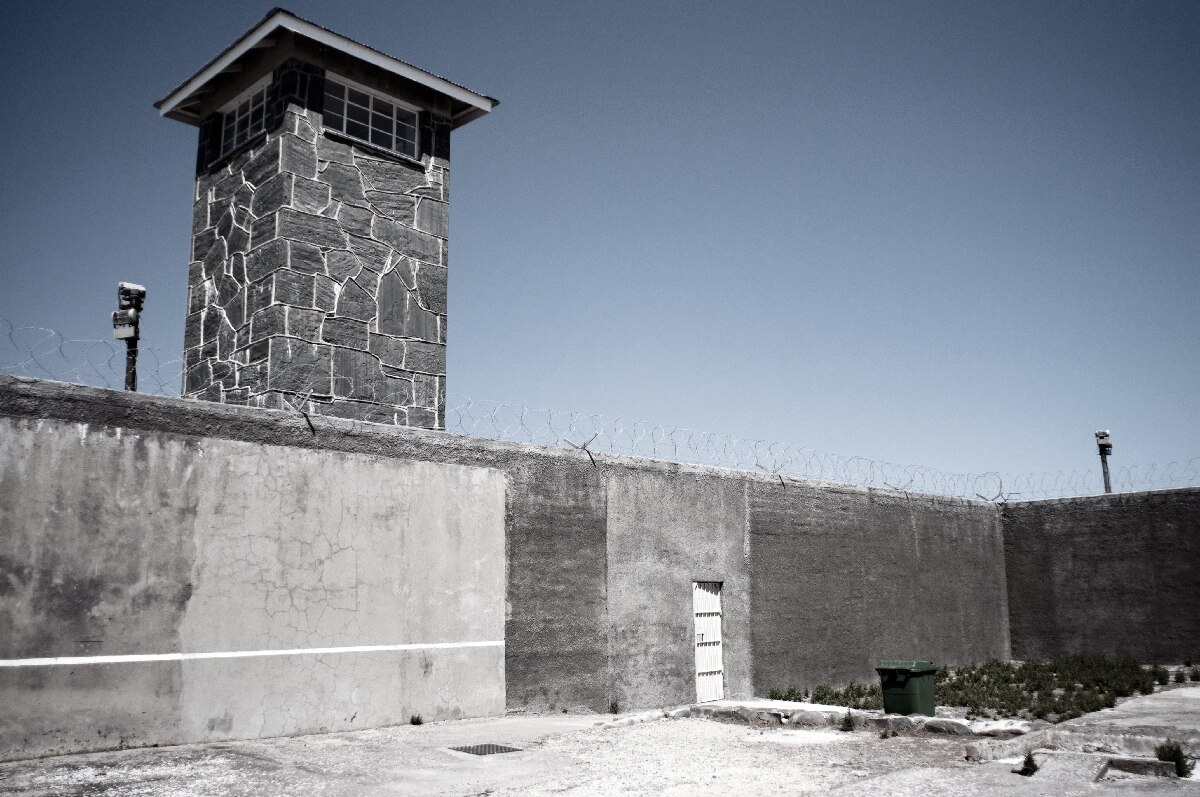
UNESCO has listed Robben Island as a World Heritage Site since 1999. Between the 17th and 20th centuries it served at various times as a prison, a hospital and a military base.
On Wednesday, 16 June 1976, more than 20,000 pupils in Soweto marched against an order to teach in Afrikaans. In the weeks of violence that followed, about 700 people were killed, many of them young.
The date is now Youth Day.
Archbishop Desmond Tutu won the 1984 Nobel Peace Prize as a unifying leader of the non-violent campaign. In 1983 the government created separate houses of Parliament for coloured and Indian South Africans, with limited power.
It scrapped the pass laws in 1986 as protest grew and international pressure mounted.
The Negotiated Transition, 1990 to 1997
In early 1990 President FW de Klerk’s government lifted the ban on the ANC and the PAC. Mandela walked out of Victor Verster Prison near Paarl on Sunday, 11 February 1990, nine days later.
He had spent 27 years in prison.
In April 1993 a gunman assassinated Chris Hani. He was general secretary of the Communist Party and chief of staff of the ANC’s armed wing.
Mandela and de Klerk shared the 1993 Nobel Peace Prize.
South Africa voted on Wednesday, 27 April 1994, under an interim constitution. The ANC won 62% and Mandela was inaugurated as president on 10 May 1994.
Nine new provinces replaced four old provinces and ten black homelands. The ANC, the National Party and the Inkatha Freedom Party (IFP) formed a Government of National Unity.
It set up the Truth and Reconciliation Commission (TRC) under a 1995 law. The TRC had committees on human rights violations, amnesty and reparations.
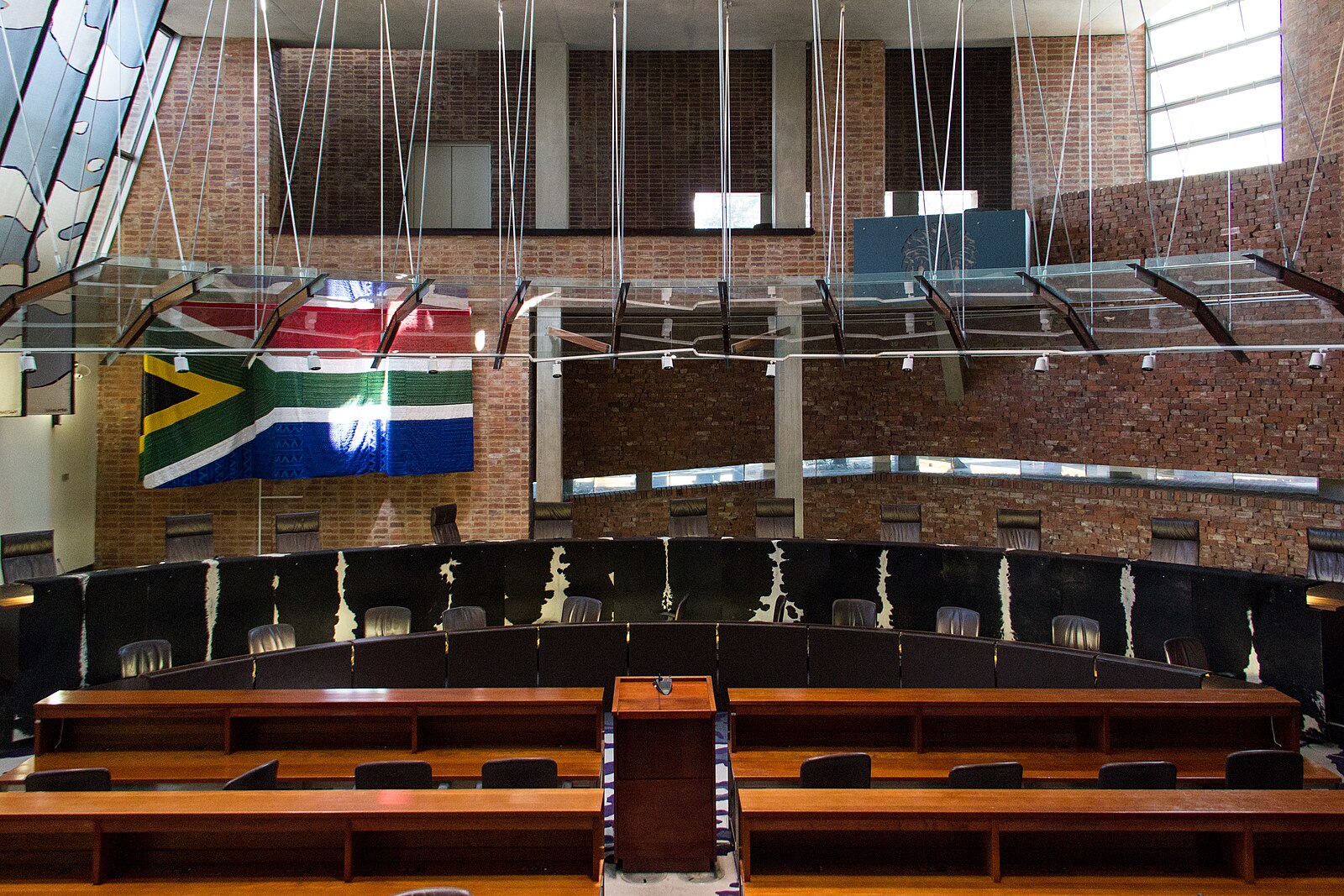
The Constitutional Court approved the final Constitution on 4 December 1996, and it took effect on 4 February 1997. The government calls its Bill of Rights the “cornerstone of democracy”.
The Constitutional Court sits on Constitution Hill in Johannesburg.
Democracy and Its Discontents, 1999 to 2026
Mandela stepped down in 1999 after one term. The ANC won just short of two-thirds of the vote that year and 69.68% in 2004.
In 2008 Kgalema Motlanthe became president after the ANC recalled President Thabo Mbeki.
Jacob Zuma was inaugurated on 9 May 2009, and South Africa hosted the FIFA World Cup in 2010. Mandela died on 5 December 2013, aged 95.
Zuma resigned in February 2018, and Parliament elected Cyril Ramaphosa president on 15 February 2018.
A judicial commission led by then Deputy Chief Justice Raymond Zondo examined allegations of state capture, corruption and fraud. It handed its reports to the Presidency in 2022.
In July 2021 unrest in parts of KwaZulu-Natal and Gauteng left more than 350 people dead.
The election of Wednesday, 29 May 2024, ended thirty years of ANC majority rule. The ANC stayed the largest party, the Democratic Alliance (DA), the official opposition, came second.
The newly formed uMkhonto weSizwe (MK) Party, named after the ANC’s former armed wing, came third. Ten parties then formed a new Government of National Unity, with Ramaphosa re-elected.
As of October 2026, Ramaphosa remains president and Paul Mashatile deputy president, government statements show. Voters choose municipal councils on Wednesday, 4 November 2026.
On 9 October 2026 the Nobel Committee honoured Navi Pillay, a jurist from Durban who once defended Nelson Mandela and other opponents of apartheid. The prize recognised “her efforts to promote peace and international law”.
How the Past Shapes South Africa in 2026
The government’s own reviews say rural areas are still marked by great poverty and inequality. Unemployment stood at 33.6% in the second quarter of 2026, Statistics South Africa reported.
The government’s own plans call poverty, unemployment and inequality the “triple challenge”.
Inequality also remains wide. The World Bank puts South Africa’s Gini index, a measure of income inequality, at 54.1 in 2022.
Zero would mean perfect equality.
The Expropriation Act 13 of 2024 governs when the state may take property. A US executive order says it enables the seizure of Afrikaners’ farmland without compensation.
That claim sits at the heart of the dispute with Washington.
Coalition politics is the newest chapter. Since 2024 no single party controls Parliament, so laws need partners.
The South Africa politics guide explains who holds which office.
What It Means for US Readers
The United States has long been part of South Africa’s story. Congress passed the Comprehensive Anti-Apartheid Act in 1986 over President Ronald Reagan’s veto.
The House voted 313 to 83 on 29 September and the Senate 78 to 21 on 2 October.
The African Growth and Opportunity Act (AGOA) dates from 2000. It gives eligible African countries duty-free access to the US market, the US Trade Representative says.
It covers more than 1,800 products.
In September 2026 the US extended AGOA to December 2028, BusinessTech reported. Whether South Africa keeps those benefits is now an open question.
Relations cooled sharply in 2025. A White House executive order of 7 February 2025 halted US aid to South Africa, citing the Expropriation Act.
It also made it US policy to resettle Afrikaner refugees.
For investors, history explains why policy on land, mining and black economic empowerment moves slowly and through the courts. For travellers, the Robben Island ferry, the Apartheid-era sites of Soweto and Constitution Hill are the core history trail.
Check the State Department’s current South Africa advisory before travelling.
Connected Coverage
South Africa Politics Explained, Who Holds Power in 2026
Who Runs South Africa in 2026, Coalition and Business
South Africa Population and Ethnic Groups Explained
South Africa and Its Neighbours in Southern Africa
Fifty Years After Soweto, South Africa’s Youth Fight a Battle for Jobs
Who Is South Africa’s President? Cyril Ramaphosa Explained
What Is Not Known
Several questions remain open as of October 2026. The result of the 4 November local elections, and what it means for the coalition, is unknown.
So is the outcome of the dispute with Washington over land and refugees.
BusinessTech, a South African business site, reported the AGOA extension to December 2028 in September 2026. It also warned that the list of eligible countries could still change.
No final US decision on the country’s status had been published.
Even the record of the deep past has gaps. UNESCO’s own page dates the end of Mapungubwe both to the late 13th century and to the 14th.
Decades after the TRC hearings, the justice department still invites identified victims to claim reparations and study or housing help.
Frequently Asked Questions
When did apartheid start and end in South Africa?
Apartheid began after the National Party won power in 1948. It ended with the first democratic election on 27 April 1994, when the ANC won 62% and Nelson Mandela became president.
Who were the first people in South Africa?
People have lived at Africa’s southern tip for more than 100,000 years. About 2,000 years ago the Khoekhoen herders and San hunter-gatherers lived there, as Bantu-speaking farmers began arriving.
When did Europeans arrive in South Africa?
The Dutch East India Company set up the first European settlement at Table Bay in 1652. Britain occupied the Cape in 1795 and again in 1806.
What happened at Sharpeville and Soweto?
On 21 March 1960 police killed 69 people protesting pass laws at Sharpeville. On 16 June 1976 more than 20,000 Soweto pupils marched, and about 700 people died in the violence that followed.
When was Nelson Mandela released?
Nelson Mandela was released from Victor Verster Prison on Sunday, 11 February 1990, after 27 years in prison. He was inaugurated as president on 10 May 1994.
Who leads South Africa in 2026?
As of October 2026, President Cyril Ramaphosa leads a Government of National Unity formed by ten parties after the ANC lost its majority on 29 May 2024.
Sources: South African Government, History (Official Guide to South Africa); South African Government, Public holidays; South African Government, Constitution of the Republic of South Africa, 1996; South African Government, media statements, 8 and 9 October 2026; Department of Justice, Truth and Reconciliation Commission; Nelson Mandela Foundation, Biography; UNESCO, Mapungubwe World Heritage listing; UNESCO, Robben Island; Norwegian Nobel Committee, Nobel Peace Prize 2026; Nobel Peace Prize 1960; Nobel Peace Prize 1984; World Bank, Gini index, South Africa; US Senate, Vetoes by President Ronald Reagan; Office of the US Trade Representative, AGOA; The White House, executive order of 7 February 2025; Statistics South Africa, QLFS Q2 2026 media release; SAnews, Local Government Elections date; BusinessTech, AGOA extension, 3 September 2026. All accessed 13 October 2026.
This article was produced by The Rio Times’ automated newsroom system. How we use AI · Report an error · Editorial responsibility: Matthias Camenzind, Editor-in-Chief
Expat Guide to South Africa
What The Rio Times publishes for foreigners who live in or move to South Africa.
Start here
- Moving to South Africa: Visa Route Decides Everything, 54,000 Applications Overdue at Home Affairs
- South Africa Residency Visa Requirements and How to Meet Them
- Opening a Bank Account in South Africa as a Foreigner
- Cost of Living in Johannesburg: Rent, Power and Water in 2026
City guides
Cape Town, Johannesburg, Durban
Coming up in South Africa
- Mamma Mia Montecasino Season Opens 16 October in Johannesburg, South Africa 16 Oct
- South Africa Hosts 9,000 Energy Delegates in Cape Town, 12-16 October 16 Oct
- Ne-Yo Sells Out Cape Town and Pretoria for 17 and 18 October 17 Oct
- Sjava 10 Year Celebration Tour Ends Sold Out in South Africa on 23 October 23 Oct
Understand South Africa