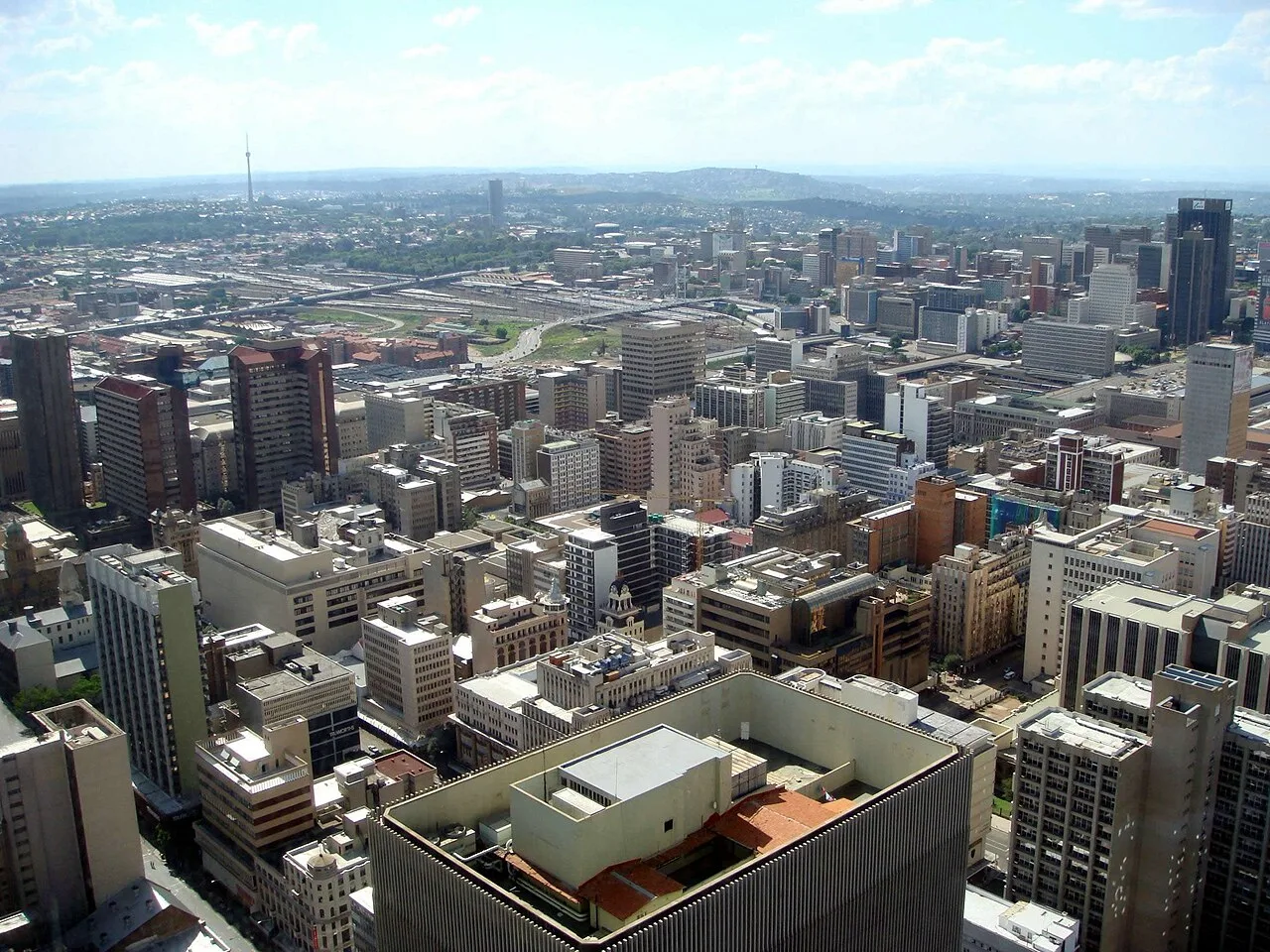
South Africa goes to the polls on Wednesday, 4 November, to choose the councils that run its cities, and the governing African National Congress (ANC) faces its hardest test yet in the big metros. Our South Africa local elections hub tracks every update.
Voting runs from 7 a.m. to 9 p.m. South African time, which is 12:00 a.m. to 2:00 p.m. ET, because South Africa is seven hours ahead of the US East Coast after US clocks went back on 1 November. Special votes for people who cannot attend on the day are cast on Monday 2 and Tuesday 3 November.
Key Facts
- %s %s
- %s %s
- %s %s
- %s %s
What Is at Stake in the Big Cities
The ANC, the party of President Cyril Ramaphosa, won 45.6% of the vote in the last local elections in 2021. A national poll by Ipsos, the international survey firm, published on 4 September, put it at 31%, ahead of the DA at 25%, the uMkhonto weSizwe party (MK) at 14% and the Economic Freedom Fighters (EFF) at 11%.
The DA is the ANC’s main rival in the cities, and MK is the party of former president Jacob Zuma. The main contests are the ANC against the DA in Johannesburg and Tshwane, which includes Pretoria, the DA’s hold on Cape Town, and MK’s strength in eThekwini, which includes Durban.
Ipsos put the DA at 46% in Cape Town and MK at 55% in eThekwini among registered voters with a party preference. In Johannesburg it had the ANC at 31% and the DA at 27%, and in Tshwane the DA at 31% against 22% for the ANC.
Local elections decide who runs city services, and councils elect their mayors, so deals struck after the count can matter as much as the vote. More recent polls from other firms exist, and we could not verify their figures.
What Prediction Markets Say
Polymarket, a crypto-based prediction market, priced the Johannesburg mayoral race on 1 November at 6:22 a.m. ET. Helen Zille led at 58.0%, ahead of David Makhura at 8.3% and Herman Mashaba at 7.0%, with US$136,743 traded.
For Durban, the same platform gave Mxolisi Phakathi 58.5% and Haniff Hoosen 25.0%, with US$46,616 traded. These are bets, not polls, and a market on one race says little about the national vote.
Why we show this: prediction markets turn real-money bets into a live probability that moves within minutes of the news, which is why investors, campaigns and newsrooms in the United States now follow them closely. We show them next to polls and official results, never instead of them.
What Has Changed Since Our Earlier Reports
In mid-October the Constitutional Court, South Africa’s highest court on constitutional matters, ordered the Electoral Commission of South Africa (IEC), the body that runs the vote, to restore 181 ANC candidates to the ballot. They had been excluded after the party missed a deadline on its final lists, and they stand in six municipalities in the Eastern Cape, KwaZulu-Natal and the Free State.
The IEC applied the same reasoning to 32 other parties and had to print 6.6 million extra ballots. Printing was due to finish on Friday 30 October, and IEC chair Mosotho Moepya said the commission did not expect the dispute to move the election date.
Special votes have been approved for 2,655,067 people, up 131% on 2021, and the IEC scheduled more than 600,000 home visits, about 80% of them for voters aged 60 or over. Chief Electoral Officer Sy Mamabolo said audit findings on the results system had been remediated and it was ready and fit for purpose.
The IEC is working to avoid a repeat of a leaderboard glitch in 2024 that lasted about two hours. Its results centre is at the Gallagher Convention Centre in Midrand, a business district between Johannesburg and Pretoria.
The Timetable Behind the Vote
The voters’ roll closed on 7 August and candidate nominations closed on 28 August. The final candidate list was published on 16 September, and special-vote applications opened on 21 September.
What It Means for US Readers
Results will appear on the IEC website, elections.org.za, and on the dashboard at its Midrand results centre. Polls close at 2:00 p.m. ET on Wednesday, 4 November, so early results could arrive on US afternoons and evenings.
Johannesburg is South Africa’s biggest city and its business centre. Investors who follow the rand and the Johannesburg stock market will watch whether a weakened ANC must lean on coalition partners.
What Is Not Known
The date of the official results declaration is not confirmed, and neither are the daily hours for special voting. We also could not confirm that all reprinted ballots have been delivered.
Poll evidence is mixed, with some firms showing the DA far stronger in Johannesburg than Ipsos does. Fieldwork details for several surveys are unconfirmed, and no poll is a firm prediction.
Frequently Asked Questions
When do South Africa’s local elections take place?
Voting is on Wednesday, 4 November 2026, from 7 a.m. to 9 p.m. South African time. That is 12:00 a.m. to 2:00 p.m. ET.
When can people vote early?
Special votes are on Monday 2 and Tuesday 3 November. The daily hours for special voting are not confirmed.
This article was produced by The Rio Times’ automated newsroom system. How we use AI · Report an error · Editorial responsibility: Matthias Camenzind, Editor-in-Chief