
BRAZIL · ELECTIONS AND WORK
Key Facts
- The country Brazil, where federal labor prosecutors can sue employers who pressure workers over their vote.
- Power Index Brazil ranks 1st of 14 in The Rio Times Latin America Power Index, with 75.0 points (October 2026 edition).
- What happened Complaints rose 75%, from 1,937 on runoff day to 3,396 by noon on Thursday 29 October 2026.
- The runoff President Luiz Inácio Lula da Silva won on Sunday 25 October 2026 with 51.79% of valid votes.
- The pattern Online posts urged bosses to check how staff voted and to fire backers of the loser.
- The response Prosecutors had won 52 court orders by 26 October and sued Meta, the US owner of Instagram.
Brazil electoral harassment, meaning bosses who threaten or punish workers over how they vote, drew 3,396 complaints by noon on Thursday 29 October 2026. That is 75% more than the 1,937 filed by the end of the 25 October runoff.
The Ministério Público do Trabalho (MPT), Brazil’s federal labor prosecutor’s office, points to online posts urging bosses to fire workers who backed the loser. For US readers it matters because Meta, the US owner of Instagram, is being sued, as our report on the court order against Meta explains.
How Brazil Electoral Harassment Complaints Grew
By 11:59 p.m. on Sunday 25 October, the night of the runoff, the MPT had received 1,937 complaints in the 2026 elections. Of those, 991 came before the end of the first round and 946 between the two rounds.
From just after midnight on 26 October to noon on Thursday 29 October, the office received another 1,459 complaints, taking the year’s total to 3,396. That is a rise of 75% in three and a half days, and the count is still running.
What the Posts Told Bosses to Do
After the runoff, social media profiles began addressing employers directly, according to the MPT’s court filing. Posts from business owners, influencers and even lawmakers told bosses to search workers’ accounts for their votes and fire those who backed a different candidate.
Other posts mocked workers by name and picture or cheered dismissals, which moved Brazil electoral harassment from the workplace to the internet. Four posts from one verified profile with 3.8 million followers drew more than 2 million likes.
Who Won the Runoff and Why It Matters
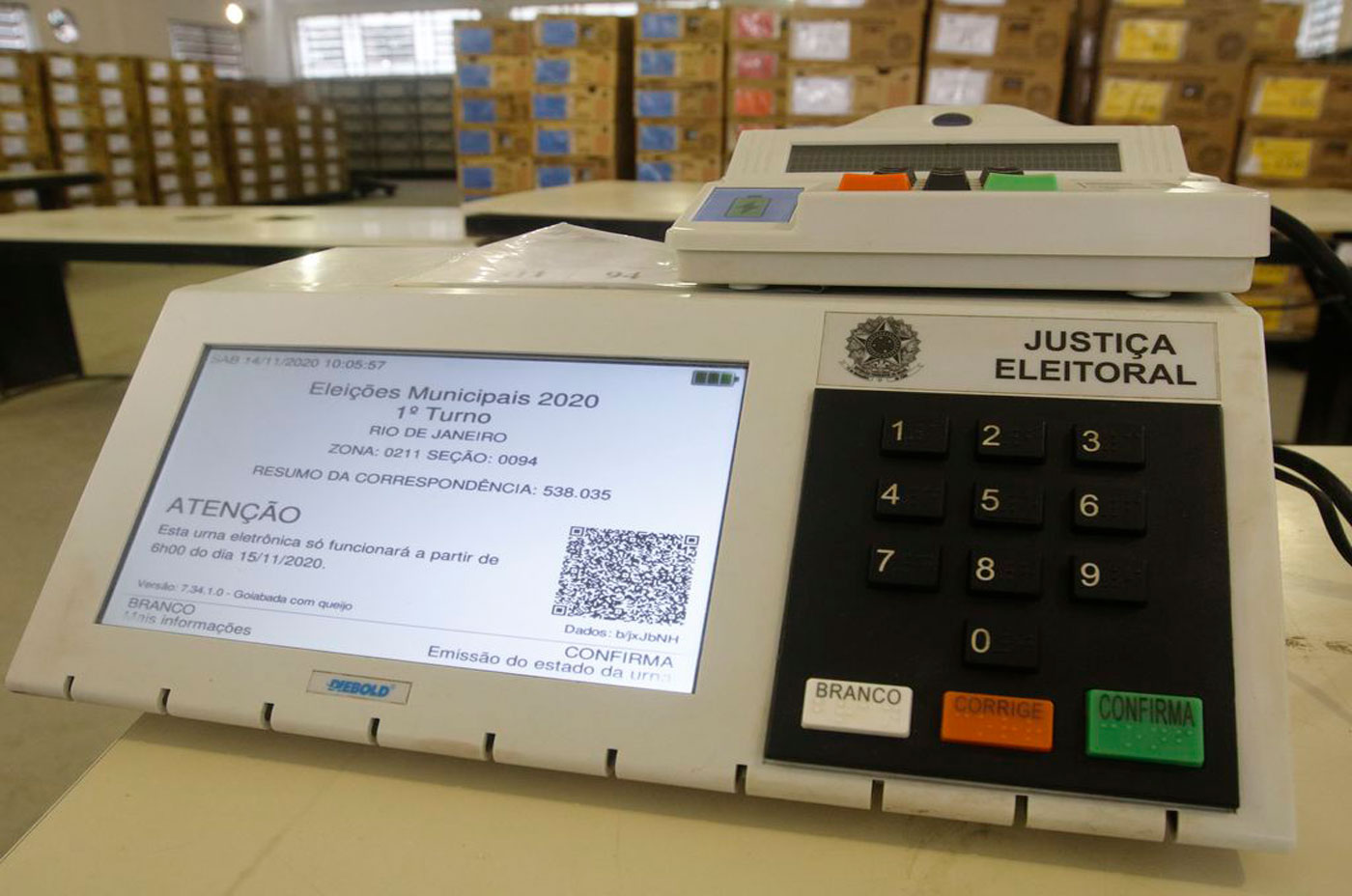
Lula, the leftist president from the Workers’ Party (PT), won re-election on Sunday 25 October 2026 with 51.79% of valid votes. Senator Flávio Bolsonaro, son of former president Jair Bolsonaro and a member of the conservative Liberal Party (PL), took 48.21%.
Lula received 64,256,232 votes against 59,826,041, a margin of 4,430,191. The Superior Electoral Court (TSE), which runs Brazil’s elections, said about 128 million people voted.
The margin of about 3.6 percentage points explains why pressure on voters draws close attention. Readers can follow the aftermath in our Brazil election coverage.
What Prosecutors and Courts Have Done
By 26 October the MPT had filed 59 public civil lawsuits and won 52 court orders in them. It had also signed 53 conduct-adjustment agreements, in which employers promise to stop the practice.
São Paulo state had the most complaints with 350, followed by Minas Gerais with 212 and Rio de Janeiro with 169. The head of the MPT, Gláucio Araújo de Oliveira, said: “The business owner owns the business, not the vote of his employee.”
He added that dismissing workers over their political convictions is illegal and will be pursued before the labor courts. The MPT asks anyone who suffered or saw Brazil electoral harassment to file a complaint on its website.
Cases From the Runoff and After
In Goiás state, prosecutors sued a meatpacker over a video offering 1,000 supporters of one candidate a free resort trip on runoff day. The complaint says it aimed to keep people from voting, so a labor court banned it, with a fine of R$100,000 (about US$18,500) per worker.
In Bahia, a court ordered the firm running Shopee’s operations, an online marketplace, to set shift rotations so all called-in workers could vote. The order followed a complaint that about 80 workers were stopped from voting.
In Rio de Janeiro, a court barred the Zona Sul supermarket chain from sending staff more political messages. The ban followed a letter from its president on the eve of the vote.
The Case Against Meta
On Thursday 29 October the MPT sued Meta in a São Paulo labor court. It asked for R$50 million (about US$9.3 million) in collective damages and for the posts to be removed within 24 hours.
Judge Bruno José Perusso granted an emergency order the same day. Meta must remove the posts within 24 hours of notice and show a warning to all its users in Brazil within 72 hours.
The warning must say that Brazilian law bans discrimination and electoral harassment at work. Meta faces a fine of R$200,000 (about US$37,000) if it fails to show it.
What It Means for You
US companies that employ Brazilians face the same rule as local firms. A boss may dismiss someone without giving a reason, but not for exclusively political reasons, which the São Paulo judge said Brazil’s constitution forbids.
Messages to staff that lean on politics can draw an injunction, as the Rio supermarket chain found. Prosecutors sued a US platform within four days of the runoff, so foreign firms should expect scrutiny of Brazil electoral harassment.
What Is Not Known
The MPT counts complaints, not proven cases. It is not known how many workers faced real Brazil electoral harassment, such as firing or threats.
It is also not known whether Meta will comply or appeal in this Brazil electoral harassment case. Nor is it known whether the claim of R$50 million (about US$9.3 million) will succeed.
More: Brazil news in English, every day from The Rio Times.
Frequently Asked Questions
What is Brazil electoral harassment?
It is the pressure bosses put on workers over how they vote, such as threats, dismissals or promised rewards. Brazilian labor prosecutors treat it as discrimination.
How many complaints has Brazil received?
The labor prosecutor’s office had logged 3,396 complaints in the 2026 elections by noon on Thursday 29 October. That is 75% more than the 1,937 counted at the end of runoff day.
Who won Brazil’s 2026 runoff?
President Lula won with 51.79% of valid votes on Sunday 25 October 2026. Senator Flávio Bolsonaro took 48.21%.
Is Meta involved?
Yes, prosecutors sued Meta over posts urging employers to fire workers over their vote. A São Paulo labor judge ordered the posts removed on 29 October.
Can a Brazilian employer fire someone over politics?
No, not when politics is the only reason. A São Paulo labor judge said on 29 October that Brazil’s constitution forbids dismissal for exclusively political reasons.
Sources: Ministério Público do Trabalho (MPT), balanço: 52 liminares e 1.937 denúncias (26 October 2026), 26 October 2026; MPT, 530 denúncias após o resultado das eleições; 991 no primeiro turno, 946 no segundo (27 October 2026), 27 October 2026; MPT, ação civil pública contra a Meta: 1.459 denúncias desde 26 de outubro, total de 3.396 (29 October 2026), 29 October 2026; MPT, decisão da 77ª Vara do Trabalho de São Paulo contra a Meta (29 October 2026), 29 October 2026; MPT, liminar contra empresário de Bragança (PA) (31 October 2026), 31 October 2026; Tribunal Superior Eleitoral (TSE), resultado do segundo turno de 25 de outubro de 2026, 26 October 2026.
In depth
Editorial responsibility: Matthias Camenzind, Editor-in-Chief · Editorial standards · Report an error
Brazil runoff, Sunday, October 25: When is the Brazil runoff election. Latest: Brazil runoff polls, Flávio 51%, Lula 49%.