Retire in Guatemala: The Pensionado Residency Income Rules
Guides · Guatemala
—The stakes. Guatemala offers a direct path to permanent residence for foreigners with lawful passive income from abroad.
—The route. The pensionado and rentista categories are handled through the Instituto Guatemalteco de Migración without a local guarantor.
—The income test. Article 33 of the Reglamento de Residencias Guatemaltecas, Acuerdo IGM-016-2025, sets the requirement at US$1,250 a month for the principal applicant plus US$300 a month per dependent.
—The tax edge. Guatemala’s territorial tax system generally keeps foreign pensions and foreign-source passive income outside the local tax base.
—The reality check. Private hospitals cluster in Guatemala City, while rural and small-town care remains limited, making evacuation cover common among expats.
Guatemala has become one of Latin America’s most talked-about retirement destinations because its migration law treats a foreign pension as a key to permanence, not just a tourist stay. Retirement here is less about escaping paperwork than about choosing which version of daily life you can sustain.
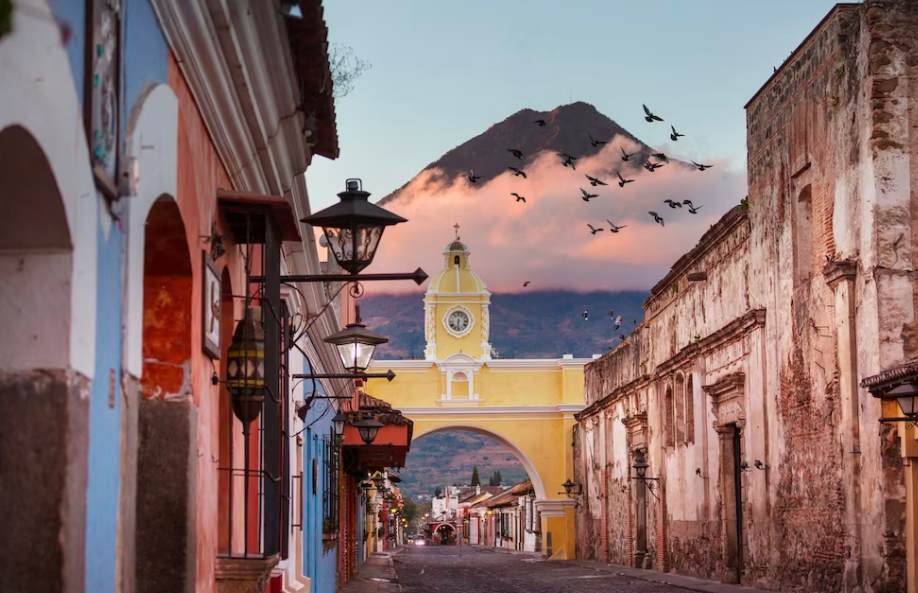
The Residence Route That Starts as Permanent
Guatemala’s retiree-focused legal route is the <em>residencia permanente para rentistas o pensionados</em>, or permanent residence for rentiers and pensioners. Secondary reporting tied to materials from the Instituto Guatemalteco de Migración describes it as covering foreigners with permanent lawful income from abroad.
That income can come from pensions, rent, dividends, annuities, or similar passive sources. The category is repeatedly described as a direct path to permanent residence from the outset, not a provisional permit that converts later.
The regulation in force, Acuerdo IGM-016-2025, sets US$1,250 a month for the principal applicant. Each dependent adds US$300 a month under the same article, and the rule applies to both the pensionado and the rentista categories.
This figure should be treated as a widely reported IGM threshold rather than an independently verified official quote. Applicants should confirm the exact current amount directly with IGM before committing funds.
Reported qualifying income includes foreign government pensions, Social Security, employer pensions, and military pensions. Rental income from property outside Guatemala, dividends, annuities, and investment income may also qualify with the right documentation.
How the Income Mechanism Works
The core requirement is proving that money arrives from outside Guatemala on a regular, lawful basis. Pension letters, bank records, contracts, or brokerage statements are the typical evidence.
The logic is mechanical: a foreign income stream must be documented well enough for a Guatemalan official to see its origin and continuity. One-time savings alone are generally less persuasive than a recurring pension or annuity.
Guides describe a periodic re-verification of income after approval, commonly cited as every five years. That means approval is not purely a one-time audit; the underlying income stream must remain demonstrable.
For married couples the main applicant carries the US$1,250 base. Each dependent adds US$300, which makes the route cheaper for a couple than for a larger household.
Because the category is residence based on passive income, it does not authorise employment in Guatemala by itself. Retirees are not typically moving to take local jobs, so this limit rarely disrupts the intended use.
The IGM Application in Practice
Applications are made through the <em>Instituto Guatemalteco de Migración</em>, the national migration authority. Immigration practice is that the file is submitted directly to IGM in Guatemala City.
A typical file includes passport copies, an apostilled criminal background check, proof of legal entry, proof of address, and income documentation. Apostille means the document has been authenticated for use across countries under the Hague Convention.
The pensionado and rentista category does not require a Guatemalan guarantor. This removes one of the more difficult local relationships that other residence routes sometimes demand.
The safest approach is to request the current fee schedule from IGM at the time of filing. Processing times vary and can stretch for months. Applicants commonly remain in legal status during the process by maintaining the entry permission they used to arrive.
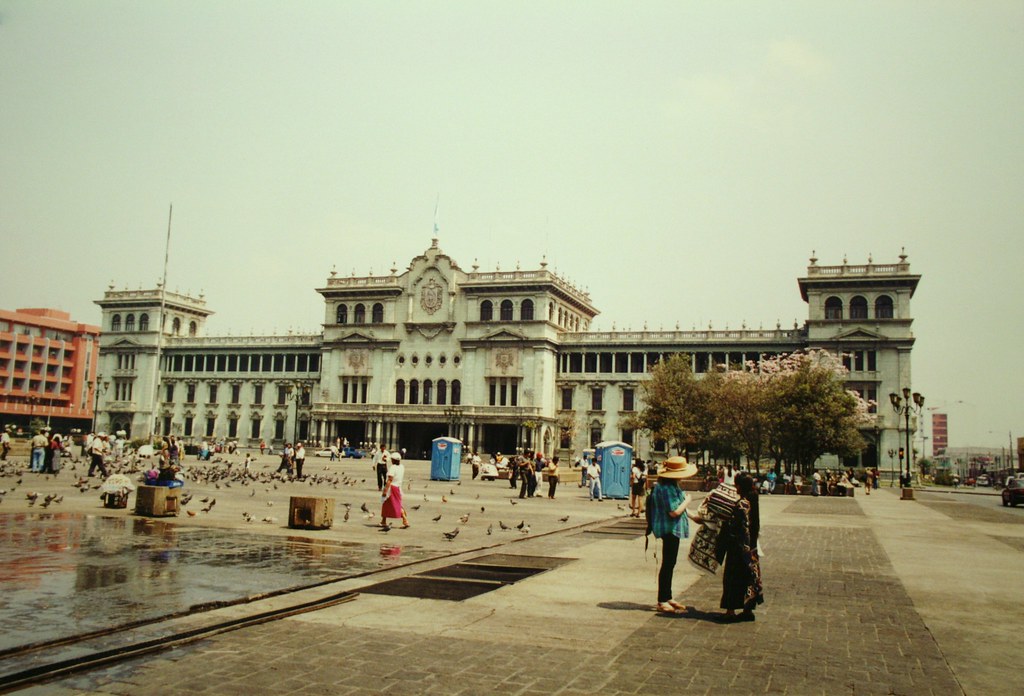
Territorial Taxation and Foreign Pensions
Guatemala is widely described as using a territorial tax system. Under this system, only income generated inside Guatemala is generally subject to Guatemalan tax.
Foreign-source income sits outside the Guatemalan tax base. Expat tax guides explicitly say foreign pensions and other foreign-source passive income are not taxed in Guatemala under that framework.
A retired couple living on a pension from the United States, Canada, or Europe would therefore not normally owe Guatemalan income tax on that pension. The same generally applies to dividends and rental income earned abroad.
Income earned locally, such as rent from a property you own in Guatemala or a business operating inside the country, is different. That would fall within the territorial tax net.
The territorial principle is one reason Guatemala attracts retirees. You can become a resident without converting your foreign retirement savings into a new taxable event.
Where Retirees Actually Settle
The most established settlement pattern for foreigners is concentrated in Antigua Guatemala, Lake Atitlán villages such as Panajachel, and affluent central neighbourhoods of Guatemala City. Each offers a different trade-off between services and tranquillity.
Antigua is repeatedly described as one of the easiest places for foreigners to land. It combines walkability, English-friendly services, Spanish schools, and a visible foreign resident network.
Local estimates describe a thriving expat community of 3,000 to 5,000 residents in Antigua. That range is widely repeated in expat-oriented coverage rather than a government census figure.
Lake Atitlán villages such as Panajachel draw retirees looking for water views and a slower rhythm. Rural surroundings mean access to advanced medical care is farther away than in the capital.
Guatemala City zones 10, 14, and 15 are the usual expat and upper-income residential districts. These zones host better private hospitals, international dining, and the bureaucratic offices needed for paperwork.
Cost of Living for a Retired Couple
Housing, food, and domestic help are the categories where foreigners most often notice savings. The search results do not provide a single authoritative, audited retired couple budget figure. Any exact monthly total should be tied to a specific local survey or indexed cost database rather than repeated as fact.
A modest budget in a town like Antigua or Panajachel will look different from a comfortable budget in Guatemala City’s private hospital districts. Location and lifestyle drive most of the variance.
Domestic staff are part of daily budgets where retirees can afford them. This is a well-known pattern in expat accounts, though official statistics do not capture household employment among foreigners.
Prudent planning means budgeting for private healthcare and insurance, not only rent and groceries. Retirees who compare only everyday prices can underestimate the cost of a major medical event.
Healthcare Reality and Evacuation Cover
Healthcare in Guatemala is split unevenly. The best private hospitals are concentrated in Guatemala City and offer service levels that expats often compare favourably to home.
Rural areas and small towns have much more limited care. A retiree living near Lake Atitlán may need to travel to the capital for complex diagnostics, surgery, or specialist treatment.
Expats commonly rely on evacuation and international medical insurance for major emergencies. Evacuation cover pays to move a patient to a better-equipped facility, often across a border or back to the home country.
For everyday needs, private clinics and English-speaking doctors are accessible in expat-heavy areas. Pharmacies are widespread, but prescription practices can differ from North America or Europe.
The practical rule is to assess your own medical history before choosing a home base. Someone with stable health may enjoy a lakeside village; someone with recurring needs often stays closer to Guatemala City.

Safety and How Expats Manage It
Safety coverage in published expat surveys generally portrays Guatemala as a place where foreigners reduce risk through behaviour. Neighbourhood selection, avoiding night travel, using trusted transport, and not displaying valuables are the standard practices.
These are risk-management behaviours rather than guarantees of safety. Crime exists, and expat forums rarely suggest ignoring that reality.
In Antigua and the safer zones of Guatemala City, daily life often feels normal during daylight. The contrast with outlying areas and night hours is sharper than in many North American cities.
Foreigners frequently adopt local transport habits such as pre-arranged drivers or guarded parking. Walking alone at night in unfamiliar areas is widely discouraged.
The safest approach is to treat security as a lifestyle decision. Choosing where you live, how you move, and what you carry matters more than any single piece of advice.
Banking, Driving, and Domestic Staff
Daily life for retirees is commonly described as workable but cash- and paperwork-heavy. Expats often maintain relationships with a local bank for rent, utilities, and everyday purchases.
Opening a bank account usually requires residence status, a passport, and proof of local address. Banking can be slower and more document-driven than many foreigners expect.
For driving, expats commonly note the need for caution due to traffic, road conditions, and varying local driving norms. Rural travel is usually described as more demanding than urban travel.
Many retirees use trusted drivers or guarded transport for longer trips. This shifts the burden of local navigation and security to someone who knows the roads.
Domestic staff are a common feature of expat life where budgets allow. A housekeeper or gardener can change the daily experience, but employment is informal in many households, so foreigners should understand local labour norms before hiring.
The Expat Community in Antigua
Antigua has the most visible foreign resident network of any retirement destination in Guatemala. Its Spanish schools create a constant inflow of foreigners, some of whom later become residents.
The 3,000 to 5,000 expat figure frequently cited in guides is a community estimate. It is not an official census count, but even the lower bound is large enough to support social groups and services.
English-friendly services are common in Antigua. Cafés, clinics, real estate agents, and volunteer networks often operate with foreign residents in mind.
This visibility cuts both ways. New arrivals find an easier landing, but Antigua is not a cheap or isolated colonial town; it is a tourism and expat hub with corresponding prices.
Retirees who want immersion in Spanish often choose Quetzaltenango or smaller lakeside villages. Those who want community from day one usually start in Antigua.
Practical Daily Life for a New Resident
The first months after approval are usually consumed by paperwork and setup. Bank accounts, rental contracts, phone plans, and local identity routines each require patience and copies of documents.
Guatemala runs on local documents. Carry a passport copy and residence proof when opening services or signing contracts.
Cash remains important even as cards gain acceptance in urban areas. Smaller towns, market vendors, and domestic staff are often paid in local currency.
Spanish ability changes daily life more than any other single factor. In Antigua and the capital you can survive in English, but Spanish unlocks better prices and smoother bureaucracy.
Long-term retirees tend to build a local team: a trusted driver, a doctor or clinic, and sometimes a lawyer. That small network reduces the friction of living far from home.
Connected Coverage
Is Guatemala Safe for Foreigners? Guide
Guatemala’s Congress Capped Fuel Prices, but Not at the Pump Yet
The Big Picture
This article was drafted with automated assistance and reviewed before publication. How we use AI · Report an error · Editorial responsibility: Matthias Camenzind, Editor-in-Chief
Expat Guide to Guatemala
What The Rio Times publishes for foreigners who live in or move to Guatemala.
Start here
- Best Places to Live in Guatemala for Expats
- Guatemala’s Fuel Tax Cut Sits on the President’s Desk: What Expats Need to Know
- Moving to Guatemala 2026 — Residency, Costs and Your First Year Explained
- Investing in Guatemala as a Foreigner in 2026: Two Taxes Just Went
Coming up in Guatemala
- Giant Kite Festival in Sumpango and Santiago on 1 November 1 Nov
- Martin Garrix in Guatemala: Explanada 5 Show on 13 November, Tickets from Q790 13 Nov
Understand Guatemala