Guatemala’s Congress Votes Gas Cap of US$5.11 a Gallon
Key Facts
Guatemala, Central America’s most populous country, has spent nine days under road blockades as fuel costs pushed inflation higher. Late on 8 September, Congress approved a fuel price cap, but nobody pays it yet.
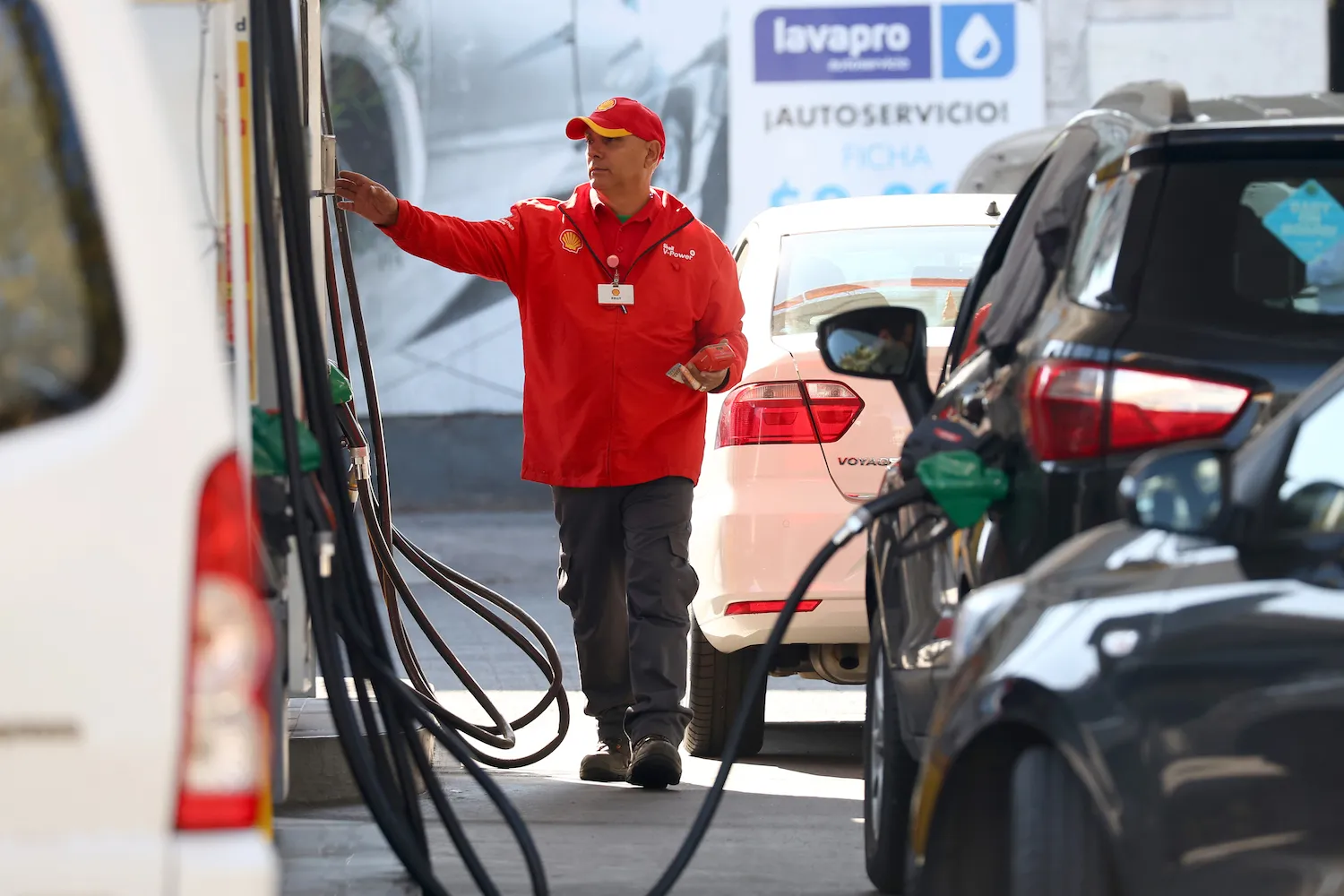
Guatemala’s Congress passed a law late on 8 September capping diesel and petrol prices until the end of 2026. President Bernardo Arévalo, a social democrat elected on an anti-corruption platform, has not yet signed it.
Why This Matters
Guatemala has about 17.6 million people, the most in Central America, and the region’s largest economy. Fuel is among its main imports, so world oil prices reach Guatemalan households quickly.
The country already had a fuel support law, sanctioned on 20 April 2026, with the subsidy running from 1 May. It expired, and international prices rose on tension around the Strait of Hormuz, a key route for Gulf oil.
The two together produced the August price spike at the pump. Inflation accelerated to 3.37% in August, from 2.70% in July, with fuel named as the main driver.
Diesel matters most, because Arévalo says it has roughly three times petrol’s impact on the basic food basket. Transport guilds began blockading roads on 31 August, and kept them up at shifting points for over a week.
The dispute also has a political clock, because Guatemala holds general elections in June 2027. Arévalo cannot stand again, because the constitution bars any president from being re-elected.
What Congress Approved
The chamber passed Decree 21-2026 on the night of Tuesday 8 September. Its formal title is a law on stabilisation and reference sale prices for covered fuels.
The constitution normally requires a bill to be debated at three sessions on three different days. Congress can skip that by declaring national urgency with a two-thirds vote, and it did so here.
The vote is reported as 130 in favour. Other counts of 131, 133 and 134 appear in Guatemalan coverage, and they refer to separate procedural votes.
Diesel and regular petrol are capped at 39 quetzales (US$5.11) a gallon, taxes included. Premium petrol, the higher-octane grade, is capped at 41 quetzales (US$5.38) a gallon.
Conversions use 7.6273 quetzales to the dollar, the Banco de Guatemala reference rate for 9 September 2026. Most foreign coverage says the cap covers diesel and premium, but it also covers regular petrol, which most private drivers buy.
Why Nobody Is Paying It Yet
The law has not been sanctioned, or signed, by the president, and it has not appeared in the official gazette. Under the constitution, Congress’s board has up to ten days to send an approved law to the president.
The president then has 15 days to sign it or return it with objections, with his cabinet’s approval. A law normally takes effect eight days after publication in the official gazette, unless it sets another date.
The energy ministry must also issue implementing rules before the caps can work in practice. The most recent firm pump prices are from 5 September, in the metropolitan region around Guatemala City.
Diesel was 46.39 quetzales (US$6.08) a gallon, and regular petrol was 41.09 quetzales (US$5.39). Premium was 43.09 quetzales (US$5.65) a gallon.
So the cap would cut diesel by more than seven quetzales (US$0.97) a gallon. On regular petrol the saving is far smaller.
Anyone writing that Guatemala has already capped fuel prices is a signature ahead of the facts. Until then, drivers in the capital keep paying the old pump prices.
A Subsidy Dressed as a Price Cap
The quetzal figures work as a maximum price to the final consumer, which looks like a price control. The mechanism behind it is different, because it pays importers rather than ordering them to sell at a loss.
Authorised importers receive a variable compensating subsidy when the international price rises above the reference price. The energy ministry administers it, importers claim the compensation, and the consumer protection agency checks station prices.
The tax authority audits invoicing and the comptroller, the state’s public-spending auditor, oversees the funds. Exporting subsidised fuel is prohibited outright.
The total is capped at 2,500 million quetzales (US$328 million), funded by expanding and reallocating the budget. One outlet reports 507.64 million quetzales (US$66.6 million) in ministry cuts to cover the first costs, a figure from a single source.
The scheme runs to 31 December 2026, a little under four months, and can end sooner if the money runs out. It also ends early if international prices fall back to or below the reference parameters.
One report sets those triggers at US$3.00 a gallon for diesel and US$2.80 for regular, sustained for fifteen days. That detail rests on one outlet.
The president of Congress has flagged smuggling as the main enforcement risk. A domestic price held below the regional market invites fuel to leave the country.
What the President Asked For, and What He Got
Arévalo proposed a cap on 7 September at the government’s weekly press conference. His version covered diesel only, at 39 quetzales (US$5.11) a gallon.
An earlier executive proposal for a subsidy of the same overall size had sat in two committees for about a month. On 8 September, party leaders negotiated with Indigenous delegates from Totonicapán and Sololá and passed a broader text.
His own text was therefore not the one that passed. He said on 8 September he would implement whatever mechanism Congress defined.
The Protests, and Who Has Stood Down
The transport guilds’ demands went beyond fuel, to a road safety law and to extortion of drivers. The peak came on 1 September, with fourteen blockade points nationwide.
They hit San Marcos, Petén, Quetzaltenango, Suchitepéquez and the El Carmen crossing into Mexico. By 4 September the count was down to five points at dawn, and on 7 September it was nine.
The 48 Cantones of Totonicapán, a traditional Indigenous authority, marched on Congress on 8 September with Sololá’s Indigenous Municipality. The 48 Cantones carry weight because in October 2023 they led an indefinite national strike after that year’s election.
That strike demanded the resignation of Attorney General Consuelo Porras, and its blockades peaked at 142 points on 13 October 2023. After this week’s vote, the Indigenous authorities declared their protest over.
Their line was that the law is not what they wanted, but it is progress. The transport guilds did not stand down.
On 9 September they moved a caravan of about 100 buses, roughly 5% of the fleet, towards Congress. Transporters in Sacatepéquez announced a rolling march for the same morning, explicitly without blockades.
The Courts and the Business Lobby
The Constitutional Court, Guatemala’s top court on constitutional matters, acted twice during the blockades. On 4 September it granted a provisional injunction to the chamber of commerce, ordering authorities to guarantee free movement.
On 8 September it granted a second one to the main business federation, covering free movement and the international airport. Both are provisional measures rather than final rulings, and neither settles anything about the fuel price itself.
What It Means If You Live In or Trade With Guatemala
Drivers should not expect lower pump prices until the decree is published and the energy ministry issues its rules. Fuel importers should watch those rules closely, because they decide how compensation is claimed and audited.
Businesses hit by the blockades should note that the transport guilds, not the Indigenous authorities, remain in protest. Price comparisons need care, because ethanol blending began in early August and regular petrol with ethanol carries a one-quetzal (US$0.13) discount.
What Is Not Yet Known
It is not known when Arévalo will sign the decree, although he has said he will implement what Congress defined. The energy ministry has not yet published the rules that turn the caps into pump prices.
It is not known whether the transport guilds will end their protests, since their demands go beyond fuel. Nor is it known how long 2,500 million quetzales (US$328 million) will last if world oil prices keep rising.
Frequently Asked Questions
Why does Guatemala’s fuel cap matter?
Fuel costs pushed inflation to 3.37% in August and triggered nine days of road blockades. The cap is Congress’s answer, and it can cost up to 2,500 million quetzales (US$328 million).
Has Guatemala already capped fuel prices?
Congress approved the cap late on 8 September. The president has not signed it and it is unpublished, so it is not yet in force.
What are the capped prices?
Diesel and regular petrol are capped at 39 quetzales (US$5.11) a gallon, and premium at 41 quetzales (US$5.38), taxes included. On 5 September, diesel cost 46.39 quetzales (US$6.08) in the capital region.
Are the protests over?
Partly. Indigenous authorities ended theirs after the vote, while transport guilds continued on 9 September with bus caravans rather than static blockades.
Sources: Diario de Centro América, the congressional approval, Prensa Libre, the approved prices, La Hora, the subsidy mechanism, Emisoras Unidas, the decree and the vote, Prensa Libre, the president’s original proposal, La Hora, the Constitutional Court injunction, Prensa Libre, August inflation, Banco de Guatemala, the reference exchange rate, Constitute Project, Guatemala’s constitution (Articles 176–180, 187), Wikipedia, Guatemala population, Wikipedia, Economy of Guatemala, Wikipedia, Bernardo Arévalo, Wikipedia, 2027 Guatemalan general election, Wikipedia (Spanish), the 2023 protests led by the 48 Cantones
This article was produced by The Rio Times’ automated newsroom system. How we use AI · Report an error · Editorial responsibility: Matthias Camenzind, Editor-in-Chief