
KENYA · ETHIOPIA BORDER
Key Facts
- The place Moyale is a trade town split by the Kenya-Ethiopia border, in Kenya’s Marsabit County.
- Why it matters Kenya is a US security partner, and Moyale lies on the road linking Lamu port to Ethiopia.
- What happened About 50,000 people crossed into northern Kenya by 28 October; aid planners prepare for up to 80,000.
- What it means for you US travel advice already warns against travel within 50 kilometers of Ethiopia’s border with Kenya.
- Still open How many more will cross, who will pay for the aid, and whether Ethiopia’s government steps in.
About 50,000 people have fled fighting in the Ethiopian border town of Moyale into northern Kenya, the International Organization for Migration (IOM), the United Nations migration agency, said on Thursday 29 October 2026. The UN Office for the Coordination of Humanitarian Affairs (OCHA), which coordinates emergency relief, gave the same figure a day earlier, and Kenya and its aid partners are now planning for up to 80,000 arrivals.
For US readers, Kenya is a longstanding security partner, and the US State Department already tells Americans not to travel near the border. Moyale also lies on the corridor road that links Kenya’s port of Lamu to landlocked Ethiopia, so the crisis touches trade as well as aid.
Earlier coverage of the Kenyan side of the crisis counted hundreds of arrivals on Thursday 22 October, and a report on the fighting in Moyale cited an official of the Kenya Red Cross, the national relief society, who put the number at 10,000 or more. The UN estimate is five times that earlier minimum.
What Happened
OCHA says renewed fighting in Moyale, Ethiopia, reportedly began on Sunday 18 October and pushed people across the border into Moyale town in Marsabit County, Kenya. Earlier reports traced the violence to a dispute over a Somali regional state flag and to clashes between forces of Ethiopia’s Oromia and Somali regions.
The count rose fast: the UN refugee agency (UNHCR) put arrivals at about 36,000 on Tuesday 27 October, and Kenya’s national human rights commission (KNCHR) counted about 40,000. OCHA’s flash update of Wednesday 28 October gave about 50,000, a figure it attributes to authorities and partners, and IOM put arrivals at an estimated 50,000 as of Thursday 29 October.
UNHCR’s representative in Kenya, Fatima Mohammed-Cole, has since said that up to an estimated 50,000 people have crossed, according to local authorities, and that the figure remains fluid while registration and verification continue. UNHCR says it is working with Kenyan authorities to find safer accommodation further from the border.
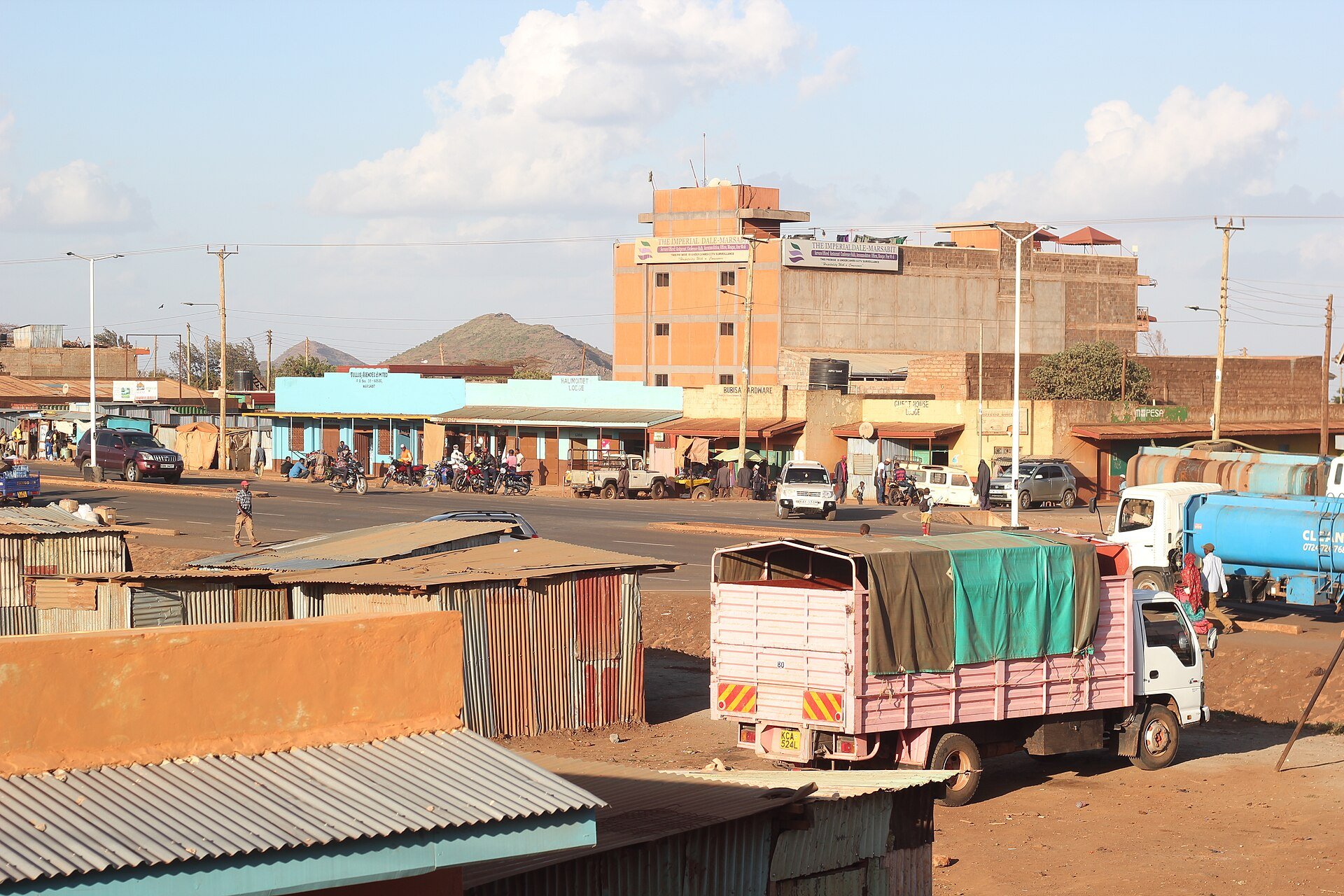
OCHA lists six temporary camps in Moyale, including Oriental Mission Church, Sessi and St Mary’s, while many families stay with relatives and hosts. About 200 people are sheltering at a police station in Mandera, in north-eastern Kenya.
What Aid Workers Need
OCHA lists food, safe water, sanitation, health care and protection as the most urgent needs, and says about 100 metric tons of dry rations are needed for two months. County authorities say they have run out of supplies to treat moderate acute malnutrition.
Health workers have isolated three suspected measles cases at Arosa camp while laboratory results are pending, and diarrheal illness has increased at the Oriental Mission Church camp. At that camp, 15 of 18 pregnant women lack iron and folic acid supplements.
The Kenya Red Cross now plans to assist more than 15,000 people for two months, up from a first target of 1,000 households on 22 October. Partners are preparing relief kits for nearly 12,000 people, but OCHA lists unmet needs that include a borehole and 30 large water tanks.
In Plain English
IOM and OCHA are United Nations bodies, one tracking migration and the other coordinating emergency relief. KNCHR is Kenya’s national human rights commission, and UNHCR is the UN refugee agency.
Moyale is one town split by the border, with its Ethiopian half shared by the Oromia and Somali regions. LAPSSET is Kenya’s Lamu Port, South Sudan and Ethiopia transport corridor program.
Why It Matters
Kenya’s LAPSSET Corridor Development Authority lists the 505-kilometer Isiolo-Moyale-Hawassa road among the main roads connecting Lamu Port to landlocked Ethiopia. The Moyale One Stop Border Post was commissioned on 9 December 2020 by Kenya’s then president, Uhuru Kenyatta, and Ethiopia’s prime minister, Abiy Ahmed.
Marsabit is one of Kenya’s 23 arid and semi-arid counties and already faced food insecurity, OCHA notes. It recalls that violence pushed an estimated 20,000 people into Kenya in 2012 and reportedly some 20,000 more in 2018.
What It Means for You
Travelers should avoid the Kenya-Ethiopia border area: the State Department’s Ethiopia advisory, Level 3 and dated 1 April 2026, says not to travel within 50 kilometers of the border with Kenya, including Oromia’s Borena zone. Its Kenya advisory urges increased caution and does not mention Marsabit County.
Companies that ship goods between Kenya and southern Ethiopia should watch the border post, because none of the UN documents says whether cargo is moving. Donors and charities face needs that OCHA and IOM have not yet priced in dollars.
What Is Not Known
No UN document gives a verified death toll, and OCHA says the number of civilians injured or killed by stray bullets has yet to be verified. The documents carry no statement from Ethiopia’s federal government on a ceasefire.
The 50,000 figure is preliminary, and IOM warns that arrivals could rise, while OCHA warns that active fighting near the border could trigger more movement. No donor pledge, dollar appeal or Kenyan statement on registering the arrivals appears in the UN documents.
Frequently Asked Questions
How many people have fled Moyale into Kenya?
About 50,000 people had crossed into northern Kenya by 28 and 29 October, according to OCHA and IOM. Both call the figure preliminary, and planners are preparing for up to 80,000.
Why are people fleeing Moyale?
OCHA says the fighting reportedly began on Sunday 18 October, and earlier reports link it to a Somali regional flag dispute and to clashes between Oromia and Somali regional forces. Families crossed into Marsabit County to escape it.
Is it safe for Americans to travel near Moyale?
The State Department tells Americans not to travel within 50 kilometers of Ethiopia’s border with Kenya. Its Kenya advisory urges increased caution and does not mention Marsabit County.
What help do the displaced people need?
OCHA lists food, safe water, sanitation, health care and protection as the most urgent needs. About 100 metric tons of dry rations are needed to feed displaced people and hosts for two months.
Sources: International Organization for Migration, press release, 29 October 2026; UN OCHA, Flash Update No. 1, 28 October 2026; Kenya National Commission on Human Rights, statement, 27 October 2026; US State Department, Ethiopia travel advisory, 1 April 2026; US State Department, Kenya travel advisory; US State Department, U.S. Relations With Kenya; LAPSSET Corridor Development Authority, highways. All opened on 30 October 2026.
This article was produced by The Rio Times’ automated newsroom system. How we use AI · Report an error · Editorial responsibility: Matthias Camenzind, Editor-in-Chief
Horn of Africa and the Red Sea
- Horn of Africa 2026: Why It Matters and Who Backs Whom
- Ethiopia’s Neighbors Explained, Ports, Eritrea, Somalia
- Eritrea Explained 2026, a Red Sea Country Guide
- Somalia Explained: Al-Shabaab, Somaliland, the Ports and the Fight Over a 2026 Vote