Trinidad and Tobago Special Operations Bill Passes House, Senate Next
TRINIDAD AND TOBAGO · SECURITY
Key Facts
- —What happened Trinidad and Tobago’s Special Operations Bill passed the House of Representatives after midnight on 19 September 2026.
- —The context It arrives after the state of emergency ended on 17 September 2026; the earlier ZOSO bill failed.
- —Why it matters The bill splits Trinidad and Tobago into seven policing districts where the President can declare ‘closed areas’.
- —The catch The bill needs only a simple majority in the Senate, not the three-fifths the earlier ZOSO bill required.
- —Who it affects People and businesses inside a closed area may need permits to enter or leave.
- —What comes next The Senate must approve the bill and it must be brought into force before any closed area can be declared.
The new crime law splits the country into seven policing districts and lets the President declare ‘closed areas’ inside them. The opposition calls it a step towards a police state.
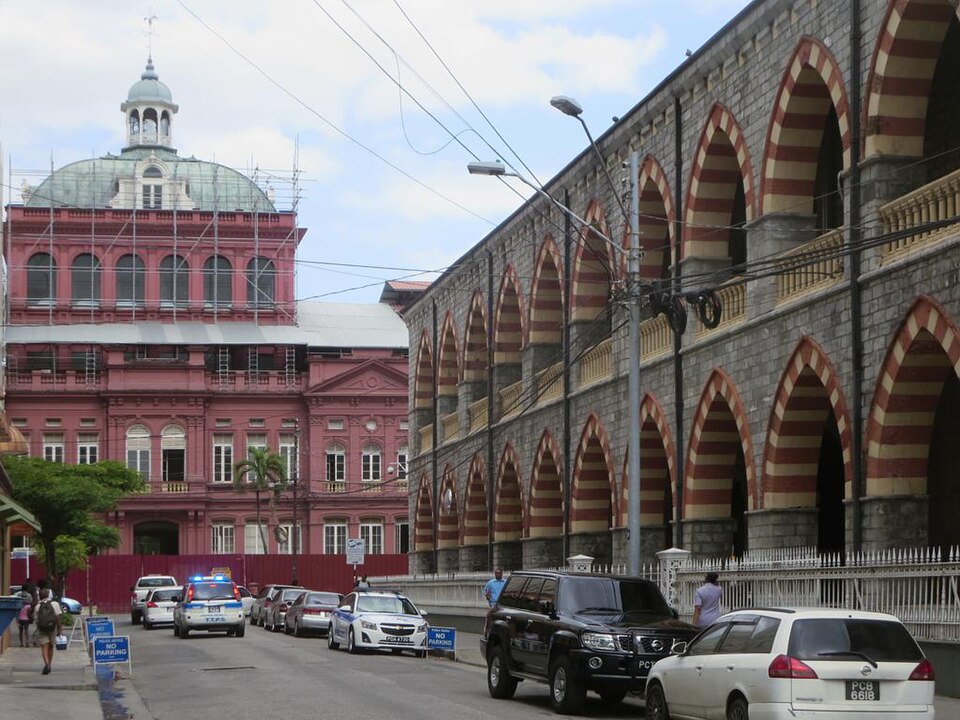
Trinidad and Tobago’s Special Operations Bill passed the House of Representatives shortly after midnight on Saturday, 19 September 2026. It came after a sitting of more than 13 hours and now goes to the Senate.
What the Special Operations Bill does
The bill divides Trinidad and Tobago into seven policing districts. Six group regional corporations in Trinidad, and the seventh covers all of Tobago.
Each district gets a Head of Special Operations, a police officer of at least superintendent rank. The Defence Force helps only when the Police Commissioner asks.
Inside a district, the President can declare a specific place a ‘closed area’. This happens by order, after an application from the Minister of Homeland Security.
The President must be satisfied that violent crime, gangs or illegal weapons threaten public safety. Ordinary policing must also be judged not enough.
In a closed area, people generally need a permit to enter or leave. Police may set cordons and curfews and search people, vehicles or places without a warrant on reasonable suspicion.
How the vote went and what the Senate faces
The Special Operations Bill was introduced on 16 September 2026 and debated two days later. Young complained that MPs had less than 48 hours to study it.
The House approved the bill after a debate that ran through Friday, 18 September. Reports have not published a vote count, so the exact tally has not been confirmed.
The earlier Zones of Special Operations (ZOSO) bill needed a three-fifths majority because it overrode constitutional rights. That override is gone from the new bill.
In the Senate in January 2026, the ZOSO bill won 15 votes to 14, with one abstention. It still failed because it lacked the special majority.
Under a simple majority, a similar result would now be enough. No date for the Senate debate has been announced.
The government’s case
Attorney General John Jeremie piloted the bill and said it keeps ‘a large measure of oversight’. He called it ‘designed to be a limited and temporary measure’.
He also stressed that it ‘is distinct from a state of emergency’. He argued that any limits on rights are reasonable and proportionate.
Closing the debate, he rejected the opposition’s warnings. ‘Police districts don’t equate to a police state,’ he said.
He pointed to judicial oversight, parliamentary scrutiny and the two-year sunset clause as safeguards. The Prime Minister must also lay an annual report on special operations before Parliament.
The opposition’s warning
Stuart Young, a former prime minister, is now an opposition MP for Port-of-Spain North/St Ann’s West. He said the governing party was ‘passing legislation here today that makes Trinidad and Tobago nothing less than a police state’.
He argued that permits would mostly burden law-abiding residents, since criminals could simply move elsewhere. Energy Minister Roodal Moonilal accused him of fearmongering.
Port-of-Spain South MP Keith Scotland argued that the bill limits constitutional rights. In his view, it should have needed a special majority.
Body cameras and time limits
Prime Minister Kamla Persad-Bissessar said officers ‘must’ use body cameras. The bill is softer: they shall use them ‘as far as is possible having regard to available resources’.
The old ZOSO bill limited a zone to 180 days at first, and a curfew to 72 hours. The new bill sets no maximum for either.
Two independent senators welcomed some changes, including the sunset clause. Senator Michael de la Bastide still said the missing limits on curfews and cordons ‘concern me greatly’.
Why this matters for expats and investors
The bill arrives just after the state of emergency ended on 17 September 2026, as The Rio Times reported. It is the government’s replacement tool for targeted crime operations.
If your home, office or site falls inside a closed area, daily movement could need a permit. Breaking the permit rules can bring a fine of 50,000 TT dollars (about US$7,390) and a year in prison.
That is at 19 September 2026 rates, about 6.77 TT dollars to the dollar. Businesses with staff or deliveries in high-crime districts should plan for checkpoints and curfews.
The bill also lets police detain suspects with court approval. A magistrate can allow 48 hours, and a High Court judge can extend that.
Unlike a state of emergency, closed areas would be local, not national. That may reduce disruption for most firms outside the affected streets.
What is not yet known
It is not known when the Senate will debate the bill, or how independent senators will vote. The official House vote count has also not been published.
No closed area has been declared, and none can be until the Act is passed and brought into force. The Senate vote on the Special Operations Bill will be the next clear signal of how the new law will work.
Frequently Asked Questions
Frequently Asked Questions
Has the Special Operations Bill become law?
No. It passed the House on 19 September 2026 but still needs Senate approval and must then be brought into force.
What majority does it need in the Senate?
A simple majority. The government removed the constitutional override that required three-fifths support for the earlier ZOSO bill.
Who can declare a closed area?
The President, by order, after an application from the Minister of Homeland Security, and only on specific crime-related grounds.
Connected Coverage
Trinidad Ends 199 Days of Emergency Rule With Murders Barely Down
Sources: Parliament of the Republic of Trinidad and Tobago; Trinidad Guardian; CNC3; Caribbean Media Corporation via Jamaica Observer; Stabroek News; The Rio Times.
This article was produced by The Rio Times’ automated newsroom system. How we use AI · Report an error
Read More from The Rio Times