DR CONGO · ECONOMY
Key Facts
- The country Central Africa’s largest country; it mined an estimated 73% of the world’s cobalt in 2025.
- Why now Prime Minister Judith Suminwa presented the 2027 budget to the National Assembly on Thursday 29 October.
- What happened The bill totals US$24.8 billion, up 11.9% on 2026, with about US$6 billion for security.
- What it means for you US cobalt buyers and Congo bondholders get a clearer view of state revenue, spending and inflation plans.
- Still open Lawmakers must vote, and the President is due to sign the law by Sunday 20 December.
Congo‘s government asked its National Assembly on Thursday 29 October 2026 to back a 2027 budget of US$24.8 billion (CDF 56,929.9 billion), which is 11.9% above this year’s revised budget. Prime Minister Judith Suminwa defended the bill in person, and her office calls it a record.
For US readers the bill is a rare official look at a state that mined an estimated 73% of the world’s cobalt in 2025, according to the US Geological Survey. It also shows bondholders and aid donors how much the government expects to collect, spend and borrow in 2027.
In Plain English
The National Assembly is the lower house of Congo’s Parliament and votes on the budget first, before the Senate reviews it. The Central Bank of Congo, known by its French initials BCC, sets interest rates and publishes the official exchange rate.
A Eurobond is a dollar bond sold to international investors, and Congo issued its first one in 2026. Sicomines is a mining venture with Chinese partners that helps pay for infrastructure.
What the Budget Contains
The bill balances revenue and spending at US$24.8 billion (CDF 56,929.9 billion), against a revised 2026 budget of US$22.2 billion (CDF 50,866.3 billion). The Ministry of Budget’s citizens’ guide to the bill, dated September 2026, converts francs at its planning rate of 2,300 per US$.
Salaries take US$6.7 billion (CDF 15,314.5 billion), up 12.2%, and investment gets US$6 billion (CDF 13,721.9 billion), up 30%. Interest on debt rises 33.3% to US$668.3 million (CDF 1,537 billion), while repayment of principal falls 3.5% to US$844.1 million (CDF 1,941.4 billion).
Where the Money Comes From
The ministry expects current revenue of US$17.5 billion (CDF 40,210.6 billion), made up of US$10 billion from the tax directorate, US$4 billion from customs and US$3.4 billion from administrative, court and state-property fees. Tax revenue is set at 12.8% of gross domestic product (GDP), up from 12.5% in the revised 2026 budget, with an ambition, set out in the ministry’s guide, of at least 17% by 2030.
Foreign sources add US$4.1 billion (CDF 9,455.9 billion), including US$529 million from Congo’s first Eurobond. Budget support from partners such as the World Bank and the French development agency falls 19% to US$972.5 million (CDF 2,236.7 billion).
Security, Roads and Power
The bill sets aside about US$6.1 billion (CDF 14,091 billion) for the security pillar of the government’s action plan, while the ministry’s guide says revenue gains have already allowed more than US$5 billion for defence and security to face the war. That pillar also covers justice, diplomacy and humanitarian emergencies, and the guide lists the recruitment of 20,000 army personnel.
When she filed the bill on Tuesday 15 September 2026, Suminwa said the budget looks at security and defence because the country must work for the return of peace, particularly in the east. The guide adds that the Washington and Doha peace processes continue in order to strengthen the ceasefire.
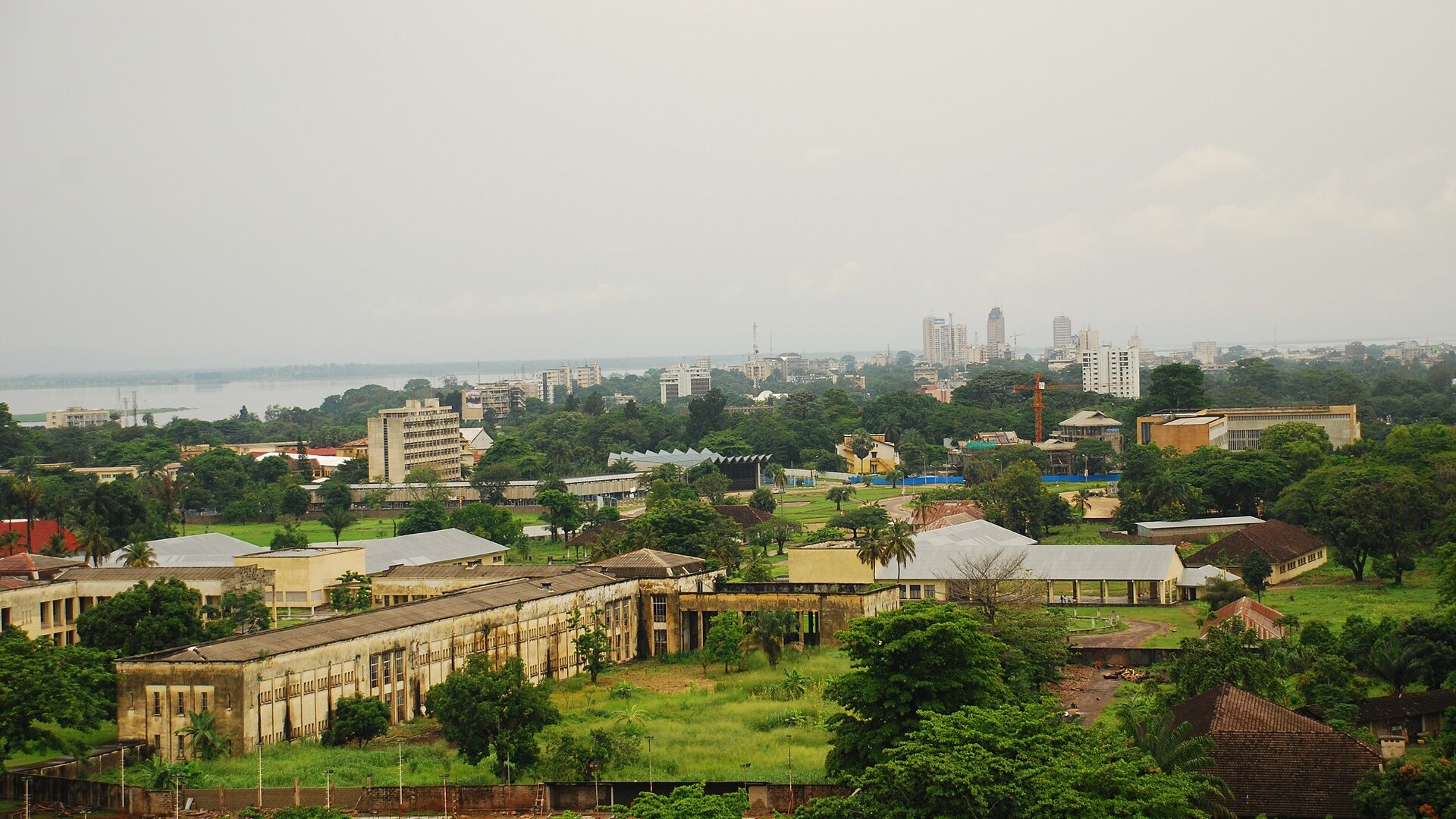
A further US$3 billion goes to roads, bridges, airports, railways, power and water, including the Kinshasa ring road, N’djili airport and the Inga power line. The guide says these projects draw on Sicomines money, Eurobond proceeds and transfers to the provinces.
Prices, the Franc and the Central Bank
The budget assumes real growth of 5.8% in 2027, inflation of 6.4% and an exchange rate of 2,300 francs per US$. The Central Bank of Congo’s official rate on Friday 30 October 2026 is 2,261.56 francs per US$, so at that rate the total would be about US$25.2 billion (CDF 56,929.9 billion).
The central bank, led by Governor André Wameso, held its policy rate at 12.5% on Thursday 8 October 2026 and forecast inflation of 8.90% at the end of 2026 and 6.40% in 2027. Its weekly note of Friday 23 October 2026 shows year-on-year inflation of 8.9%.
What It Means for You
The central bank’s note of 23 October puts cobalt at US$38,596 a tonne, 25.9% below the end of 2025, and copper at US$14,087.6 a tonne, 12.3% above it. The US relied on imports for 79% of its cobalt use in 2025, according to the US Geological Survey, which also records Congolese export quotas of up to 96,600 tonnes a year for 2026 and 2027 (see DR Congo explained).
Bondholders can track the debt lines, with interest costs up 33.3% and Eurobond proceeds budgeted at US$529 million. Aid groups can note that budget support from partners falls 19%.
Travellers should know that the State Department, as of Friday 30 October 2026, urges Americans to reconsider travel to Congo because of crime and civil unrest. It rates North Kivu, Ituri, eastern Congo and the three Kasai provinces Level 4, Do Not Travel.
What Is Not Known
Lawmakers have not voted, and the Assembly’s president announced two days of debate in parliamentary groups before a plenary vote. The ministry’s calendar sets promulgation by President Félix Tshisekedi no later than Sunday 20 December 2026.
Whether revenue will match the 2027 forecast cannot be known yet, and the central bank’s note showed collections at 87.2% of October’s forecast on 23 October with eight days of the month left. The bank’s own list of risks includes a wider Middle East conflict, volatile commodity prices, insecurity in the east and Ebola.
The citizens’ guide does not split the security envelope into pay, equipment and operations. Amendments by lawmakers could still change the totals before the vote.
Frequently Asked Questions
How big is Congo’s 2027 budget?
The bill totals US$24.8 billion (CDF 56,929.9 billion), about 11.9% above the revised 2026 budget. Revenue and spending are balanced.
When will Congo’s 2027 budget become law?
Lawmakers must vote first, and the Senate then reviews the text. The ministry’s calendar sets promulgation by the President no later than Sunday 20 December 2026.
Does the budget affect US cobalt buyers?
Only indirectly, because the budget does not set cobalt quotas or prices. It shows how much the state expects to collect from mining and spend on security and infrastructure.
Is it safe for Americans to travel to Congo?
The State Department tells Americans to reconsider travel to Congo because of crime and civil unrest. It says do not travel to North Kivu, Ituri, eastern Congo and the three Kasai provinces.
Sources: Ministry of Budget, citizens’ budget for the 2027 finance bill, September 2026; Prime Minister’s office, filing of the 2027 finance bill, 15 September 2026; Central Bank of Congo, monetary policy statement, 8 October 2026; Central Bank of Congo, weekly economic note, 23 October 2026; Central Bank of Congo, official exchange rates, 30 October 2026; US Geological Survey, Mineral Commodity Summaries 2026, cobalt; US State Department, Democratic Republic of the Congo travel advisory, read 30 October 2026.
This article was produced by The Rio Times’ automated newsroom system. How we use AI · Report an error · Editorial responsibility: Matthias Camenzind, Editor-in-Chief