Who Runs Ivory Coast’s Economy, the Key Players in 2026

IVORY COAST · ECONOMY
Key Facts
- What is happening Cocoa, gold and oil drove 6.5% growth in 2025 in this West African economy of 32 million.
- Why it matters Cocoa farmers now get US$2.05 a kilogram, down 57% from US$4.78, which strains farmers and the budget.
- The numbers Exports of goods reached US$28.2 billion in 2025; public debt is near 57% of output.
- Who is who The state, the regional central bank, Petroci (state oil), Eni and listed banks hold the levers.
- What to watch The Baleine oil expansion, the 3.8% deficit target and whether a new lending arrangement follows.
- What it means for you US investors can reach cocoa, gold and Abidjan-listed shares; Ivorians face partial US entry limits.
Cocoa, gold, oil and a regional central bank power Ivory Coast. This guide shows who holds the levers in November 2026.
The Ivory Coast economy is steered by a few players: the state, the regional central bank, foreign lenders, miners and banks. It grew 6.5% in 2025, says the International Monetary Fund (IMF), the global lender.
This guide names who controls cocoa, oil, gold, money and the stock exchange, and what each figure means for a US reader. Every number carries its date, and local amounts are converted at about 586 CFA francs to US$1 (4 November 2026).
For the wider picture, see the Rio Times guide to Ivory Coast and the West Africa page. The politics and foreign ties are covered in the Ivory Coast geopolitics guide.
The Ivory Coast Economy in Numbers
The IMF puts nominal output at about CFAF 52,821 billion (US$87 billion) in 2024, for about 32 million people. That is roughly US$2,710 per person in 2024.
The IMF assumes oil averages US$99 a barrel in 2026. Higher oil prices raise the import bill and the cost of fuel support.
Real growth was 6.0% in 2024 and 6.5% in 2025, and the IMF projects 6.0% for 2026. Inflation was only 0.1% in 2025, and the IMF expects 3.3% in 2026.
Central government debt was about 57% of output in 2025. The IMF upgraded the risk of debt distress from moderate to low.
The budget deficit was 4.0% of output in 2024 and 3.0% in 2025. For 2026 the target was relaxed to 3.8% after an oil price shock, with a return to 3.0% by 2028.
Tax revenue rose from 12.7% of output in 2022 to 14.7% in 2025, against a regional floor of 20%. That floor is set by WAEMU, the West African Economic and Monetary Union, a regional currency bloc.
The 2026 to 2030 national development plan aims to raise about US$200 billion and create 3 million jobs. It targets upper-middle-income status by 2030, with private firms funding about 70% of investment (about US$140 billion).
Cocoa and the State Price
Cocoa is the backbone of the economy, at about 40% of goods exports in 2025. Cocoa sales abroad were CFAF 6,657 billion (US$11.4 billion) out of CFAF 16,522 billion (US$28.2 billion) in total goods exports.
In 2025 cocoa exports equalled 11.5% of output, according to the IMF tables. The IMF projects CFAF 6,277 billion (US$10.7 billion) of cocoa exports in 2027.
The government, with the Conseil du Café-Cacao (the state cocoa and coffee regulator), fixes the price farmers receive each season. For the main crop opened in October 2025 the price announced was CFAF 2,800 a kilogram (US$4.78).
On Wednesday, 4 March 2026 the government launched the mid-year campaign at CFAF 1,200 a kilogram (US$2.05), citing falling world prices. The IMF calls this a sharp 57% decline in farmgate prices.

On Tuesday, 1 September 2026 Agriculture Minister Bruno Koné Nabagné set cocoa at US$2.05 a kilogram (CFAF 1,200) and coffee at US$2.22. Coffee had been US$2.90 (CFAF 1,700) the season before.
He said last season’s sales were hard because world prices were volatile and had fallen sharply. The government also made a producer card mandatory for cocoa sales, so that official-price revenue reaches farmers directly.
The minister listed ageing plantations, swollen shoot disease, soil damage and illegal gold mining as threats. He also set a goal of processing more cocoa locally into butter, powder and chocolate.
Oil, Gas and Gold
Crude and refined oil brought in CFAF 2,675 billion (US$4.6 billion) in 2025, about 16% of goods exports. Gold was larger, at CFAF 3,052 billion (US$5.2 billion), about 18%.
Gold exports grew from CFAF 1,909 billion (US$3.3 billion) in 2024, helped by high gold prices. The IMF names the expansion of hydrocarbons and mining as a medium-term growth driver.
Eni (an Italian energy major), Petroci (the state oil company) and Vitol (a commodity trader) approved Baleine’s third offshore phase. They did so at a ceremony in Abidjan on Monday, 25 May 2026.
Eni says oil capacity rises from 60,000 to 150,000 barrels a day. Gas rises from 80 to 200 million cubic feet a day, and the release gives no ownership split, cost or start date.
The IMF expects Baleine phase 3 to narrow the current account deficit from 2029 onward. Until then, higher oil prices raise the import bill.
Only about 20% of the oil price rise had been passed on to pump prices by mid-2026, the IMF says. The state therefore carries much of the cost, which is why the deficit target was loosened.
Banks, the CFA Franc and the Regional Central Bank
The BCEAO, the Central Bank of West African States, pools reserves for the whole currency bloc. The IMF puts them at US$48.5 billion at the end of April 2026, over eight months of imports.
The IMF calls Ivory Coast a net contributor to those regional reserves. It also says financial market conditions in the region are favourable.
The IMF calls the banking system sound, with a Tier 1 capital ratio of 15.2% in June 2025, up from 14.2%. Bad loans were about 1.5%, close to historic lows.
Credit to private firms grew 13.3% in 2025, and the IMF projects 8.4% in 2026. Broad money grew 23.8% in 2025.
In February 2026 the state sold a US$1.3 billion Eurobond (a dollar bond sold to foreign investors) due in 15 years. A currency swap cut its 6.75% coupon to about 5.4% on the US$1.3 billion.
The gap in the 2026 external financing plan is CFAF 672 billion (US$1.15 billion). The IMF covers US$0.48 billion, the World Bank US$0.38 billion, the African Development Bank US$0.13 billion and bilateral lenders US$0.13 billion.
The IMF approved a US$3.5 billion arrangement in May 2023 and a US$1.3 billion climate arrangement alongside it. Its Executive Board completed the sixth review of the main programme on Wednesday, 24 June 2026.
Listed Companies on the Abidjan Stock Exchange
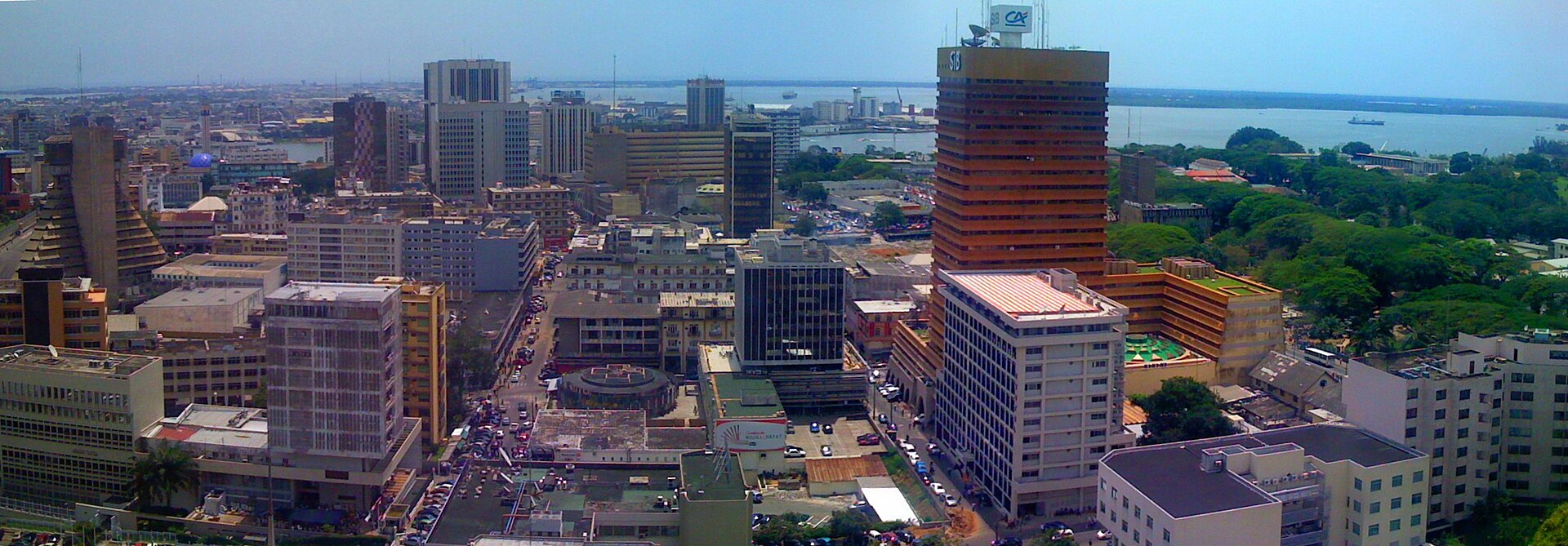
The BRVM, the regional stock exchange in Abidjan, listed equities worth US$35.4 billion (CFAF 20,760.7 billion) on Tuesday, 3 November 2026. Its price table has 35 shares with Côte d’Ivoire in the company name.
Seven are banks: BICI, Bank of Africa, Ecobank, NSIA Banque, Société Générale, Société Ivoirienne de Banque and Bridge Bank Group. Orange Côte d’Ivoire is the listed telecom group.
Others include CIE (an electricity distributor), Solibra (a brewer), Sucrivoire (sugar), SAPH and SOGB (rubber and palm plantations) and Sitab (tobacco). Fuel retailers Vivo Energy and TotalEnergies Marketing also trade there.
Many carry the names of foreign groups, such as Nestlé, Unilever, Société Générale and Ecobank. That shows how much of the listed economy is the local arm of an international company.
The exchange page does not publish each company’s market value, so this guide does not rank them. The highest closing prices on 3 November were Unilever at US$81.9, Solibra at US$66.5 and Société Générale at US$66.4.
A high share price does not mean a large company, because the number of shares differs. Readers should check each company’s own filings before comparing size.
The State, Power and Public Enterprises
President Alassane Ouattara was re-elected in October 2025, and his coalition won a large parliamentary majority in December 2025, the IMF notes. The IMF reads this as a mandate to continue reforms.
The state sets cocoa prices, owns Petroci, shares in offshore oil and borrows abroad. It also holds the main levers over fuel prices and electricity tariffs.
The IMF says performance contracts have raised the profits of public enterprises. It warns that the electricity sector needs a firm focus on financial viability, including unpaid bills from neighbouring countries.
Electricity reached 72.4% of the population in 2023. Two solar plants of 108.3 megawatts-peak were awarded, lifting solar under development to 210.3, due to run in early 2028.
In 2026 the government cut public investment by 0.5% of output to hold down the deficit. Capital spending is still expected to rise by nearly 1% of output compared with 2025.
This guide names no business families or tycoons. None of the primary sources checked ranks private fortunes, and unverified lists are left out.
Farmers, Informal Workers and Who Is Left Out
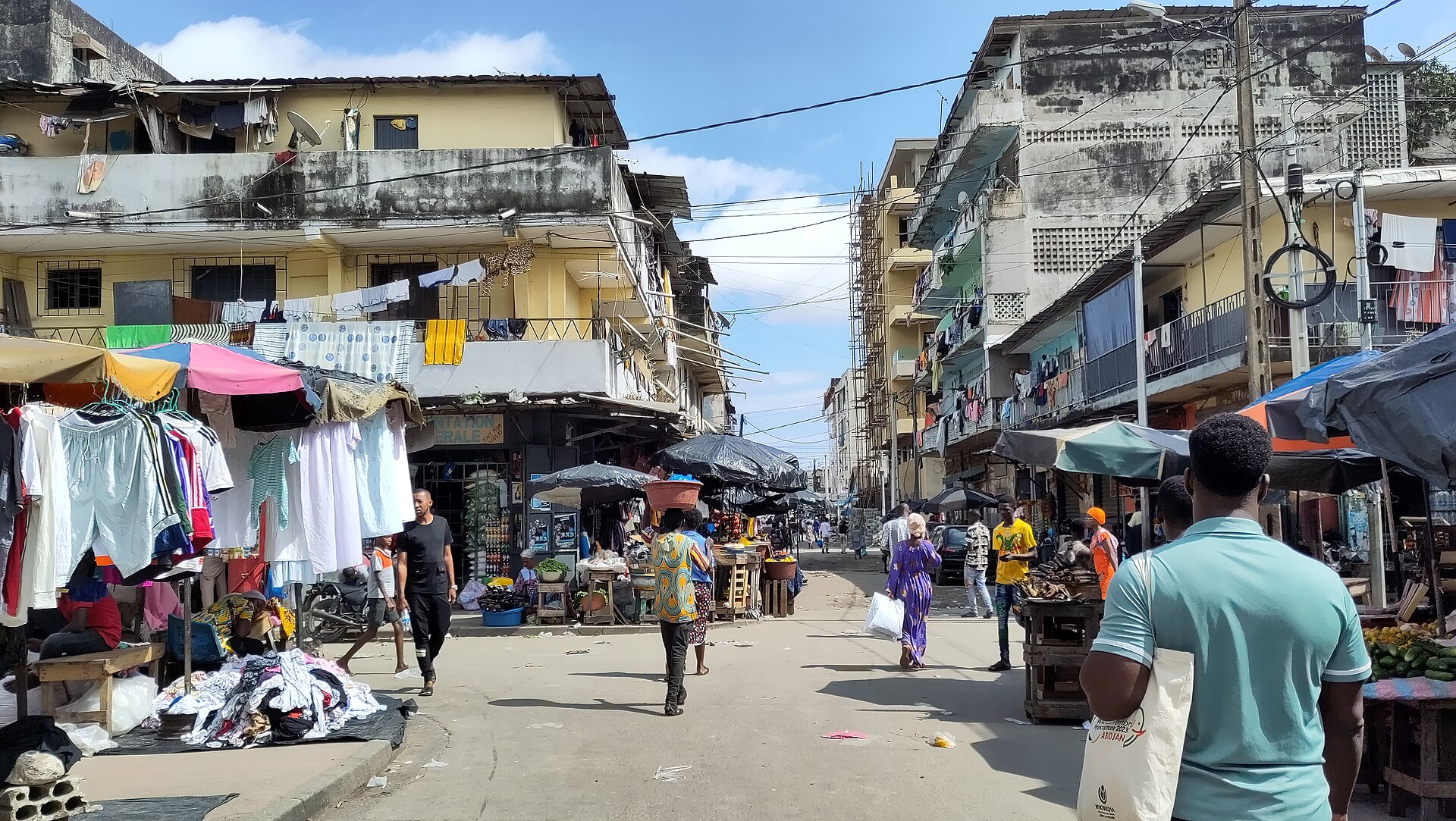
The informal sector accounts for about 45% to 50% of economic activity, the IMF estimates. Informal jobs were 92.1% of employment in 2022.
In the 2023 enterprise survey, 77% of firms said they face competition from informal businesses. Informality limits tax revenue and access to credit.
The national poverty rate fell from 37.5% in 2021 to about 31.7% in 2025. That still leaves roughly three in ten people below the poverty line.
Cocoa farmers bear the price swings, since they receive the fixed farmgate price and not the world price. The IMF names the 57% cut in that price as a hit to producers.
What It Means for US Readers
A US proclamation of 16 December 2025 places Ivory Coast under partial entry suspension from 1 January 2026. It suspends immigrant entry and B, F, M and J visas for Ivorian nationals abroad without a valid visa.
Exceptions cover green card holders, diplomats and some athletes, and officials can grant case-by-case waivers. Ivorian business partners should plan visits to the United States early.
For investors, the main exposures are cocoa, gold and listed Ivorian shares on the BRVM. Cocoa farmgate cuts show world prices have fallen, but this guide does not show whether US chocolate prices will follow.
Lenders and bondholders face an upgraded debt rating from the IMF but a looser 2026 deficit. For related reading, see the cocoa price cut report and the report on the deficit of US$3.75 billion.
The OPEC Fund deal report covers new development lending. The guide to Ivory Coast and its neighbours covers regional trade ties.
What Is Not Known
The ownership shares, cost and start date of Baleine phase 3 are not stated in the Eni release checked. Whether Eni and Petroci hold the stakes in the same way as in earlier phases was not confirmed.
No primary source checked ranks private business families or the biggest listed companies by market value. Orange Côte d’Ivoire’s size relative to the banks was not verified.
The IMF’s tables differ slightly on 2025 debt, at 57.1% in the table and 57.6% in the text. Whether a new IMF arrangement follows the sixth review was not found.
Ivory Coast’s current status on the Financial Action Task Force’s money-laundering watchlist was not confirmed at the watchdog’s own site. The US tariff rate on Ivorian goods and the status of the African Growth and Opportunity Act were not checked.
The official price notices were not opened on a government page, but the IMF confirms the 57% cut. No prediction market is shown.
Frequently Asked Questions
What are the biggest sectors of the Ivory Coast economy?
Cocoa is the largest export at about 40% of goods exports in 2025, and gold follows at about 18%. Oil is about 16%, according to the IMF’s June 2026 tables.
How fast is the Ivory Coast economy growing?
The IMF estimates growth of 6.5% in 2025, after 6.0% in 2024. It projects 6.0% for 2026.
Who sets the price of cocoa in Ivory Coast?
The government sets the price farmers receive each season, with the cocoa and coffee regulator. For 2026-27 it is CFAF 1,200 a kilogram (US$2.05), announced on 1 September 2026.
What currency does Ivory Coast use?
It uses the CFA franc, which was about 586 to US$1 on 4 November 2026. The BCEAO issues it for the West African monetary union.
Where can investors buy Ivorian shares?
Ivorian companies list on the BRVM, the regional stock exchange in Abidjan. On 3 November 2026 its equities were worth CFAF 20,760.7 billion (US$35.4 billion).
Can Ivorians travel to the United States?
A US proclamation limits entry for Ivorian nationals from 1 January 2026, including immigrant visas and B, F, M and J visas. Some exceptions and waivers apply.
Sources: IMF, Côte d’Ivoire sixth review, Country Report 26/171 (June 2026); IMF, press release on the fifth review (4 December 2025); BRVM, market data (3 November 2026); Eni, Baleine phase 3 press release (25 May 2026); White House, proclamation of 16 December 2025; Government of Côte d’Ivoire and Conseil du Café-Cacao, farmgate price announcements of October 2025, 4 March 2026 and 1 September 2026; open.er-api.com exchange rates (4 November 2026) (all accessed 4 November 2026).
This article was produced by The Rio Times’ automated newsroom system. How we use AI · Report an error · Editorial responsibility: Matthias Camenzind, Editor-in-Chief