Ouattara Keeps Power in Côte d’Ivoire as Its Economy Holds Near 6 Percent Growth
Economy · Côte d’Ivoire
—The stakes. Investors weigh a fast-growing West African hub against cocoa price swings, new EU deforestation rules and post-election political friction.
—The growth. Real GDP expanded about 6.5 percent in 2024 and 2025, with 2026 forecasts ranging from 5.5 to 6.5 percent depending on the forecaster.
—The debt shift. The IMF upgraded Côte d’Ivoire’s risk of debt distress from moderate to low by May 2026 after revenue-based fiscal consolidation.
—The cocoa risk. The EU deforestation regulation and volatile cocoa prices are testing a sector that still anchors rural livelihoods and export earnings.
—The political unknown. Financial institutions treat the post-October 2025 government as stable enough for programme continuity, though the election remains disputed locally.
Côte d’Ivoire enters late 2026 as Francophone Africa’s most consistent large-economy performer, yet the political settlement behind that record is now openly contested. Investors are being asked to separate the country’s macroeconomic momentum from a disputed mandate, cocoa-sector transition costs and a global demand shock that is already trimming forecasts.
A Continuity Election With Contested Legitimacy
Côte d’Ivoire held a presidential election in October 2025 in which incumbent President Alassane Ouattara remained in power.
IMF and government documents from 2026 consistently refer to continuity of the authorities and the existing economic programme, with no reference to a change of leadership.
The retrieved financial documentation does not provide official election results or detailed vote-share data for the opposition.
Local media and political analysis characterise the vote as disputed, but international financial institutions treat the post-election situation as stable enough for programme continuity.
Given the country’s history of post-2010 crisis and 2020 tensions, ratings reports continue to reference political and external uncertainties even while affirming the macro outlook.
Growth Near 6 Percent: The Region’s Benchmark
The IMF estimates real GDP growth of about 6.5 percent in 2024 and 6.5 percent in 2025.
For 2026, the IMF baseline projects growth moderating to 6.0 percent, citing the Middle East war and heightened global uncertainty as dampening demand and confidence.
The African Development Bank is more optimistic, projecting 6.5 percent growth in 2026 with inflation near 2.4 percent.
BMI and Fitch Solutions cut their 2026 forecast to 5.8 percent from 6.4 percent, calling Côte d’Ivoire Sub-Saharan Africa’s biggest loser from the Middle East conflict fallout.
Allianz Trade forecasts GDP growth of 5.5 percent in 2026 and 5.1 percent in 2027, while noting the country has grown between 5 and 10 percent annually since 2011 except in 2020.
Inflation and External Balances Stay Within Bounds
The Central Bank of West African States, known as BCEAO for Banque Centrale des États de l’Afrique de l’Ouest, targets inflation between 1 and 3 percent.
Inflation was exceptionally low in 2025 at around 0.1 to 0.3 percent, before projected acceleration to roughly 2 to 3.3 percent in 2026 depending on the forecaster.
The current account deficit is projected to widen in 2026 to around 2.5 to 4.8 percent of GDP from near balance in 2025, driven by higher energy and transport costs.
Despite that widening, the overall balance of payments is projected to record a surplus of about 2.1 percent of GDP in 2026, supporting foreign reserves.
The inflation and external metrics remain within ranges that allow the CFA franc peg and regional monetary framework to function without acute stress.
Fiscal Choices: Cocoa Support and Fuel Subsidies
Côte d’Ivoire has been pursuing fiscal consolidation toward the West African Economic and Monetary Union, or WAEMU, deficit ceiling of 3 percent of GDP.
The general government deficit fell from about 5.2 percent of GDP in 2023 to 4 percent in 2024 and around 3 percent in 2025 under programme assumptions.
Several sources project a temporary widening to about 3.8 percent of GDP in 2026, driven by support for the cocoa sector and fuel price stabilisation measures.
From 2027 onward, the deficit is expected to stabilise around 3 percent as these exceptional supports fade.
The cocoa-sector support is not a minor budget line; it reflects the government’s decision to cushion farmers and exporters during a volatile and regulatory-heavy transition period.
A Landmark IMF Upgrade: Debt Distress Risk Falls to Low
The IMF completed the sixth and final review of the Extended Fund Facility and Extended Credit Facility arrangement in May 2026.
During that review, the Fund upgraded Côte d’Ivoire’s risk of debt distress from moderate to low.
The improvement stems from revenue-based fiscal consolidation and the first reduction in the public debt-to-GDP ratio in more than a decade, according to the IMF.
President approval of the sixth review came through an IMF Executive Board decision announced on 24 June 2026.
This upgrade matters for bondholders because it lowers the perceived sovereign risk premium and improves access to external financing at a time when borrowing needs are rising.
Cocoa Price Swings and the New EU Deforestation Rules
Cocoa remains a central pillar of the Ivorian economy, anchoring rural incomes and a large share of export earnings.
The European Union deforestation regulation, known as EUDR, is reshaping traceability and due-diligence requirements for cocoa entering the European market.
EUDR factsheets from April 2026 highlight the compliance burden for Ivorian cocoa producers and exporters, including geolocation and deforestation-free certification requirements.
Cocoa price swings have added a second layer of uncertainty, with the government responding through sector support measures and producer price stabilisation.
The combination of regulatory change and price volatility creates a transition risk that fiscal projections now explicitly acknowledge through deficit widening in 2026.
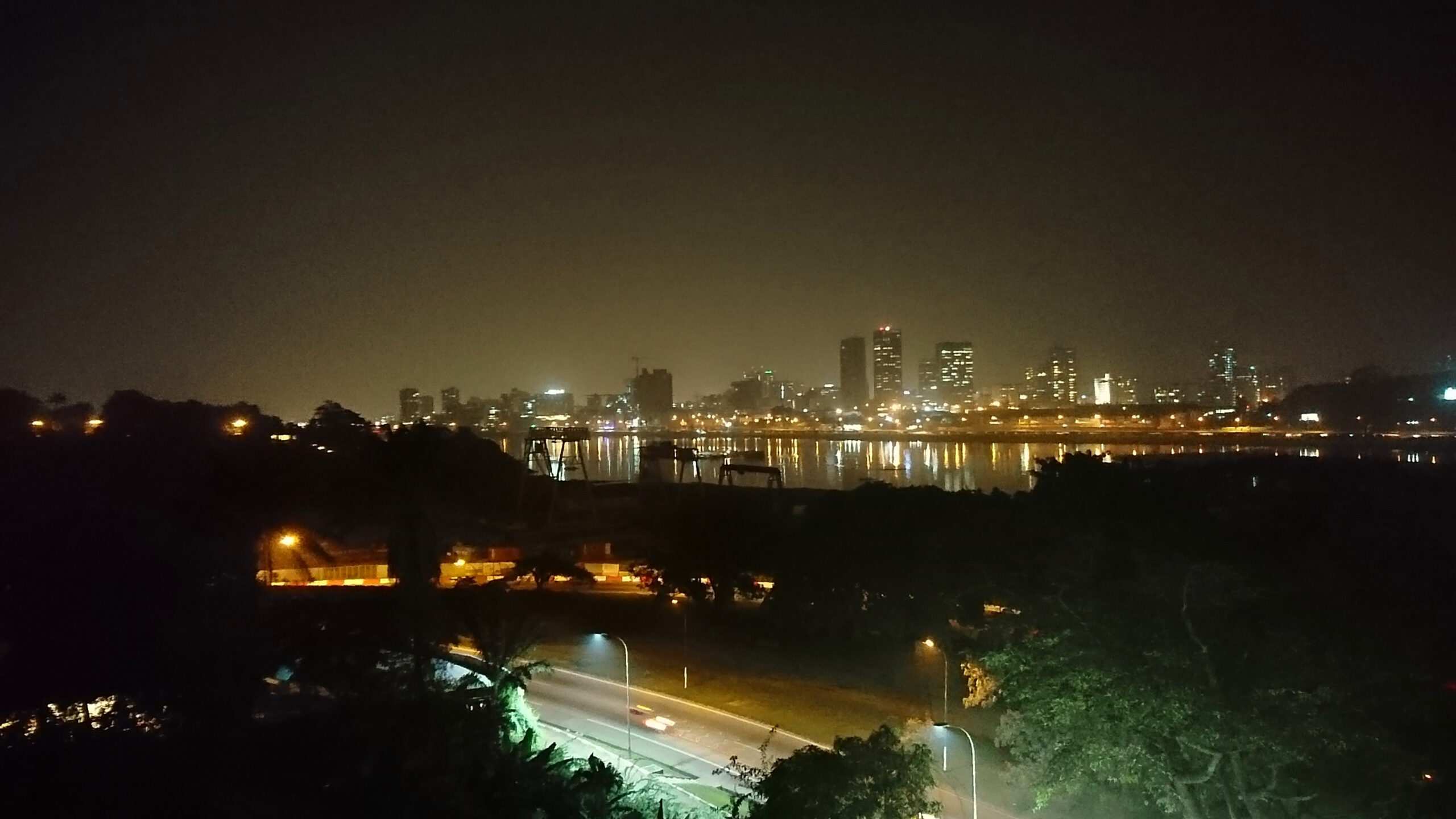
Abidjan’s Rise as West Africa’s Business Hub
Abidjan has consolidated its role as a Francophone West African commercial and logistics hub, benefiting from relative political stability and infrastructure investment.
The city’s capacity to attract regional headquarters, financial services and logistics operations underpins the services contribution to growth.
International financial institutions and rating agencies now treat Côte d’Ivoire as a benchmark for large-economy stability in the region.
The growth of Abidjan’s business ecosystem is not frictionless, however, given the post-election political tensions and the external shocks weighing on regional demand.
Still, the continuity of the IMF programme and the low debt-distress rating reinforce Abidjan’s position as a preferred entry point for investors in Francophone Africa.
Debt, the CFA Franc and Financing Needs
Côte d’Ivoire’s public debt-to-GDP ratio has started to decline for the first time in more than a decade, according to IMF communications.
Medium-term growth is projected to average around 6.5 to 6.6 percent between 2026 and 2030, supporting debt-sustainability metrics.
Higher external financing needs in 2026 are partly offset by the overall balance-of-payments surplus and the improved IMF risk assessment.
The CFA franc’s peg to the euro within the WAEMU framework provides currency stability but limits independent monetary-policy responses to cocoa shocks.
Investors should read the low debt-distress rating as a signal of repayment capacity, not as an absence of external vulnerability in a commodity-dependent economy.
What the Politics Means for Investors
The October 2025 election produced continuity at the top, but local political sources describe the vote as disputed.
Investor-relevant documents from the IMF and government do not detail opposition vote shares or specific unrest incidents, suggesting the dispute has not derailed the programme.
Ratings reports nonetheless flag political and external uncertainties as a recurring risk factor in the Ivorian outlook.
The key investor question is whether post-election tensions remain contained or escalate into disruptions around ports, roads or government operations in Abidjan.
So far, the macro evidence points to an economy absorbing political friction without abandoning its fiscal and reform trajectory.
Reading the 2026 Forecast Divergence
Forecast dispersion for 2026 is unusually wide for a stable performer, ranging from 5.5 percent at Allianz Trade to 6.5 percent at the African Development Bank.
The divergence reflects different assumptions about the severity of Middle East conflict spillovers on energy importers.
BMI and Fitch Solutions explicitly frame Côte d’Ivoire as the region’s biggest loser from that shock, cutting their forecast to 5.8 percent.
The IMF’s 6.0 percent baseline sits near the middle, acknowledging dampened demand and weaker confidence without projecting a growth collapse.
For portfolio and direct investors, the message is that Côte d’Ivoire’s growth premium over regional peers persists, but the margin is now more sensitive to external energy and transport costs.
The Medium-Term Case for Francophone Africa’s Growth Champion
Côte d’Ivoire has grown between 5 and 10 percent annually since 2011, except for the pandemic year of 2020.
IMF staff project average growth of 6.5 percent over 2026-2030, with earlier documents peaking near 7.5 percent in 2027.
Inflation is projected to remain within the BCEAO target band over the medium term, averaging around 2.1 percent.
Fiscal policy is anchored to the WAEMU 3 percent deficit ceiling, with exceptional 2026 cocoa and fuel supports treated as temporary.
The combination of sustained growth, contained inflation, a low debt-distress rating and currency stability makes Côte d’Ivoire the clearest large-economy case in Francophone Africa, provided political tensions do not escalate.
The Big Picture
Latest developments
- Senegal Court Voids Special Funds Law Oct 15 — 16 October 2026
- US General Says Russia Armed N Korea 13 Oct — 16 October 2026
- Ghana World Cup Visa Fraud Allegations Explained — 16 October 2026
- Kwankwaso Warns APC on 16 January Election — 16 October 2026
This article was produced by The Rio Times’ automated newsroom system. How we use AI · Report an error · Editorial responsibility: Matthias Camenzind, Editor-in-Chief
City Guides in Ivory Coast
Events, rents, safety and practical guides, city by city.