
IVORY COAST · COUNTRY GUIDE
Key Facts
- —What it is A coastal West African presidential republic whose economic centre is Abidjan and whose constitutional capital is Yamoussoukro.
- —Why it matters It is one of West Africa’s principal economies, a regional logistics gateway and the world’s leading cocoa producer.
- —The numbers The government formed on 23 January 2026 has 34 members: 30 full ministers, including one vice-prime minister, and four delegated ministers, according to the official government portal.
- —Who is who Alassane Ouattara is President of the Republic and Robert Beugré Mambé is Prime Minister and Head of Government, reconfirmed on 21 January 2026.
- —What it means for you A newcomer should expect a multilingual, layered society, a euro-pegged CFA franc, and Abidjan as the practical entry point for business and daily life.
Ivory Coast explained means understanding a country that is both a cocoa superpower and a West African commercial hub. For a foreigner, it is a place where Abidjan sets the rhythm of business, while Yamoussoukro holds the constitutional title of capital.
Côte d’Ivoire sits on the Gulf of Guinea, bordered by Liberia, Guinea, Mali, Burkina Faso and Ghana. This guide explains its geography, people, politics, economy and daily life for anyone arriving with fresh eyes.
What Ivory Coast Is
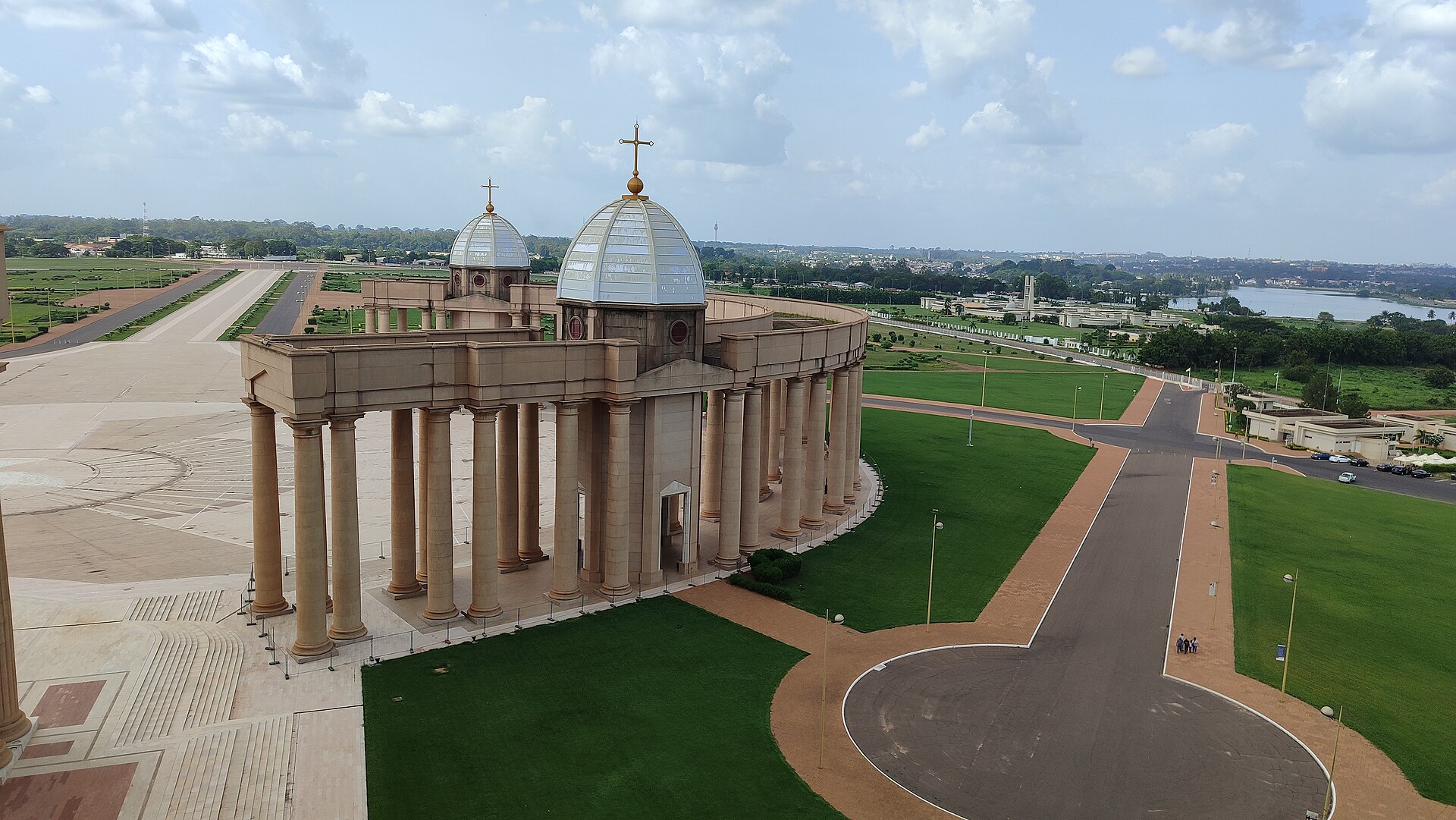
Ivory Coast, officially the Republic of Côte d’Ivoire, is a coastal West African state. Its political and economic centre is Abidjan, while Yamoussoukro is the constitutional capital. The country uses the West African CFA franc, known by its code XOF, within the monetary framework of the Central Bank of West African States, or BCEAO.
The country is a member of the West African Economic and Monetary Union. French is the official language of administration, education, law and formal business. Daily conversation is multilingual, and many people move between a local language at home and French in school, government offices or the workplace.
For a newcomer, the first practical distinction is between Abidjan and Yamoussoukro. Abidjan is the economic capital and main business, port, finance, media and diplomatic centre. Yamoussoukro is the official political capital, but most foreign residents initially encounter the country through Abidjan.
Geography and Regional Position
Côte d’Ivoire occupies the southern portion of West Africa. It is bordered by Liberia and Guinea to the west, Mali and Burkina Faso to the north, Ghana to the east, and the Gulf of Guinea to the south. Its coastline gives it direct access to Atlantic shipping routes and helps explain Abidjan’s role as a commercial gateway for landlocked neighbours, particularly Burkina Faso and Mali.
The country has three broad ecological zones. A humid forest and coastal zone in the south includes Abidjan and much of the cocoa-growing belt. A transitional savannah zone lies in the centre. A drier northern savannah zone borders the Sahel.
This geography shapes the economy. Rainfall and soil conditions support cocoa, rubber, oil palm, bananas and other tropical crops in the south and centre. Northern areas are more associated with cotton, cashew production, livestock and cereals.
Major urban areas include Abidjan, Yamoussoukro, Bouaké, San-Pédro and Korhogo. Bouaké is a major inland commercial and transport centre. San-Pédro is an important southwestern port and agricultural-export hub. Korhogo is a northern centre for cotton, cashews, trade and regional services.
People, Language and Identity
Côte d’Ivoire is ethnically and linguistically diverse. Major cultural-linguistic groupings include Akan peoples in the southeast and centre, Krou communities in the southwest, Mandé groups in the north and northwest, and Gur-speaking communities in the north. These categories contain many distinct peoples and languages and should not be treated as interchangeable ethnic labels.
Religion is also diverse. Islam and Christianity are both major faiths, alongside traditional religious practices. Religious identity often overlaps with regional and family histories, but Côte d’Ivoire should not be reduced to a simple north-south religious divide.
Nouchi, an urban youth language associated especially with Abidjan, combines French with vocabulary from Ivorian languages and other influences. For newcomers, the practical point is that social identity is layered. Region, family, language, religion, education, urban experience and nationality may all matter depending on the context.
Political System
Côte d’Ivoire is a presidential republic. The president is the head of state and is elected nationally. The president appoints the prime minister, who heads the government and coordinates ministerial action. Parliament legislates and exercises political oversight, while the judiciary includes ordinary courts and higher constitutional and administrative institutions.
The country’s recent political history has been shaped by the 2002-2011 crisis, the post-election conflict of 2010-2011, and subsequent efforts to consolidate political stability. The political environment has improved considerably compared with the crisis period, but questions concerning electoral competition, succession, institutional independence and inclusion remain important for investors and residents to monitor.
Confirmed senior officeholders
Alassane Ouattara is President of the Republic. Robert Beugré Mambé is Prime Minister and Head of Government. The presidency reconfirmed Mambé on 21 January 2026, according to the government portal. The new government was announced on 23 January 2026.
Téné Birahima Ouattara is Vice-Prime Minister and Minister of Defence in the government formed on 23 January 2026. Ibrahime Kuibiert Coulibaly is President of the Council of State, having been sworn in on 2 July 2026 as the new president of that institution, according to Ivorian press reports.
The current government formed in January 2026 has 34 members: 30 full ministers, including one vice-prime minister, and four delegated ministers, according to the official government announcement. The exact current holders of other offices should be checked individually against the relevant official websites immediately before any business or legal decision.
The Economy
Côte d’Ivoire is one of West Africa’s principal economic engines. Its economy combines agriculture and agricultural processing, oil, gas and electricity, mining, manufacturing and construction, ports, logistics and transport, and banking, telecommunications and other services.
Côte d’Ivoire is the world’s leading cocoa producer and a central supplier to the global chocolate industry. Cocoa is grown predominantly by smallholders, making the sector socially significant as well as commercially important. Its performance depends on rainfall, farm productivity, international prices, ageing plantations, disease, labour conditions, traceability and European market regulation.
The sector is regulated through the Conseil du Café-Cacao, which sets and administers important parts of the marketing framework. Cocoa remains a major source of foreign exchange, but the government has also sought to increase domestic processing so that more value is captured inside the country.
Côte d’Ivoire is also a major cashew producer and has expanded processing capacity. Cotton is particularly important in northern regions. Other significant agricultural products include rubber, palm oil, bananas, mangoes, coffee and timber.
Energy, mining and industry
The country has developed offshore oil and gas production and has invested in electricity generation and regional power exports. Mining has expanded, especially gold production, while nickel and other minerals are gaining importance. Industrial policy increasingly focuses on processing domestic commodities rather than exporting raw materials.
Ports and logistics
The Port of Abidjan is the country’s largest maritime gateway and a major regional logistics platform. The Port of San-Pédro is especially important for cocoa, agricultural products and southwestern trade. Abidjan’s position gives Côte d’Ivoire commercial links to the interior of West Africa. Road and rail corridors connect the coast with neighbouring landlocked economies, although border procedures, road quality, security conditions and informal costs can affect transit times.
Currency and monetary policy
Côte d’Ivoire uses the West African CFA franc, issued within the monetary framework of the Central Bank of West African States, known by its French acronym BCEAO. The currency is pegged to the euro, which reduces exchange-rate volatility against the euro but does not eliminate inflation, liquidity, fiscal or transfer risks.
Businesses should distinguish between the official currency, XOF, the euro exchange relationship, local bank conversion spreads and fees, restrictions or documentation requirements for cross-border transfers, and the difference between official and street-market pricing in any transaction where informal exchange is involved.
Investment Environment
Côte d’Ivoire is attractive to investors because it combines a relatively large domestic market, access to the West African regional market, major ports and transport corridors, strong agricultural supply chains, a growing urban middle class, public investment in roads, energy and digital infrastructure, and a relatively diversified economy compared with many neighbouring states.
The main sectors of interest include agribusiness and food processing, logistics and warehousing, energy and renewables, mining services and mineral processing, construction and real estate, financial technology and digital services, telecommunications, healthcare and education, and tourism and hospitality.
Investors should also assess land acquisition and title security, tax administration, customs procedures, local-content expectations, labour and immigration compliance, contract enforcement, electricity and water reliability at the project site, political and electoral risk, security conditions near northern borders, and repatriation and foreign-exchange procedures.
Society and Daily Life
Most foreign residents initially encounter Côte d’Ivoire through Abidjan. The city is dense, commercially active and divided by the Ébrié Lagoon. Neighbourhoods have distinct social and economic profiles, and commuting can be a major part of daily life.
Common expatriate and business districts include areas such as Cocody, Marcory, Plateau, Zone 4 and Treichville, though housing, traffic, services and security vary considerably within each area. Abidjan offers international schools and private education, private clinics and hospitals, supermarkets and shopping centres, restaurants serving Ivorian, West African, French, Lebanese, Asian and other cuisines, banks and mobile-money services, international hotels and serviced apartments, and a growing technology and start-up ecosystem.
The trade-off is cost. Imported goods, international schooling, premium housing, private healthcare and secure transport can be expensive relative to local incomes. Housing is commonly rented rather than purchased by newly arrived foreigners. Lease terms, deposits, agency fees, furnishing standards and responsibility for repairs should be clarified in writing.
Electricity access is comparatively strong in urban areas, but outages and voltage interruptions can still occur. Water reliability depends on the neighbourhood and infrastructure. Many homes and offices use backup systems such as generators, inverters or water tanks. Internet access is widely available through mobile networks and fixed providers, but service quality can vary by location. Mobile money is an important part of everyday payments, particularly outside the formal banking system.
What to Watch
The political calendar matters for anyone doing business in Côte d’Ivoire. Questions concerning electoral competition, succession and institutional independence remain important to monitor. The government’s development agenda also emphasises infrastructure, digital services, logistics, industrial zones and urban expansion.
For investors, the key watchpoints are cocoa-sector regulation, cashew processing capacity, gold and nickel mining, port expansion, and the implementation of the national development plan. The government announced a Plan National de Développement 2026-2030, whose Consultative Group of financing partners met in Abidjan on 8 and 9 July 2026, according to the government portal.
Security conditions near northern borders deserve attention, as do currency transfer rules and the gap between official and informal exchange pricing. For residents, the practical watchpoints are housing costs, traffic, electricity and water reliability, and the quality of internet and mobile-money services in specific neighbourhoods.
Related reading: Kenya Continent Role, Weight and Alliances Explained; Namibia Travel Guide 2026 Covers Visas, Safety, Seasons; Cape Verde 2026 Guide to Politics, Money, Entry Rules; more from Africa.
Frequently Asked Questions
What is the capital of Ivory Coast?
Yamoussoukro is the constitutional capital of Côte d’Ivoire. Abidjan is the economic capital and main business, port, finance, media and diplomatic centre.
What currency does Ivory Coast use?
Côte d’Ivoire uses the West African CFA franc, known by its code XOF. It is issued within the monetary framework of the Central Bank of West African States, or BCEAO, and is pegged to the euro.
Who is the president of Ivory Coast in 2026?
Alassane Ouattara is President of the Republic. Robert Beugré Mambé is Prime Minister and Head of Government, reconfirmed on 21 January 2026, according to the government portal.
What is Ivory Coast known for economically?
Côte d’Ivoire is the world’s leading cocoa producer and a central supplier to the global chocolate industry. It is also a major cashew producer and has significant gold, oil, gas and agricultural sectors.
Is Ivory Coast safe for foreigners?
The political environment has improved considerably compared with the 2002-2011 crisis period. Security conditions near northern borders and neighbourhood-level variation in Abidjan should be assessed individually.
What language is spoken in Ivory Coast?
French is the official language of administration, education, law and formal business. Daily conversation is multilingual, and Nouchi, an urban youth language associated especially with Abidjan, combines French with vocabulary from Ivorian languages.
Sources: gouv.ci, gouv.ci, gouv.ci, gouv.ci, gouv.ci, gouv.ci. Retrieved 2 October 2026.
This article was produced by The Rio Times’ automated newsroom system. How we use AI · Report an error · Editorial responsibility: Matthias Camenzind, Editor-in-Chief
Part of our ongoing coverage
Africa: The New Scramble — the great-power contest over the continent.