IVORY COAST · GEOPOLITICS
Key Facts
- The country A coastal West African republic of about 32.9 million people with a US$99.9 billion economy in 2025 (as of October 2026).
- Why it matters It hosts the International Cocoa Organization’s secretariat and borders Mali and Burkina Faso, where UK advice warns against all travel near the frontier.
- The leadership President Alassane Ouattara won the 25 October 2025 vote in the first round with 89.77%; Robert Beugré Mambé is Prime Minister.
- The partners France keeps a 100-person liaison detachment, the US has health and energy agreements, and the EU and the African Development Bank add finance.
- What it means for you A US proclamation partly restricts entry for Ivorians since 1 January 2026, and the US travel advisory is Level 2.
- Still open Whether Sahel militancy moves south, and whether the US entry limits are lifted at their 180-day reviews.

Ivory Coast geopolitics turns on a coastal West African state of about 32.9 million people that sits between the Sahel and the Gulf of Guinea, runs a US$99.9 billion economy and hosts the International Cocoa Organization. As of October 2026 President Alassane Ouattara is in a new term, ECOWAS lists 12 members without Mali and Burkina Faso, and a US proclamation has partly restricted entry for Ivorians since 1 January 2026.
In Plain English
Côte d’Ivoire is the French name of the country that English speakers also call Ivory Coast. Geopolitics here means how its location, its trade and its armed forces shape its dealings with other states.
ECOWAS is the Economic Community of West African States, a regional bloc whose website lists 12 member states. Mali and Burkina Faso, which border Côte d’Ivoire to the north, are not on that list.
Where Ivory Coast Sits on the Map
The International Monetary Fund (IMF), the global lender, puts the 2025 economy at US$99.9 billion and projects US$110.4 billion for 2026, as of October 2026. It counts about 32.9 million people in 2025 and projects 33.8 million for 2026.
The IMF projects real growth of 6.0% for 2026 after 6.5% in 2025, and public debt of 57.8% of output for 2026 after 57.1% in 2025. It projects consumer price inflation of 2.2% for 2026.
The UK government advises against all travel within 40 km of the borders with Burkina Faso and Mali, in the northern Zanzan and Savanes provinces and in Comoé National Park, because of the risk of terrorist attacks and kidnaps by groups based in the Sahel. Its advice was still in force when checked in October 2026.
The same UK advice warns against all but essential travel within 20 km of the border with Liberia because of the risk of serious violence by local militias. The Prime Minister of Guinea, Amadou Oury Bah, called Côte d’Ivoire a country bordering Guinea and a reference in the region when he met his Ivorian counterpart on 6 August 2026.
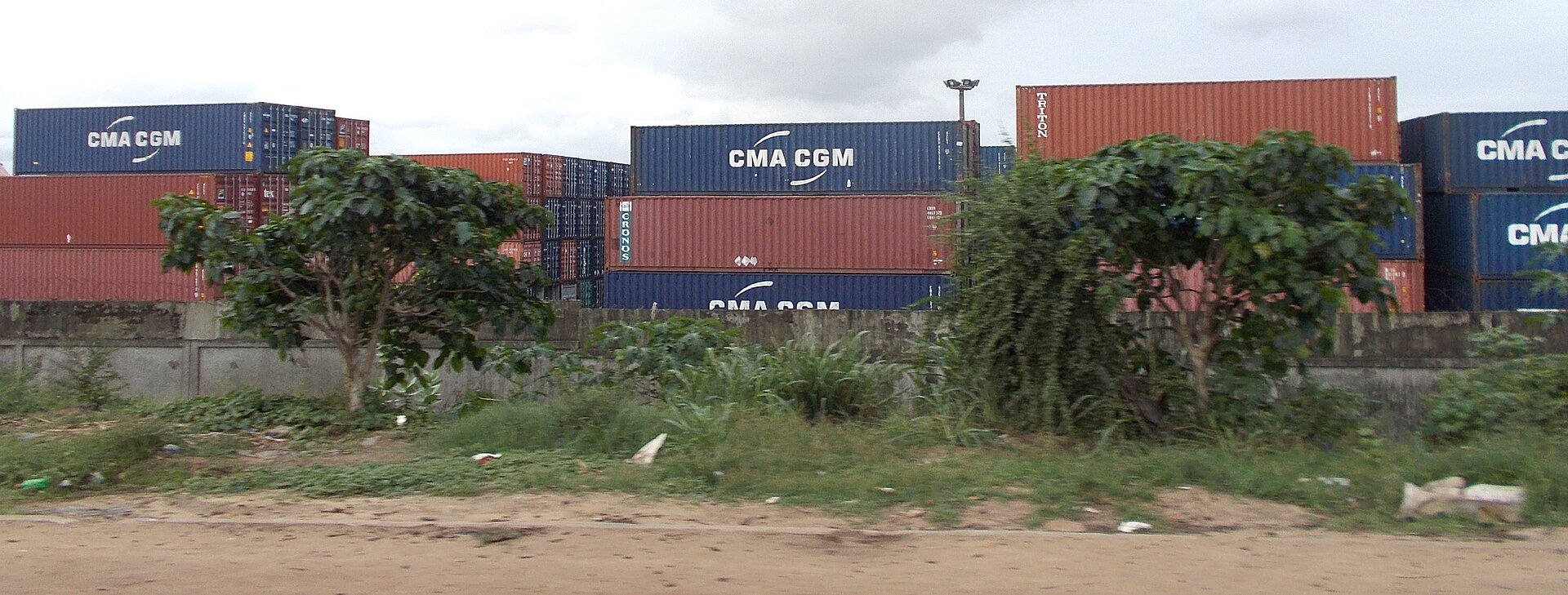
The US State Department advisory warns that ships near Côte d’Ivoire are vulnerable to piracy, armed robbery and kidnapping for ransom. It tells US citizens on vessels in the Gulf of Guinea off West Africa to stay alert.
For wider portraits of the country, see the guides Ivory Coast Explained 2026 and Ivory Coast and Its Neighbours in West Africa, and the Côte d’Ivoire news hub for current coverage. This page covers only the foreign relationships that shape the state of play as of October 2026.
Who Runs the Country and Its Foreign Policy
The Constitutional Council proclaimed Alassane Ouattara elected in the first round of the 25 October 2025 presidential vote on 4 November 2025, with 3,759,030 votes, or 89.77% of valid ballots. Turnout was 50.10% of 8,568,456 registered voters, and the Council recorded no complaint from any candidate.
The Prime Minister’s office said that more than 20 heads of state and government would attend the inauguration on 8 December 2025 and named the leaders of Congo-Brazzaville, Mauritania, Ghana, Sierra Leone, Liberia, Djibouti and the Gambia among those arriving. The National Assembly vote was set for 27 December 2025, and the Electoral Commission lists a partial rerun in two constituencies on 21 February 2026.
Robert Beugré Mambé is Prime Minister, Téné Birahima Ouattara is Vice Prime Minister and Defence Minister, and Nialé Kaba is the Minister of State for foreign affairs, according to the government’s published composition and the Prime Minister’s office news of October 2026. Vice President Tiémoko Meyliet Koné presided over the opening of an investor meeting on 8 July 2026 on behalf of the President.
ECOWAS and the Sahel Neighbours
ECOWAS lists 12 member states on its website, with its headquarters in Abuja: Benin, Cabo Verde, Côte d’Ivoire, Ghana, Guinea, Guinea-Bissau, Liberia, Nigeria, Senegal, Sierra Leone, the Gambia and Togo. Mali, Burkina Faso and Niger do not appear on that list as of October 2026.
Prime Minister Mambé opened the third Abidjan Border Forum on 20 October 2026 and said the state would make border areas levers of peace, security and African integration. The chairman of the African Union Commission, Mohamed Ali Youssouf, attended and tied the meeting to the African Union Border Programme.
On 8 July 2026 the Prime Minister told investors that the country is strengthening security at its borders, hosts more than 100,000 refugees from neighbouring countries and is carrying out a North-East Resilience Plan. He added that foreigners make up more than 22% of the population and that ECOWAS counts more than 400 million people.
The UK government names Jama’at Nusrat al-Islam wal-Muslimin, known as JNIM, an al-Qa’ida affiliate, as the main terrorist threat in Côte d’Ivoire and says it is mainly active in the northern border areas, including Comoé National Park. It adds that attacks could occur anywhere, including major cities such as Abidjan.
On 19 October 2026 the Prime Minister received his Senegalese counterpart, Ahmadou Al Aminou Mohamed Lo, in Abidjan, and both governments reaffirmed that they would speed up preparatory work on a single ECOWAS currency. They also called for closer defence and intelligence cooperation, citing a worsening security context in West Africa.
On 2 October 2026 Mambé represented Ouattara at Guinea’s 68th independence anniversary in Conakry, where Côte d’Ivoire was guest of honour and General Mamadi Doumbouya received him. Guinea’s Prime Minister had visited Abidjan on 6 August 2026 to represent his president at Côte d’Ivoire’s 66th independence anniversary.
France and the Security Partnership
The French defence ministry says that France and Côte d’Ivoire have renewed their military partnership around a joint liaison detachment inside the Général Ouattara Thomas d’Aquin camp, with a permanent core of 100 personnel. The detachment plans and helps carry out joint training and exercises and can be reinforced by temporary teams.
The same page names the International Academy for the Fight against Terrorism, an Ivorian training centre open to the armed forces of regional states, and says French training places for Ivorian soldiers are maintained until 2030. It adds that Ivorian forces have asked France to help build up their air force.
The Prime Minister’s office says that Mambé presented the experience of Côte d’Ivoire, including the academy at Jacqueville, to the Tokyo conference on African development in Yokohama on 20 August 2025. Japan’s prime minister then made three pledges for the continent, covering private-sector growth, youth and women, and regional connectivity.
The United States: Visas, Health Money and Energy
Presidential Proclamation 10998 of 16 December 2025 partly restricts entry for nationals of 15 countries, including Côte d’Ivoire, from 1 January 2026. For Ivorians it suspends entry as immigrants and as nonimmigrants on B-1, B-2, B-1/B-2, F, M and J visas and shortens the validity of other nonimmigrant visas.
The proclamation cites a B-1/B-2 overstay rate of 8.47% and an F, M and J overstay rate of 19.09% for Côte d’Ivoire. It applies only to nationals who were outside the United States and held no valid visa on the effective date.
It exempts lawful permanent residents, dual nationals travelling on a passport of a country that is not designated, holders of certain diplomatic and NATO visas, and athletes travelling for major sporting events. It also orders a review within 180 days and every 180 days after that.
Côte d’Ivoire and the US signed a five-year health memorandum of about 272 billion CFA francs (US$474 million) on 30 December 2025 under the US global health strategy called America First. Côte d’Ivoire pledged to raise its co-financing to 163 billion CFA francs (US$284 million), or 60% of the total, by 2030.
Those conversions use the US Treasury reporting rate of 573.75 CFA francs per US$ on 30 September 2026. The US ambassador named HIV, malaria, maternal and child health and health security as the four priority areas, according to the Prime Minister’s office.
A five-year US Millennium Challenge Corporation compact worth US$524.7 million began in August 2019 and supported Port of Abidjan logistics and education, according to the State Department. The Prime Minister’s office said the programme officially ended on 16 September 2025, the day a Regional Energy Compact worth US$300 million, plus US$22.5 million from Côte d’Ivoire, was signed.
Côte d’Ivoire is on the 33-country list of sub-Saharan African beneficiaries of the African Growth and Opportunity Act (AGOA) for 2026. A law approved on 2 September 2026 extended the programme to 31 December 2028.
Cocoa, Money and Partners
The International Cocoa Organization (ICCO) keeps its secretariat in Abidjan, and Côte d’Ivoire, the Democratic Republic of Congo, Madagascar and Togo declared the 2026 International Cocoa Agreement in force there on 15 September 2026, with Nicaragua joining remotely. The organisation announced the entry into force on 1 October 2026.
ICCO says the new agreement formally ties price stability to a goal of decent income for producers, and its members estimate that the market it governs is close to 96% of world cocoa production. The EU Deforestation Regulation lists cocoa among seven covered commodities and applies from 30 December 2026 to large and medium operators and from 30 June 2027 to micro and small operators.
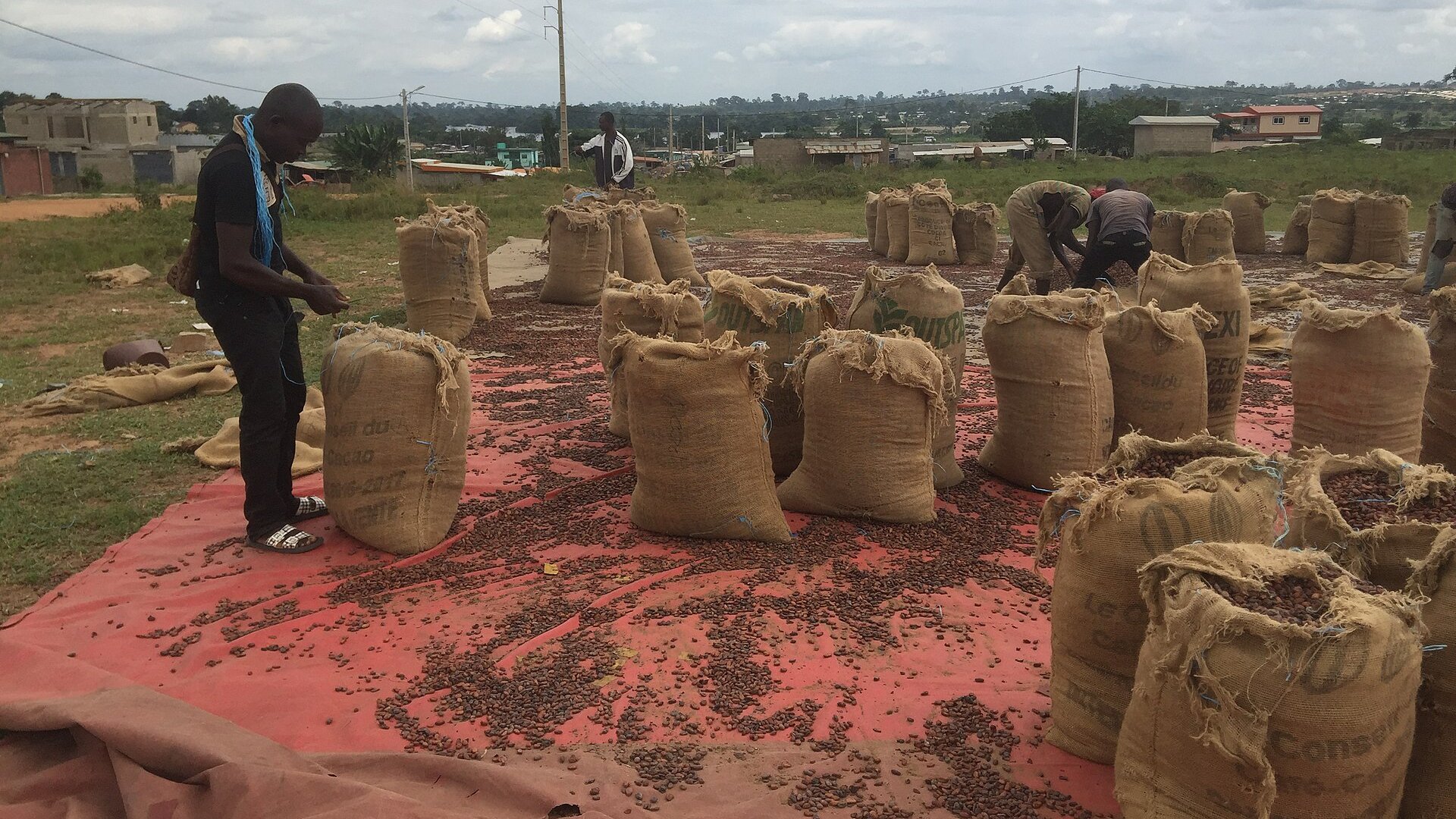
ICCO estimates 2024/25 world gross production at 4.733 million tonnes, up 8.5%, with grindings down 3.3% at 4.649 million tonnes, and notes that cocoa prices surged past US$10,000 per tonne between 2023 and 2025. Its June 2025 market report calls Côte d’Ivoire the top producer.
The 9th session of the Côte d’Ivoire and European Union partnership dialogue opened in Abidjan on 16 April 2026, with peace and security and the business climate as its main themes. The Prime Minister said the partnership should also cover the energy transition, climate, governance, innovation, development finance and human capital.
The European Commission’s list of high-risk third countries for money laundering names Côte d’Ivoire with an entry-into-force date of 5 August 2025, and its latest amendments were published on 9 January 2026. On 23 May 2026 the Prime Minister opened a ministerial meeting of the regional anti-money-laundering group GIABA in Abidjan, and his office said reforms had brought significant progress, giving hope of a more comfortable standing with the Financial Action Task Force.
At a consultative group on the 2026 to 2030 national development plan on 8 and 9 July 2026, partners announced pledges of US$80 billion, about four times the US$20.3 billion target, according to the government. More than 3,000 participants from 49 countries attended, and the IMF’s Africa director, Zeine Ould Zeidane, told the Prime Minister that the Fund backs the country’s programme.
African Development Bank president Sidi Ould Tah told the Prime Minister on 19 February 2026 that the country has the bank’s best portfolio for performance and diversification, and he referred to commitments that Arab development funds made during a visit to Abidjan in January 2026. On 15 October 2026 an Italian delegation led by Ambassador Roberta Di Lecce met the Prime Minister and Foreign Minister Kaba, and the ambassador placed the effort within Italy’s Mattei Plan for Africa.
On 2 June 2026 the chief executive of China Energy Engineering Corporation told the Prime Minister that the company is ready to invest in power, water and infrastructure in Côte d’Ivoire. On 7 September 2026 the president of the Asian Infrastructure Investment Bank, Zou Jiayi, said she found close alignment between the Prime Minister’s priorities and the bank’s own policy.
Oil, Power and Cities
Eni’s page on the Baleine field says the discovery well lay about 50 km off Abidjan in some 1,200 metres of water, that production began in August 2023 and that the third phase aims at up to 150,000 barrels of oil and 200 million standard cubic feet of gas per day. The page gives targets and not current output.
On 16 September 2025 the Prime Minister said that the country supplies electricity to six West African countries and that the Regional Energy Compact is meant to expand power trade across the region. The energy portfolio is held by Minister of Mines, Petroleum and Energy Mamadou Sangafowa Coulibaly.
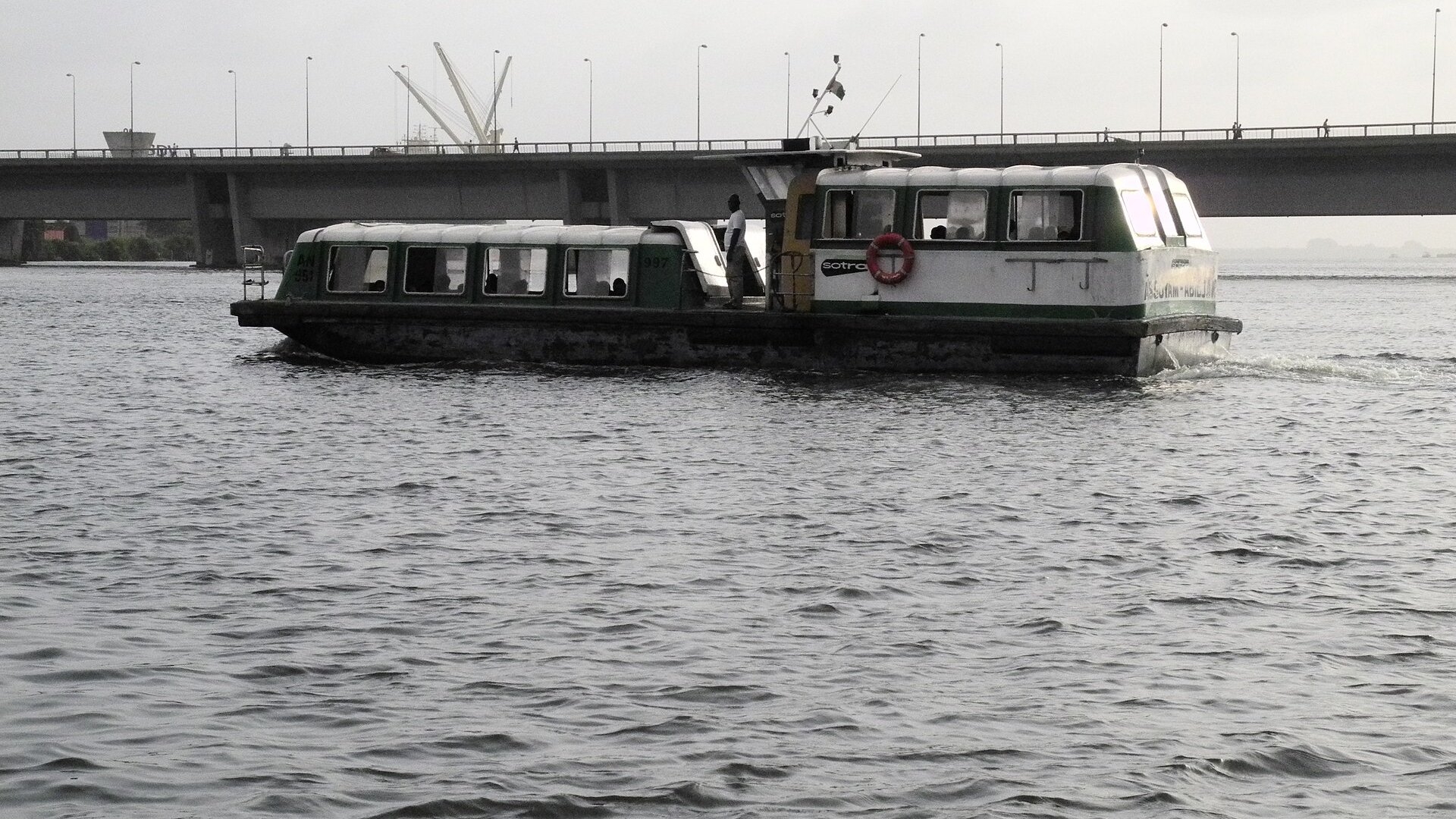
In October 2026 Mambé told the launch of a World Bank report on urbanisation in sub-Saharan Africa that Côte d’Ivoire has already passed 50% urbanisation, while the report projects 748 million more urban residents in sub-Saharan Africa over 25 years. He named road bypasses, mass transit, bridges and the Abidjan metro among the investments that the government wants to continue.
The Prime Minister opened the first West African Water Forum in Abidjan on 24 September 2026 and called on the region to practise water diplomacy. He cited 28 transboundary basins covering 71% of the regional area and 500 million people.
Related coverage of the economy and the election aftermath is in Côte d’Ivoire Explained and Ouattara Keeps Power in Côte d’Ivoire as Its Economy Holds Near 6 Percent Growth. They give the domestic story behind the foreign relationships described here.
What It Means for US Readers
The US State Department rates Côte d’Ivoire Level 2, Exercise Increased Caution, because of crime, terrorism, unrest, health and piracy in nearby waters, in an advisory dated 18 February 2026 that was still listed in October 2026. US government employees may not drive outside major cities at night, and the department advises US citizens to take the same precautions.
Ivorians who want to travel to the US on business, tourist, student or exchange visas, or to move there as immigrants, face the suspension in Proclamation 10998 unless an exception applies. US companies with Ivorian staff or partners should check the exceptions and the 180-day reviews, and exporters should note that AGOA duty-free access for eligible goods runs to 31 December 2028.
What Is Not Known
The primary documents read for this page describe no Russian, Turkish, Indian or BRICS role in Côte d’Ivoire, and no United Nations voting record was checked, so none is described here. The terms of Chinese lending to the country are not given in the sources used.
The French defence page gives a permanent core of 100 personnel but no date for any change to that number, and Eni’s page gives no current output for the Baleine field. No result of a 180-day review of the US entry limits was found.
Cocoa farmgate and forward-sale prices for the 2026/27 season are not stated because the regulator’s published figures were not confirmed against a decision text. The country’s current share of world cocoa output is not given by the ICCO documents read here.
Frequently Asked Questions
Who is the president of Côte d’Ivoire in October 2026?
Alassane Ouattara, whom the Constitutional Council proclaimed elected in the first round on 4 November 2025 with 89.77% of valid votes. Robert Beugré Mambé is Prime Minister.
Is Côte d’Ivoire still in ECOWAS?
Yes, the ECOWAS website lists it among 12 member states. Mali and Burkina Faso, its northern neighbours, do not appear on that list.
Are French forces based in Côte d’Ivoire?
France keeps a joint liaison detachment with a permanent core of 100 personnel inside an Ivorian military camp, according to its defence ministry. Its job is to plan and help carry out joint training and exercises.
Can Ivorians get US visas in 2026?
A US proclamation suspended entry for Ivorians as immigrants and on B-1, B-2, F, M and J visas from 1 January 2026, with exceptions such as lawful permanent residents. The order is to be reviewed every 180 days.
Is Côte d’Ivoire covered by AGOA?
Yes, it is on the 33-country list for 2026, and a law approved on 2 September 2026 extends AGOA to 31 December 2028. AGOA gives eligible African goods duty-free access to the US market.
What is the US travel advisory for Côte d’Ivoire?
The State Department lists Level 2, Exercise Increased Caution, because of crime, terrorism, unrest, health and piracy in nearby waters. The advisory is dated 18 February 2026 and was still listed in October 2026.
What is Côte d’Ivoire’s link to the cocoa organization?
The International Cocoa Organization keeps its secretariat in Abidjan, where four signatory states declared the 2026 International Cocoa Agreement in force on 15 September 2026. The organisation announced the entry into force on 1 October 2026.
Sources: Constitutional Council of Côte d’Ivoire, decision of 4 November 2025; Prime Minister’s office of Côte d’Ivoire, news of 2 June to 29 October 2026 and government composition; Independent Electoral Commission, results; ECOWAS, member states; French defence ministry, liaison detachment in Côte d’Ivoire; UK government, travel advice for Côte d’Ivoire; US State Department travel advisory feed; US State Department, relations with Côte d’Ivoire; Presidential Proclamation 10998, 16 December 2025; USTR AGOA eligibility notice, 30 June 2026; US Public Law 119-103, approved 2 September 2026; International Cocoa Organization, agreement announcement of 1 October 2026; International Cocoa Organization, August 2026 bulletin; International Cocoa Organization, market report of June 2025; European Commission, high-risk third countries list; European Commission, Deforestation Regulation page; IMF World Economic Outlook database, read 30 October 2026; US Treasury reporting rates, 30 September 2026; Eni, Baleine field page.
This article was produced by The Rio Times’ automated newsroom system. How we use AI · Report an error · Editorial responsibility: Matthias Camenzind, Editor-in-Chief
City Guides in Ivory Coast
Events, rents, safety and practical guides, city by city.