Ethiopia Faces Higher Flood Risk as a Very Strong El Niño Peaks in 2026
Ethiopia · CLIMATE
Key Facts
- —The country Ethiopia, in the Horn of Africa, is the continent's second most populous nation, with about 135 million people. Its economy, about US$126 billion in 2025, is less than a twentieth of Britain's.
- —Why it matters Most Ethiopians work in farming, which relies mostly on rain. In parts of the country, October to December brings up to 70% of the year's rainfall.
- —Why now El Niño, a Pacific warming that shifts weather worldwide, is turning very strong. The UN weather agency expects it to peak around the end of 2026.
- —What happened On 18 August the regional climate centre, ICPAC, gave southern Ethiopia a 90% chance of wetter-than-normal October–December rain. It restated this in Addis Ababa on 15–17 September.
- —The numbers In 2023 a strong El Niño displaced 633,000 people in Ethiopia, UN figures show. In 1997 floods killed 2,823 people across Ethiopia, Kenya, Somalia and Uganda.
- —What it means for you Expect flooded roads and supply delays in southern Ethiopia from October. Disruption is likeliest around the year-end peak.
- —Still open How much rain falls locally, and when it starts. Also open: whether aid money reaches flood-prone areas before the water does.
El Niño in Ethiopia is set to bring heavier rain to the south from October. Regional forecasters give the area a 90% chance of a wetter-than-normal season, raising flood risk.
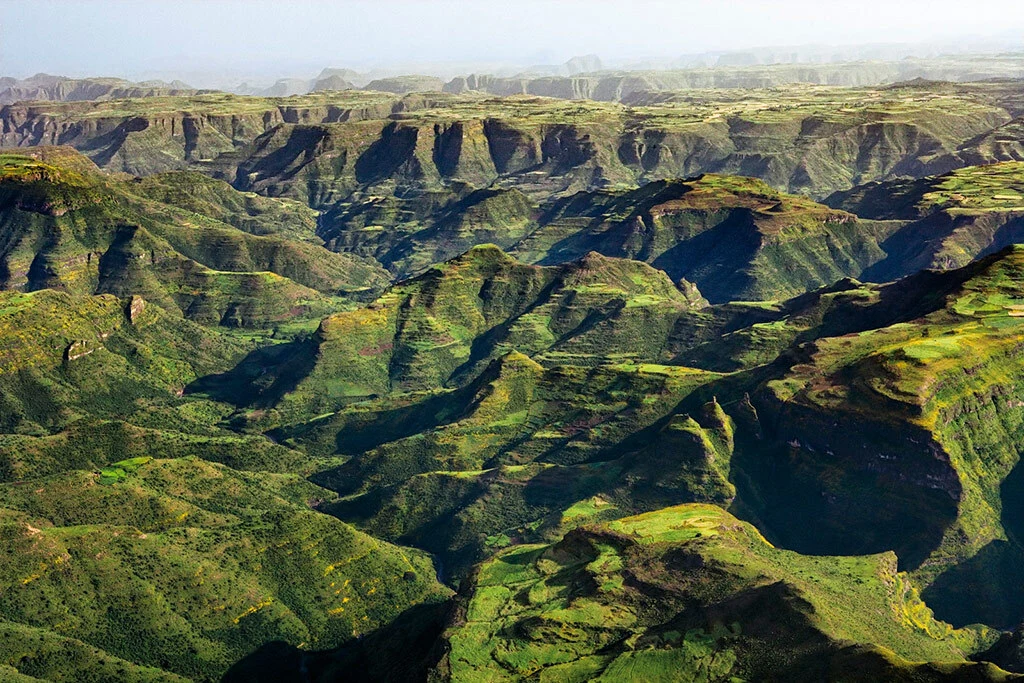
Ethiopia, home to about 135 million people in the Horn of Africa, grows most of its food on rain-fed land. That leaves it highly exposed to El Niño, a Pacific warming that reshuffles rainfall around the world.
This year's event is forecast to be one of the strongest since 1950. For southern Ethiopia, the main risk over the coming months is too much rain, not too little.
A wetter final quarter for the Greater Horn
The warning comes from ICPAC, the climate centre of IGAD, a bloc of East African governments. It issued its October–December outlook at a regional forum in Kigali, Rwanda, on 18 August.
The outlook gives southern Ethiopia, central and southern Somalia and north-eastern Kenya a 90% chance of enhanced rainfall. The World Meteorological Organization (WMO), the UN weather agency, relayed the forecast on 19 August.
The season matters more than its length suggests. In parts of Ethiopia, Kenya and Somalia, October to December supplies up to 70% of annual rainfall, the WMO says.
Temperatures are also forecast to run above average, with some of the highest probabilities over Ethiopia. Forecasters expect the rains to start early or on time in southern Ethiopia.
ICPAC named 1997 and 2023 as the closest past matches for this year. Both brought wetter-than-normal conditions to much of the region.
A near-certain, very strong El Niño
On 3 September the WMO said there was an “exceptionally high likelihood of nearly 100%” that El Niño lasts through February 2027. It was the agency's most unequivocal update yet.
The WMO expects the event to strengthen to very strong intensity and peak towards the end of 2026. Its effects should continue well into 2027.
A second driver adds to the signal in East Africa. A positive Indian Ocean Dipole, a pattern of unusually warm water in the western Indian Ocean, was also expected to develop.
“This exceptional El Niño demands exceptional preparation and response,” said Celeste Saulo, the WMO's secretary-general. Governments then met at an IGAD ministerial forum on El Niño preparedness in Addis Ababa on 15–17 September.
Better pasture, higher flood risk
Good rain is welcome in the dry southern lowlands, where herders depend on grass and water for their cattle, goats and camels. The WMO expects better pasture and water for livestock.
But excessive rain sharply raises flood risk, a regional food-security working group warned. It listed deaths, destroyed crops, damaged roads and bridges, and outbreaks of water-borne and insect-borne disease.
The Ethiopian Meteorology Institute, the national weather service, has also warned of flash flooding. The Addis Ababa weekly The Reporter carried the warning on 19 September.
History shows what is at stake. In 1997, El Niño floods killed 2,823 people across Ethiopia, Kenya, Somalia and Uganda, according to the EM-DAT international disaster database.
In 2023 a strong El Niño displaced 633,000 people in Ethiopia and 1.3 million in Somalia. Those figures come from OCHA, the UN's humanitarian coordination office.
Plans are ready, money is short
Preparation is further ahead than in past episodes. The International Federation of Red Cross and Red Crescent Societies (IFRC) has already triggered early flood funding for Ethiopia.
The UN's Central Emergency Response Fund has set aside up to US$100 million for high-risk countries. It has pre-approved sums for Ethiopia and Somalia and paid out more than US$20 million.
Aid groups still call money the weak link. Across eastern Africa, 48.5 million people already need assistance, according to OCHA's regional office.
The forecast is certain and plans for action exist, Sirak A. Temesgen of the Netherlands Red Cross wrote for the Anticipation Hub, a humanitarian network. What is missing, he argued, is money released early.
What it means for travellers and business
The forecast targets the south and south-east, not the whole country. Overland trips there, including routes towards the Kenyan border crossing at Moyale, may face flooded roads from October.
Firms moving goods through southern Ethiopia should plan for delays around the end of the year, when El Niño peaks. Livestock traders and food buyers will watch pasture and crop conditions closely.
Ethiopia also faces conflict in parts of its north, which already stretches the government and aid agencies. A large flood response in the south would compete for the same people and money.
What to watch next
The first test is whether the October rains start on time and how quickly rivers respond. November and December will show whether the peak matches the models.
Aid agencies will track displacement figures and food prices in the affected zones. A sharp rise in either would show the response falling behind the weather.
The longer question is funding as the event runs into early 2027. For now, the forecast is clear even if the money is not.
Frequently Asked Questions
When will El Niño in Ethiopia be strongest?
The World Meteorological Organization expects El Niño to peak towards the end of 2026. It puts the chance that the event lasts through February 2027 at nearly 100%.
Which parts of Ethiopia face the wettest conditions?
Southern Ethiopia has a 90% chance of wetter-than-normal rain from October to December, according to ICPAC, the regional climate centre. Central and southern Somalia and north-eastern Kenya share that outlook.
What does it mean for travellers and businesses?
Expect possible flooded roads and supply delays in southern Ethiopia from October, especially near the year-end peak. Check forecasts from the Ethiopian Meteorology Institute before overland trips in the south.
Connected Coverage
Sources
- wmo.int — El Niño impacts Greater Horn of Africa (19 August 2026)
- wmo.int — El Niño set to become very strong (3 September 2026)
- anticipation-hub.org — El Niño 2026/27: no excuse for inaction (16 September 2026)
- data.worldbank.org — Ethiopia population and GDP
This article was produced by The Rio Times’ automated newsroom system. How we use AI · Report an error
LatAm Markets: Live Signals → — real-time movers, turnover leaders and FX across Latin America.
Read More from The Rio Times