7 Ecuador Polling Sites Flooded Before Vote
The CNE has about 2,500 backup sites and decides any move itself; voters can check their polling place with an ID number and date of birth.

Ecuador: Elections
Ecuador’s electoral council said on Wednesday 18 November 2026 that seven polling sites were flooded, down from 21 at the weekend. The council, known as the CNE, says the list of problem sites changes overnight, 11 days before the local elections of Sunday 29 November.
It has about 2,500 backup sites and says it will decide on any move, even on election day. Voters can check their assigned site on the CNE’s official lookup page with their ID number and date of birth.
Key Facts
- Flooded. CNE president José Cabrera said seven sites were flooded on 18 November, down from 21.
- Backup. About 2,500 alternative sites exist, against 4,399 official polling sites.
- Hours. Polls open 07:00 to 17:00 on Sunday 29 November, Ecuador time, matching US Eastern Standard Time.
- Check. Look up your site on the CNE website with your ID number and date of birth.
- Power Index. Ecuador ranks 8th of 14 in The Rio Times Latin America Power Index, with 37.2 points (November 2026 edition).
A flooded polling site is not a flooded election. The CNE keeps backup sites and can move voters to one of them.
What the CNE Has Said
José Cabrera, the CNE’s president, said that 21 polling sites were flooded at the weekend and seven were flooded on Wednesday 18 November. He said in a television interview that sites that wake up in trouble change from one night to the next.
The CNE’s provincial offices each run a monitoring team that reports to the council, and decisions can be taken on the day, including on 29 November. If a site is cut off or flooded hours before the vote, the council can move it to one of about 2,500 alternative sites.
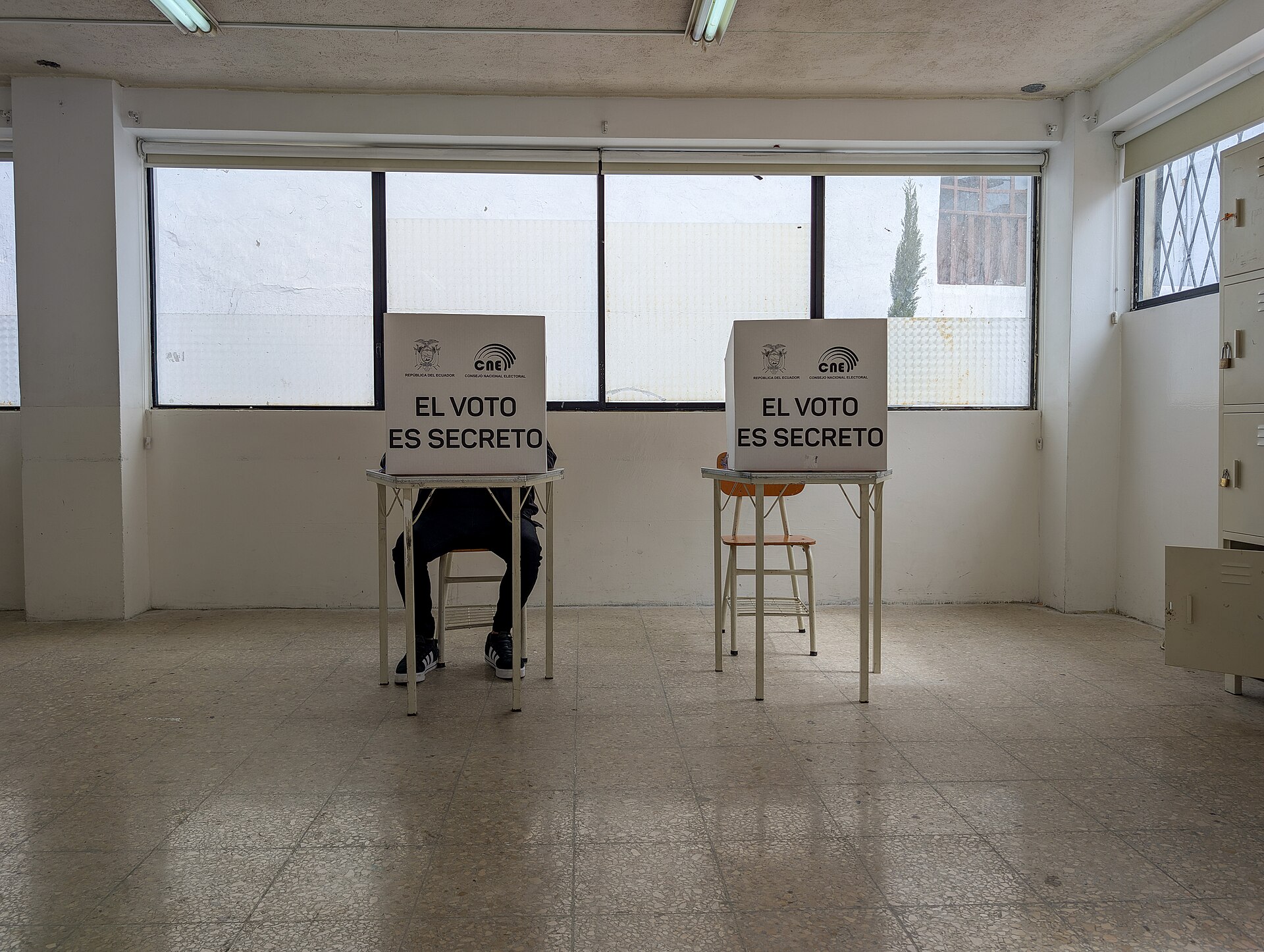
The Bigger Picture: A Vote in the Rainy Season
The CNE brought the local elections forward to Sunday 29 November 2026, which puts them in the middle of a rainy season driven by El Niño. El Niño is a warming of Pacific waters that brings extra rain to Ecuador’s coast.
The council has run two national drills, and the second, on Sunday 15 November, included an evacuation exercise for floods. Its protocol covers a temporary suspension of voting, evacuating voters and protecting the ballot material, with police, armed forces and firefighters.
Why It Matters
About 13.8 million Ecuadorians are registered to vote, and seven flooded sites are roughly 0.16% of the 4,399 official polling sites by our arithmetic. The 21 flooded at the weekend were 0.5%, and 20 of the 21 problem sites counted at the CNE’s 15 November drill were in Guayas, the province around Guayaquil, Ecuador’s largest city.
The practical question for a voter is where to cast the ballot. If a site cannot be moved, suspension or postponement in that one area would need a decision by the CNE’s governing board, its plenary.
How to Check Where You Vote
- Website: open lugarvotacion.cne.gob.ec and enter your cédula (national ID card) number and date of birth. The result shows province, canton, parish, polling site and voting table.
- CNE app: the free CNE app offers the same lookup.
- Phone: the CNE also runs a telephone helpline.
Check again on the eve of the vote, because the CNE can still change a site. Ecuadorians abroad vote from 09:00 to 19:00 in the country where they live.
What to Watch
The CNE says backup sites will be made ready from 10:00 on Saturday 28 November. INAMHI, Ecuador’s weather institute, has a rain warning in force until 10:00 on Saturday 21 November, eight days before the vote.
Voting is compulsory for Ecuadorians aged 18 to 65. The fine for not voting is US$48.20, or 10% of the US$482 basic monthly wage.
In Plain English
- CNE: the Consejo Nacional Electoral, which runs Ecuador’s elections.
- Backup site: an alternative place the CNE can use if the usual site is unusable.
What It Means for You
Readers with a vote should check their site now and again on Saturday 28 November, because the CNE can still change it. Visitors should follow CNE and local-authority notices in flood-hit areas.
What Is Not Known
We found no published list of relocated polling sites. It is also not clear which seven sites were flooded on 18 November, or how many of the roughly 2,500 backup sites will be used.
Frequently Asked Questions
How do I find my polling place in Ecuador?
Enter your ID number and date of birth on the CNE lookup page at lugarvotacion.cne.gob.ec. The CNE app also offers the lookup.
What happens if my polling place is flooded?
The CNE can move the site to one of about 2,500 backup sites. If that is impossible, a suspension or postponement in that area needs a decision by the CNE’s governing board.
When are the polls open on 29 November?
Polls open at 07:00 and close at 17:00 Ecuador time (UTC-5), which matches US Eastern Standard Time on 29 November. Ecuadorians abroad vote from 09:00 to 19:00 where they live.
What is the fine for not voting?
The fine is US$48.20, or 10% of the US$482 basic wage. Voting is compulsory for Ecuadorians aged 18 to 65.
Sources
CNE president José Cabrera, statements of 15 and 18 November 2026; CNE electoral calendar and fine notice; INAMHI warning number 88; CNE polling-place lookup · INAMHI forecasts and alerts
Connected Coverage
Ecuador news · Ecuador’s Quito Race Tight Ahead of Vote · Ecuador Voting Weekend Rules for Expats · Latin America Power Map
This article was produced by The Rio Times’ automated AI newsroom. Editorial responsibility: Matthias Camenzind, Publisher and Editor-in-Chief. The Rio Times also runs Ask Rio Times, which answers from 100,000+ of our own articles, the daily Latin America Power Map, and prediction-market odds on elections and markets.. How we use AI · Report an error