Dominican Republic
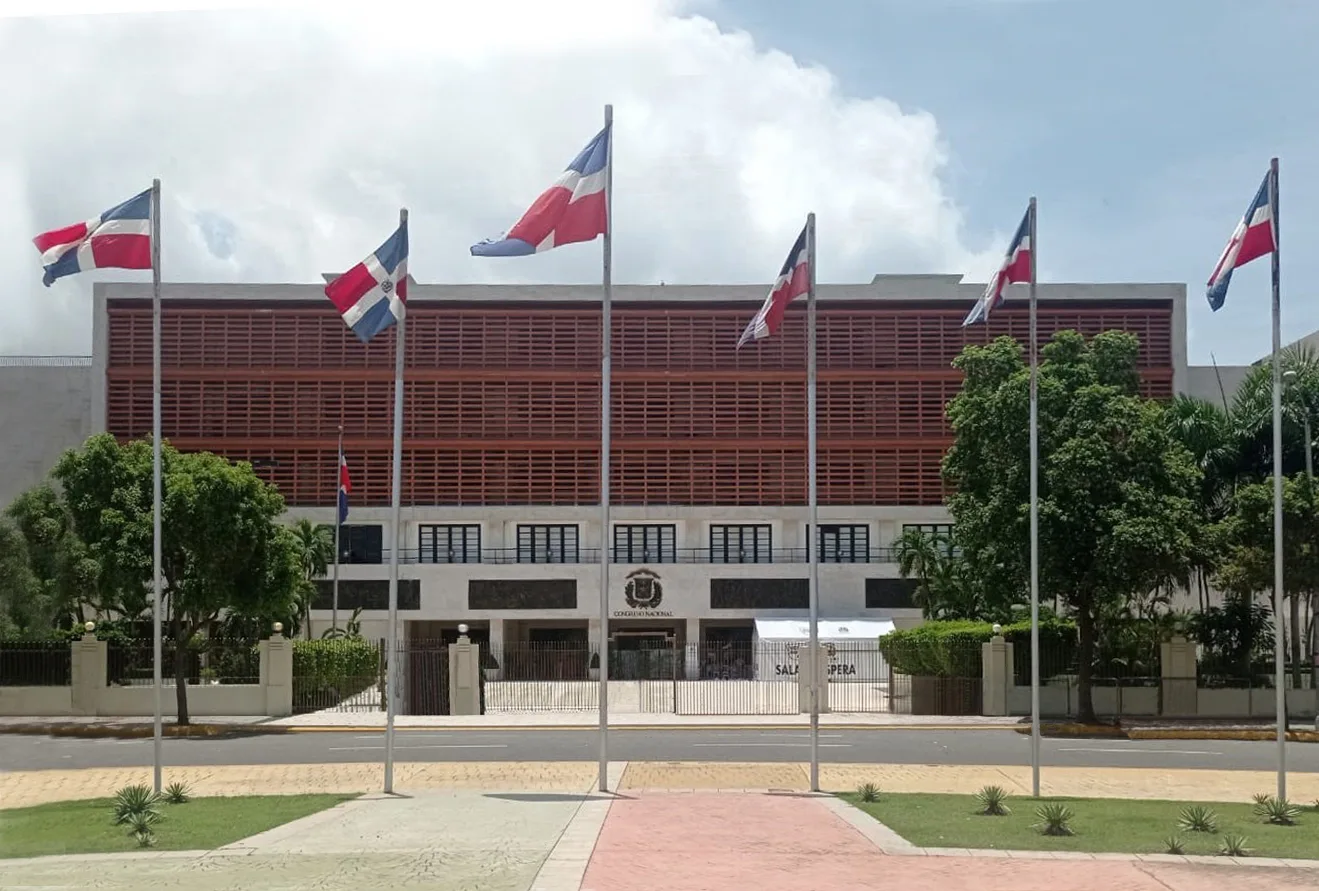
On Tuesday 17 November 2026, the Dominican Republic’s 2027 budget is stuck in Congress mainly over one question: how much money political parties receive. The executive gave the RD$2.08 trillion bill in Dominican pesos (about US$34.5 billion) to the Chamber of Deputies, the lower house, on Friday 25 September 2026.
The fight matters because the country votes for president and Congress on 21 May 2028. The draft gives parties RD$1.75 billion (about US$29.0 million), but they calculate that the law requires RD$3,498.7 million (about US$58.0 million).
All US$ amounts use the rate of US$1 = RD$60.36 on 17 November 2026. Congress must settle the question before the year ends.
Key Facts
- Issue Parties want more state money in 2027; the draft gives RD$1.75 billion (about US$29.0 million).
- Parties’ claim Parties say the law requires RD$3,498.7 million (about US$58.0 million), about twice the draft.
- Deadline Without approval by 31 December 2026, the 2026 budget law continues to apply with adjustments.
- Elections Party primaries are on 3 October 2027; presidential and congressional votes on 21 May 2028.
- As of Tuesday 17 November 2026, 11:00 GMT
A budget line worth under 0.1% of spending has held up the 2027 plan, because parties say the law demands more than the draft offers ahead of the 2028 elections.
Why Party Money Is in the Budget Fight
Dominican parties receive a yearly state subsidy through the Junta Central Electoral (JCE), the electoral authority that warns about AI fakes ahead of the vote. In the draft bill, published by DIGEPRES, the national budget office, line 4011 is a special fund for parties.
That line holds RD$1,750,863,459 (about US$29.0 million), roughly 0.08% of the total. The JCE said on 8 May 2026 that Article 224 of Law 20-23, the organic electoral law, sets 0.25% of national revenue for parties in a year without elections.
The JCE said then that the 2026 budget law (Law 99-25) gave only 0.12%. That is less than half of the 0.25% it cites for a year without elections.
Parties argue that 2027 is costly because they must hold primaries and choose candidates for 2028. Their own calculation is RD$3,498.7 million (about US$58.0 million), about twice the draft line.
Deputy Danilo Díaz of the Dominican Liberation Party (PLD), an opposition party, spoke on Monday 16 November 2026. He said the government had not responded and that parties must pay more in 2027 because they must choose candidates.
He asked whether a cut would favour the governing Modern Revolutionary Party (PRM), which holds the presidency. The government’s side is austerity: on 30 April 2026 the Presidency, the president’s office, announced emergency measures over the Middle East crisis, including a 50% reduction of the budget for political parties.
Magín Díaz, the Minister of Finance and Economy, said on Thursday 5 November 2026: “We have nothing written in stone. When a government sends a draft budget, it can always be subject to modification.”
In Plain English
JCE The Junta Central Electoral, which runs elections and pays party funds.
DIGEPRES The national budget office that published the draft bill.
PLD Dominican Liberation Party, an opposition party.
PRM Modern Revolutionary Party, which holds the presidency.
Organic law A law that sets detailed rules under the constitution.
Rollover If no new budget passes by 31 December, last year’s budget law applies.
What Happens Next
Article 239 of the constitution, proclaimed on 27 October 2024, sets a deadline. If Congress has not approved a new budget by 31 December 2026, the previous year’s budget law applies with adjustments.
Senator Daniel Rivera, vice-president of the joint commission of both chambers studying the budget, said the draft is fully analysed. He said it has not moved because opposition members await the executive’s answer to Magín Díaz’s commitment to consult on a possible increase for parties.
Lawmakers including Rivera and Díaz say the executive has not yet answered Congress. Party pre-campaigns start on 4 July 2027, and party primaries are on 3 October 2027.
Parties that use conventions, assemblies or polls must choose candidates by 31 October 2027. Municipal elections follow on 20 February 2028, and presidential and congressional elections on 21 May 2028.
What Is Not Known
It is not known whether the executive will raise line 4011. The exact legal base of the parties’ RD$3,498.7 million (about US$58.0 million) is not confirmed officially.
No official date has been published for the commission report or the floor vote. What became of the 50% cut announced on 30 April 2026 is also not confirmed.
What It Means for Readers
Dominican parties, their candidates and the taxpayers who fund the subsidy are most affected. Readers abroad are affected only indirectly, since the dispute concerns domestic party finance.
Nelson Suárez, a Dominican economist, calculated that parties and movements received at least RD$28,712 million (about US$476 million at today’s rate) from the state between 1998 and 2025. Almost half of it, RD$13,725 million (about US$227 million), came in 2020 to 2024.
The Presidency’s note on the bill projects a deficit of 3.4% of gross domestic product (GDP), the yearly value of output, and growth of 4.75%. For context, see our reports on the central bank outlook and October inflation.
Our Dominican Republic news page follows the budget as it moves. A new budget law, or the rollover on 1 January 2027, will settle the party line for the year.
Frequently Asked Questions
Why is the Dominican 2027 budget stalled?
Congress has not moved the bill because opposition members await the executive’s answer on party money, said Senator Daniel Rivera. Parties say the law requires RD$3,498.7 million (about US$58.0 million), against RD$1.75 billion (about US$29.0 million) in the draft.
What happens if no budget is approved by 31 December?
Under Article 239 of the constitution, the previous year’s budget law applies with adjustments set by the organic law. In this case the 2026 budget law would continue to apply into 2027.
Sources: DIGEPRES draft 2027 budget bill, September 2026; Presidency, 25 September 2026; Presidency, 30 April 2026; Constitution of the Dominican Republic, 2024; Junta Central Electoral, public statement of 8 May 2026 as quoted in Dominican press.
This article was produced by The Rio Times’ automated AI newsroom. Editorial responsibility: Matthias Camenzind, Publisher and Editor-in-Chief. The Rio Times also runs Ask Rio Times, which answers from 100,000+ of our own articles, the daily Latin America Power Map, and prediction-market odds on elections and markets.. How we use AI · Report an error