Costa Rica Supreme Court: Judge Patricia Solano Seeks Presidency in October
COSTA RICA · JUSTICE
Key Facts
- —The candidate Patricia Solano, who heads the Supreme Court’s criminal chamber, said on 30 September 2026 she will run for president of the court, El Mundo CR reported.
- —The vote The court’s 22 magistrates choose their president; the vote is set for 26 October 2026, and no other candidate had formally registered by 30 September.
- —Her own seat Solano asked Congress on 28 September 2026 to renew her eight-year term, which expires on 6 November; only 38 of 57 deputies can block it.
- —The money fight The Finance Ministry has frozen ₡29,843.8 million (about US$67.6 million, at 30 September rates) of the judiciary’s 2027 budget, the court says.
- —Last time In 2022 Solano lost the presidency to Orlando Aguirre, 12 votes to 7, after 19 rounds of secret voting, La Teja reported.
Costa Rica Supreme Court judge Patricia Solano enters the race to lead the judiciary and rejects the president’s criticism on crime.
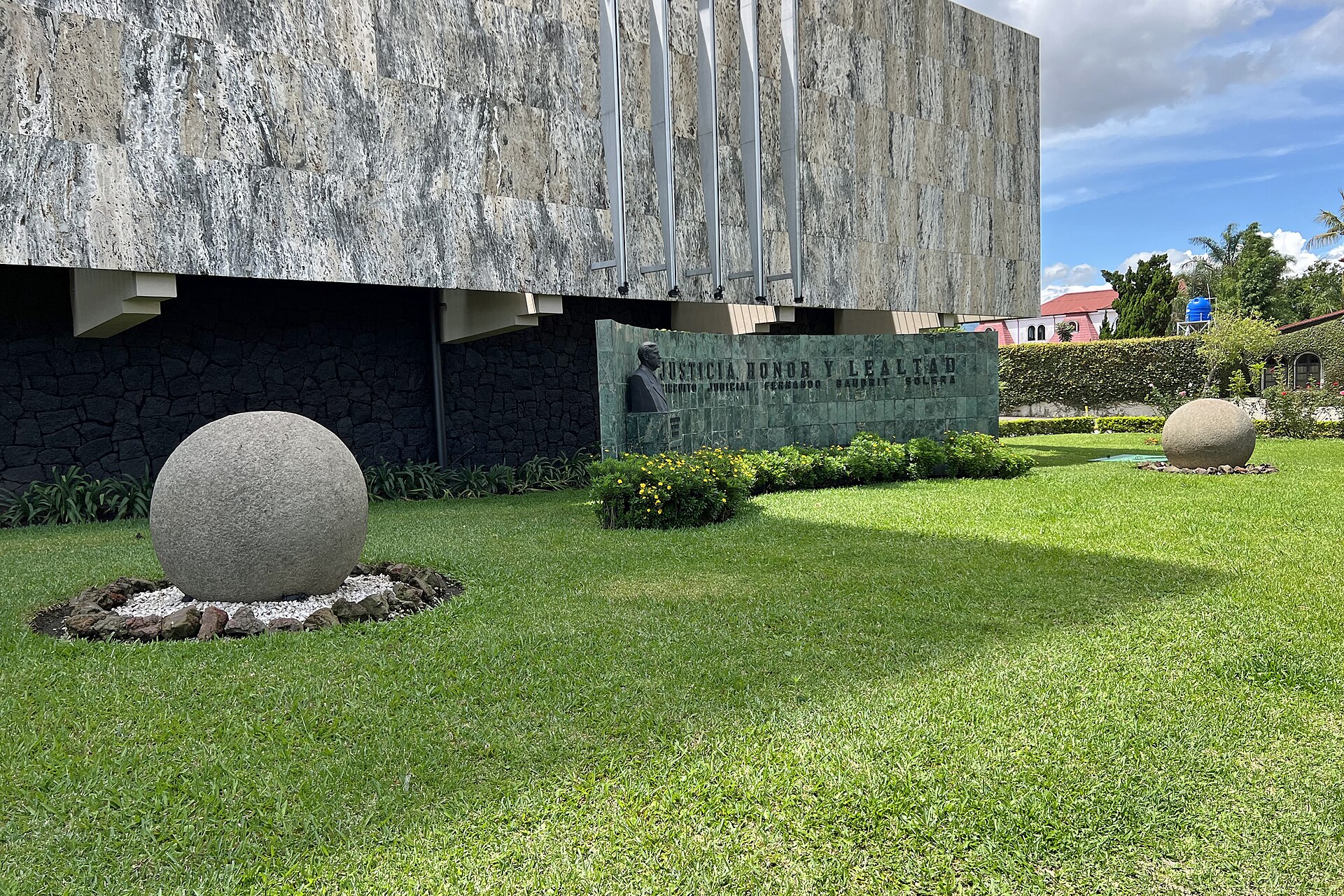
Patricia Solano, a Costa Rica Supreme Court judge, will run for president of the court in a vote on 26 October 2026. She announced her candidacy on 30 September in a television interview, El Mundo CR reported.
Why she says she is running
Solano heads the Third Chamber, the court’s criminal appeals bench. She made the announcement on the programme En Profundidad, according to El Mundo CR.
“I am going to put my name forward for the presidency of the Supreme Court of Justice,” she said. She cited “the historic moment” for Costa Rica and the judiciary.
She described her style as direct, transparent and focused on results. “Things must be clear so that people understand where we stand,” she said.
By 30 September no other magistrate had formally registered as a candidate, El Mundo CR reported. The election falls to the court’s own members, not to voters or Congress.
How Costa Rica picks its top judge
Costa Rica’s Supreme Court has 22 magistrates, who sit together as the Corte Plena, or full court. That full court elects the president of the judiciary by secret ballot.
The president speaks for the whole judicial branch and runs its administration. That includes its budget and the OIJ, the Judicial Investigation Agency, which works as the country’s criminal police.
The contest can be long. In 2022 the full court needed 19 rounds of voting before Orlando Aguirre won with 12 votes, La Teja reported.
Solano was the runner-up in that final round, with 7 votes. Aguirre, then 79, had led the court’s Second Chamber since 1991.
A clash with the president over crime
Solano spoke hours after President Laura Fernández criticised the judiciary in Puntarenas, a port city on the Pacific coast. Fernández said police work alone cannot restore safety if suspects are not jailed.
“It is not me who puts them in jail, it is the judiciary,” Fernández said, according to El Mundo CR. She also asked deputies to call the judiciary to account for the violence.
Solano rejected the charge. She said the OIJ had a very successful year against organised crime.
“Every time there is an operation of this kind, the next day or two days later they cut our budget,” she said. “So it is not true that we are not doing our work.”
The budget dispute behind the words
The judiciary has published its side of the dispute. On 24 June 2026 the Finance Ministry asked it to cut 5% of this year’s budget, about ₡27,076 million (US$61.3 million).
The full court agreed on 29 June to give up ₡13,042 million (about US$29.5 million). The ministry later announced a larger cut of ₡23,721.8 million (about US$53.7 million), the court said. But that cut still needs approval by Congress through an extraordinary budget.
For 2027, the government’s draft budget assigns the judiciary ₡530,973.2 million (about US$1.2 billion). Of that, ₡29,843.8 million (about US$67.6 million) stays blocked until several conditions are met.
The court warns that the freeze could force a “technical closure” of some services. It says the procedure sets no fixed date for releasing the money. Congress has yet to vote on the 2027 budget. All dollar figures use the rate of 30 September 2026.
Her own seat is also up for renewal
Solano joined the Third Chamber in 2018, and her current term ends on 6 November 2026. On 28 September she asked the Legislative Assembly to renew it for eight more years.
Under Article 158 of the constitution, a magistrate is re-elected automatically unless 38 of the 57 deputies vote against. Her renewal runs under legislative file 25.804, El Mundo CR reported.
Two other magistrates, Roxana Chacón and Jorge Olaso, have also said they want to stay. Congress must settle several such renewals before the end of the year.
What comes next
On 19 October the same full court votes on whether chief prosecutor Carlo Díaz gets a second term. A week later, on 26 October, it begins voting on the court presidency.
It is not yet clear whether other magistrates will enter the race before the vote. The outcome will shape how the judiciary handles its budget fight with the government in the months ahead.
More: Costa Rica news, every day from The Rio Times.
Frequently Asked Questions
Who is Patricia Solano?
Patricia Solano is a magistrate on Costa Rica’s Supreme Court and heads its Third Chamber, which hears criminal appeals. She joined the court in 2018 and finished second in the 2022 race for the court presidency.
How is Costa Rica’s Supreme Court president chosen?
The court’s 22 magistrates elect their president in a secret vote of the full court. In 2022 the winner needed 12 votes and the process took 19 rounds. This year’s vote is set for 26 October.
Why is the judiciary in a dispute with the government?
The Finance Ministry has cut the judiciary’s 2026 budget and blocked ₡29,843.8 million (about US$67.6 million) in its 2027 budget. The court says this could force a technical closure of some services.
Sources: El Mundo CR · El Mundo CR · La Teja · Poder Judicial de Costa Rica · Poder Judicial de Costa Rica
This article was produced by The Rio Times’ automated newsroom system. How we use AI · Report an error
Read More from The Rio Times