Who Runs Costa Rica’s Economy, the Key Players in 2026
COSTA RICA · ECONOMY
Key Facts
- —Growth The economy grew 4.6% in 2025. The forecast for 2026 is 3.4% and for 2027 it is 3.5% (July 2026).
- —Biggest export Medical devices made up almost half of goods exports in 2025, and about 66% of those shipments went to the United States.
- —Who sets policy President Laura Fernández leads the government. Her predecessor Rodrigo Chaves is minister of the Presidency and of Finance (October 2026).
- —Money The central bank’s policy rate is 3% (October 2026). The colón is near its strongest level against the dollar in about 20 years.
- —US tariff Costa Rican goods entering the United States face a 12.5% extra tariff since 24 July 2026. Coffee, bananas and pineapple are exempt.
- —Public debt Debt reached 61.1% of GDP in the first half of 2026. The 2027 budget is about US$27 billion.
- —Power Index Costa Rica ranks 9th of 14 in The Rio Times Latin America Power Index, with 36.5 points (October 2026 edition).
The Costa Rica economy matters to US readers because about two-thirds of its biggest export, medical devices, goes to the United States.
A small circle of ministers, central bankers, state companies and foreign manufacturers decides how it moves. This guide names them as of October 2026.

How the Costa Rica Economy Works
The Costa Rica economy is a small Central American engine that sells medical devices, business services and tourism to the world. The central bank cut its 2026 growth forecast to 3.4% on 30 July 2026, after 4.6% growth in 2025, Infobae reported.
Four forces shape the Costa Rica economy. They are a new government team, an independent central bank, foreign factories in free trade zones and a few state-owned giants.
Free trade zones, called zonas francas in Spanish, are tax-favoured industrial parks where foreign firms make goods mainly for export. From January to July 2026 they shipped US$9.3 billion of the country’s US$13.8 billion in goods exports, per Procomer data in Revista Summa.
- The government: President Laura Fernández and her economic ministers, as covered in our Costa Rica coverage.
- The central bank: sets interest rates and manages the colón, the national currency.
- The multinationals: medical device makers, technology firms and service centres.
- The state giants: the electricity company, the oil company, three state banks and the social security fund.
The Government Team Behind Economic Policy
President Laura Fernández took office in May 2026 and kept her predecessor close to economic policy. Her cabinet of 5 May 2026 named Rodrigo Chaves minister of the Presidency and of Hacienda, the finance ministry.
La Nación still described Chaves as minister of the Presidency and of Finance in its coverage of 19 October 2026. The cabinet announcement also made him coordinator of the cabinet’s economic affairs, according to Semanario Universidad.
The other economic ministers named in May 2026, as listed on the Presidency’s cabinet page in October 2026, are these.
- Economy, Industry and Commerce: minister María del Milagro Solórzano, who covers domestic business, consumer and competition policy.
- Foreign Trade (Comex): minister Indiana Trejos, who leads talks with Washington over the tariff and trade deals.
- Environment and Energy: minister Mónica Navarro del Valle, who oversees energy policy.
- Agriculture: minister Juan Gabriel Ramírez, responsible for farm exports such as bananas and pineapples.
- Tourism: Marcos Borges, executive president of the Costa Rican Tourism Institute.
The Central Bank, the Colón and Public Finances
The Central Bank of Costa Rica sets interest rates and guards the colón. Its president is Róger Madrigal.
The bank held its policy rate at 3% a year, El Financiero reported on 7 October 2026. That followed a cut of a quarter of a percentage point on 23 July 2026.
Inflation has stayed below the bank’s target since mid-2023. The colón has grown so strong that the dollar sits at one of its lowest levels in about 20 years, as our earlier report explained.
A strong colón makes imports cheaper but squeezes exporters. Banana grower Standard Fruit blamed the exchange rate for laying off 111 workers in February 2024 and 412 in May 2024, CR Hoy reported.
On 10 September 2026 Fernández said past governments steered the exchange rate through phone calls. Madrigal replied that the bank has no record of such pressure, Semanario Universidad reported.
Central government debt reached 61.1% of GDP by mid-2026, Forbes Centroamérica reported. The government projects a deficit of 4.62% of GDP for 2026.
The 2027 budget sent to Congress on 1 September 2026 is 12.4 trillion colones (about US$27 billion). That is 3.1% below the 2026 budget.
Exports, Free Zones and the Medical Device Boom
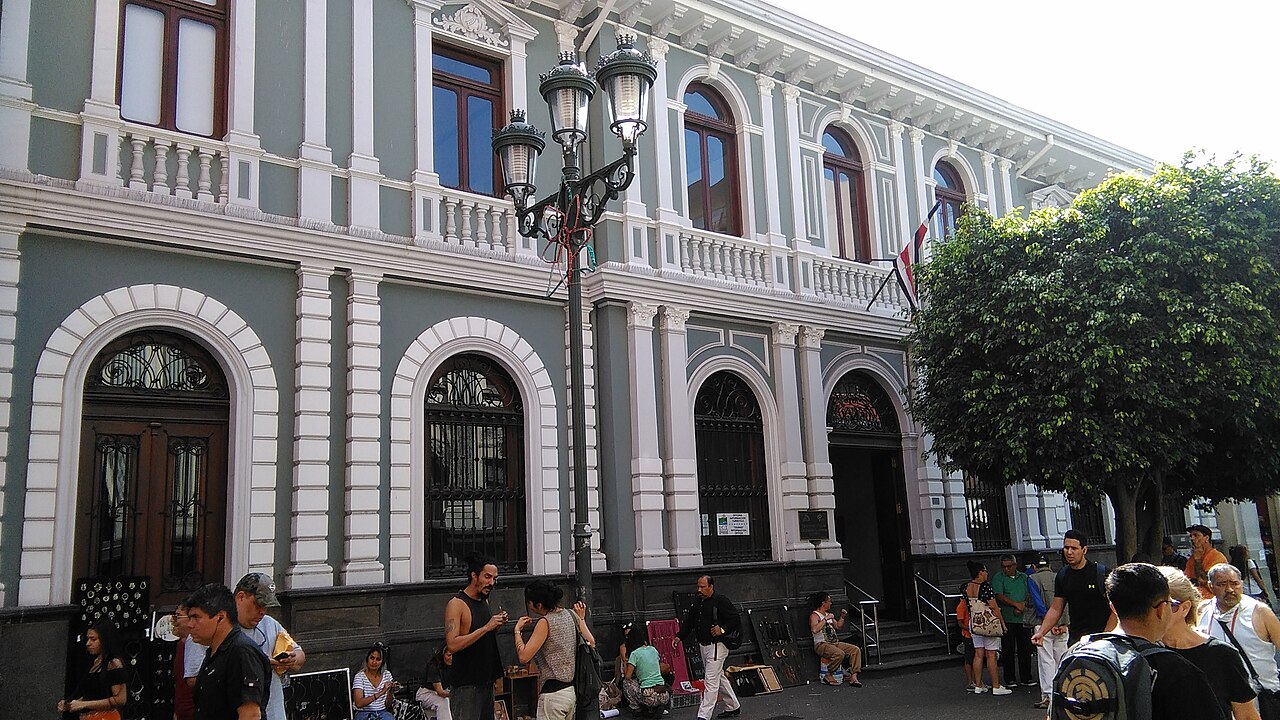
Medical devices are now the largest export of the Costa Rica economy. They earned US$10.9 billion in 2025, or 48% of goods exports, according to Comex.
Their share was 45% in the first quarter of 2026, per Procomer data reported by El Mundo.
Of those 2025 sales, 66% went to the US market, La Nación reported on 2 July 2026. Comex minister Indiana Trejos travelled to Washington to meet US Under Secretary of Commerce Jeffrey Kessler about protecting the sector.
Farm goods have shrunk in importance but still matter in rural areas. Pineapple made up 6% of goods exports in 2025 and banana 5%, according to the same El Mundo report.
Goods exports reached US$13.8 billion from January to July 2026, up 5% from a year earlier, Procomer’s figures show. Services exports excluding travel reached US$6.06 billion in the first half of 2026, up 3%, mostly business and technology services.
On 24 July 2026 the United States raised its extra tariff on Costa Rican goods to 12.5% under Section 301, Delfino.cr reported. Medical devices are missing from the published exemption lists, but coffee, bananas and pineapple are on them, as our tariff report details.
The Multinationals Employing Costa Ricans
Foreign companies run most of the free-zone economy, so their decisions move jobs and exports. Costa Rica’s investment agency, Cinde, courts them, and Procomer helps them sell abroad.
Several of them have cut back. According to CR Hoy on 5 October 2026, more than 6,000 jobs were lost over three years in closures and reorganisations.
Our report on the multinational exits covers how the central bank read these job figures. The layoffs came while exports kept growing.
- Intel closed its assembly and test plant in San Antonio de Belén in July 2025, with at least 1,500 jobs affected by estimate.
- Qorvo ended 29 years of operations in July 2025, affecting 300 jobs.
- Viant, a medical device maker, cut about 900 jobs in January 2026.
- Amazon announced about 1,000 job cuts in January 2026 and carried out dismissals in May 2026.
- Microsoft and Boston Scientific announced cuts in July 2026, and Western Union said in September 2026 it would trim more than 1,000 jobs over 12 months.
The Banks That Move the Money
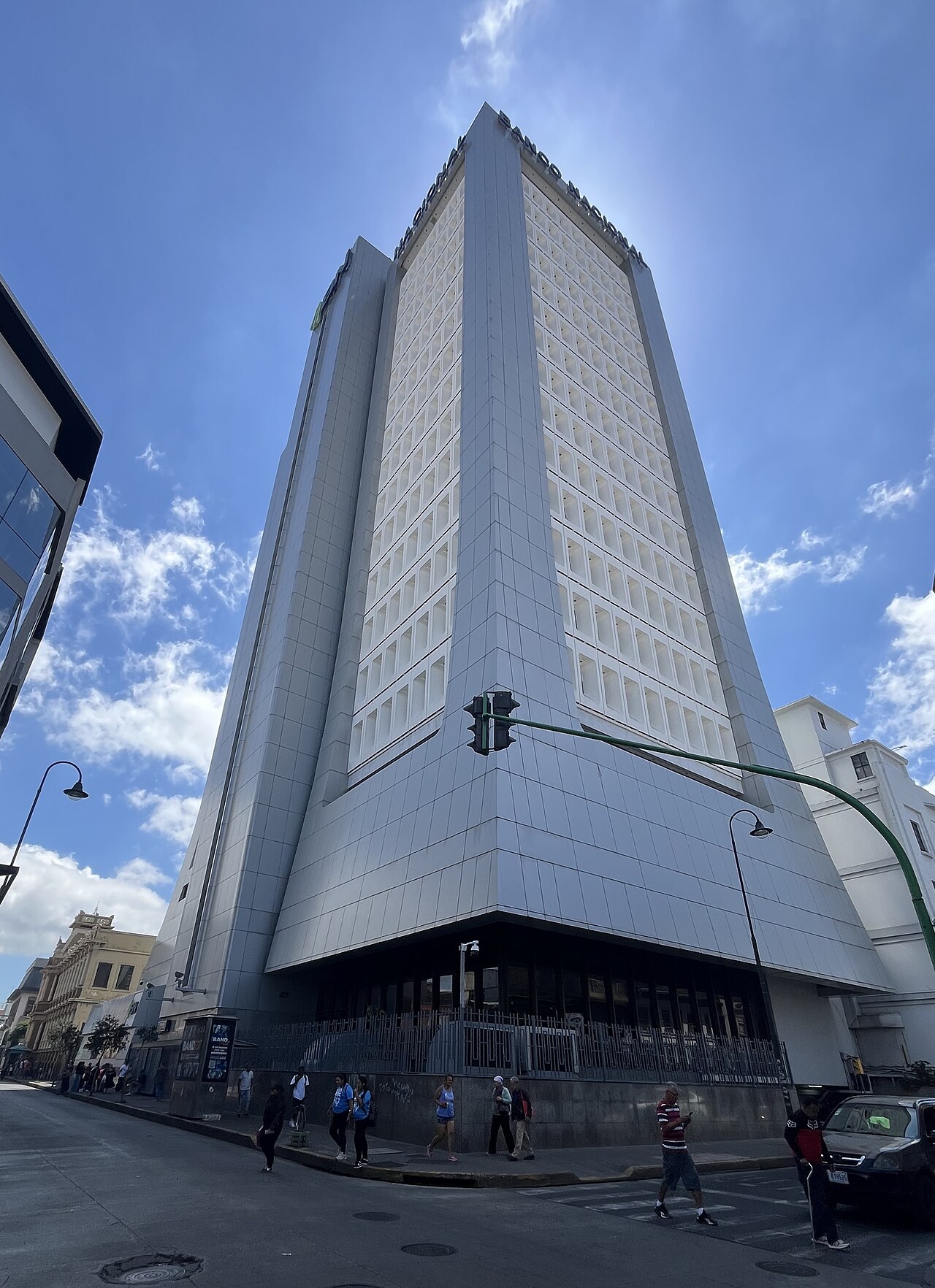
Costa Rica has three state-owned banks and ten private ones, according to La Nación’s review of 2025 results from the banking regulator Sugef. The three state banks are Banco Nacional, the Bank of Costa Rica (BCR) and Banco Popular.
In 2025 the state banks earned 149.4 billion colones combined (about US$328 million), slightly more than the private banks’ 145.4 billion colones (about US$319 million). The private side is dominated by BAC Credomatic, which earned 97.2 billion colones (about US$213 million).
Banco Nacional earned 86.9 billion colones (about US$191 million), the second-highest profit in the system. BCR earned 38.5 billion colones (about US$85 million) and Banco Popular 24.1 billion colones (about US$53 million).
BAC belongs to BAC Holding International, whose main shareholder is Colombian banker Luis Carlos Sarmiento, La Nación reported in January 2025. BAC earned 62% of the private banks’ combined profit in 2025.
Davivienda, owned by Colombia’s Grupo Bolívar, announced in January 2025 a deal to absorb Scotiabank’s operations in Costa Rica. Colombian financial groups therefore sit at the top of private banking.
State Giants in Power, Fuel and Social Security
The Costa Rican Electricity Institute (ICE) is the state utility for power and telecoms. Marco Acuña stayed on as its executive president under Fernández, and the Presidency’s cabinet page still lists him in October 2026.
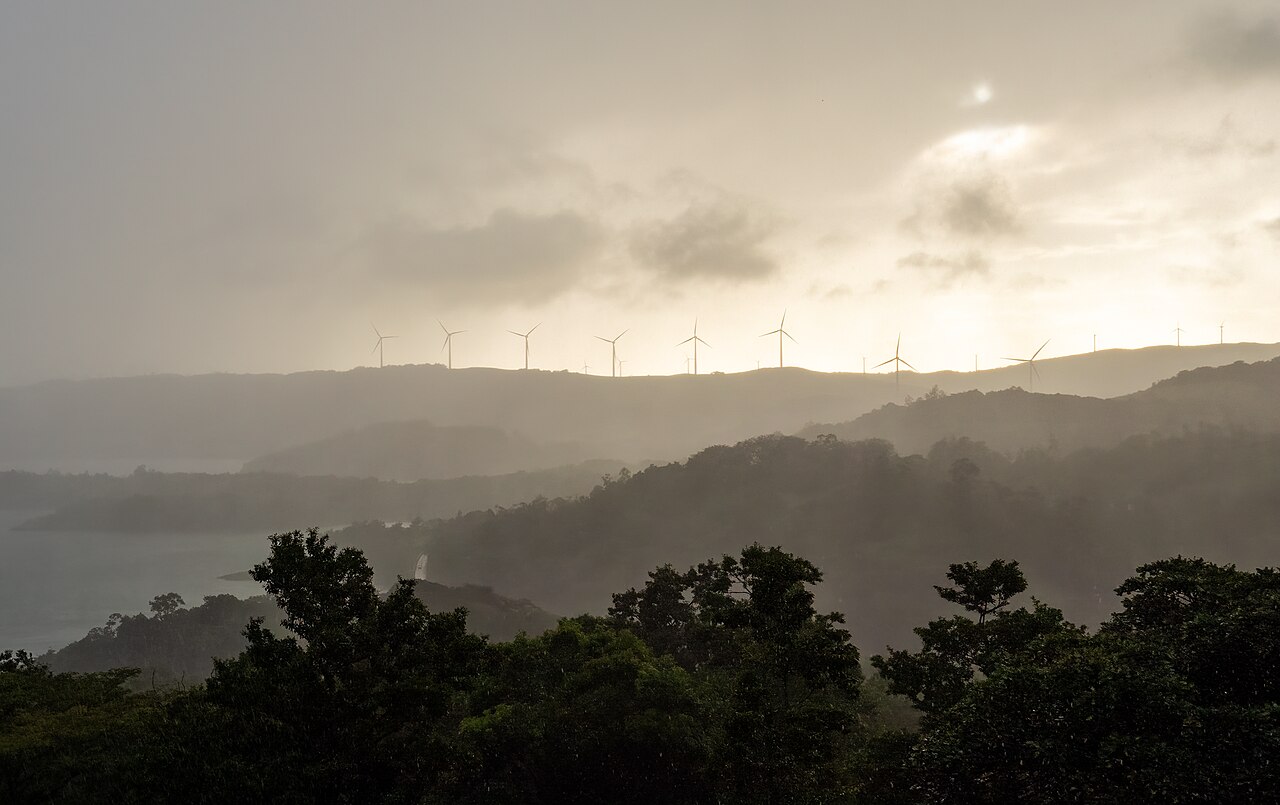
Renewable sources produced 98.6% of Costa Rica’s electricity in 2025, ICE’s own data show, as reported by El Guardián CR. That clean grid is a selling point for foreign factories.
RECOPE, the state oil company, is led by Karla Montero, who also stayed on in May 2026 and is on the Presidency’s October 2026 list. Madrigal warned on 19 October 2026 that higher fuel costs could push consumer prices up, La Nación reported.
The Costa Rican Social Security Fund (CCSS) runs public health insurance and the main pension scheme. At the end of June 2025 the state owed it about 4.4 trillion colones (about US$9.7 billion), Semanario Universidad reported on 21 October 2026.
Home-Grown Firms, Cooperatives and Tourism
The best-known local brand, FIFCO, sold its drinks, food and retail businesses in Costa Rica and several neighbouring countries to Heineken. The deal was valued at US$3.25 billion and closed in late January 2026, with an extra US$23 million agreed in July 2026, La Nación reported.
Heineken now runs Imperial, Pilsen and Bavaria beer in Costa Rica with about 4,600 workers, according to El Financiero on 29 March 2026. A slimmed-down FIFCO remains, but its remaining holdings are not detailed in public reports.
Dos Pinos is a dairy cooperative owned by its producer-members, and it buys all their milk, about 1.3 million litres a day. It provides about 6,200 direct jobs in the region, La República reported in April 2025.
Walmart de México y Centroamérica runs 348 stores in Costa Rica with more than 15,000 employees, La Nación reported on 5 July 2026. In July 2026 it opened what it calls Central America’s largest perishables distribution centre, in El Coyol de Alajuela.
Tourism is the other pillar of the Costa Rica economy. The tourism institute counted 2,001,660 visitors through July 2026, up 6.4%, and first-quarter 2026 tourism earnings hit a record US$2.03 billion, La Nación reported.
What It Means for US Readers
The United States is the biggest buyer of Costa Rica’s medical devices, and US firms run many of its factories. The 12.5% tariff can raise import costs for US buyers of those devices, including hospitals and the firms that make them there.
US companies named in this guide, including Intel, Amazon, Microsoft, Boston Scientific and Western Union, have cut Costa Rican jobs in 2025 and 2026. Walmart, a US retailer through its Mexico and Central America arm, is expanding.
For wider context, read our Costa Rica explainer and our geopolitics guide.
For travellers, a strong colón makes Costa Rica pricier in dollar terms. The dollar fell more than 34% against the colón over five years, Semanario Universidad reported in September 2026.
What Is Not Known
Whether Washington will carve medical devices out of the 12.5% tariff remains open. A separate US national-security investigation into the sector, begun in September 2025, has not produced a published result.
The full list of family owners behind Costa Rica’s private companies is not public. What FIFCO still owns after the Heineken sale is not itemised in the reports reviewed.
The cabinet may change again, as it did after May 2026, so named ministers should be checked on the Presidency’s website. How many of the 6,000 lost jobs will return is also unclear.
Frequently Asked Questions
What is the biggest export of Costa Rica?
Medical devices are the biggest export, at almost half of goods sales in 2025. About 66% of them went to the United States.
Who runs the Costa Rica economy day to day?
Minister Rodrigo Chaves leads Finance and the Presidency, and Róger Madrigal heads the central bank. The multinationals in free trade zones drive exports.
What is the US tariff on Costa Rica?
Costa Rican goods face a 12.5% extra tariff since 24 July 2026 under Section 301. Coffee, bananas and pineapple are exempt.
What are the biggest banks in Costa Rica?
BAC Credomatic leads the private banks, and Banco Nacional is the largest state bank by profit. Banco Nacional, BCR and Banco Popular are state-owned.
What is the policy interest rate in Costa Rica?
The central bank held the rate at 3% a year in October 2026. It cut the rate by a quarter point in July 2026.
How much of Costa Rica’s power is renewable?
Renewable sources produced 98.6% of electricity in 2025, according to ICE data. ICE is the state electricity company.
Sources: Infobae, cabinet of Laura Fernández, 5 May 2026; Semanario Universidad, cabinet 2026-2030, May 2026; Presidency of Costa Rica, cabinet page, October 2026; La Nación, Chaves as minister, 19 October 2026; El Financiero, Róger Madrigal on interest rates, 7 October 2026; Semanario Universidad, central bank and exchange rate, 10 September 2026; Infobae, central bank growth forecast, 31 July 2026; El Mundo CR, export structure (Procomer data), 14 October 2026; Revista Summa, goods exports January to July, 24 August 2026; La República, services exports, 5 October 2026; La Nación, medical devices and Washington, 2 July 2026; Delfino.cr, 12.5% tariff, 24 July 2026; CR Hoy, job losses and company closures, 5 October 2026; La Nación, bank profits 2025 (Sugef data), 27 January 2026; La Nación, Colombian groups and private banks, 9 January 2025; El Guardián CR, renewable electricity 2025 (ICE data), 2 March 2026; Semanario Universidad, state debt to the CCSS, 21 October 2026; La Nación, FIFCO and Heineken, 8 July 2026; El Financiero, Heineken Costa Rica, 29 March 2026; La República, Dos Pinos, 24 April 2025; La Nación, Walmart distribution centre, 5 July 2026; La Nación, tourism arrivals and earnings, 24 August 2026; Forbes Centroamérica, 2027 budget and debt, 2 September 2026; Comex, record goods exports 2025 (medical devices), January 2026; US Trade Representative, Section 301 forced-labor action (Federal Register notice), 23 July 2026.
This article was produced by The Rio Times’ automated newsroom system. How we use AI · Report an error · Editorial responsibility: Matthias Camenzind, Editor-in-Chief
Expat Guide to Costa Rica
What The Rio Times publishes for foreigners who live in or move to Costa Rica.
Start here
- Fer De Lance Snake Facts and Safety Tips
- Best Places to Live in Costa Rica for Expats 2026
- Costa Rica Income Tax Bill Would Charge Residents 15% on Five Kinds of Foreign Investment Income
- Costa Rica Permanent Residency and Citizenship: How the Rules Work
City guides
Coming up in Costa Rica
- Rosario Flores brings Gira 2026 to San José 24 Oct
- Reggae giants Cultura Profética play Belén 25 Oct 25 Oct
- Def Leppard Costa Rica Concert Set for 27 October 27 Oct
- Ozuna Plays Costa Rica on 31 October 31 Oct
Understand Costa Rica
Rotate for Best Experience
This report is optimized for landscape viewing. Rotate your phone for the full experience.
You've reached your free article limit
Subscribe to The Rio Times for unlimited access to our news, expat and nomad guides and market intelligence on Latin America and Africa.
Expat Guide to Costa Rica
What The Rio Times publishes for foreigners who live in or move to Costa Rica.
Start here
- Fer De Lance Snake Facts and Safety Tips
- Best Places to Live in Costa Rica for Expats 2026
- Costa Rica Income Tax Bill Would Charge Residents 15% on Five Kinds of Foreign Investment Income
- Costa Rica Permanent Residency and Citizenship: How the Rules Work
City guides
Coming up in Costa Rica
- Rosario Flores brings Gira 2026 to San José 24 Oct
- Reggae giants Cultura Profética play Belén 25 Oct 25 Oct
- Def Leppard Costa Rica Concert Set for 27 October 27 Oct
- Ozuna Plays Costa Rica on 31 October 31 Oct
Understand Costa Rica