Cost of Living in Barranquilla, Colombia 2026 — Budgets, Rent and Utility Bills

GUIDES · COLOMBIA
Key Facts
- —What it is a monthly budget guide to Barranquilla, Colombia’s main Caribbean port and industrial city.
- —Who it’s for expats, remote workers and retirees weighing a move to Colombia’s Caribbean coast.
- —What it costs about US$1,100 a month for a single person, and near US$1,950 for a family.
- —Why it matters the peso floats, so a stronger peso raises every bill a dollar earner pays.
- —The catch air conditioning, not rent, is the line that quietly breaks north-side budgets.
The cost of living in Barranquilla in 2026 runs near US$1,100 a month for a single foreigner, and roughly double that on the north side.
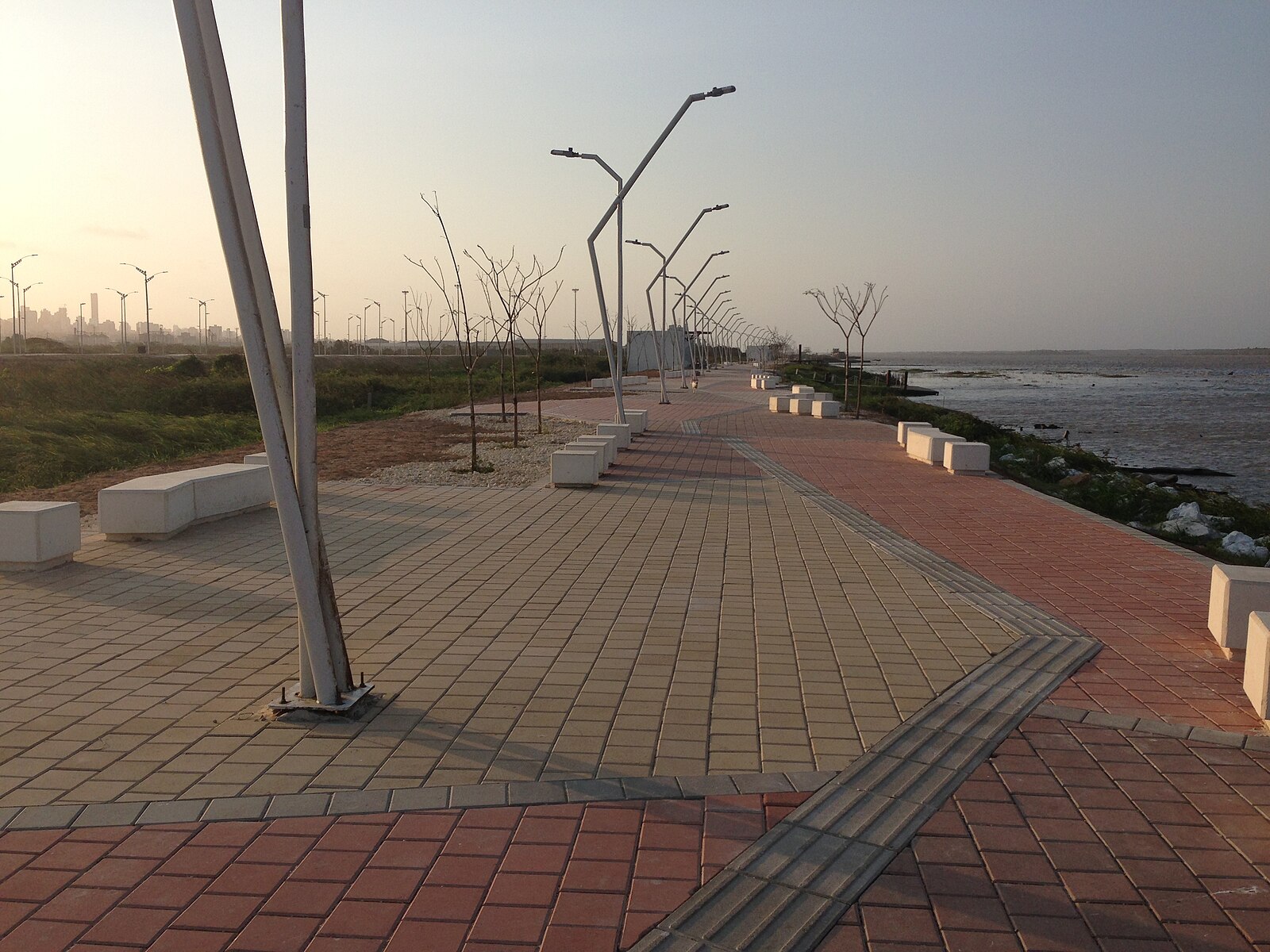
The cost of living in Barranquilla, Colombia sits well below Cartagena and Medellín on rent, and climbs fast once air conditioning runs. A single foreigner in a modest flat spends roughly 3.5 million pesos a month (about US$1,100), at 21 September 2026 exchange rates.
Cost of living in Barranquilla 2026 — what a month actually costs
The cost of living in Barranquilla is set by a working port city, not by a resort economy. That single fact explains most of what follows.
Numbeo’s crowdsourced Barranquilla page, last updated on 19 June 2026, puts a one-bedroom flat outside the centre at 1,612,000 pesos (about US$509). A three-bedroom outside the centre runs 2,853,333 pesos (about US$901).
Add the utilities, internet, food and transport it prices, and a single person lands near 3.5 million pesos (about US$1,100) a month. A family of four reaches roughly 6.2 million pesos (about US$1,950), before any school fees.
Those totals are arithmetic on a thin dataset — Numbeo lists only 12 contributors for the city in 18 months. Treat them as a starting frame, not as a quotation.
Why a working port city draws a different kind of foreigner
Barranquilla’s port zone moved 6.7 million tonnes in the first half of 2026, up 5 percent on the same period in 2025. Imports rose 15 percent, led by machinery and construction materials.
That is the draw for a certain kind of foreigner: industry, trade and a real local economy. Barranquilla also hosts Colombia’s best-known Carnival, held from 6 to 9 February in 2027.
What it is not is a tourist city. Numbeo’s comparison puts Cartagena’s rents 61.7 percent above Barranquilla’s, and its restaurant prices 36.5 percent higher.
So the cost of living in Barranquilla buys you the Caribbean coast without the visitor premium. The trade-off is heat, humidity and a city built around work rather than around visitors.
The peso, the dollar and what actually moves your budget
Colombia lets its currency float, so no peg protects a foreign budget here. The Superintendencia Financiera de Colombia calculates and certifies the market representative rate, the TRM, every business day.
At 21 September 2026 exchange rates the peso stood near 3,166 to the dollar. Every US dollar figure in this guide uses that one rate.
The cost of living in Barranquilla is priced in pesos, while your income probably is not. A weaker peso makes your dollars stretch further, and a stronger peso quietly raises every bill you pay.
For scale, Colombia’s statutory monthly minimum wage in 2026 is 1,750,905 pesos (about US$553). Decreto 0159 of 19 February 2026 set it transitionally, after the Council of State suspended the original decree.
That suspension matters for anyone reading local salary or income thresholds. The figure is the one in force, but it is provisional rather than settled.
Rent by neighbourhood, from Riomar to the centre

Rent is the largest single component of the cost of living in Barranquilla. The Lonja de Propiedad Raíz de Barranquilla, the city’s property board, published average asking rents per square metre on 6 January 2026.
Riomar came in at 48,313 pesos per square metre (about US$15.26) and Altos del Prado at 41,842 pesos (about US$13.22). Villa Country sat lower, at 30,848 pesos (about US$9.74).
El Prado, the historic tree-lined district, averaged 20,476 pesos per square metre (about US$6.47). The board put the cheaper mid-and-lower strata between 18,000 and 32,000 pesos (about US$5.69–10.11).
On those figures a 70-square-metre flat costs about 3,381,910 pesos in Riomar (about US$1,068), and 1,433,320 pesos in El Prado (about US$453). Furnishing, parking and building fees sit on top of that.
These are asking rents per square metre, not verified transaction prices for whole units. No official rent index exists for the city, so the board’s averages are the best local benchmark available.
The estrato system and the air-conditioning bill
Colombia sorts homes into six socioeconomic strata, called estratos, under Ley 142 de 1994. Each municipal mayor does the classifying, using methods supplied by the national statistics office.
Estratos 1, 2 and 3 receive utility subsidies of up to 60, 50 and 15 percent. Estratos 5 and 6, plus commercial and industrial users, pay a contribution of up to 20 percent.
Estrato 4 sits in the middle and pays neither. Most northern districts where foreigners rent sit in the upper strata, so the surcharge applies rather than the subsidy.
The subsidy also stops at a consumption ceiling. Below 1,000 metres of altitude, which includes Barranquilla, only the first 173 kilowatt-hours a month are subsidised.
Air conditioning passes that ceiling easily. Air-e, the regional utility, charged 890.26 pesos per kilowatt-hour (about US$0.28) in August 2026, on its own published comparison.
That rate has moved during the year. It stood at 796 pesos (about US$0.25) in January 2026, and a 400-kilowatt-hour estrato-4 household now faces about 356,000 pesos (about US$112).
Water, gas, internet and the weekly food shop
Numbeo prices basic utilities for an 85-square-metre flat at 475,000 pesos a month (about US$150). That bundle covers electricity, water, rubbish collection and piped gas together.
Home internet at 60 megabits or more runs 103,333 pesos (about US$33). A mobile plan adds roughly 46,667 pesos (about US$15) on top.
Food is where the cost of living in Barranquilla stays genuinely low. A meal in an inexpensive restaurant costs 27,000 pesos (about US$8.50), and a mid-range dinner for two runs 200,000 pesos (about US$63).
Neighbourhood markets and fishmongers carry most of the daily shopping. Cooking at home is the single largest saving available, and imported supermarket brands erase that advantage quickly.
Transport: Transmetro, buses and the car question
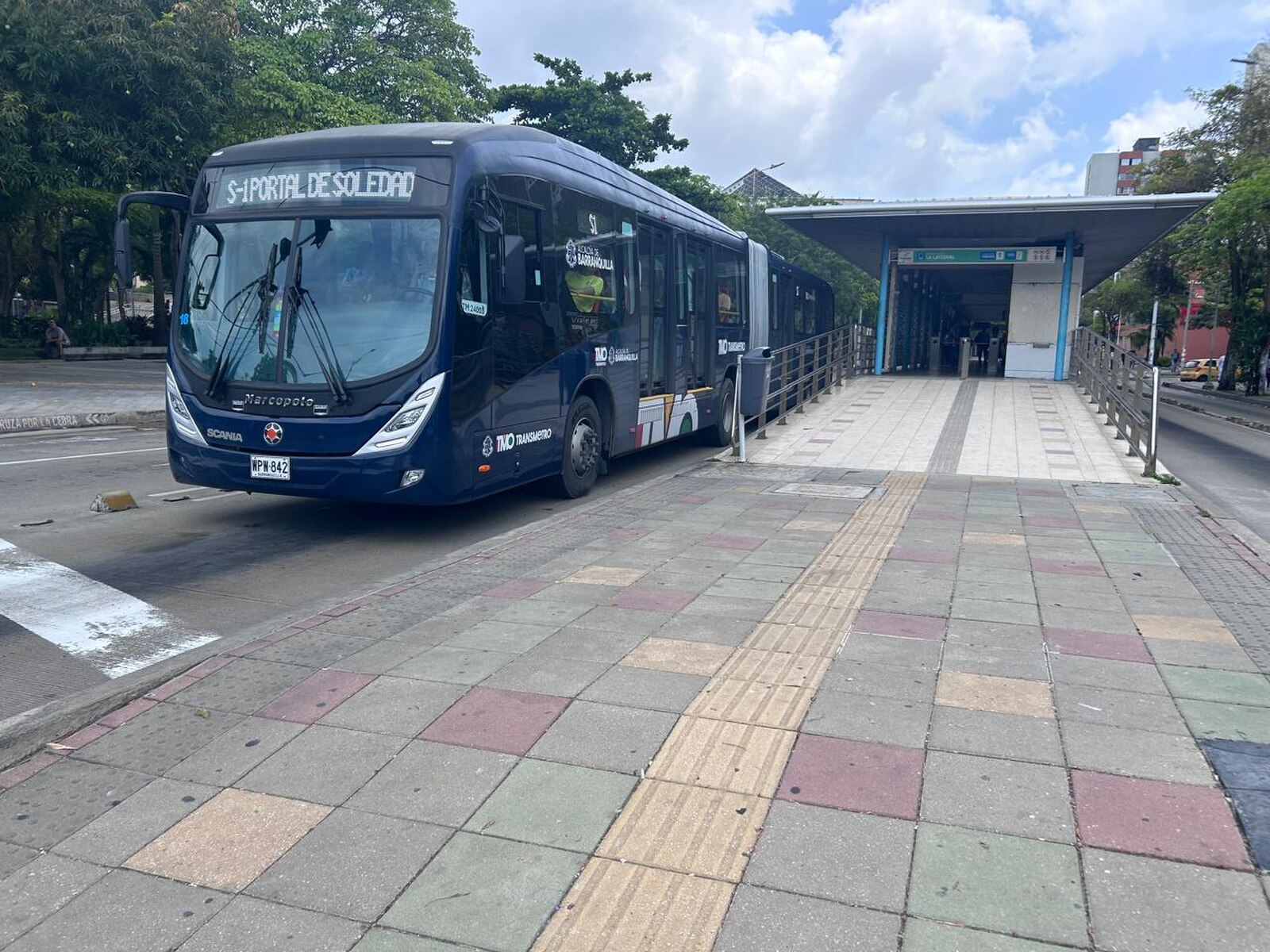
The Área Metropolitana de Barranquilla raised public transport fares by 400 pesos (about US$0.13) on 19 January 2026. Transmetro and ordinary city buses now charge 3,700 pesos (about US$1.17).
Sundays and public holidays cost 3,800 pesos (about US$1.20). A taxi starts at around 11,000 pesos (about US$3.50).
Most foreigners use ride-hailing or taxis after dark and keep Transmetro for daytime trips. A car is optional, and parking plus fuel usually outweighs the convenience inside the northern corridor.
Healthcare, insurance and schools for families
Legal residents join Colombia’s contributory health system, known as the EPS. The contribution is 12.5 percent of a declared base income, so the cost scales with what you earn.
Independent workers declare 40 percent of gross monthly income as that base, under Article 89 of Ley 2277 de 2022. The floor is one minimum wage, giving about 218,863 pesos (about US$69) a month.
Private prepaid medicine, medicina prepagada, buys faster access and a choice of specialist. It is a top-up rather than a replacement, and the health regulator requires EPS membership first.
Schooling is the item that reshapes a family budget entirely. Numbeo puts international primary school at 15,000,000 pesos a year (about US$4,740), and individual schools must be asked directly.
Safety by district and the Carnival season
Safety is not a line in the cost of living in Barranquilla, but it decides where foreigners rent. Colombia publishes homicide counts by municipality rather than by neighbourhood.
Barranquilla recorded 411 homicides between 1 January and 15 August 2026, on district figures reported by El Tiempo. Across the five-municipality metropolitan area the same period brought 738.
That already exceeded the 725 recorded in all of 2025. The direction is upward, and no official dataset ranks the city’s individual barrios.
Carnival runs from 6 to 9 February in 2027 and tightens short-term supply sharply. Nightly rates rise and well-placed flats book out months ahead, while ordinary long leases are unaffected.
Barranquilla against Cartagena, Santa Marta and Medellín
Against its neighbours, the cost of living in Barranquilla sits low on housing. Numbeo gives rent and restaurant gaps, but warns it lacks the data for a full index.
Cartagena rents run 61.7 percent above Barranquilla, and its restaurants 36.5 percent higher. Santa Marta is closer, with rents 19 percent higher and groceries 8.5 percent higher.
Medellín rents sit 52.4 percent above Barranquilla, and its groceries 25.2 percent higher. Its restaurants, though, are 15.9 percent cheaper than Barranquilla’s.
Medellín’s real advantage is climate rather than price. Its cool valley air removes the air-conditioning bill that shapes every budget on the Caribbean coast.
What this means for your money in 2026
The cost of living in Barranquilla rewards a foreigner willing to live like a resident. Rent below the northern corridor and cook at home, and a comfortable single life fits near US$1,100 a month.
Choose Riomar, furnish it and run air conditioning all day, and the same city costs roughly twice that. The spectrum is wide, and you choose your own position on it.
Setting up carries its own small line. Migración Colombia’s Resolución 0599 of 10 February 2026 set the foreigner ID card at 294,000 pesos (about US$93).
What is not settled is the 2026 minimum wage, still provisional while the Council of State hears the case. Nor is there an official rent index or a neighbourhood safety ranking for the city.
Barranquilla is moving up on crime and on electricity, and sideways on rent. It remains the calm middle of Colombia’s coastal cost range, and the peso decides the rest.
Connected Coverage
Cost of Living in Cali, Colombia for Foreign Residents
Colombia Healthcare for Foreigners: EPS & Private Plans
Taxes in Colombia for Expats: The 183-Day Residency Rule Explained
More: Colombia news in English, every day from The Rio Times.
Frequently Asked Questions
How much does a single expat need each month in Barranquilla in 2026?
On Numbeo’s June 2026 prices, plus a one-bedroom outside the centre, a single person lands near 3.5 million pesos (about US$1,100). A north-side flat with heavy air conditioning can roughly double that. The dataset rests on 12 contributors, so treat it as a frame rather than a quotation.
What is the estrato system and how does it change my bills?
Colombia classifies homes into six socioeconomic strata under Ley 142 de 1994, and utility pricing follows that classification. Estratos 1, 2 and 3 receive subsidies of up to 60, 50 and 15 percent. Estratos 5 and 6, plus commercial and industrial users, pay a contribution of up to 20 percent, while estrato 4 pays neither.
Why is the electricity bill so high in Barranquilla?
Barranquilla lies below 1,000 metres, so only the first 173 kilowatt-hours a month attract a subsidy. Air conditioning passes that ceiling easily. Air-e charged 890.26 pesos per kilowatt-hour (about US$0.28) in August 2026, up from 796 pesos (about US$0.25) in January.
Is Barranquilla cheaper than Cartagena, Santa Marta and Medellín?
On Numbeo’s city comparisons, Barranquilla is the cheapest of the four on rent. Cartagena rents run 61.7 percent higher, Medellín 52.4 percent and Santa Marta 19 percent. Numbeo also warns that it holds too little Barranquilla data for a full cost-of-living index.
How safe is Barranquilla, and are there figures by neighbourhood?
No official dataset ranks the city by barrio. Barranquilla recorded 411 homicides between 1 January and 15 August 2026, and its metropolitan area 738, exceeding the 725 of all 2025. Foreigners concentrate in the northern corridor, and visiting a specific block by day and night remains the practical test.
What exchange rate should I budget with?
The Superintendencia Financiera de Colombia certifies the market representative rate, the TRM, every business day. At 21 September 2026 exchange rates the peso stood near 3,166 to the dollar. Colombia floats its currency, so check the TRM on the day you actually convert.
Sources: Figures come from Migración Colombia, the Superintendencia de Servicios Públicos Domiciliarios, the Superintendencia Financiera de Colombia, the national statistics office, the Barranquilla metropolitan authority, the Lonja de Propiedad Raíz de Barranquilla, Numbeo and Colombian press reporting.
- portal.migracioncolombia.gov.co
- superservicios.gov.co
- superfinanciera.gov.co
- dane.gov.co
- ambq.gov.co
- numbeo.com
- notaseconomicas.com
- eluniversal.com.co
This article was produced by The Rio Times’ automated newsroom system. How we use AI · Report an error · Editorial responsibility: Matthias Camenzind, Editor-in-Chief
Expat Guide to Colombia
What The Rio Times publishes for foreigners who live in or move to Colombia.
Start here
- Colombia Healthcare and Education Explained for 2026
- Colombia SIM Card and Internet for Foreigners in 2026
- Colombia Rent Increase Limit Is 5.10% in 2026
- Bancolombia Explained, Colombia's Largest Bank in 2026
City guides
Medellín, Bogotá, Cartagena, Cali
Coming up in Colombia
- Cartagena Independence Festivities: 11 to 16 November 2026 11 Nov
- US$22 Tickets Fund Colombia Quake Rebuild 13 Nov
- Colombia vs Chile in Cali on Friday 13 November 13 Nov
- Calvin Harris Plays Bogotá on 13 November 13 Nov
Understand Colombia