Colombian Traditions Holidays and Family Celebrations

COLOMBIA · LIFE AND CULTURE
Key Facts
- —The basics Colombian traditions peak between 7 December and Carnival, with candle night, nine nights of Christmas prayer, New Year rituals and two carnivals listed by UNESCO.
- —Why it matters For US visitors, the season from December to February brings family gatherings, Monday holidays and crowded carnival streets that shape travel costs, opening hours and safety.
- —The numbers As of October 2026, Colombia has 19 national public holidays, eleven of which move to a Monday, and the Novena runs nine nights from 16 to 24 December.
- —Who is who Families and Catholic parishes host the Christmas Novena, Barranquilla’s carnival has crowned Salwa Maloof Habib as its 2027 queen, and private homes in Pasto become workshops for carnival arts.
- —What to watch Candle night falls on Monday, 7 December 2026, Pasto’s carnival runs from 28 December to 6 January, and Barranquilla parades from 6 to 9 February 2027.
- —Power Index Colombia ranks 6th of 14 in The Rio Times Latin America Power Index, with 51.9 points (October 2026 edition).
- —What it means for you US citizens visit without a visa but must file the Check-MIG form online, and the US travel advisory stands at Level 3, Reconsider Travel, as of October 2026.
From candle night to carnival, the Colombian calendar is built around family, faith and the street. Here is how it works, and how to join in.
Colombian traditions peak between early December and the February carnival, when families light candles, pray and fill the streets. For US visitors, it is a season of family gatherings and long weekends, so knowing the calendar avoids closed doors.
This guide explains the main customs, the national holidays and the regional carnivals, with dates checked for 2026 and 2027. It also covers how to join in respectfully, whether in Bogotá, Medellín or on the Caribbean coast.
Colombian Traditions at a Glance
Most Colombian traditions mix Catholic feast days with Indigenous, African and Spanish roots that differ from region to region. The country’s many identities are explained in the Rio Times guide to Colombia’s population and ethnic groups.
The family sits at the centre of almost every celebration, from the Christmas Novena to New Year’s Eve. Visitors who are invited to a home should expect long evenings, several generations at the table and music until late.
The season has a clear rhythm that runs from candle night in early December to the end of Carnival in February. The main dates are these:
- 7 December: Día de las Velitas, the night of candles before the Immaculate Conception holiday.
- 16 to 24 December: the Novena de Aguinaldos, nine nights of prayer and carols at home.
- 24 and 25 December: Christmas Eve dinner and Christmas Day with the family.
- 28 December to 6 January: the Blacks and Whites Carnival in Pasto.
- 6 to 9 February 2027: the Barranquilla Carnival on the Caribbean coast.
Candle Night and the Start of Christmas
The Colombian Christmas season opens on the night of 7 December with Día de las Velitas, or Little Candles Day. Families place candles and paper lanterns on doorsteps, balconies and pavements to honour the Virgin Mary.
The next day, 8 December, is the feast of the Immaculate Conception and a fixed national holiday under Law 51 of 1983. In 2026, candle night falls on Monday, 7 December, and the holiday on Tuesday, 8 December.
Cities such as Medellín also switch on large public light displays in December. Evening walks to see the lights are a family outing, so expect crowds and heavy traffic after dark.

The Christmas Novena and Christmas Eve
From 16 to 24 December, Colombians gather in homes, offices and parishes to pray the Novena de Aguinaldos. Each night brings prayers, readings and villancicos, the Spanish-language carols sung around the nativity scene.
El Tiempo, the Bogotá daily, reports that the prayers were written by Fray Fernando de Jesús Larrea, a Franciscan from Quito. It adds that Bertilda Samper, later Mother María Ignacia, edited his text in the 19th century and added hymns.
The Novena is as social as it is religious, with neighbours taking turns to host and children leading the songs. Hosts usually serve natilla, a firm custard, and buñuelos, fried cheese dough balls, after the prayers.
The main celebration is on the night of 24 December, not the morning of 25 December. In 2026, Christmas Eve is a Thursday and Christmas Day, a fixed holiday, is a Friday.
Gifts are part of the season, and aguinaldo, the word in the Novena’s name, means a Christmas present. Many Colombian children are told that the Niño Dios, the Christ Child, brings their gifts rather than Santa Claus.
Families eat late and many open presents at midnight, after the last night of the Novena. Guests are welcome to bring a dessert or a small gift, and they should expect to stay well past midnight.
New Year and the Pasto Carnival
The Blacks and Whites Carnival in San Juan de Pasto, in south-western Colombia, runs from 28 December to 6 January every year. UNESCO added it to its list of the Intangible Cultural Heritage of Humanity in 2009.
According to UNESCO, the carnival opens on 28 December with water thrown in homes and streets. On New Year’s Eve, marchers carry satirical figures of celebrities and current events, which are then burned to close the old year.
On the last two days, people of every background paint each other first with black cosmetics and then with white talc. UNESCO describes the custom as a symbol of equality and the integration of all citizens.
The 2026 edition runs from Monday, 28 December 2026 to Wednesday, 6 January 2027. Visitors should wear old clothes, protect their phones and expect paint, water and talc on every street.
Colombian Public Holidays and Long Weekends
Colombia has 19 national public holidays, most of them set out in Law 51 of 1983, known as the Emiliani law. Eight holidays stay on their date, while eleven move to the following Monday when they fall on another day.
The fixed holidays are 1 January, 1 May, 20 July, 7 August, 8 December and 25 December. Holy Thursday and Good Friday also stay where Easter puts them.
The law moves Epiphany, Saint Joseph, Saints Peter and Paul, the Assumption, 12 October, All Saints and Cartagena’s 11 November independence day. Ascension, Corpus Christi and the Sacred Heart also shift to a Monday.
The newest holiday, created by Law 2578 of 1 June 2026, honours the Virgin of Chiquinquirá, Colombia’s patron saint, on 9 July. The Emiliani rules apply to it, so it is observed on Monday, 12 July 2027.
The result is a string of three-day weekends, called puentes, when city residents leave for the countryside and the coast. Epiphany, for example, falls on Wednesday, 6 January 2027, so the holiday is observed on Monday, 11 January 2027.
The law gives workers paid rest on every national holiday, so public offices and many businesses close. Book flights, buses and hotels early for these weekends, especially around Christmas, New Year and Holy Week.
The Barranquilla Carnival and Regional Festivals
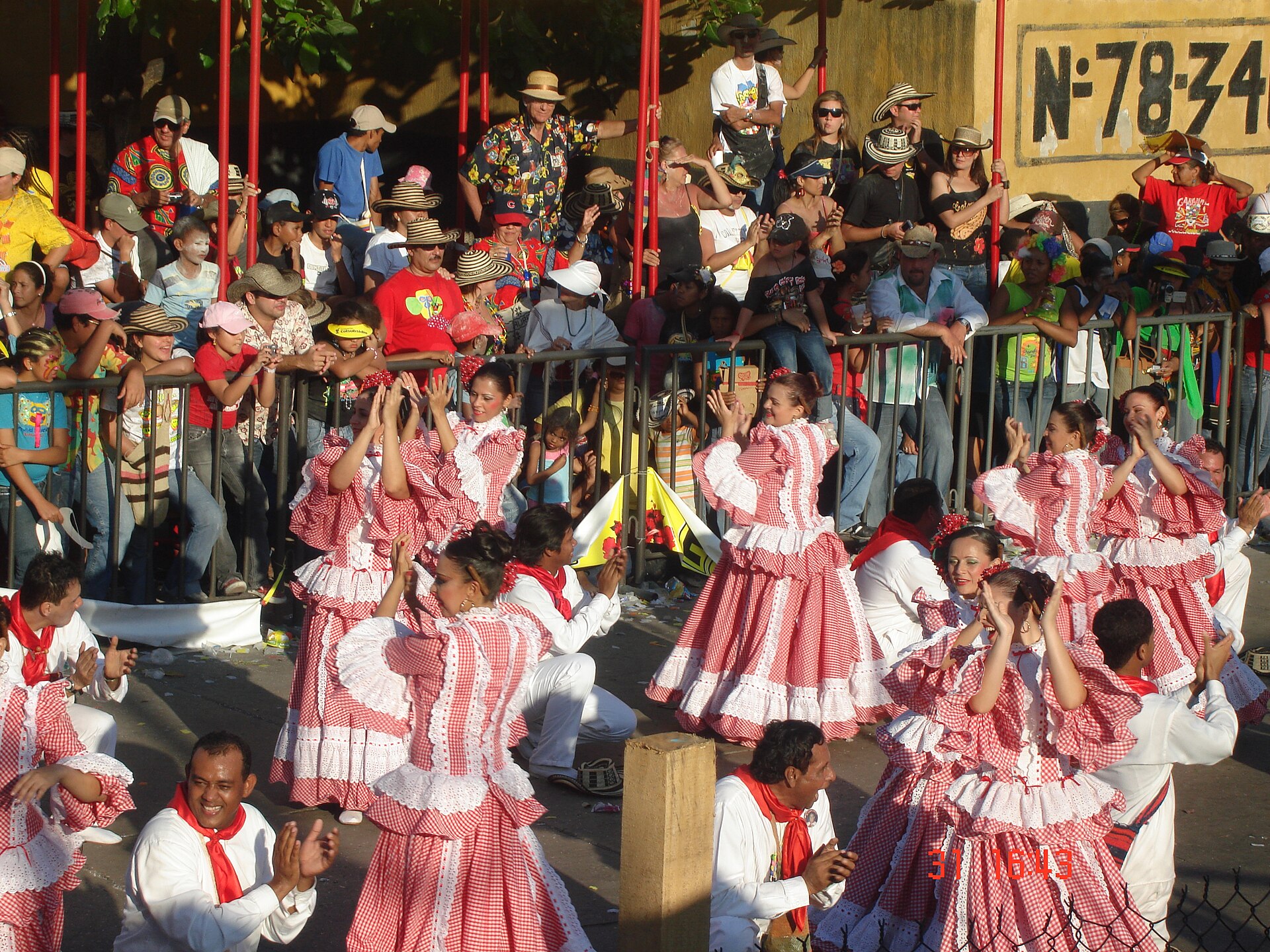
The Barranquilla Carnival is held on the four days before Lent in the Caribbean port city of Barranquilla. UNESCO proclaimed it a masterpiece of intangible heritage in 2003 and inscribed it on its representative list in 2008.
UNESCO highlights dances of Indigenous, African and Spanish origin, such as the mico y micas, the congo and the paloteo. The music is cumbia and its variants, puya and porro, played on drums, maracas and wind instruments.
The official carnival website lists the 2027 dates as Saturday, 6 February 2027 to Tuesday, 9 February 2027. It names Salwa Maloof Habib as the carnival queen for 2027.
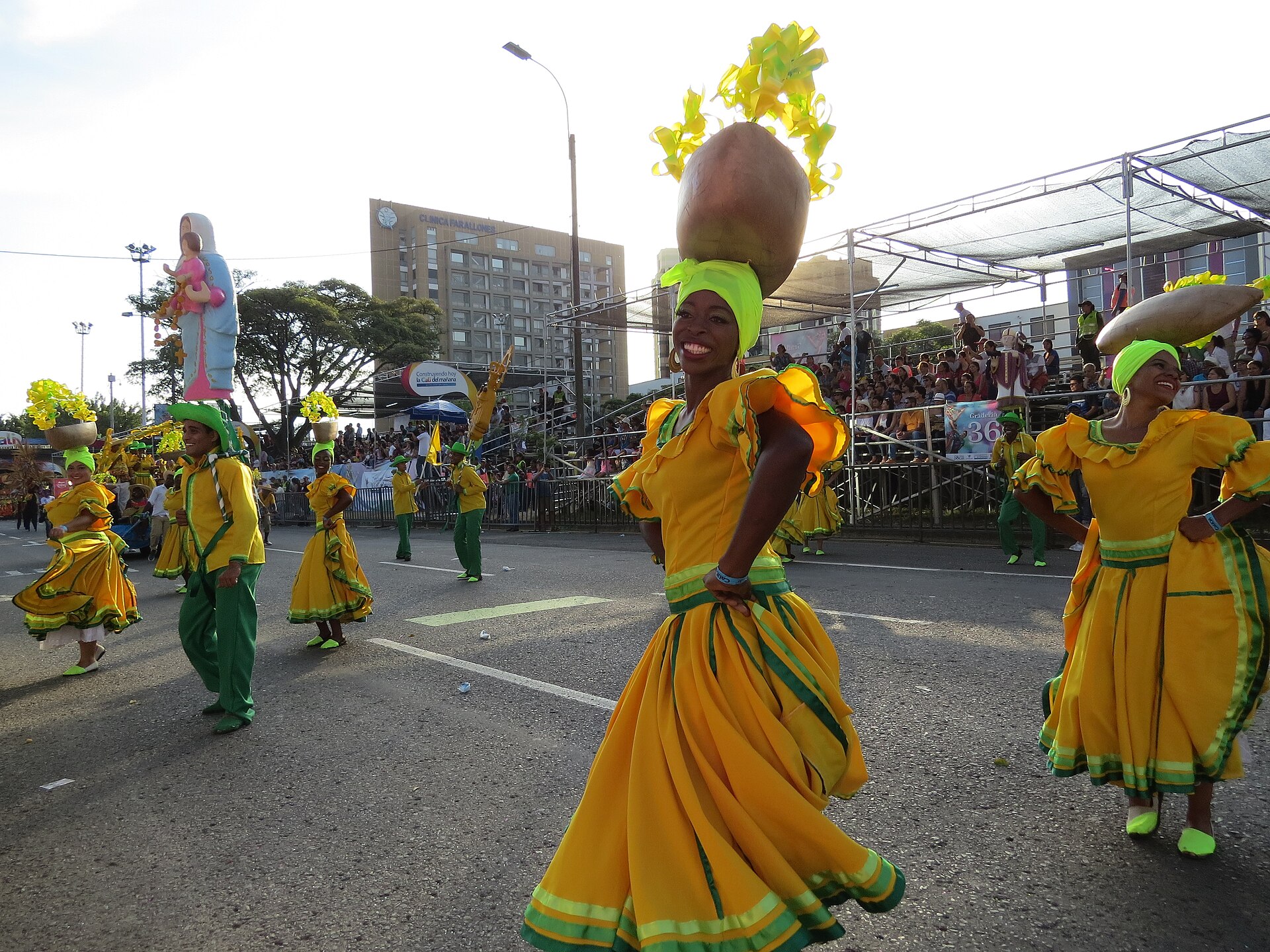
Costs for visitors are covered in the Rio Times guide to the cost of living in Barranquilla. Further west, Cartagena celebrates its independence in November, while Cali hosts the salsa-focused Feria de Cali in late December.
Bogotá and Medellín have their own expat city pages, at Bogotá and Medellín. Cartagena has one too, at Cartagena, with tips on its busy December and January season.
Family Life and How to Join In
Colombian families tend to be close, and grown children often live near their parents and gather every weekend. The country’s best-known artists and athletes are profiled in the Rio Times guide to Colombian culture.
A handshake and a friendly greeting are the safe start, and many people greet friends with a single kiss on the cheek. Use the formal “usted” with older people until they invite you to switch.
If you are invited to a Novena, it is polite to arrive with a small gift and join the songs. Nobody expects a foreign guest to know the prayers, but phones should stay in pockets during them.
At carnivals, follow the lead of local families on where to stand and when to leave. Keep valuables to a minimum and agree on a meeting point, because crowds can separate groups quickly.
Colombians who made their name abroad in music, film and sport are covered in the Rio Times pillar on famous Colombians. The country’s business landscape is explained in the pillar on Colombia’s economy and its key players.
What It Means for US Readers
US citizens can visit Colombia as tourists without a visa, but they must file the Check-MIG form online before the trip. Migración Colombia, the migration authority, says the form can be completed from 72 hours to one hour before travel.
The US State Department has kept Colombia at Level 3, Reconsider Travel, since its advisory of 31 March 2026. It warns that many US citizens have been drugged and robbed by criminals posing as dates.
The advisory urges caution on small tourist boats between Cartagena and nearby islands, as seas can be rough in December and January. Visitors should use licensed operators, never leave drinks unattended and meet new contacts only in public places.
For a US traveler, the practical rule is to plan around the puentes, Christmas Eve and the carnival weeks. Flights, hotels and roads out of the big cities all feel the pressure on those dates, so book early.
More news and guides on the country are collected on the Rio Times Colombia page. Festival news, such as the Cartagena Music Festival in January 2027, is listed there as well.
What Is Not Known
The detailed 2027 Barranquilla parade programme and grandstand ticket prices have not yet been published on the official website. The full 2026 to 2027 programme of the Pasto carnival was also not available on an official page in mid-October 2026.
Local light displays and Novena events change every year and are announced by city halls and parishes in late November. Visitors should check official city pages before travelling rather than rely on past schedules.
Frequently Asked Questions
What are the most important Colombian traditions?
The best known are candle night on 7 December, the Novena from 16 to 24 December and Christmas Eve dinner. The Pasto and Barranquilla carnivals are both on the UNESCO list of intangible heritage.
When is Dia de las Velitas in 2026?
Candle night falls on the evening of Monday, 7 December 2026. The Immaculate Conception holiday follows on Tuesday, 8 December.
How many public holidays does Colombia have?
Colombia has 19 national public holidays under Law 51 of 1983 and Law 2578 of 2026. Eleven of them move to the following Monday, which creates many long weekends.
When is the Barranquilla Carnival in 2027?
The official carnival website lists Saturday, 6 February 2027 to Tuesday, 9 February 2027. Detailed parade times and ticket prices had not been published by mid-October 2026.
Do US citizens need a visa for Colombia?
US citizens do not need a visa for a tourist visit. They must complete the Check-MIG form online between 72 hours and one hour before travel.
Can foreigners join a Novena?
Yes, foreign guests are usually welcome when a family or parish invites them. Bring a small gift and join the carols, even if you do not know the words.
Sources: Law 51 of 1983, Colombia (official compilation); Law 2578 of 2026, Ministry of Culture; UNESCO, Carnival of Barranquilla; UNESCO, Blacks and Whites Carnival; Carnaval de Barranquilla; Migración Colombia; US State Department, Colombia Travel Advisory; Colombia Aprende, Ministry of Education; El Tiempo (all accessed 14 October 2026).
This article was produced by The Rio Times’ automated newsroom system. How we use AI · Report an error · Editorial responsibility: Matthias Camenzind, Editor-in-Chief
Expat Guide to Colombia
What The Rio Times publishes for foreigners who live in or move to Colombia.
Start here
- Colombia SIM Card and Internet for Foreigners in 2026
- Colombia Rent Increase Limit Is 5.10% in 2026
- Bancolombia Explained, Colombia's Largest Bank in 2026
- Cost of Living in Colombia for Expats in 2026: Rent, Transport and Health in Five Cities
City guides
Medellín, Bogotá, Cartagena, Cali
Coming up in Colombia
- JetBlue Cali Flights From Fort Lauderdale Start 15 October 15 Oct
- Bad Gyal Bogotá Concert Brings Más Cara Tour to Colombia on 18 October 18 Oct
- Fonseca El Campín Concert Set for 24 October 2026 in Colombia 24 Oct
- Ryan Castro El Campín Halloween Show Set for 31 October in Colombia 31 Oct
Understand Colombia