Cost of Living in Colombia for Expats in 2026: Rent, Transport and Health in Five Cities

GUIDES · COLOMBIA
Key Facts
- What it is A budget guide to Colombia, South America’s second most populous country and a leading base for foreign residents.
- Who it’s for Expats, remote workers and retirees comparing Bogotá, Medellín, Cali, Barranquilla and Cartagena.
- What it costs Roughly US$1,100 to US$1,800 a month for a single person in Bogotá or Medellín, based on crowd-sourced data; less in Cali.
- The catch Annual inflation was 6.24% in August 2026 and the minimum wage rose about 23%, pushing up fares, services and some visa thresholds.
- What is still open The final court ruling on the 2026 minimum-wage decree, and the peso’s path against the dollar.
The cost of living in Colombia is still modest by US and European standards, but 2026 brought the sharpest wage-driven price rises in years.
This guide sets out what rent, food, transport and health cover cost in five Colombian cities. It shows where official figures end and estimates begin, so you can build a budget you can trust.
How prices are moving in 2026
As of 22 September 2026, the latest official inflation figure is for August. The national statistics office, DANE, reported annual consumer-price inflation of 6.24% that month.
Prices rose 0.39% in August alone and 5.35% since January. That is well above the 3% target of Colombia’s central bank, the Banco de la República.
Some lines matter more to foreigners than the headline. Restaurants and hotels were up 9.36% on a year earlier, and health costs 8.30%, according to the DANE release.
DANE builds the index from 443 items priced every month in 38 cities. It measures what an average Colombian household buys, not an expat basket with imported goods.
All dollar figures in this guide use a rate of about 3,300 pesos per US dollar, the market rate in late September 2026. The peso floats freely, so a stronger peso makes Colombia dearer for anyone paid in dollars or euros.
The minimum wage that sets the benchmark
Colombia’s monthly minimum wage, the SMMLV, was set for 2026 at 1,750,905 pesos (about US$530). That was an increase of about 23% on 2025, fixed by Decree 1469 of 2025.
Workers earning up to two minimum wages also receive a transport allowance of 249,095 pesos (about US$75). Together that makes 2,000,000 pesos (about US$606) a month.
The Council of State, Colombia’s top administrative court, provisionally suspended the wage decree on 12 February 2026. The government then issued a transitional decree, Decree 0159 of 19 February 2026, that kept the same figures while the case continues.
The minimum wage matters to foreigners for three reasons. It drives many regulated prices, from bus fares to fees, and it sets the floor for health contributions.
It also sets several visa income thresholds, which are written as multiples of the minimum wage. A 23% rise therefore made those thresholds harder to meet in 2026.
Check the current multiple for your visa class with the Foreign Ministry, Cancillería, before you apply. The Rio Times visa guide linked below sets out the main options.
Rent: what five cities ask
Rent is the biggest variable in any Colombian budget. The figures below come from Numbeo, a crowd-sourced price site, and show the range of user-reported monthly rents.
They are ranges, not official statistics. Contributor numbers vary widely, from nearly 1,000 entries in Bogotá to about a dozen contributors in Barranquilla.
Bogotá
In the capital, a one-bedroom flat in the centre ranged from 1,500,000 to 3,640,000 pesos (about US$454 to US$1,103) in Numbeo data for September 2026. The average was 2,360,833 pesos (about US$715).
Outside the centre, the range was 900,000 to 2,400,000 pesos (about US$273 to US$727).
Medellín
Medellín is now dearer than Bogotá for rent on Numbeo’s figures. A central one-bedroom ranged from 1,800,000 to 4,680,000 pesos (about US$545 to US$1,418), with an average of 3,346,204 pesos (about US$1,014).
Outside the centre, one-bedroom rents ranged from 1,500,000 to 2,500,000 pesos (about US$454 to US$757). Rio Times reporting has tracked digital-nomad demand pushing up furnished rents in El Poblado.
Cali
Cali is the cheapest of the five large cities in this guide. A central one-bedroom ranged from 1,500,000 to 2,600,000 pesos (about US$454 to US$788) in Numbeo data last updated in August 2026.
Few entries exist for Cali’s outer districts, where reported rents clustered near 936,000 pesos (about US$284). Treat that figure as a thin sample.
Barranquilla and Cartagena
Data for the coast are patchier. In Barranquilla, Numbeo data last updated in June 2026 put a one-bedroom outside the centre at 800,000 to 3,100,000 pesos (about US$242 to US$939).
Numbeo flags that some of its Barranquilla data are estimated because contributors are few. Cartagena is the coast’s premium market.
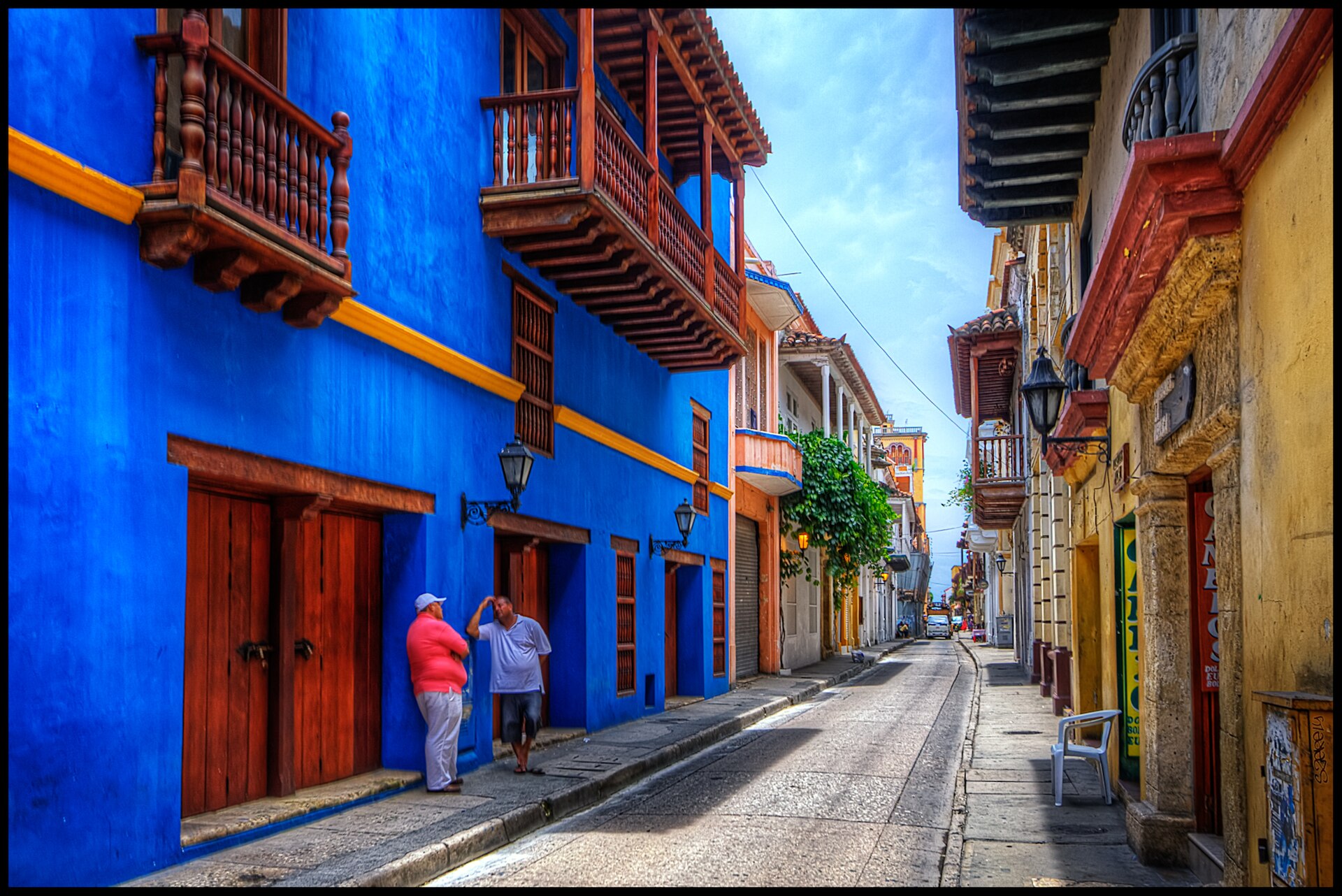
A one-bedroom outside the centre ranged from 1,506,820 to 2,530,000 pesos (about US$456 to US$766), while the single central entry was 3,330,000 pesos (about US$1,009). Short-term holiday lets in Cartagena’s old town and Bocagrande compete with long-term tenants.
That keeps central rents high relative to local incomes. Long-term leases usually require a Colombian guarantor, known as a codeudor, or an insurance-backed guarantee.
Furnished flats let through agencies often skip that step but cost more.
Food, eating out and utilities
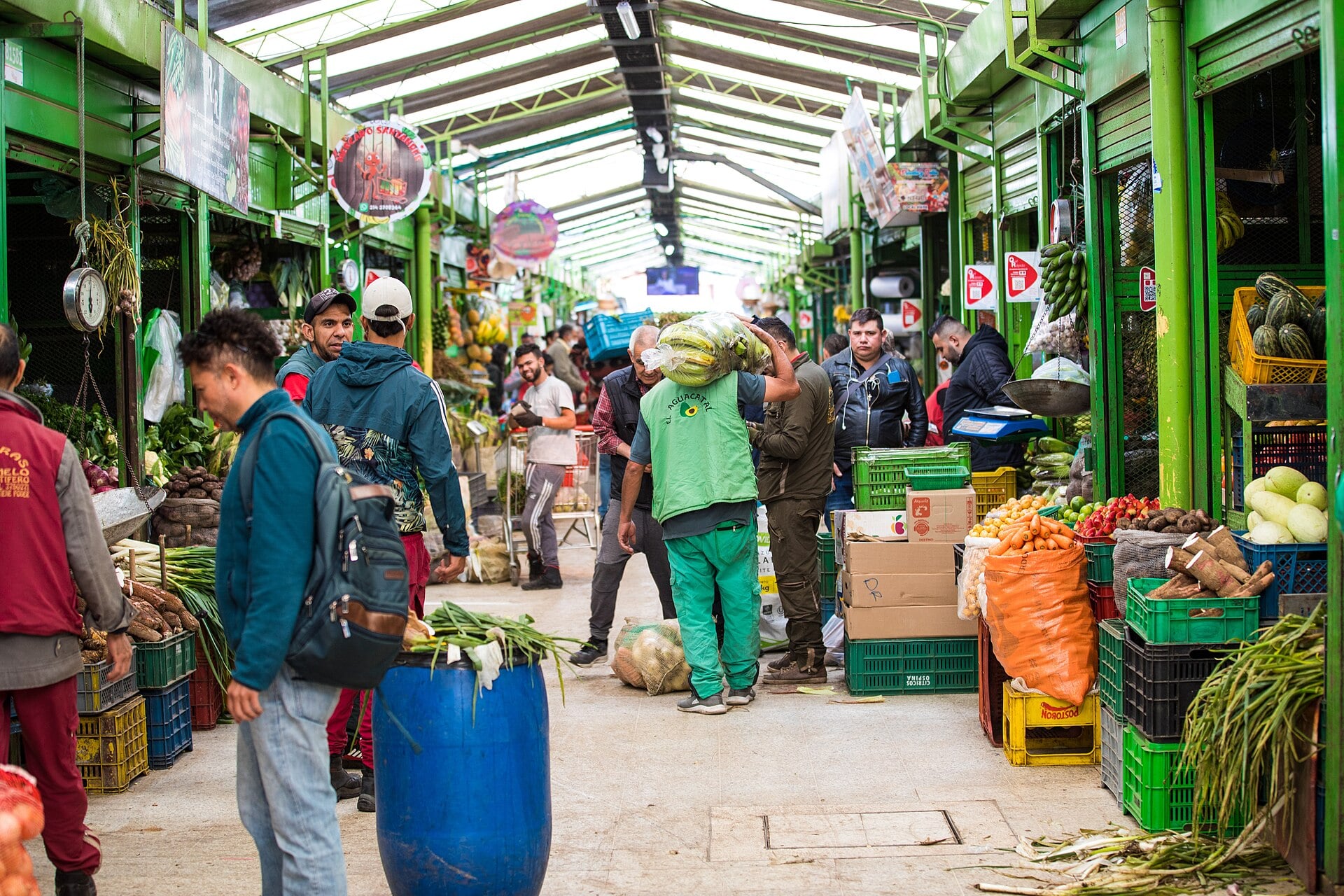
Eating out remains good value.A meal at an inexpensive restaurant cost around 25,000 pesos (about US$7.57) in Bogotá in Numbeo’s September data.
In Medellín it was 25,500 pesos (about US$7.73) and in Cali 24,000 pesos (about US$7.27). The set lunch, or menú del día, of soup, a main plate and a juice is often cheaper still.
It remains the best-value meal in the country. Fresh produce from covered markets such as Paloquemao in Bogotá costs far less than imported brands in upmarket supermarkets.
Cooking at home with local produce is the biggest single saving. Basic utilities for a mid-sized flat ran about 395,335 pesos (about US$120) a month in Bogotá.
Medellín users reported 526,875 pesos (about US$160), and Barranquilla 475,000 pesos (about US$144). On the Caribbean coast, air conditioning is the line that breaks budgets.
Utility bills in Barranquilla and Cartagena rise sharply in the hottest months. Home broadband cost roughly 97,765 pesos (about US$30) a month in Bogotá and 90,778 pesos (about US$28) in Medellín.
Colombian bills are also shaped by the estrato system, which grades homes from 1 to 6. Higher-estrato homes pay more for the same electricity and water to subsidise lower strata.
Most expat districts are estrato 4 to 6, so expect bills at the top of the range.
Getting around: 2026 fares city by city
All five cities raised public transport fares in January 2026, largely because of the minimum-wage rise. The fares below come from city operators and authorities.
In Bogotá, a single fare on TransMilenio, the zonal SITP buses and TransMiCable is 3,550 pesos (about US$1.08). That was a rise of 350 pesos (about US$0.11), according to TransMilenio.
Riders with a personalised TuLlave card get free transfers within a 125-minute window. Register the card to benefit.
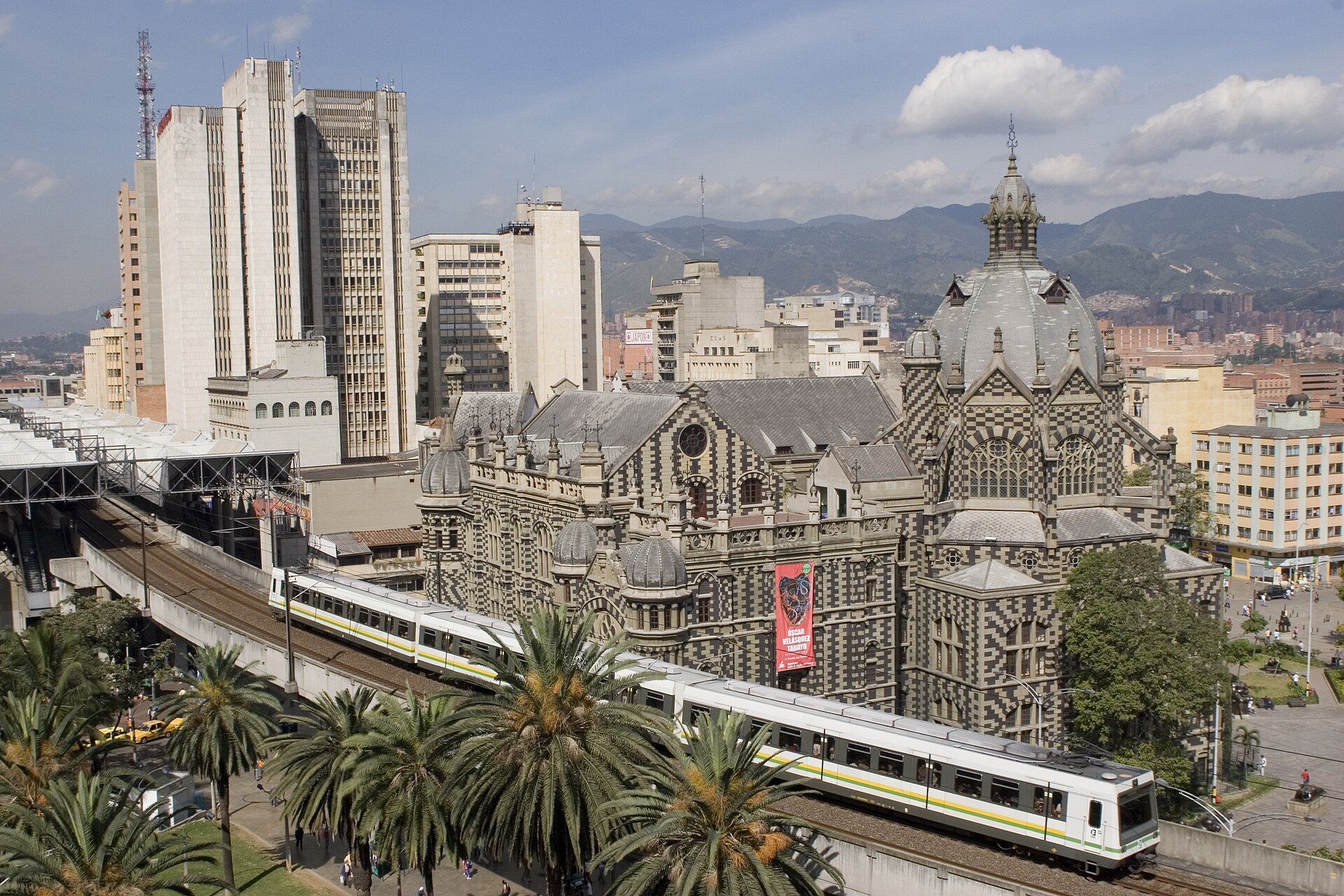
Medellín’s Metro has two main fares. In Medellín, the Metro’s frequent-user fare with a Cívica card rose to 3,820 pesos (about US$1.16) from 10 January 2026.
A single ticket without the card costs 4,400 pesos (about US$1.33). Cali’s MIO system charges 3,500 pesos (about US$1.06), according to the mayor’s office.
Barranquilla’s Transmetro charges 3,700 pesos (about US$1.12) on ordinary days and 3,800 pesos (about US$1.15) on Sundays and holidays, from 19 January 2026. Cartagena’s TransCaribe charges 3,900 pesos (about US$1.18), the highest standard card fare of the five.
The city set it by Decree 017 of 2026, effective 23 January.A monthly pattern of two trips each working day comes to roughly 44 fares.
In Bogotá that is about 156,200 pesos (about US$47) a month. App-based rides and taxis are widely used, especially at night.
They cost several times a bus fare, so they can double a transport budget quickly.
Health cover: the EPS and what it costs
Colombia’s public health insurance runs through health-promoting companies, known as EPS. Foreign residents with a cédula de extranjería, the foreigner ID card, can join the contributory scheme.
Employees share the cost with their employer through payroll. Independent workers, including many remote workers and freelancers, pay the full contribution themselves.
The health contribution is 12.5% of a contribution base. For independent workers that base is 40% of monthly income, and it cannot fall below one minimum wage.
In 2026, that makes the minimum monthly health payment 218,863 pesos (about US$66). Someone earning 5,000,000 pesos (about US$1,515) would pay 250,000 pesos (about US$76).
Independent workers must also pay into a pension fund, at 16% of the same base. Occupational-risk cover (ARL) is also required under many service contracts.
Payments are made through the PILA system each month. Many foreigners add private prepaid medicine, called medicina prepagada, or international insurance.
Prices depend on age and cover, so get quotes before you budget. The EPS system has been under strain, and several large providers have been placed under state intervention in recent years.
Waiting times vary widely by provider and city.
Sample monthly budgets
The budgets below combine Numbeo’s estimate of a single person’s costs excluding rent with the one-bedroom rents above. They are planning estimates, not official figures.
In Bogotá, Numbeo put a single person’s monthly costs excluding rent at 2,272,078 pesos (about US$688) in September 2026. Adding the average one-bedroom rent, outside or in the centre, gives roughly US$1,102 to US$1,404 a month.
In Medellín, the same estimate was 2,653,315 pesos (about US$804). With rent, a single budget comes to roughly US$1,427 to US$1,818 a month.
Add health cover on top. At the EPS minimum of 218,863 pesos (about US$66), a single budget in either city rises by about US$66.
A couple sharing a one-bedroom flat will spend less than double, because rent and utilities are shared. Families need three bedrooms and often private school fees.
In Bogotá, a central three-bedroom averaged 4,136,257 pesos (about US$1,253) on Numbeo. In Medellín the average was 5,989,105 pesos (about US$1,814).
The Rio Times Barranquilla guide, linked below, estimates about US$1,100 a month for a single foreigner there. Cali generally comes in below Bogotá, while central Cartagena can match Medellín.
How to keep your costs down
Choose your district before your city. The gap between a central expat enclave and a well-connected middle-class district is often larger than the gap between cities.
Pay in pesos, not dollars. Landlords and agencies that quote in dollars usually build in a premium, and you carry the exchange risk twice.
Use public transport cards rather than single tickets. In Medellín, the Cívica card saves 580 pesos (about US$0.18) on every Metro trip compared with a single ticket.
Eat like a local at lunchtime and shop at markets. Imported cheese, wine and cereals carry import costs and taxes that can double their price.
Plan for the January reset. Minimum wage, fares and many regulated prices change at the start of each year, so budget for a jump then.
The cost of living in Colombia still rewards foreigners who live locally. It punishes those who import a North American or European lifestyle wholesale.
Connected Coverage
Cost of Living in Barranquilla, Colombia 2026 — Budgets, Rent and Utility Bills
Expats See Medellín Rents Surge as Digital Nomads Flood El Poblado
Colombia’s Wage Hike Just Made Every Residency Visa Harder to Get
Taxes in Colombia for Expats: The 183-Day Residency Rule Explained
Colombia Explained: The Country, Its Politics, Its Economy and What to Watch
What Is Not Known
The final court ruling on the 2026 minimum-wage decree has not been issued. A different outcome could change health contributions, visa thresholds and next year’s wage talks.
No official source publishes average rents for foreigners by city. The rent ranges here are crowd-sourced and thin for Cali, Barranquilla and Cartagena.
Where the peso trades over the coming months is not known. It decides what anyone earning in dollars or euros really pays.
How far the August inflation reading of 6.24% will ease before the January 2027 wage and fare resets is also open. Forecasts differ between the central bank and private banks.
Sources: Inflation data come from DANE. Minimum-wage decrees and court decisions are as reported by Colombian press. Fares come from TransMilenio, Metro de Medellín, the Cali mayor’s office, the Área Metropolitana de Barranquilla and TransCaribe. Rents and prices come from Numbeo. All accessed 22 September 2026.
- dane.gov.co
- incp.org.co
- infobae.com
- infobae.com
- transmilenio.gov.co
- telemedellin.tv
- cali.gov.co
- elespectador.com
- transcaribe.gov.co
- enlace.com.co
- numbeo.com
- numbeo.com
- numbeo.com
- numbeo.com
- numbeo.com
- open.er-api.com
More: Colombia news in English, every day from The Rio Times.
Frequently Asked Questions
How much does it cost to live in Colombia as an expat in 2026?
A single person in Bogotá or Medellín should plan on roughly US$1,100 to US$1,800 a month including a one-bedroom flat, based on Numbeo crowd-sourced data from September 2026. Health cover adds at least about US$66 a month. Cali is generally cheaper, and central Cartagena can be as expensive as Medellín.
Is Medellín more expensive than Bogotá?
For rent, yes, on Numbeo figures. A central one-bedroom averaged about 3.35 million pesos (about US$1,014) in Medellín against about 2.36 million pesos (about US$715) in Bogotá in September 2026.
What is Colombia's minimum wage in 2026?
The 2026 minimum wage is 1,750,905 pesos (about US$530) a month, plus a transport allowance of 249,095 pesos (about US$75) for lower earners. The Council of State provisionally suspended the decree in February 2026, but a transitional decree kept the same figures while the case continues.
How much does public transport cost in Colombian cities?
In 2026 a TransMilenio fare in Bogotá is 3,550 pesos (about US$1.08). Medellín's Metro costs 3,820 pesos (about US$1.16) with a Cívica card. Cali's MIO costs 3,500 pesos (about US$1.06), Barranquilla's Transmetro 3,700 pesos (about US$1.12) on ordinary days and Cartagena's TransCaribe 3,900 pesos (about US$1.18).
How much do foreigners pay for EPS health insurance?
Independent workers pay 12.5% of a base equal to 40% of monthly income, with the base never below one minimum wage. The minimum monthly health payment in 2026 is 218,863 pesos (about US$66).
What was Colombia's inflation rate in August 2026?
DANE reported annual consumer-price inflation of 6.24% in August 2026. Restaurants and hotels were up 9.36% and health 8.30% on a year earlier.
This article was produced by The Rio Times’ automated AI newsroom. Editorial responsibility: Matthias Camenzind, Publisher and Editor-in-Chief. The Rio Times also runs Ask Rio Times, which answers from 100,000+ of our own articles, the daily Latin America Power Map, and prediction-market odds on elections and markets.. How we use AI · Report an error
Expat Guide to Colombia
What The Rio Times publishes for foreigners who live in or move to Colombia.
Start here
- Colombia Healthcare and Education Explained for 2026
- Colombia SIM Card and Internet for Foreigners in 2026
- Colombia Rent Increase Limit Is 5.10% in 2026
- Bancolombia Explained, Colombia's Largest Bank in 2026
City guides
Medellín, Bogotá, Cartagena, Cali
Coming up in Colombia
- Megaland Bacano 2026 Brings Feid to Bogotá on 20 November 20 Nov
- Copa Sudamericana Final in Barranquilla on 21 November 2026 21 Nov
- Dimash Plays Bogotá's Movistar Arena on 22 November, First Colombia Show 22 Nov
- Marco Antonio Solís Performs in Medellín on 27 November 27 Nov
Understand Colombia