
CHILE · PORT STRIKE
Key Facts
- What happened San Antonio truckers lifted their blockade on Friday 6 November after winning an 8% freight-rate rise.
- How long The blockade began late on Wednesday 28 October and lasted more than a week.
- What changes Rates will now follow an official diesel-linked cost index, so fuel swings should feed into freight prices.
- The catch The deal is with private cargo firms, and the government announced the framework deal but calls the dispute one between private parties.
- Where it hits The port ships cherries, mostly to China: more than 16,500 containers last season, with the new season starting.
- What comes next State agency Corfo will lend small haulers about US$85,000 to US$595,000 per loan.
- Power Index Chile ranks 3rd of 14 in The Rio Times Latin America Power Index, with 62.9 points (November 2026 edition).
Independent truckers at Chile’s San Antonio port ended a strike on Friday 6 November after winning an 8% rise in freight rates. The blockade of container depots had run since late on Wednesday 28 October, as the cherry export season began.
Independent truckers who haul containers at San Antonio, a Pacific port in central Chile, ended their strike on Friday 6 November after winning an 8% rise in freight rates. Manuel Millones, the national government’s regional delegate for Valparaíso, called the deal “quite beneficial” for the truckers.
The blockade of container depots began at 11 p.m. on Wednesday 28 October and lasted more than a week. It hit the port just as the cherry export season opened, and the first ship of a dedicated cherry service had to sail from nearby Valparaíso instead.
What the Truckers Won
The truckers get an 8% rise on the rates they are paid now, and independent haulers can bid directly for contracts that cargo companies hold. Millones said this removes middlemen and settles “three great aspirations” of the group.
Future rate changes will follow a formula built on a freight-cost index from INE, Chile’s national statistics institute, combined with the diesel price. Millones called it an objective formula, and INE publishes its road-freight cost index, known as ICT, every month.
Corfo, Chile’s state development agency, will offer loans of 2,000 to 14,000 UF to small transport firms, about US$85,000 to US$595,000, for working capital and new vehicles. The UF is a Chilean inflation-indexed unit worth 41,279.51 pesos on 6 November, and we convert at the central bank’s observed dollar of 970.94 pesos per US$ for that day.
A truck-registration system agreed with the port side will also bar unregistered vehicles from entering the port. The reports we reviewed do not say which company will run the system.
How the Strike Unfolded
An association of independent port haulers, known as Agreporsai, led the strike, and its president, Manuel Araya, said freight rates had been frozen while diesel nearly doubled since 2022. The group also opposed four new electronic toll gates on Route 78, the highway serving the port, and asked for a central-government official to negotiate in San Antonio.
Cargo firms had offered rises of CLP 1,000 to CLP 2,000 per trip (about US$1.03 to US$2.06), which the truckers rejected. Seven companies that run container depots outside the port sat on the other side, among them D&C, Sitrans, Agunsa, Medlog, CLEP, SIX Extraportuario and Contopsa.
Karlfranz Koehler, the Undersecretary of Economy, said on 29 October that the dispute was “a problem between private parties”, though the government would mediate. By 4 November he was urging cargo firms to update rates for the diesel price and the truckers to unblock the depots.
By 3 November the blockade covered depots serving the terminals run by STI and DP World San Antonio. The union said more than 3,000 containers had been kept from entering the port and a similar number from leaving, figures that come from the union alone.
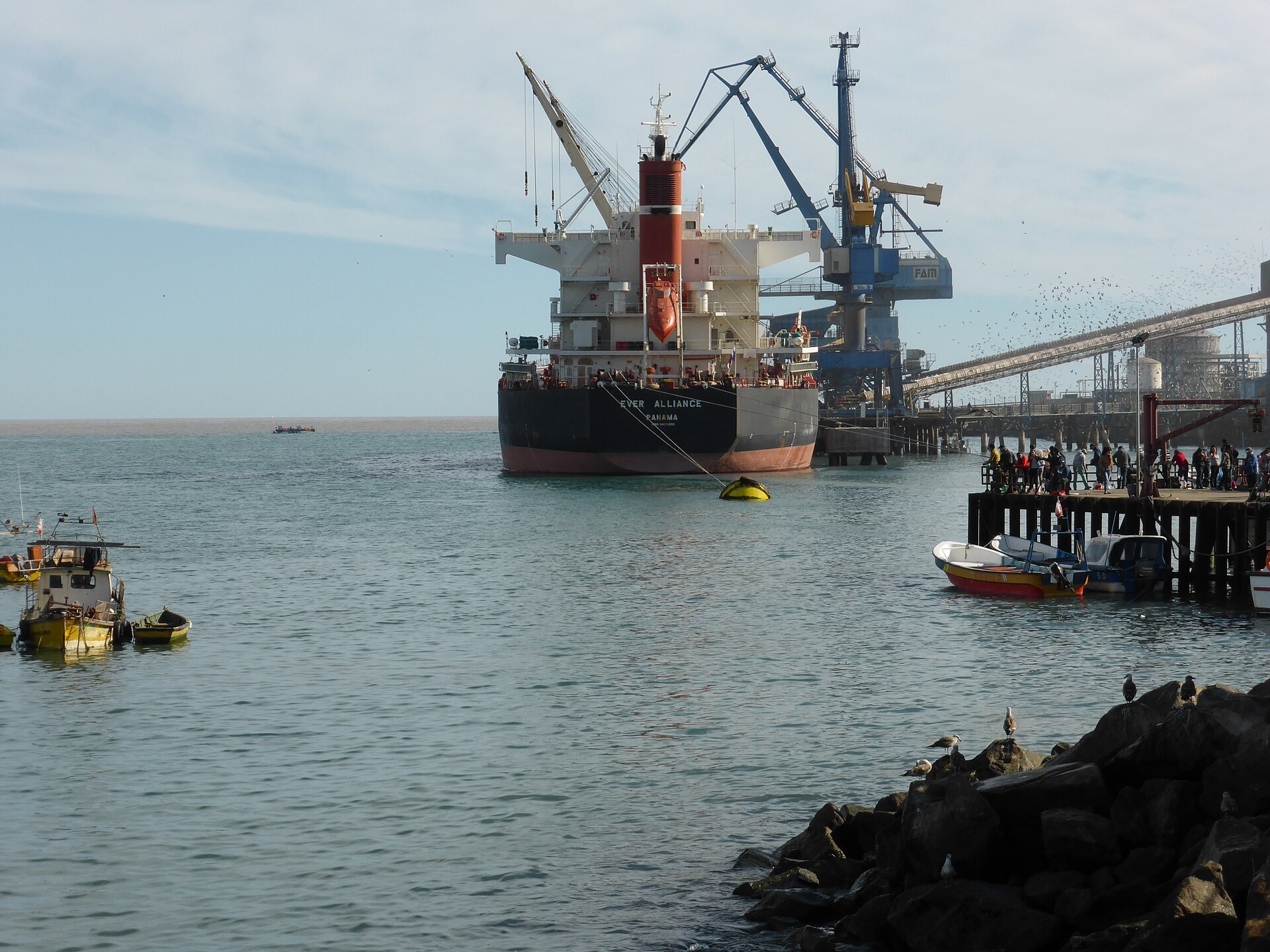
Why San Antonio Matters
The state port company says San Antonio moved 2,107,623 tonnes of cargo in August, 9.6% more than a year earlier. Its concessioned terminals, including STI and DP World San Antonio, handled 190,070 standard container units that month, up 18%.
In the 2025-26 season the port handled more than 16,500 containers of cherries bound for China, and November and December are the peak of the next season. A national farmers’ group, the Sociedad Nacional de Agricultura, had urged both sides to settle quickly to protect food supply.
What It Means for US Readers
The dispute was about fuel costs, a pressure US truckers also face, and the new formula ties rates to a published cost index so that fuel-price risk is shared. The cherry shipments held up go mainly to China, so the direct US effect looks limited, and no US importer is named in the dispute.
Importers of Chilean produce should watch whether the national stoppage called from Tuesday 10 November goes ahead. For background, see Chile Rejects New Aid for Truckers and Chile in Latin America, Its Role and Alliances.
Readers weighing Chile’s politics can read Who Holds Power in Chile. Visitors can see the Valparaíso city guide for the nearby port city.
What Is Not Known
It is not clear how far the national stoppage called for Tuesday 10 November will go, because the CNDC, a national truck owners’ confederation, has said it will not join. The Confederación Fuerza del Norte, which called it, can answer when the stoppage is due to start at 00:00 on that Tuesday.
The written terms of the 8% rise are not public, including its start date and whether all seven depot firms signed. Millones’s office and the cargo companies can answer once the agreement is formalised, a date neither side has given.
Frequently Asked Questions
Why did the San Antonio truckers strike?
They said freight rates had been frozen while diesel nearly doubled since 2022. They also opposed new toll gates on Route 78 and wanted a government official to negotiate on site.
What did the truckers win?
They won an 8% rise, the right to bid directly on cargo contracts and a rate formula linked to a freight-cost index and the diesel price. Corfo, the state development agency, will also lend small haulers about US$85,000 to US$595,000 per loan.
How long did the strike last?
It began at 11 p.m. on Wednesday 28 October and ended on Friday 6 November, more than a week. Local reports count between seven and nine days, depending on the start.
Does the strike affect US imports of Chilean fruit?
The direct effect looks limited, because the cherries held up are mainly bound for China. No US importer is named in the dispute, and operations at the depots are returning to normal.
Is another trucker strike coming in Chile?
Stoppages have been announced from Tuesday 10 November, mainly in the Arica, Tarapacá and Antofagasta regions. ChileTransporte, a national trucking federation, says it is monitoring them and distances itself from the call.
Sources: Puerto San Antonio, August 2026 cargo release; Instituto Nacional de Estadísticas, Transport Cost Index (ICT); Banco Central de Chile, observed dollar series (6 November 2026: 970.94 pesos); statements by the regional presidential delegate for Valparaíso and the Undersecretary of Economy, 29 October to 6 November 2026 (accessed 7 November 2026).
This article was produced by The Rio Times’ automated newsroom system. How we use AI · Report an error · Editorial responsibility: Matthias Camenzind, Editor-in-Chief