Chile in Latin America, Its Role, Weight and Alliances
CHILE · CONTINENTAL ROLE
Key Facts
- —The country Chile is a long Pacific nation of 18.5 million people (2024 census), the world’s largest copper miner and one of Latin America’s richest economies per head.
- —Its weight The IMF’s April 2026 outlook projects Chile’s 2026 output at about US$408 billion, fifth in Latin America after Brazil, Mexico, Argentina and Colombia.
- —Its clubs Chile belongs to CELAC, the OAS, the Pacific Alliance, APEC and the CPTPP, and is an associate state of Mercosur.
- —What changed On 22 September 2026 the government of conservative President José Antonio Kast formally adhered to the Escudo de las Américas, a US-led anti-crime coalition.
- —Old disputes The World Court rejected Bolivia’s sea-access case in 2018 and fixed the sea border with Peru in 2014.
- —What it means for you Chile sold half its copper exports to China in 2025, yet has had a free-trade deal with the United States since 2004.
- —Still open Whether Congress gets a say on the Escudo, and how far Chile can side with Washington while China buys over a third of its exports.
The Chile role in Latin America matters to US readers because Chile mined almost a quarter of the world’s copper in 2025. In September 2026 its government also joined a US-led security coalition, while China remains its biggest customer.
This guide explains Chile’s economic weight, its regional clubs, its quarrels with Bolivia and Peru, and its balance between Washington and Beijing.

Chile’s Weight in Latin America: Small Nation, High Income
Chile counted 18,480,432 residents in its 2024 census, according to INE, the national statistics institute. Brazil, by IMF estimates, has more than ten times as many people.
In money terms Chile weighs more than its population suggests. The IMF’s April 2026 World Economic Outlook puts its 2025 output at about US$355 billion.
The fund projects US$408 billion for 2026. That makes Chile Latin America’s fifth-largest economy at market exchange rates, just ahead of Peru.
Income per person is where Chile stands out. The IMF estimates Chilean output per head at about US$17,700 in 2025, the highest among the region’s six largest economies.
Smaller Uruguay, Panama and Costa Rica rank higher still, with Uruguay at about US$24,500 per person. Growth in Chile is steady rather than fast: the IMF estimates 2.3% for 2025 and projects 2.4% for 2026.
Chile joined the OECD, a club of mostly wealthy democracies, in 2010. The OECD says Chile was its 31st member and its first from South America.
The IMF’s 2025 estimates show how the Chile role in Latin America compares with the region’s other big economies:
- Brazil: about US$2.28 trillion of output and 213 million people; Chile’s economy is less than a sixth of Brazil’s.
- Mexico: about US$1.83 trillion and 133 million people; Mexico shares Chile’s seats in the Pacific Alliance and the CPTPP.
- Argentina: about US$681 billion, with output per head of roughly US$14,400, below Chile’s level.
- Colombia: about US$457 billion, a bigger economy than Chile’s, but with output per head under half of Chile’s.
- Peru: about US$341 billion, the closest in size, and Chile’s fellow copper giant and Pacific Alliance partner.
Copper, Lithium and an Export Model That Faces Asia
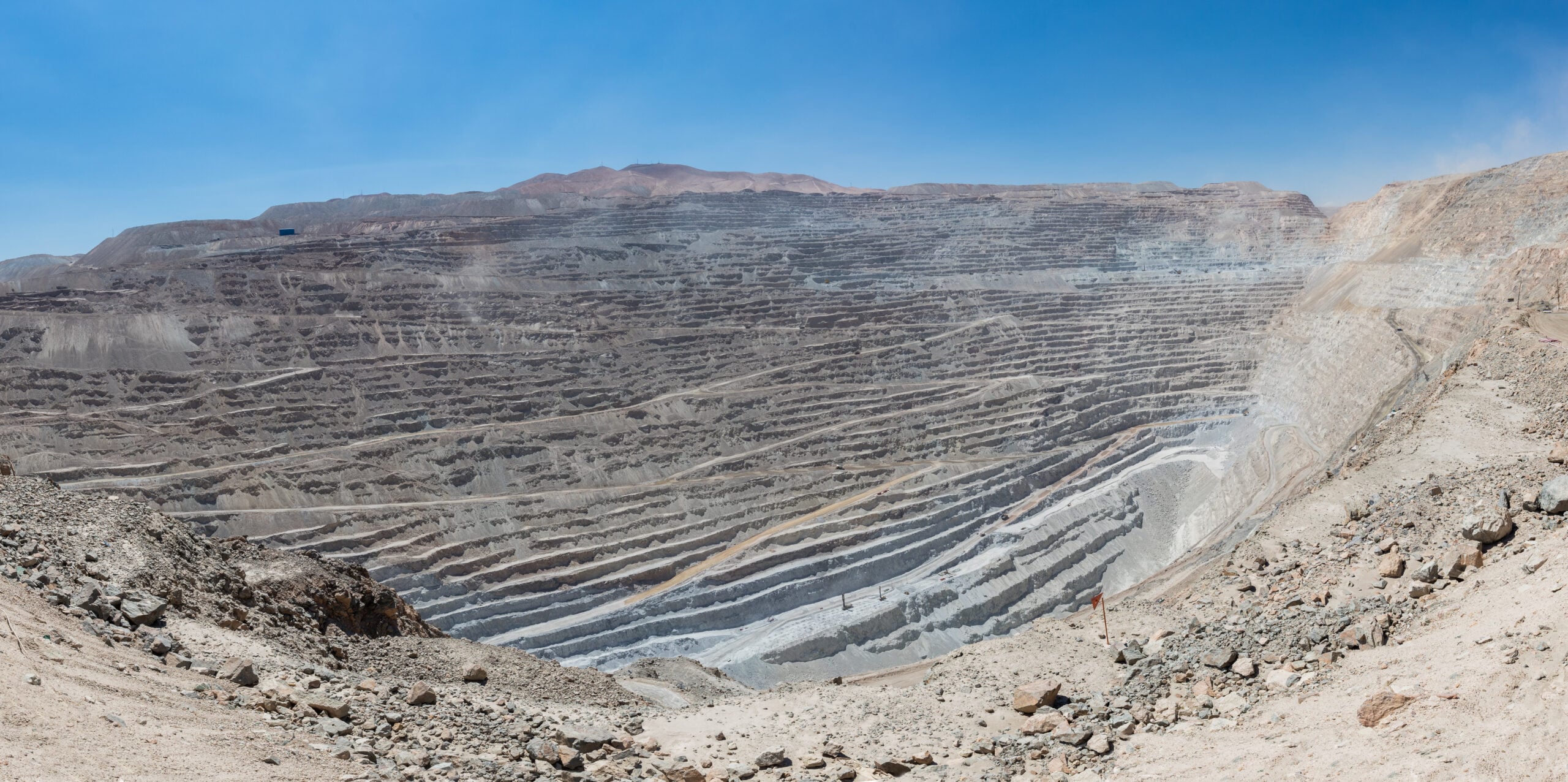
Chile is the world’s largest copper producer. The US Geological Survey estimates its 2025 mine output at 5.3 million tonnes, about 23% of the world total.
Peru, the next-largest producer in Latin America, mined an estimated 2.7 million tonnes. Chile’s state copper company is profiled in What Is Codelco?
Chile also holds the largest lithium reserves listed by the USGS, about 9.2 million tonnes of a world total of 37 million. Its estimated 2025 lithium output ranked third, behind Australia and China.
Copper earned Chile US$55.2 billion in 2025, or 51.6% of all goods exports. That is according to SUBREI, the foreign ministry’s undersecretariat for international economic relations.
Total goods exports reached a record US$107 billion that year. The striking point for a Latin American country is where those goods go.
China took 35.4% of Chile’s exports of goods and services in 2025, and the United States 16.7%. Japan, South Korea and India together took another 16%.
Brazil, the biggest Latin American buyer, took just 4.4%. Mercosur’s four founders, Argentina, Brazil, Paraguay and Uruguay, took 6.3% together, and Chile’s three Pacific Alliance partners 4.8%.
So the Chile role in Latin America rests on trade deals rather than on one bloc. SUBREI lists more than 30 trade agreements in force.
They include deals with the United States since 2004 and China since 2006. An association agreement with the European Union dates from 2003, and an updated interim trade deal took effect on 1 February 2025.
The Pacific Alliance, Mercosur and the Andean Community
In Latin America, Chile is a founding member of the Pacific Alliance and an associate of both Mercosur and the Andean Community.
The Pacific Alliance groups Chile, Colombia, Mexico and Peru. It was announced in Lima on 28 April 2011 and formalised on 6 June 2012 in Chile’s northern Antofagasta region.
Its trade protocol took effect on 1 May 2016. It cut tariffs to zero at once on 92% of tariff lines among the four members, SUBREI says.
SUBREI lists 61 observer states. Mexico held its rotating presidency in August 2026, and Peru takes over in December 2026, Peru’s state news agency Andina reported.
For Chile, the Alliance works more as a platform than as a market. Its three partners took only 4.8% of Chilean exports in 2025.
Mercosur is the South American trade bloc whose full members include Brazil, Argentina, Paraguay, Uruguay and Bolivia. Its own website lists Chile among its associated states.
Associates are countries that have signed free-trade deals with the bloc. Chile’s agreement, known as ACE 35, has been in force since 1 October 1996.
SUBREI describes that deal as giving Mercosur countries a platform of access to the Pacific. Since 2012, Chilean exports have entered Argentina, Brazil, Paraguay and Uruguay tariff-free, it adds.
The Andean Community, a trade bloc of Bolivia, Colombia, Ecuador and Peru, lists Chile among its five associate countries. Relations with each neighbour are covered in Chile and Its Neighbours Explained for 2026.
CELAC, the OAS and ECLAC: Chile’s Diplomatic Stages
CELAC, the Community of Latin American and Caribbean States, gathers the region’s 33 countries without the United States or Canada. Uruguay took over its rotating presidency on 21 March 2026 in Bogotá.
For Chile, CELAC is a forum that seats every Latin American and Caribbean government, including those outside Washington’s new security coalition.
The Organization of American States (OAS) is the older hemispheric body, and it does include the United States and Canada. All 35 independent states of the Americas have ratified its charter, the OAS says.
Chile keeps a permanent mission to the OAS in Washington. The new US-led coalition plans to ask the OAS for a meeting under the Rio Treaty, an old hemispheric mutual-defence pact.
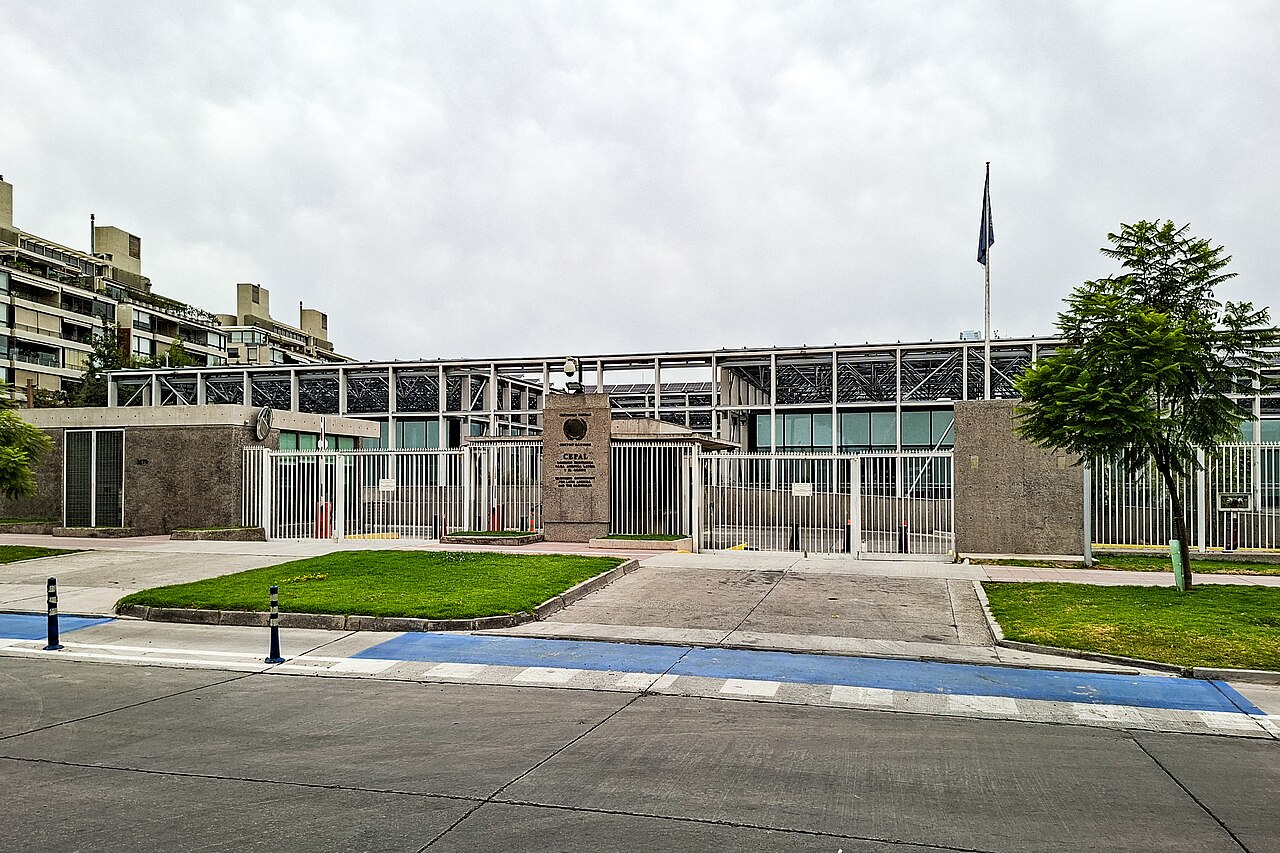
Santiago is also home to ECLAC, the UN Economic Commission for Latin America and the Caribbean. It is one of the UN’s five regional commissions and was created in 1948.
Hosting ECLAC gives Chile’s capital a permanent place in the region’s economic debates. It is a quieter part of the Chile role in Latin America than summits or security pacts.
Across the Pacific: APEC, the CPTPP and Asia
Chile looks across the Pacific as much as it looks at its own region. It joined APEC, the Asia-Pacific Economic Cooperation forum, in 1994 and served as host economy in 2004 and 2019.
The CPTPP, a 12-country Pacific trade pact, was signed in Santiago on 8 March 2018. It took effect for Chile on 21 February 2023, after four years before Congress.
Mexico and Peru are its other Latin American members. SUBREI says CPTPP countries account for 14.4% of world output and 595 million people, as of March 2026.
The bloc took 14.4% of Chile’s exports in 2025, according to SUBREI’s page on the pact. Chile has also belonged to DEPA, a small digital-trade pact, since 23 November 2021.
This Pacific outlook is a core part of the Chile role in Latin America. By value, Asian buyers matter far more to Chilean exporters than regional neighbours do.
Latin America still matters for smaller firms. SUBREI counted 6,066 Chilean companies exporting to the region in 2025, more than to any other area.
Old Disputes With Bolivia and Peru
Chile’s sharpest regional quarrel is with Bolivia, which lost its coastline in the War of the Pacific. Chile declared war on Peru and Bolivia on 5 April 1879, the World Court’s 2018 judgment recalls.
During that war Chile occupied Bolivia’s coastal territory. A peace treaty of 20 October 1904 recognised the land as Chilean “absolutely and in perpetuity”.
Bolivia suspended diplomatic relations on 17 March 1978, according to the same judgment. In 2013 it asked the International Court of Justice, the UN’s top court, to order Chile to negotiate sea access.
On 1 October 2018 the court ruled by 12 votes to 3 that Chile had no legal obligation to negotiate. It added that its ruling should not stop both sides from talking “in a spirit of good neighbourliness”.
Chile took Bolivia to the same court in 2016 over the waters of the Silala, a watercourse that crosses their border. The court gave its judgment on 1 December 2022.
Bolivia’s foreign minister wrote in September 2026 that a “diplomatic recomposition” with Chile was already under way, Bolivian broadcaster Unitel reported. He added that Bolivia does not renounce its maritime aspirations.
Bolivia’s president, Rodrigo Paz, said on 30 September 2026 that Kast would visit Bolivia in October, Unitel reported. Trade, security and integration are on the agenda.
With Peru, the fight was over the sea. On 27 January 2014 the court ruled that the boundary follows a line of latitude for 80 nautical miles.
Beyond that point it runs along an equidistance line. The two governments approved the exact coordinates on 25 March 2014, the court’s case record shows.
Kast, the Escudo de las Américas and the Turn Toward Washington
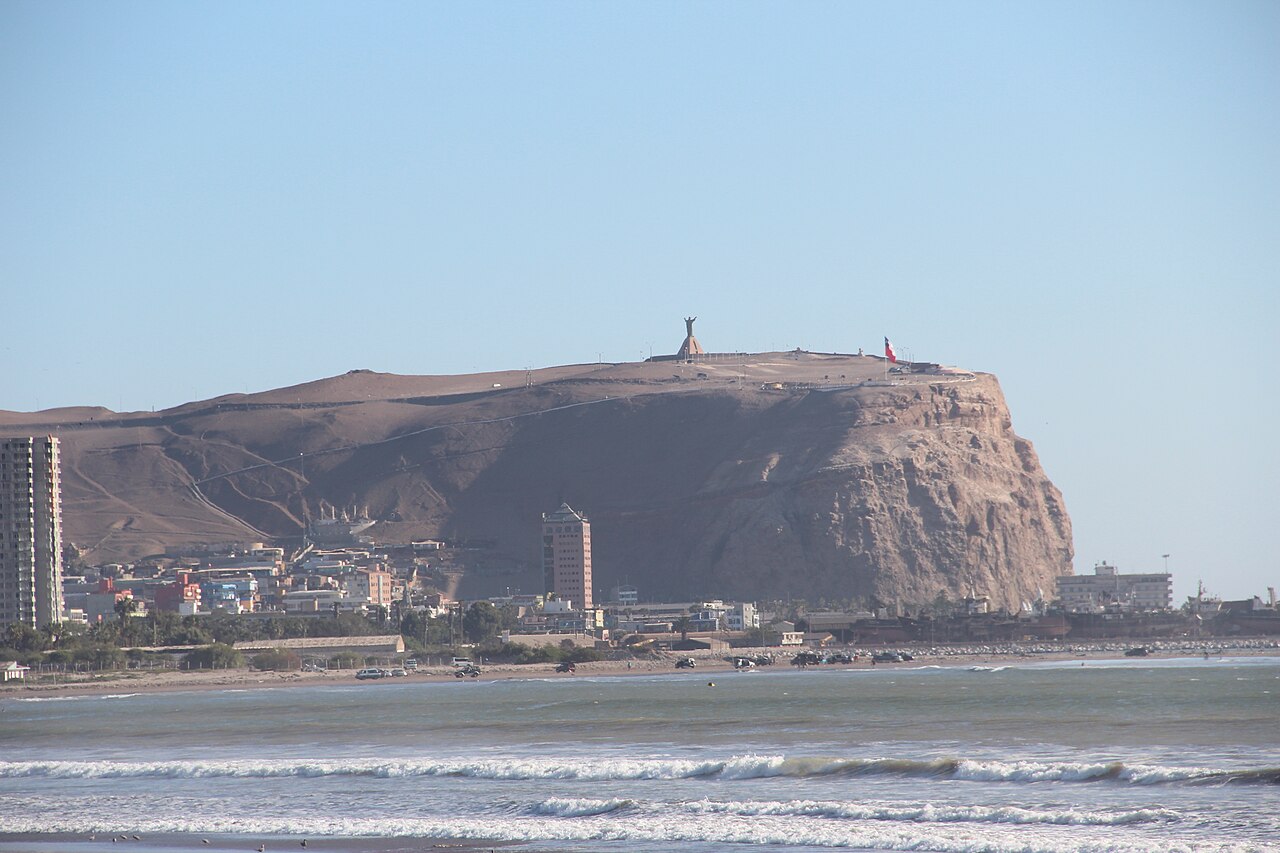
José Antonio Kast, a conservative, has been Chile’s president since 11 March 2026. On security, his government has moved Chile closer to the United States.
The Escudo de las Américas, or Shield of the Americas, is a US-led coalition against organised crime. President Donald Trump addressed a Shield summit at Trump National Doral, in Miami, on 7 March 2026.
The US Embassy in Santiago posted joint statements of Shield members in May, June and July 2026. Chile’s name was already on them.
On 22 September 2026 Chile’s foreign ministry announced that the country had decided to adhere. It called the Shield “a voluntary coordination framework” against transnational organised crime.
A joint statement published by the US State Department the same day lists 15 governments. They include the United States, Argentina, Bolivia, Colombia, Ecuador, Paraguay and Peru.
Brazil and Mexico, Latin America’s two largest economies, are not on that list. That gap reshapes the Chile role in Latin America, placing Chile in a US-led group without the region’s two giants.
The statement goes beyond crime. Its economic pillar mentions “safeguarding critical minerals supply chains” and “exploring investment screening mechanisms”.
Members also plan asset freezes and visa curbs on 24 named groups. They include Tren de Aragua, the Sinaloa Cartel and Primeiro Comando da Capital.
Foreign Minister Francisco Pérez Mackenna faced questions from deputies on 28 September 2026, Radio Universidad de Chile reported. “There was no signature, it is simply a declaration,” he said.
Five opposition deputies asked the Contraloría to rule that the Shield is a “concealed international treaty”, BioBioChile reported. The Contraloría is the watchdog that checks the legality of government acts.
Gabriel Boric, a left-wing former president, said joining “goes against the essential principles” of Chilean foreign policy. El Dínamo reported his remarks on 4 October 2026, and Boric Rejects Chile’s Escudo de las Américas Membership traces his objections.
Former centrist president Eduardo Frei backed the move, writing that it “strengthens the state’s response to organised crime and drug trafficking”. Chile’s Frei Backs US-Led Escudo de las Américas Pact sets out his case.
What It Means for US Readers
For US companies, Chile is a long-standing free-trade partner. The US-Chile free trade agreement has been in force since 1 January 2004, according to SUBREI.
The United States is Chile’s second-largest export market, taking 16.7% in 2025, behind China’s 35.4%. Copper is the main link between the two economies.
In 2025 the United States took 14.9% of Chile’s copper exports and China 50.6%, SUBREI data show. The Shield’s mineral clauses could pull that copper deeper into US-China rivalry.
For US investors, Chile is a steady supplier of copper and lithium. The Chile role in Latin America also tests how far Washington can draw in a country whose top customer is China.
The Shield’s visa measures target members, associates and supporters of the 24 listed groups, not ordinary travellers. Chile’s wider balancing act is covered in Chile Geopolitics Explained 2026.
More news and explainers on the country are collected on the Chile hub, alongside Chile Politics Explained, Who Holds Power in 2026.
What Is Not Known
It is not known whether Congress will force a vote on the Shield, or how the Contraloría will rule.
Officials have not said what concrete steps, if any, Chile will take on critical minerals or investment screening under the Shield.
Bolivia and Chile had not announced a date for restoring full diplomatic relations as of early October 2026. Bolivia’s sea claim remains a political issue in La Paz.
The economic figures here use the IMF’s April 2026 projections, which the fund updates regularly. Chile’s export earnings depend heavily on the copper price.
Frequently Asked Questions
What is Chile’s role in Latin America?
The Chile role in Latin America is that of a mid-sized, high-income trading nation. It has the region’s fifth-largest economy, the world’s largest copper output and close ties to Asian markets.
Is Chile a member of Mercosur?
No. Chile is an associate state of Mercosur, linked by a free-trade agreement known as ACE 35, in force since 1 October 1996. Its full members include Brazil and Argentina.
What is the Pacific Alliance?
It is a trade and integration bloc of Chile, Colombia, Mexico and Peru, formalised in Chile’s Antofagasta region on 6 June 2012. Its trade protocol has been in force since 1 May 2016.
What is the Escudo de las Américas and why did Chile join?
It is a US-led coalition against organised crime, which Chile formally joined on 22 September 2026. The government says it gives Chile’s police access to intelligence and training against cross-border gangs.
Why does Bolivia want sea access through Chile?
Bolivia lost its coastline to Chile in the War of the Pacific that began in 1879. In 2018 the World Court ruled that Chile has no legal obligation to negotiate sea access.
How big is Chile’s economy compared with its neighbours?
The IMF estimated Chile’s 2025 output at about US$355 billion, slightly above Peru’s and well below Argentina’s US$681 billion. Its output per head, about US$17,700, beats both.
Does Chile have a free trade agreement with the United States?
Yes. The US-Chile free trade agreement has been in force since 1 January 2004. The United States took 16.7% of Chile’s exports in 2025.
Sources: INE Chile, Censo 2024, accessed October 2026; IMF World Economic Outlook DataMapper, April 2026; SUBREI, Informe Comercial 2025, 2026; SUBREI, Acuerdos comerciales vigentes, October 2026; US Geological Survey, Copper, January 2026; US Geological Survey, Lithium, January 2026; US State Department, Joint Statement on Defending Hemispheric Sovereignty, 22 September 2026; Chile Foreign Ministry, Chile adhiere a Escudo de las Américas, 22 September 2026; International Court of Justice, Bolivia v. Chile judgment summary, 1 October 2018; International Court of Justice, Peru v. Chile, 27 January 2014; Unitel (Bolivia), Paz confirma visita de presidente de Chile, 30 September 2026.
This article was produced by The Rio Times’ automated newsroom system. How we use AI · Report an error · Editorial responsibility: Matthias Camenzind, Editor-in-Chief
Rotate for Best Experience
This report is optimized for landscape viewing. Rotate your phone for the full experience.
You've reached your free article limit
Subscribe to The Rio Times for unlimited access to our news, expat and nomad guides and market intelligence on Latin America and Africa.