Top Copper Miner Chile Posts Its Weakest Seven Months Since 2003
Key Facts
Chile is the source of about a quarter of the world’s mined copper, a metal whose price hit records this month. Seven months of 2026 data now show the smallest Chilean haul for that period since 2003.
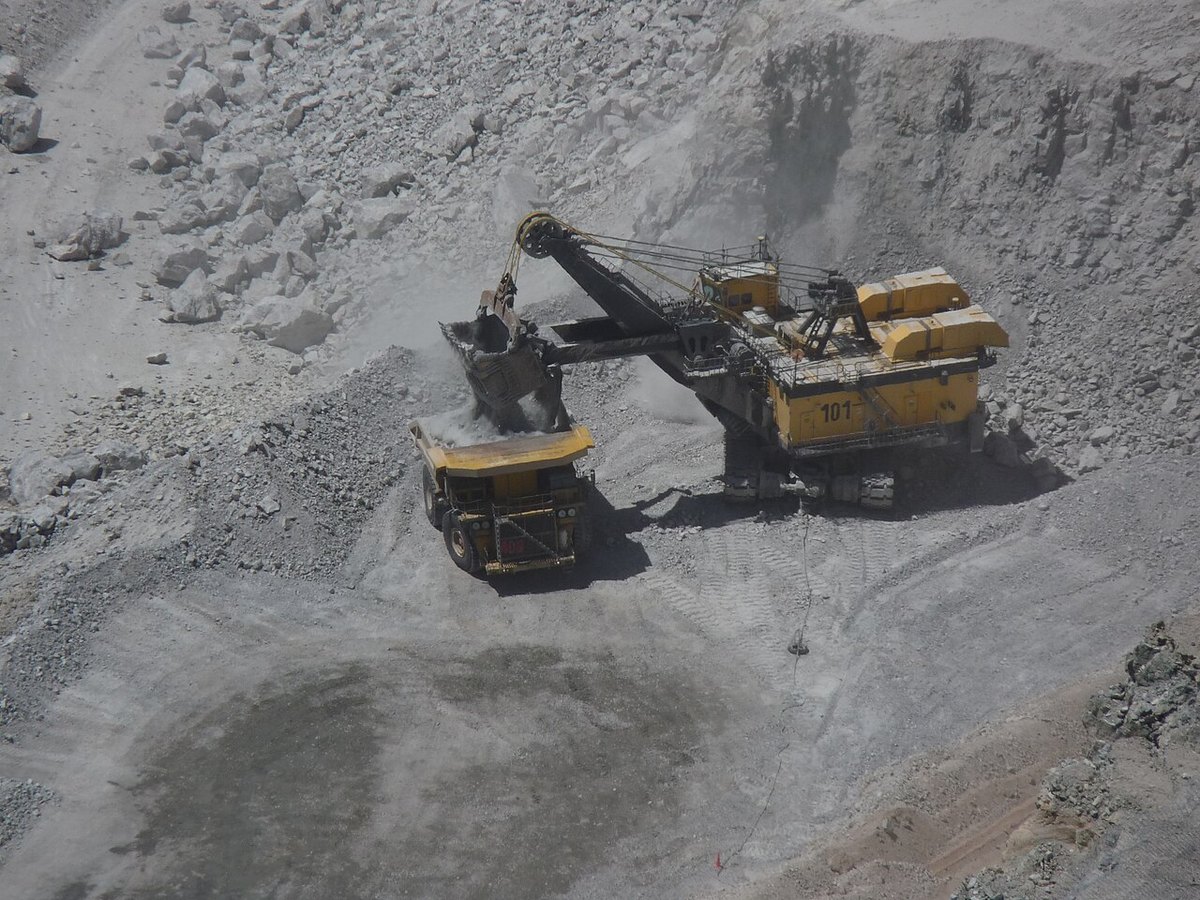
Chile produced roughly 2.9 million tonnes of copper between January and July 2026, about 7.1% below the same months of 2025. The figures come from INE, the national statistics institute, and Cochilco, the state copper commission, published on 31 August.
Why It Matters Beyond Chile
Chile mined an estimated 5.3 million of the world’s 23 million tonnes of copper in 2025, the US Geological Survey says. That is more than any other country, ahead of DR Congo on 3.2 million tonnes and Peru on 2.7 million.
Demand from power grids and data centres has stayed firm, so lost Chilean tonnes tighten the global market. The bank Morgan Stanley expects 2026 to bring the first drop in global mine supply since 2017.
At home, copper ores and refined copper made up about half of Chile’s 2025 exports. The state also owns Codelco, the national copper company, so its output and profits matter to public finances.
Mining Minister Daniel Mas serves under José Antonio Kast, a right-wing president in office since 11 March 2026. Mas has set a goal of returning national output to about 6 million tonnes a year.
What the Seven-Month Data Show
INE reported 403,424 tonnes of mined copper in July 2026. That was 9.4% below the 445,322 tonnes recorded in July 2025.
The agency blamed weather in the north and maintenance at large operations. Its mining production index fell 7.2% year on year in the same month.
Adding July to the first half leaves about 2.9 million tonnes for seven months. The legal news site Actualidad Juridica put the shortfall at about 223,000 tonnes against 2025.
It described the result as the lowest January-July total since 2003. It attributes the underlying data to INE and Cochilco rather than to a private house.
How the Official Forecast Still Adds Up
Cochilco published its revised outlook on 11 August 2026. It expects 5.27 million tonnes for the full year, a fall of 2.6%.
That implies 2025 output of roughly 5.41 million tonnes. Seven months at 2.9 million tonnes leaves about 2.37 million for August to December.
The same five months of 2025 yielded roughly 2.29 million tonnes. So the official number requires a gain of about 3% in the closing stretch.
It would follow declines in six of the seven months, June being the exception. Cochilco also sees 5.55 million tonnes in 2027 as new tonnes arrive.
Where the Tonnes Went Missing
Cochilco’s mine-level figures, reported by CNN Chile, name the main gaps. El Teniente, Codelco’s giant underground mine, produced 148,900 tonnes in seven months against 202,600 a year earlier.
That is a drop of 26.5%, the steepest among the large divisions. Escondida, the mine controlled by the mining group BHP, fell 9.3% to 721,400 tonnes.
Quebrada Blanca, run by Canada’s Teck, was the clear gainer, up 16.8% to 132,000 tonnes. Collahuasi was broadly flat and Los Pelambres slipped 3.7%.
In July alone, Escondida fell 22.1% to 89,400 tonnes. Collahuasi rose 12.3% that month to 38,400 tonnes.
Codelco’s Own Position
Codelco produced 564,000 tonnes in the first half of 2026. That was 11% down on the 634,000 tonnes of a year earlier.
Pre-tax profit still rose to US$1.97 billion from US$429 million, the news agency Reuters reported. The realised price climbed to 653.2 cents a pound from 461.7 cents.
Direct cash costs rose 7% to 231.6 cents a pound. Chairman Bernardo Fontaine said the 1.33-1.36 million tonne target looked difficult to achieve.
On 16 September, Reuters reported the company’s restructuring plan may slip to year-end. Four sources told the agency job cuts could reach 5% to 20% of about 77,000 staff.
Structural Causes and One-Off Ones
Two very different problems are running at the same time. The structural one is ore grade, the share of copper in the rock.
BHP reported Escondida concentrator feed grade at 0.90%, down from 1.02%. It guided fiscal 2027 group copper output to 1.65-1.80 million tonnes, against nearly 1.95 million the prior year.
The one-off causes are weather and the El Teniente accident of July 2025. Storms in July and August 2026 halted operations and disrupted ports.
How the El Teniente Setback Works
El Teniente is an underground block-cave mine over a century old. Ore is undercut and allowed to break under its own weight.
That method makes the rock mass seismically active as voids grow. Codelco suspended the Andes Norte expansion on 4 August 2026 for two years.
The trade publication Fastmarkets reported the decision followed geological studies flagging seismic risk. El Teniente produced 310,100 tonnes in 2025, down 13% on the prior year.
The same month, ministers let Codelco retain US$2.422 billion of 2025 profits. Mas said the aim was to safeguard the company’s credit rating.
What the Price Is Doing
Copper has been strong all year despite the volume losses. The London Metal Exchange, the main global market, showed a three-month closing price of US$14,083.50 a tonne.
That quote was day-delayed and dated to 16 September 2026. The same contract closed at US$14,708 on 8 September, after an all-time high the same day.
December copper on Comex, the New York futures market, hit a record US$6.8730 a pound that week. The metal was up roughly 22% on the year at that point.
What It Means for the Budget and the Peso
Trade data put total exports above US$107 billion in 2025, with mining the largest single block. The finance ministry’s expert committee set the 2027 budget’s reference copper price at US$5.37 a pound.
That is up from US$4.38 a pound used for the 2026 budget. The Banco Central de Chile’s copper indicator read US$6.36 a pound on 17 September.
Volumes matter because a reference price cannot mine tonnes that do not exist. Central bank data showed August copper exports at US$4.62 billion, 3.2% below August 2025, Bloomberg reported.
The central bank’s last published dolar observado, the official reference rate, was 957.53 pesos on 15 September 2026. At that rate a tonne of copper at US$14,083.50 is about 13.5 million pesos.
The peso stood near 926 to the dollar on 10 September, so it has weakened even as copper held near records. Lower export volumes are one plausible reason, though the bank has not said so.
Chile’s July Imacec, the monthly economic activity index, fell 1.5% year on year. Mining within that index was down 9.3%.
What Officials and the Industry Say
Mas points to framework law 21,770, which is meant to cut permit times. The government says simplifying mining permits could unblock about US$24 billion of investment.
Jorge Riesco, president of the industry association Sonami, was more bullish in January 2026. He projected national output of 5.5 to 5.7 million tonnes for the year.
Cochilco’s own August revision put the figure at 5.27 million tonnes. Neither body has publicly revised its position since the July data landed.
What It Means If You Live or Invest in Chile
Exporters and mining suppliers face lower volumes but higher unit revenue. Contractors are the exposed group if Codelco’s restructuring cuts deep.
Codelco says contractors account for about 80% of its jobs. Chile’s unemployment rate was 9.5% in July 2026.
For residents paid in pesos, a weaker currency raises imported costs. For dollar earners, the same move cuts the local cost of living.
Investors should watch the August and September output prints closely. Those two months decide whether the 5.27 million tonne forecast holds.
What Is Not Yet Known
Cochilco has not published a further revision since 11 August. August output figures were not available at the time of writing.
Codelco has not given a firm number for job reductions, saying it was too early to speculate. No analyst house has been identified publicly forecasting a 7% full-year fall.
The 7.1% figure describes the seven months already recorded, not the year. Whether the peso keeps weakening against a record copper price is untested.
More: Chile news in English, every day from The Rio Times.
Frequently Asked Questions
Why does this matter?
Chile mines about a quarter of the world’s copper, so its losses tighten global supply. Copper is also about half of Chile’s exports.
Has Chile’s copper output really fallen 7%?
Yes, for January to July 2026 against the same months of 2025. The full-year forecast from Cochilco is a smaller fall of 2.6%.
Why is the copper price high if Chile is producing less?
Lower supply from a quarter of the world’s mines tightens the market. Demand from grids and data centres has stayed firm.
Is El Teniente back to normal?
No, its seven-month output was 26.5% below last year. Codelco has also paused the Andes Norte expansion for two years.
Sources: INE, industrial production release for July 2026, Reuters via Kitco, Chile’s July copper output down 9.4%, Mining.com, Cochilco sees 2026 output at 5.27 million tonnes, Actualidad Juridica, January-July output lowest since 2003, CNN Chile, Cochilco mine-level figures to July 2026, Reuters via Kitco, Codelco first-half results, Reuters via Mining.com, Codelco restructuring may slip to year-end, London Metal Exchange, LME Copper price page, US Geological Survey, Mineral Commodity Summaries 2026, copper, Senate of Chile, Kast sworn in as president, Forbes Centroamerica, Kast takes office
This article was produced by The Rio Times’ automated newsroom system. How we use AI · Report an error · Editorial responsibility: Matthias Camenzind, Editor-in-Chief
In depth