
Brazil: Senate Fiscal Plan
Brazil’s Senate is due to vote on Tuesday 17 November 2026 on four disputed parts of the government’s fiscal adjustment bill, the Senate said on 16 November 2026. The package aims to save R$45.1 billion to R$56.1 billion (about US$7.8 billion to US$9.7 billion) in 2027, at US$1 = R$5.78 (RT, a market-data provider, 17 November 2026).
The result is not known yet. Whatever senators decide, the bill then goes to the Chamber of Deputies, the lower house of Congress.
The Senate, Brazil’s upper house with 81 senators, approved the main text on 12 November 2026, the Senate said that day. The 2027 target is a primary surplus (revenue minus spending before debt interest) of 0.5% of GDP, and the bill would let the government block more spending to aim for it, the Senate said on 12 November 2026.
Key Facts
- Vote. Senators decide four separate requests on Tuesday 17 November 2026; the result is not yet known.
- Bill. PLP 299/2026, a complementary bill needing an absolute majority, passed 45 to 31.
- Target. The government estimates the package improves the 2027 budget balance by US$7.8 billion to US$9.7 billion.
- Next. The bill then goes to the Chamber of Deputies, the lower house; no date is set.
- Power Index. Brazil ranks 1st of 14 in The Rio Times Latin America Power Index, with 74.2 points (November 2026 edition).
Four small votes could decide who pays for Brazil’s budget repair: companies, states, cities or the federal budget.
The Big Picture
Senator Jaques Wagner of the Workers’ Party (the party of President Lula) filed the bill, and Senator Eduardo Braga, the rapporteur, wrote the replacement text, the Senate said on 12 November 2026. Braga accepted 21 of 74 amendments in whole or part.
The Senate approved the main text 45 votes to 31 on Thursday 12 November 2026. Senate President Davi Alcolumbre then postponed four separate votes to give senators time to weigh positions.
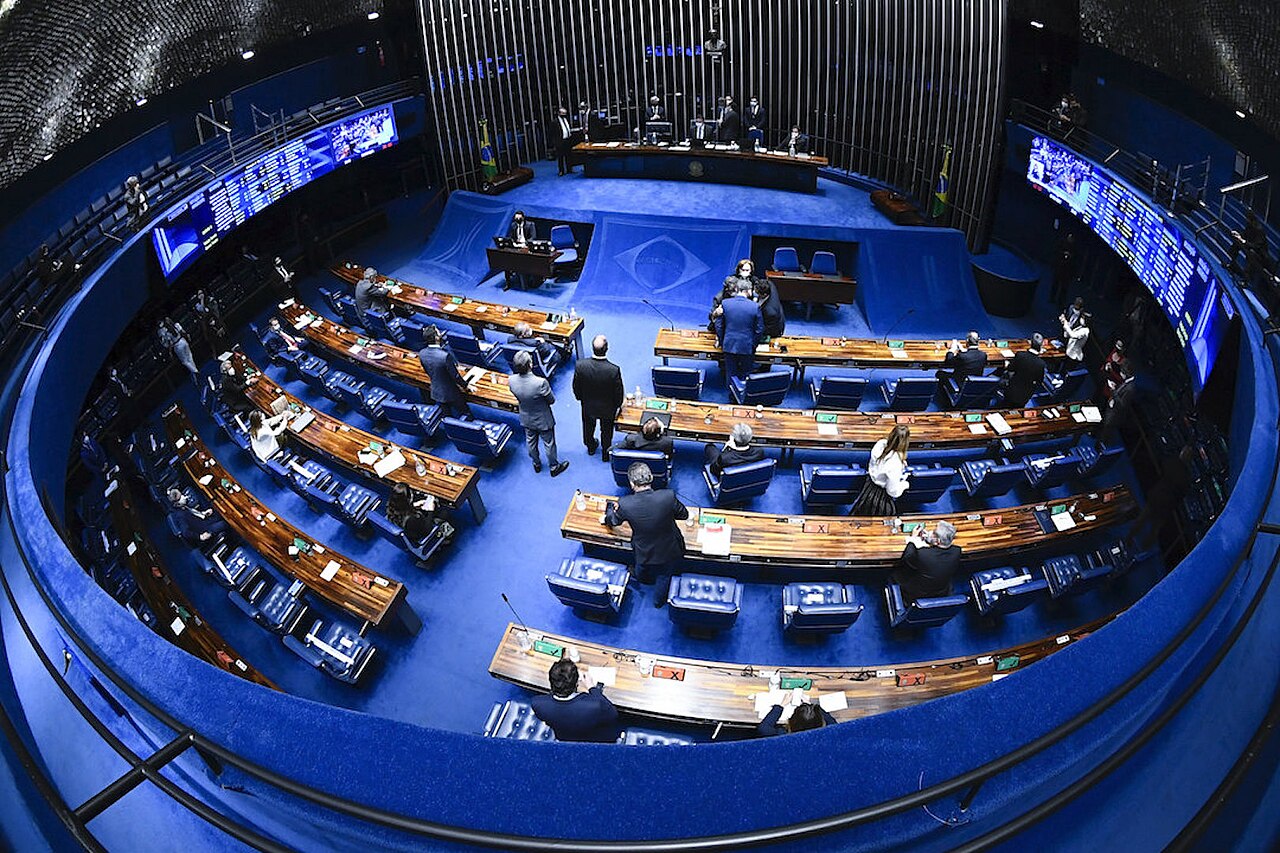
What the Pending Votes Cover
A destaque is a request to vote part of a bill separately. Four opposition destaques are pending, and they include the Lei Kandir transfers (payments that offset states’ export tax exemptions), a cap on social-security compensation and a restriction on using tax credits, the Senate said on 13 and 16 November 2026.
The first covers the Lei Kandir payments. Annual transfers fall from R$4 billion (about US$0.7 billion) to R$1 billion (about US$0.17 billion) in 2027 to 2030, the Senate said on 12 November 2026.
The difference, R$12 billion (about US$2.1 billion), is repaid by 2037 in equal yearly instalments, the Senate said on 12 November 2026. The first instalment falls in the year after each reduction, so each cut is repaid from the following year.
The second covers a cap on compensation for social-security costs, and the third covers a restriction on using tax credits to pay federal taxes. The package also cuts many tax benefits and allows new limits on offsetting taxes, the Senate said on 12 November 2026.
Why It Matters
The government estimates the 2027 primary balance improves by R$45.1 billion to R$56.1 billion (about US$7.8 billion to US$9.7 billion), the Senate said on 12 November 2026. The target for 2027 is a surplus of 0.5% of GDP, with results between 0.25% and 0.75% accepted, the Senate said on 12 November 2026.
In Plain English
Destaque. A request to vote one passage of a bill separately, which can remove or change it.
Primary balance. Government revenue minus spending before debt interest, so a higher balance means a smaller gap.
Golden rule. A rule limiting borrowing to pay current spending, so debt funds investment.
What to Watch
The Senate floor vote on the four destaques is set for Tuesday 17 November 2026, the Senate said on 16 November 2026. After that the bill goes to the Chamber of Deputies, the lower house of Congress, and the date is not confirmed.
The Strongest Counter-View
In November 2026, a manifesto signed by 119 organisations, including the São Paulo state industry federation (Fiesp) and the national agriculture confederation (CNA), asked the Senate to remove the limit on offsetting taxes with credits. The limit belongs to the bill’s new restrictions on offsetting taxes with credits, which the Senate described on 12 November 2026.
What Is Not Known
The outcome of the four votes is not known, and neither is the Chamber of Deputies timetable. Braga estimates a R$100 billion (about US$17 billion) gain in the room under the golden rule (the cap on borrowing to pay current spending), the Senate said on 12 November 2026, and the text does not say how.
What It Means for You
For US readers with Brazilian exposure, the vote shows whether the 2027 budget plan holds together. Earlier Rio Times reports: Brazil Senate Backs 2027 Budget Savings Plan, Brazil Senate Resumes Vote on US$9.7B Plan and our Brazil section.
Frequently Asked Questions
What is PLP 299/2026?
It is the Brazilian government’s fiscal adjustment bill, a complementary bill that needs an absolute majority. The Senate approved its main text 45 votes to 31 on 12 November 2026.
When does the Senate vote on the remaining items?
The floor vote on the four destaques is set for Tuesday 17 November 2026, the Senate said on 16 November 2026. The result is not known at the time of writing.
What happens after the Senate vote?
The bill goes to the Chamber of Deputies, the lower house of Congress. The date of that vote is not confirmed.
Sources
Senate, 12 November 2026 · Senate, 16 November 2026 · Senate Budget Consultancy, briefing note on the approved text of PLP 299/2026 (November 2026)
This article was produced by The Rio Times’ automated AI newsroom. Editorial responsibility: Matthias Camenzind, Publisher and Editor-in-Chief. The Rio Times also runs Ask Rio Times, which answers from 100,000+ of our own articles, the daily Latin America Power Map, and prediction-market odds on elections and markets.. How we use AI · Report an error
Brazil runoff, Sunday, October 25: Brazil runoff start time and results schedule. Latest: Brazil runoff polls, Flávio 51%, Lula 49%.