
BRAZIL ECONOMY · FISCAL POLICY
Key Facts
- The vote Brazil’s Senate passed the main text of President Lula’s budget-savings bill by 45 votes to 31 on Thursday.
- The size The government counts R$45 billion to R$56 billion (US$8.0 billion to US$9.9 billion) in 2027 savings.
- What is left Four amendment votes come Tuesday 17 November, then the bill goes to the lower house.
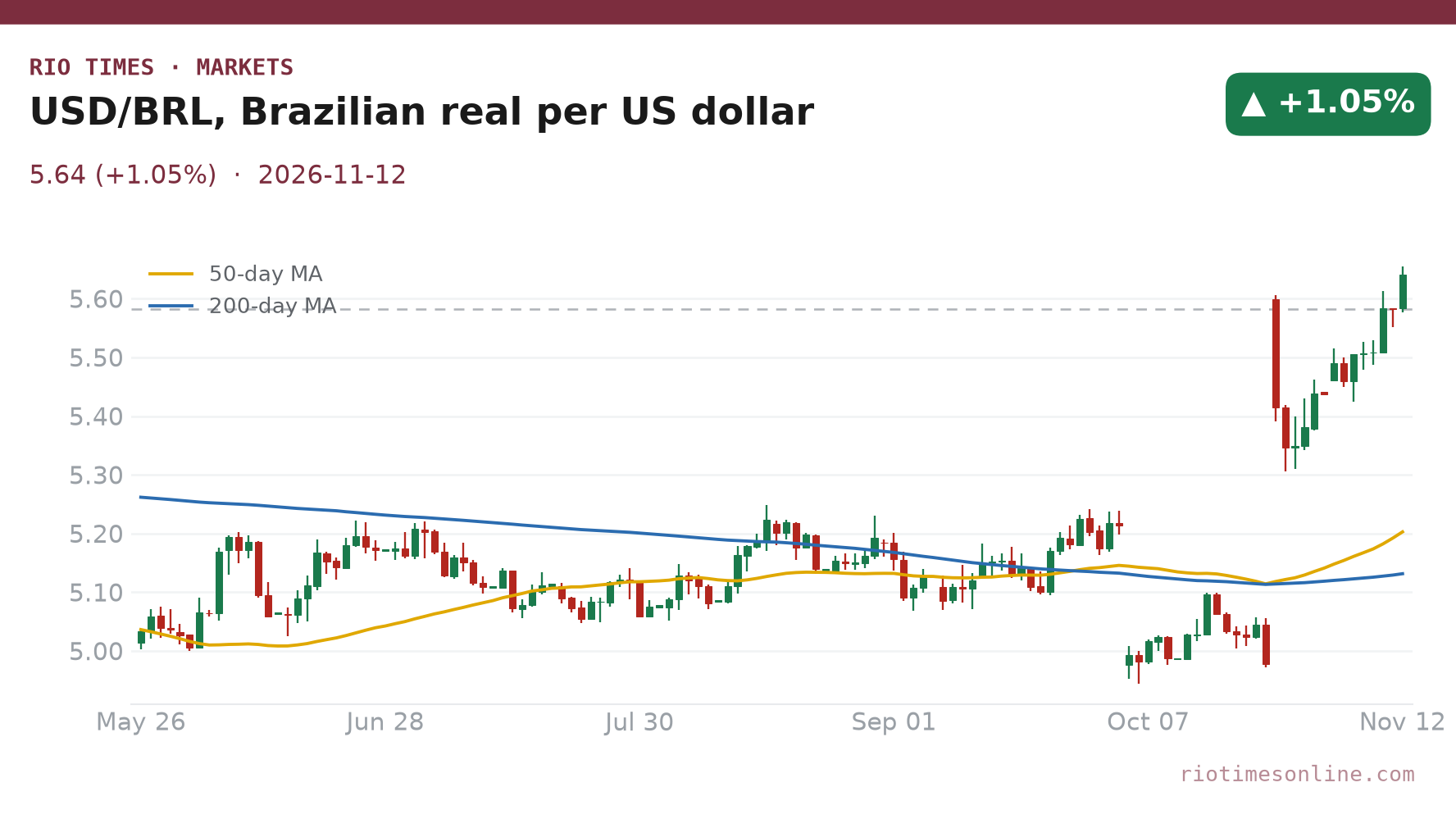
- The market The real had already fallen about 1% to R$5.64 per dollar before the vote.
- Prediction markets Traders on Polymarket, a prediction market, put a December hold on Brazil’s Selic interest rate at 92% (7:50 p.m. ET, 12 November).
Brazil’s government cleared its biggest hurdle yet on a budget-savings bill on Thursday evening, and it did so with four votes to spare. The Senate passed the main text of the bill, known as PLP 299/2026 (a complementary bill), by 45 votes to 31, and a complementary law (one that needs an absolute majority) needs 41 of 81.
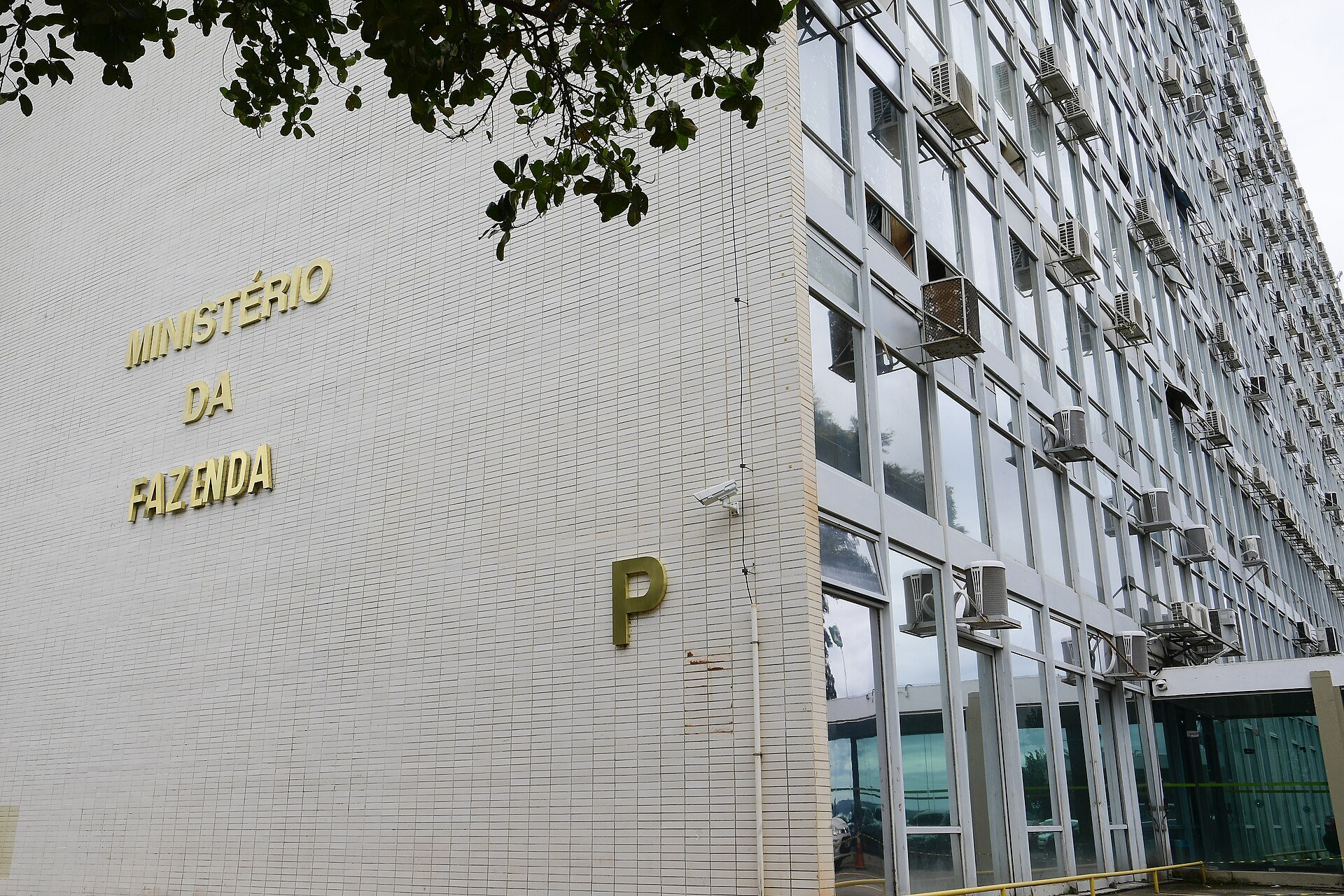
The government of President Luiz Inácio Lula da Silva says the measures would improve its primary balance (revenue minus spending, before interest on debt) by R$45.1 billion to R$56.1 billion in 2027, or US$8.0 billion to US$9.9 billion at 5.64 reais per dollar. Senator Eduardo Braga of the MDB party, the lawmaker who rewrote the bill as its rapporteur, said it sets out the state’s real capacity to pay and is meant to let Brazil’s economy run next year’s budget.
What Does the Bill Do?
It tightens spending first. From 2027, in years when the government freezes extra spending, growth above inflation would be capped at 2% instead of 2.5% under the current fiscal framework, the 2023 rule that limits budget growth.
It also lets the government freeze more money to aim for the middle of its budget target, even when it is already inside the allowed range. For 2027 the target is a primary surplus of 0.5% of gross domestic product (GDP), and results from 0.25% to 0.75% are accepted.
Who Pays for the Savings?
On the revenue side, the bill trims tax breaks, credits and special regimes, and allows new limits on how companies offset taxes with credits owed to them by the tax agency. Incentives for the information-technology and semiconductor industries are spared, as is vehicle-purchase relief for people with disabilities or autism.
States also get less help. Payments under the Kandir Law, which compensates states for export tax breaks, would fall from R$4 billion to R$1 billion a year from 2027 to 2030, or from US$709 million to US$177 million.
Why Are Investors Not Cheering?
Many economists and market analysts see the package as too small to fix the deeper problem, which is high public debt that keeps interest rates up and holds back investment. The bill lets the government freeze more spending but does not force it to.
What Does It Mean for US Readers?
Budget credibility moves the real and Brazilian bond yields, and both matter to dollar investors. On Thursday the real weakened about 1% to R$5.64 per dollar, and the Ibovespa, Brazil’s main stock index, slipped 0.4% to 171,324, according to RT market data.
The EWZ, a New York-traded fund that tracks Brazilian stocks, fell 2.0% to US$31.78. Those moves came before the Senate vote.
The dollar has gained 2.4% against the real since Monday 9 November, when it cost R$5.51. A close above R$5.65 before the Tuesday 17 November votes would extend that run, while a return toward R$5.50 would suggest investors are calmer.
In RT’s reading, the likely winner of a final pass is the federal Treasury, which gains room to freeze spending and collect more revenue. The likely losers are companies that lean on tax breaks and credits, so holders of Brazilian ADRs (US-traded receipts) such as oil company Petrobras (PBR) and bank Itaú (ITUB) will watch how those firms fare.
What Prediction Markets Say
On Polymarket, a real-money prediction market, traders put the odds that Brazil’s central bank leaves its Selic benchmark interest rate unchanged at its December meeting at 92%. A 25-basis-point cut (0.25 percentage points) is priced at 7.1%, and about US$73,000 has been traded across all December rate outcomes, as of 7:50 p.m. ET on 12 November.
Why we show this: prediction markets turn real-money bets into a live probability that moves within minutes of the news, which is why investors, campaigns and newsrooms in the United States now follow them closely. We show them next to polls and official results, never instead of them.
What Is Not Known
It is not known whether the four pending amendment votes will change the bill, or whether the Chamber of Deputies, the lower house, will accept it as written. The Senate’s president, Davi Alcolumbre, left those votes for Tuesday 17 November, and the bill then moves to the Chamber.
A clean finish on Tuesday would confirm the savings, while amendments that dilute the tax-credit limits would shrink them. The central bank’s weekly Focus survey of forecasters, due Monday 16 November, will show whether expectations for inflation and interest rates move.
Background: Brazil Sends Senate a Budget Savings Bill and Brazil Senate Fast-Tracks 2027 Savings Plan.
Frequently Asked Questions
What did Brazil’s Senate approve on Thursday?
It approved the main text of the government’s fiscal-adjustment bill, PLP 299/2026, by 45 votes to 31. Four amendment votes remain for Tuesday 17 November, and then the bill goes to the Chamber of Deputies.
How much would the bill save in 2027?
The government estimates an improvement of R$45.1 billion to R$56.1 billion (about US$8.0 billion to US$9.9 billion) in the primary balance. The bill lets the government freeze more spending but does not force it to.
Sources: Brazil’s Federal Senate (PLP 299/2026, plenary session of 12 November 2026); RT market data (USD/BRL, Ibovespa and EWZ closes, 12 November 2026); Polymarket (December Selic decision market, 12 November 2026).
This article was produced by The Rio Times’ automated AI newsroom. Editorial responsibility: Matthias Camenzind, Publisher and Editor-in-Chief. The Rio Times also runs Ask Rio Times, which answers from 100,000+ of our own articles, the daily Latin America Power Map, and prediction-market odds on elections and markets.. How we use AI · Report an error
Brazil runoff, Sunday, October 25: Brazil runoff date. Latest: Brazil runoff polls, Flávio 51%, Lula 49%.