Brazil Population 2026: 214 Million and Peaking in 2041
Rio Times · Guides
Key Facts
—People today About 214 million. The IBGE, Brazil’s national statistics agency, projects 214.2 million for 2026; the United Nations puts it at 213.6 million.
—The peak Brazil stops growing in 2041, at 220,425,299 people, according to the IBGE.
—After that The IBGE sees 199.2 million by 2070. The UN, which projects further out, sees about 163 million by 2100.
—Why Brazilian women now have 1.57 children on average. Anything below 2.1 means a population that eventually shrinks.
—Getting older The median Brazilian was 28 in 2000 and 35.5 in 2023. By 2070 the IBGE expects 48.4.
—Where they live 87.4% of Brazilians live in cities, up from 84.4% in 2010.
Brazil is still adding people, but not for much longer. The country’s own statisticians put the turning point at 2041, when the population tops out at just over 220 million and starts to fall.
What happens between now and then – fewer babies, longer lives, and a median age climbing towards 50 – will reshape everything from pension bills to which shops survive on which street.
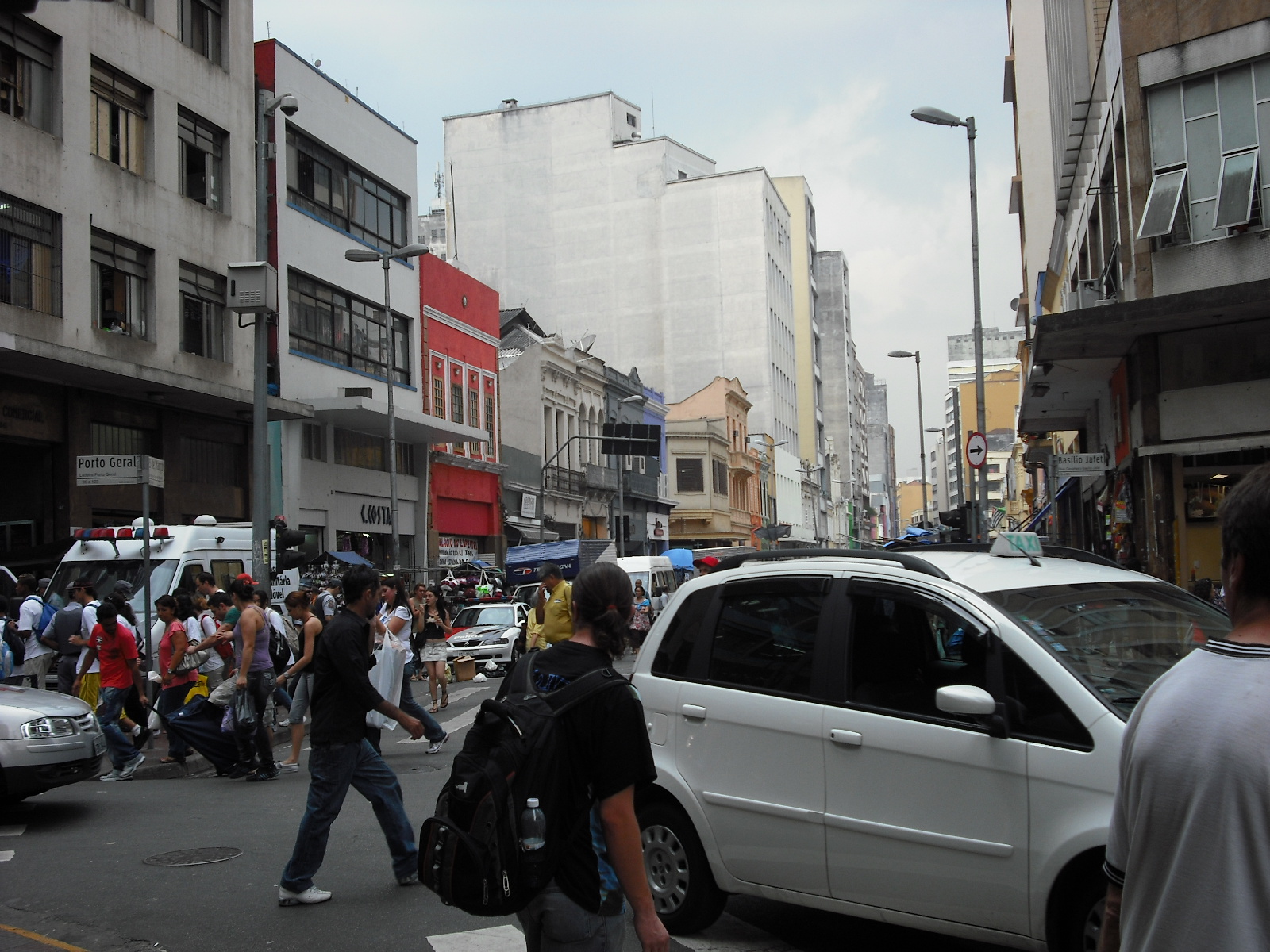
How many people live in Brazil right now
Two different numbers are both correct, and confusing them is the most common mistake foreigners make with Brazilian data.
The 2022 Census reached 195.1 million people directly. The published census figure of 203,080,756 already includes an adjustment for households that could not be interviewed.
Even that is short. When the IBGE, Brazil’s statistics agency, rebuilt its projections in 2024, it reconciled the census against birth, death and migration registers and against a follow-up survey that measures how many people a census misses. On that basis the population in 2022 was 210.9 million, not 203.1 million. It reaches 213.4 million by mid-2025 and 214.2 million in 2026. Those are the numbers Brazilian government bodies use for everything from municipal funding to pension planning.
The United Nations, working from its own model, lands in almost exactly the same place: 213.6 million for 2026. So the two big independent sources agree to within about six-tenths of a million people, which for a country this size is a rounding error.
The practical rule: say 203 million when you mean “people the census counted in 2022”. Say 214 million when you mean “people living in Brazil today”.
Why Brazil stops growing in 2041
The IBGE’s projection is unusually specific. Brazil peaks at 220,425,299 people in 2041, and from 2042 onwards there are fewer Brazilians every year.
That is not a forecast about migration or disaster. It is arithmetic.
A population keeps growing as long as each generation is at least as large as the one before it, which needs roughly 2.1 children per woman. Brazil is well under that and falling fast.
In 2000 the average Brazilian woman had 2.32 children. By 2023 it was 1.57. The IBGE expects 1.44 by 2040. Births have already collapsed in absolute terms: 3.6 million babies a year in 2000, 2.6 million in 2022, and a projected 1.5 million by 2070.
For the next fifteen years the population still creeps upward, because people are living longer and because the large generations born in the 1980s and 1990s are still alive. Once those generations start dying in numbers, the arithmetic flips.
What Brazil looks like after the peak
The IBGE projects out to 2070 and stops there. Its number for that year is 199,228,708 – roughly 21 million fewer Brazilians than at the peak. In the same IBGE series, that is almost exactly the population Brazil had in 2013 – 199,226,702 people, a difference of about two thousand.
For anything beyond 2070 there is no Brazilian official figure at all. The United Nations does go further, and its medium projection puts Brazil at about 163 million in 2100. That number is the UN’s alone. If you see it quoted as an IBGE forecast, whoever wrote that has not read the source.
Both institutions agree on the shape of the curve: a plateau in the 2040s, a gentle decline through the 2050s, and a steeper one after that. Where they differ is only in how far out they are willing to guess.
The real story is age, not size
A country of 214 million falling to 199 million over fifty years is not, by itself, dramatic. What happens to the age structure is.
The median Brazilian was 28.3 years old in 2000 and 35.5 in 2023. The IBGE expects 48.4 by 2070. In two generations Brazil goes from a young country to an older one than most of Europe is today.
Life expectancy is the happy half of that story: 71.1 years in 2000, 76.4 in 2023, and a projected 83.9 by 2070. Brazilians are living longer, which is exactly what a country wants.
But longer lives plus fewer births means a shrinking pool of working-age people supporting a growing pool of retired ones.
That is the pressure point. Brazil’s pension system is generous for a country at its income level, and was already reformed once, in 2019, precisely because the sums did not work.
That reform raised the minimum retirement age to 65 for men and 62 for women. It bought time; it did not change the demographics.
Where Brazilians actually live
Brazil is one of the most urbanised large countries on earth. At the 2022 Census 87.4% of the population lived in cities, up from 84.4% in 2010. The image of a rural, agricultural Brazil is a century out of date, even though farming still earns most of the money Brazil makes from selling abroad.
Growth is uneven inside the country. More than 3,000 of Brazil’s 5,570 municipalities had fewer people in 2022 than in 2010.
The big coastal metropolitan regions and the cities of the Northeast keep pulling people in, while small interior towns empty out – young people leave, the old stay, and the school closes.
That pattern is well established in the census data and it will sharpen as the national total starts to fall.
For anyone deciding where to open a shop, buy a flat or place a distribution centre, the national number matters far less than which municipality is still gaining people. Those two lines are moving in opposite directions in a lot of Brazil.
A country that changed its religion
The 2022 Census asked about religion, and the IBGE published the answers in June 2025. They show how fast the country’s religious map has changed in a single generation.
Catholics made up 56.7% of Brazilians, down from 65.1% in 2010. Evangelicals reached 26.9%, up from 21.6%. And 9.3% – about 16.4 million people – reported no religion at all.
Brazil is still the largest Catholic country in the world by headcount, but it is a much less Catholic one than it was a generation ago. The shift has visible consequences in politics, in broadcasting, in retail, and in which neighbourhood associations actually get things done.
The people the statistics struggle to count
Brazil has no single authoritative count of people living on the street. The best available proxy is CadÚnico, the federal welfare register, and the number recorded there reached 365,822 in 2025, up almost 12% on the 327,925 registered a year earlier.
Researchers who work on the data agree it is an undercount, because registering requires paperwork and a fixed point of contact that many people on the street do not have. Treat it as a floor, not a total.
Brazil is running out of workers
For most of the past forty years Brazil enjoyed what economists call a demographic dividend: a large share of the population was of working age, and relatively few people were either very young or very old. That is the single best condition a developing country can have, and it is the backdrop to everything Brazil achieved economically between the 1990s and the 2010s.
That window is closing. The share of Brazilians of working age peaked around 2017 and has been slipping ever since.
The absolute number is still rising – the IBGE expects the 15-to-64 group to keep growing until 2035, when it tops out at 149.6 million – but from 2036 it starts to fall, and by 2040 Brazil is losing roughly half a million working-age people a year.
Countries that hit this point rich – Japan, Italy, South Korea – can afford it, awkwardly. Countries that hit it before they are rich have a harder time, because the pension bill arrives before the tax base is big enough to pay it.
Brazil is in the second group, which is why every finance minister for the next twenty years will be arguing about the same thing.
The 2019 pension reform raised minimum retirement ages and lengthened contribution requirements. It was politically brutal.
Nothing in the projections suggests it will be the last such reform.
How to read Brazilian population numbers without getting caught
Four habits will save you from most of the mistakes that circulate in English-language coverage of Brazil.
Always ask which series. Census count, IBGE estimate, IBGE projection and UN projection are four different things with four different numbers. None of them is wrong; they answer different questions.
Always ask which year. Brazilian figures are revised. The IBGE republished its whole projection series in 2024 after the census results came in, and numbers quoted from before that revision no longer match anything official.
Never take a 2100 figure from a Brazilian source. The IBGE stops at 2070. Anything further out is the UN or a private model, and should be labelled as such.
Check the municipality, not the country. National totals hide almost everything that matters commercially. Brazil will shrink while dozens of its cities keep growing.
What this means if you are moving to Brazil or selling into it
Three practical conclusions follow from the numbers above.
The labour market is tightening, slowly but permanently. Brazil built its reputation on abundant, cheap workers. On the IBGE’s own numbers, that reputation has about another ten years to run. Companies planning a decade ahead should expect to pay more for skilled staff, not less.
The growth market is older customers. Health services, private pensions, insurance, accessible housing and anything that saves labour all have a growing pool of customers. Products aimed at large young families have a shrinking one.
Location beats the national average. A shrinking country still contains fast-growing cities. Ask which municipality, not which country.
More: Brazil news in English, every day from The Rio Times.
Frequently Asked Questions
How many people live in Brazil in 2026?
About 214 million. The IBGE’s projection for 2026 is 214.2 million and the United Nations puts it at 213.6 million.
The 2022 Census counted 203.1 million people directly, but that figure is a head count that does not correct for the people every census misses.
When will Brazil’s population start to fall?
In 2042. The IBGE projects the peak at 220,425,299 people in 2041, followed by decline.
By 2070 it expects 199.2 million. The United Nations, projecting further out, sees roughly 163 million by 2100.
Why is Brazil’s population going to shrink?
Because Brazilian women now have 1.57 children on average, well below the 2.1 needed to keep a population stable, and the figure is still falling. Longer life expectancy delays the decline but does not prevent it.
Sources: IBGE – Population projections, revision 2024, IBGE – Projeção da População, UN World Population Prospects 2024, IBGE – 2022 Census results, IBGE 2022 Census – religion results
Connected Coverage
This article was produced by The Rio Times’ automated newsroom system. How we use AI · Report an error
In depth
Read More from The Rio Times