Key Facts
- Softer US inflation set the tone: core PCE prices rose 3.0% on the year in August, below the 3.3% forecast, and Brazilian stocks rallied on the last day of the quarter
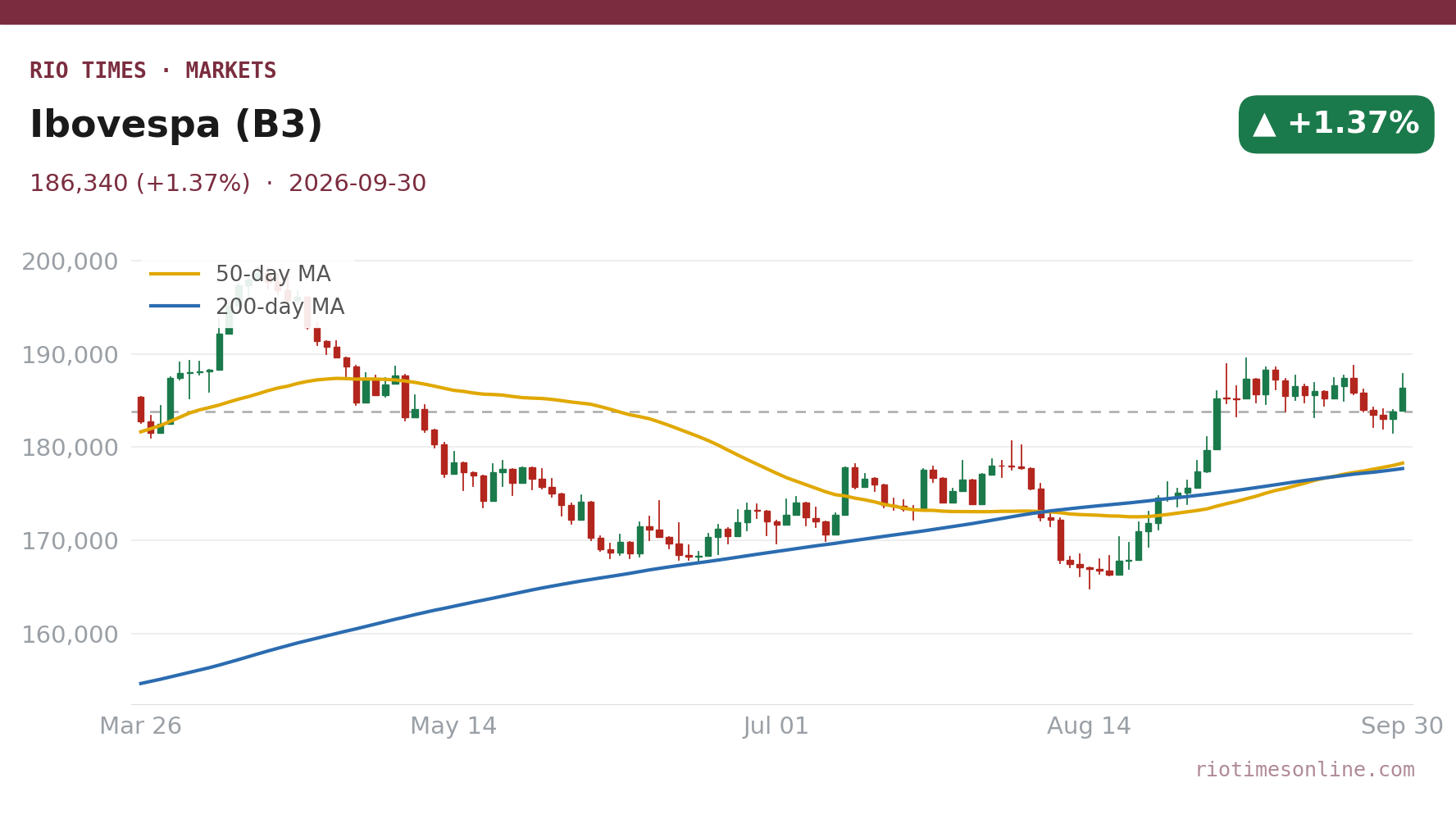
- The Ibovespa rose 1.37% to 186,340 points, its best day since 10 September, ending September up 5.03% and the third quarter up 8.3%
- Banks led: Itaú Unibanco and Banco do Brasil gained 4.7% and Bradesco 4.1%; Itaú traded R$3.27 billion (US$632 million), the most of any stock
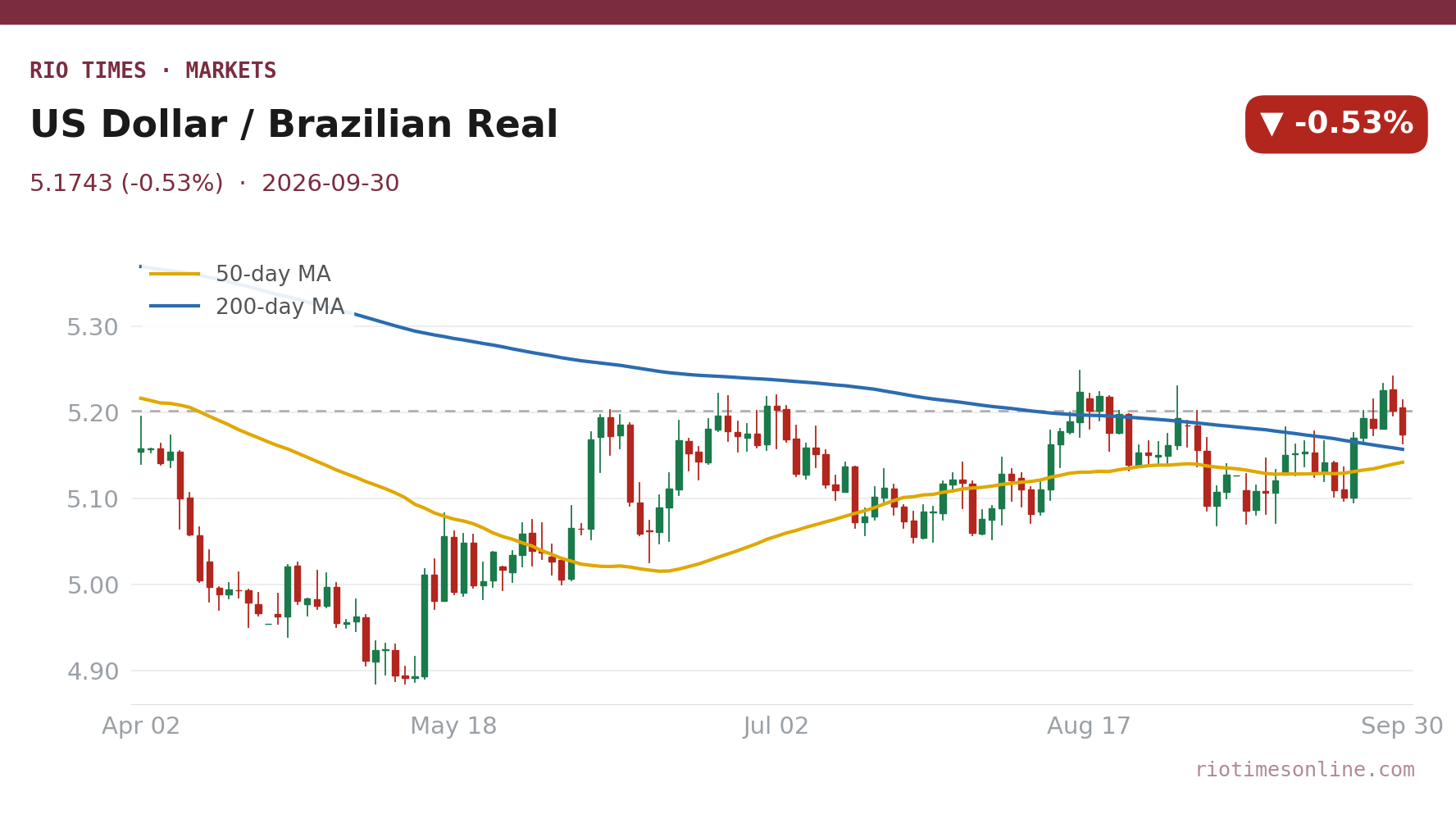
- The real firmed 0.53% to 5.174 per US dollar
- Fiscal data were mixed: the public sector ran a primary deficit of R$10.0 billion (US$1.9 billion) in August, while gross debt rose to 82.9% of GDP, the highest since 2021
- Sunday’s first round of the presidential election on 4 October is the next big test for the real and bank shares
Today’s Focus
Brazil’s stock market ended September on a high note. The Ibovespa index climbed 1.37% to 186,340 points on Wednesday, its best session since 10 September, and finished the month 5.03% higher.
The trigger came from Washington. US core PCE inflation, the Federal Reserve’s preferred price gauge, rose 3.0% on the year in August, below the 3.3% forecast. Investors bought emerging-market assets, and in Brazil they went first to the heavyweight banks.
Itaú Unibanco and Banco do Brasil each rose 4.7% and Bradesco gained 4.1%. Retailer Magazine Luiza jumped 12.5%, the biggest gain in the index.
The real also strengthened 0.53% to 5.174 per US dollar, meaning Brazilians need fewer reais to buy one dollar. Local fiscal data were mixed: the public sector’s August primary deficit was smaller than a year earlier, but gross debt climbed to 82.9% of GDP.
What matters today. The rally rested on a US data surprise rather than on Brazilian news. Sunday’s 4 October first round and Friday’s US jobs report are the next tests.
01 The session in one read
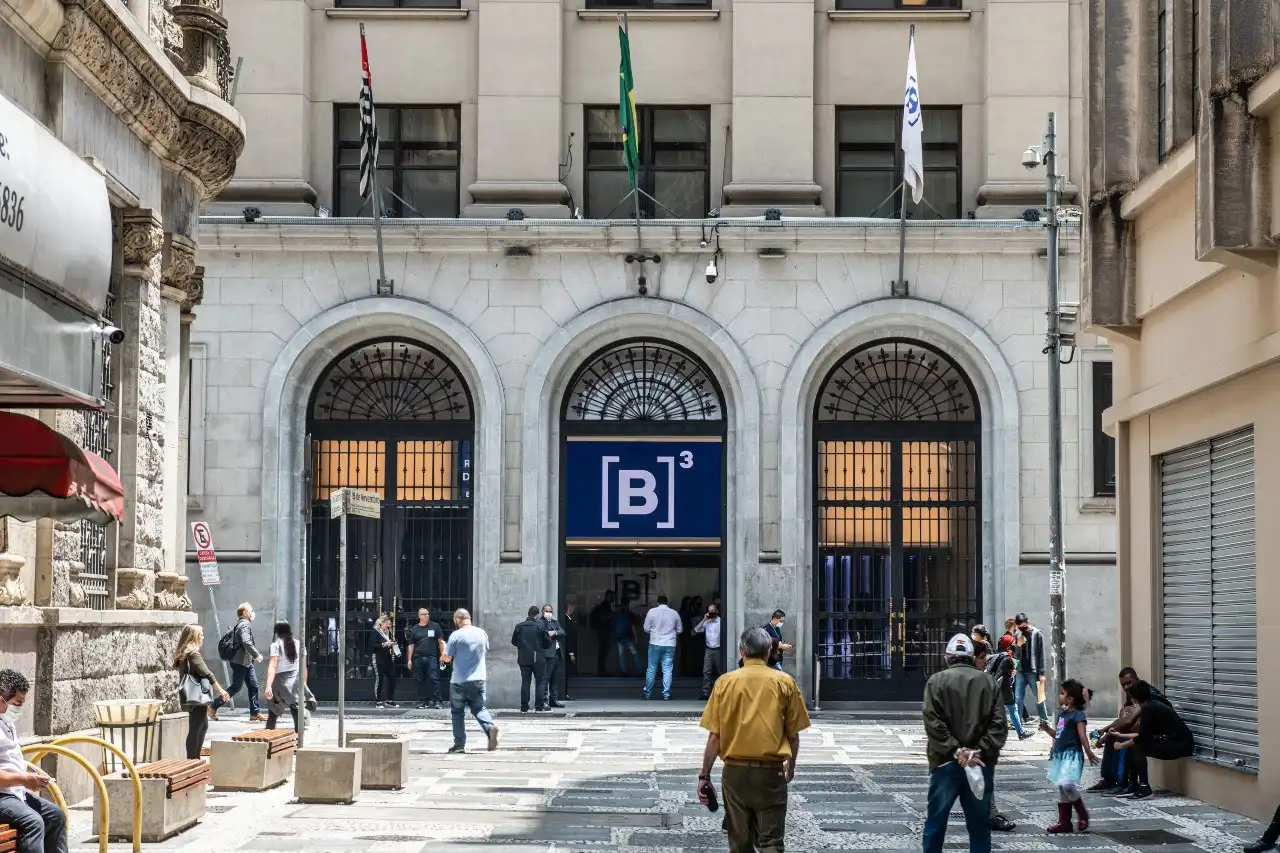
The Ibovespa, Brazil’s main stock index and the benchmark for the São Paulo exchange B3, climbed 1.37% to close at 186,340 points on Wednesday. It was the index’s best session since 10 September and capped a 5.03% gain for September and an 8.3% gain for the third quarter.
The rally was concentrated in financial shares. Itaú Unibanco, the country’s largest private-sector bank and a bellwether for foreign investors, jumped 4.7% on turnover of R$3.27 billion (US$632 million), the heaviest trading of any stock in the session.
Banco do Brasil, a state-controlled lender, rose 4.7%, while Bradesco, another private-sector heavyweight, gained 4.1%. Together, these three banks account for a large slice of the Ibovespa, so their strength lifted the entire market.
The real, Brazil’s currency, also had a good day. It firmed 0.53% to 5.174 per US dollar, leaving the dollar 7.4% below its 52-week closing high of 5.5901 per US dollar (22 December 2025). A stronger real reduces the cost of imported goods and makes Brazilian assets worth more in dollar terms.
The evidence is clear: the biggest, most liquid bank stocks rose in unison on heavy turnover, while the real strengthened against the dollar. That combination is consistent with foreign buying rather than a short-lived local bounce. The risk is the Federal Reserve. New York Fed President John Williams said on Tuesday that one further US rate rise may be appropriate late this year, and the US 10-year yield still rose on Wednesday. A strong US jobs report on Friday could unwind the trade quickly.
02 The day’s numbers
| Measure | Level | Change | Read |
|---|---|---|---|
| Ibovespa | 186,340 | +1.37% | Best day since 10 September; 6.2% below 52-week closing high |
| USD/BRL | 5.174 | −0.53% | Real firms; dollar 7.4% below its 52-week closing high |
| S&P 500 | 7,652 | −0.25% | US benchmark slips; Brazil decoupled |
| Dow Jones | 50,906 | −0.86% | Blue-chip US index falls more sharply |
| Nasdaq | 26,861 | +0.24% | Tech-heavy US index edges higher |
| VIX | 16.34 | +1.87% | US volatility gauge rises but stays subdued |
| US 10-year yield | 5.291% | +4.2 bp | Yields rose despite softer PCE |
| Brazil 10-year yield | 14.16% | +2.5 bp | Local rates little changed |
The Ibovespa’s 52-week closing range runs from 140,680 (10 October 2025) to 198,657 points (14 April 2026), so Wednesday’s close at 186,340 leaves the index about 6.2% below that high. That distance is small enough to keep momentum traders interested but large enough to suggest there is still room for further gains if conditions remain supportive.
Over the past 52 weeks the real has closed between 4.8909 per US dollar (11 May 2026) and 5.1743 per US dollar (22 December 2025). At 5.174, the exchange rate is 7.4% below the December peak and 5.8% above the May low. A Selic policy rate of 13.75% keeps the real attractive to carry traders even after five consecutive cuts.
Live Market IntelligenceBrazil — Live Market Board
Rio Times · Live Market Intelligence
Brazil — Live Market Board
| Instrument | Last | Change | YoY | Prev. | High | Low | Volume |
|---|---|---|---|---|---|---|---|
| IBOV | 172,457.76 | +0.66% | +9.73% | 171,324.31 | — | — | — |
| USD/BRL | 5.67 | -0.02% | +7.01% | 5.67 | 5.67 | 5.64 | — |
| SELIC | 13.75% | — | — | — | — | — | |
| PETR4 | 45.30 | +0.00% | +39.43% | 45.30 | 45.30 | — | — |
| VALE3 | 63.50 | +0.00% | -3.30% | 63.50 | 63.50 | — | — |
| ITUB4 | 42.27 | +0.00% | +7.66% | 42.27 | 42.27 | — | — |
| BBDC4 | 14.52 | +0.00% | -25.46% | 14.52 | 14.52 | — | — |
| BBAS3 | 15.10 | +0.00% | -32.89% | 15.10 | 15.10 | — | — |
| B3SA3 | 14.89 | +0.88% | +2.90% | 14.76 | 14.94 | 14.53 | 34,792,900 |
| ABEV3 | 15.79 | +0.00% | +15.85% | 15.79 | 15.79 | — | — |
| WEGE3 | 51.31 | -0.66% | +14.48% | 51.65 | 52.05 | 50.93 | 7,741,000 |
| PRIO3 | 63.30 | +0.00% | +58.93% | 63.30 | 63.30 | — | — |
| SUZB3 | 54.77 | +0.00% | +14.92% | 54.77 | 54.77 | — | — |
| RENT3 | 30.07 | +0.00% | -28.47% | 30.07 | 30.07 | — | — |
| AZZA3 | 15.91 | +0.00% | -45.85% | 15.91 | 15.91 | — | — |
| CSNA3 | 3.72 | +0.00% | -56.79% | 3.72 | 3.72 | — | — |
| GGBR4 | 24.73 | +0.00% | +30.78% | 24.73 | 24.73 | — | — |
| ENEV3 | 26.81 | +0.00% | +38.98% | 26.81 | 26.81 | — | — |
03 Why it moved: US inflation, banks and the election
The trigger was the US inflation report. Core PCE prices rose 3.0% on the year in August, against a 3.3% forecast, which eased fears that the Federal Reserve will have to keep raising rates. Emerging-market assets benefited, and in Brazil the money went first to the big banks.
Investors often treat these lenders as a proxy for the domestic economy. They are also the most liquid shares on B3, so they are the first stop for foreign funds. The Selic stands at 13.75% after the central bank’s fifth consecutive cut in September, and the next rate decision is on 4 November.
There is also a political angle. The first round of Brazil’s presidential election is on Sunday, 4 October. An AtlasIntel/Bloomberg poll published on Tuesday showed President Luiz Inácio Lula da Silva on 45.3% and Senator Flávio Bolsonaro on 42.2%. When election odds shift, bank and state-controlled shares are among the first to react.
Globally, the backdrop was mixed. The S&P 500 fell 0.25% and the Dow Jones 0.86%, while the Nasdaq edged up 0.24%. The US 10-year yield rose to 5.291% after second-quarter US growth was revised up to 2.2%. Brazil’s ability to rally on such a day shows that investors read the inflation data as good news for emerging markets.
04 Wednesday’s data, one by one
Our Wednesday edition flagged Brazil’s fiscal accounts and producer prices, China’s factory survey, US jobs and inflation data, Colombia’s rate decision, quarter-end and election polls. Here is how each landed.
Public accounts (central bank), 08:30 BRT. The consolidated public sector posted a primary deficit of R$10.0 billion (US$1.9 billion) in August, smaller than the R$17.3 billion (US$3.3 billion) of August 2025. Over 12 months the primary deficit is R$82.1 billion (US$15.9 billion), or 0.62% of GDP. Interest costs of R$105.9 billion (US$20.5 billion) pushed the nominal deficit to R$115.9 billion (US$22.4 billion), wider than the roughly R$109 billion (US$21 billion) expected.
Public debt. Gross general government debt rose 0.3 percentage point to 82.9% of GDP, slightly below the 83.1% forecast but the highest level since 2021. Net public debt rose 0.1 percentage point to 69.3% of GDP. The figures did not stop the real from firming.
Producer prices (IBGE), 09:00 BRT. Factory-gate prices rose 0.36% in August, against a forecast fall of 0.4% and after a 0.83% drop in July. Over 12 months they are up 2.53%. Food producers led the increase. There was no visible market reaction.
China. The official manufacturing PMI was 50.1 in September, in line with forecasts and up from 49.8, back above the 50 line that separates growth from contraction. Vale rose 0.4%.
United States. ADP counted 90,000 new private jobs in September, above the 70,000 forecast. August PCE inflation was 3.4% on the year against a 3.7% forecast; core PCE was 3.0% against 3.3%. Second-quarter growth was revised up to an annualised 2.2% from 1.5%. The inflation miss drove the rally in Brazil.
Colombia. Banco de la República surprised with a quarter-point rise to 12.25%; a hold had been expected. Colombia’s COLCAP fell 0.38%.
Quarter-end and polls. Wednesday closed the third quarter with the Ibovespa up 1.4% since 30 June. Polls ahead of Sunday’s vote still show a close race, and they remain the main domestic risk.
05 The day’s movers
| Driver | Close | Change | Note |
|---|---|---|---|
| Itaú Unibanco (ITUB4) | R$44.28 (US$8.56) | +4.7% | Most-traded stock: R$3.27bn (US$632m) |
| Banco do Brasil (BBAS3) | R$23.07 (US$4.46) | +4.7% | R$956m (US$185m) traded; state bank |
| Bradesco (BBDC4) | R$18.51 (US$3.58) | +4.1% | R$1.11bn (US$215m) traded |
| Magazine Luiza (MGLU3) | R$7.46 (US$1.44) | +12.5% | Top Ibovespa gainer; R$362m (US$70m) traded |
| Totvs (TOTS3) | R$33.43 (US$6.46) | −3.5% | Biggest Ibovespa loser; software |
| Cury (CURY3) | R$27.74 (US$5.36) | −3.4% | Homebuilder gives back Tuesday’s 4.1% gain |
The table tells a clear story: money flowed into the largest, most liquid bank stocks. Itaú alone traded R$3.27 billion (US$632 million), more than any other stock. Banco do Brasil and Bradesco added another R$2.07 billion (US$400 million) between them, confirming that the rally was spread across the sector rather than a one-stock spike.
Outside the banks, Magazine Luiza’s 12.5% jump was the standout. The retailer is among the most volatile stocks on the Brazilian exchange. The retailer is highly sensitive to borrowing costs, and local interest-rate futures eased on the day.
The losers were smaller and had less market impact. Totvs, a software provider, fell 3.5%, homebuilder Cury dropped 3.4% and planemaker Embraer lost 3.1%. There was no single theme behind the declines; Cury gave back part of Tuesday’s 4.1% gain.
06 The regional scoreboard
| Index | Country | Change |
|---|---|---|
| Ibovespa | Brazil | +1.37% |
| Merval | Argentina | +0.00% |
| COLCAP | Colombia | −0.38% |
| IPSA | Chile | −0.78% |
| S&P/BMV IPC | Mexico | −1.38% |
Brazil and Argentina were the region’s bright spots, with their benchmarks rising 1.37% and 1.32% respectively. Argentina’s Merval rebounded after falling in each of the previous eight sessions.
Colombia, Chile and Mexico finished lower. Mexico’s IPC fell most, 1.38% to 64,214 points, while Colombia’s COLCAP slipped 0.38% after the central bank’s surprise rate rise. The divergence from Brazil shows how local conditions still matter more than any single regional trend.
07 The technical picture
The Ibovespa’s close at 186,340 puts it roughly 6.2% below its 52-week high of 198,657, a level that now acts as a clear target for bulls. A push through that mark would signal a new uptrend, while a reversal below the session low of 183,880 could invite short-term profit-taking.
For the real, the dollar’s close at 5.174 is 7.4% below its 52-week closing high of 5.5901 and 5.8% above its low of 4.8909. The first support for the dollar is Wednesday’s low of 5.1631; the 5.00 psychological level is about 3.4% away.
Traders will be watching the US payrolls report on Friday, 2 October, where about 90,000 new jobs are expected. A weaker number would ease fears of another Fed rate rise and support emerging-market currencies and stocks. A strong number could push US yields higher and have the opposite effect.
08 What to watch
- Brazil factory PMI, 10:00 BRT: S&P Global’s September manufacturing index, forecast at 46.5 after 46.3; a reading below 50 signals contraction
- US data, 09:30 and 11:00 BRT: Weekly jobless claims (200,000 expected), then the ISM manufacturing index, forecast at 55.0 after 54.6
- Fed speakers: Collins, Schmid, Waller, Bowman, Williams and Logan speak today, a test of the rate-rise debate after Wednesday’s softer inflation data
- China closed: Mainland markets are shut for the Golden Week holiday from 1 to 7 October, so iron-ore signals for Vale will be thin
- Election and Friday: Final polls before Sunday’s 4 October first round; on Friday, US payrolls (about 90,000 expected) and Brazil’s August industrial production
Background: What Is Vale? Brazil’s Mining Giant Explained: Iron Ore, the Dam Legacy and What to Watch.
More: Brazil news, every day from The Rio Times.
Frequently Asked Questions
What is the Ibovespa?
It is Brazil’s main stock-market index, tracking the largest and most-traded companies listed on the B3 exchange in São Paulo.
Why did Brazilian banks rally on September 30?
Softer-than-expected US inflation data lifted demand for emerging-market assets, and investors bought Brazil’s large, liquid banks first. Itaú Unibanco and Banco do Brasil rose 4.7% and Bradesco 4.1%.
What does a stronger real mean for investors?
A stronger real means each dollar buys fewer reais. For foreign investors, it boosts the dollar value of Brazilian assets. On Wednesday the real firmed 0.53% to 5.174 per US dollar.
Why did Brazil rise while US markets fell?
Investors read the softer US inflation data as good news for emerging markets and bought Brazilian banks, while the S&P 500 slipped 0.25% and the Dow Jones fell 0.86%.
Source: RT live market data, close of Wednesday 30 September 2026; exchange figures from B3; fiscal data from the Central Bank of Brazil; producer prices from IBGE.
This article was produced by The Rio Times’ automated AI newsroom. Editorial responsibility: Matthias Camenzind, Publisher and Editor-in-Chief. The Rio Times also runs Ask Rio Times, which answers from 100,000+ of our own articles, the daily Latin America Power Map, and prediction-market odds on elections and markets.. How we use AI · Report an error
LatAm Markets: Live Signals → — real-time movers, turnover leaders and FX across Latin America.
Brazil runoff, Sunday, October 25: When is the Brazil runoff election. Latest: Brazil runoff polls, Flávio 51%, Lula 49%.