
Politics: Brazil
Students marched on São Paulo’s Avenida Brigadeiro Faria Lima, the street that stands for Brazilian finance, on Tuesday 17 November 2026. The National Students’ Union (UNE), a national student organisation, called the march against the government’s fiscal adjustment.
Several union confederations stayed away from the march and say they will press for lower interest rates instead. The Senate passed the plan on Wednesday 18 November 2026, and it now goes to the Chamber of Deputies, the lower house.
Key Facts
- What. UNE says it marched in at least 13 cities on Tuesday 17 November 2026.
- The bill. Senate passed Bill 299 (PLP 299/2026) by 69 votes to 2 on Wednesday 18 November 2026.
- Rates. The central bank held its Selic benchmark rate at 13.75% on Wednesday 4 November 2026.
- Prediction markets. Polymarket, a prediction market, prices 83.5% for no December rate change (1:08 a.m. ET).
- Power Index. Brazil ranks 1st of 14 in The Rio Times Latin America Power Index, with 74.2 points (November 2026 edition).
A student march against a fiscal plan went ahead without several union confederations, and the bill now heads to the lower house.
The Big Picture
The fiscal plan travels as Complementary Bill 299 of 2026 (PLP 299/2026), which the Senate has now passed. Senator Jaques Wagner of the Workers’ Party (PT), from Bahia, filed it at the government’s request, and Senator Eduardo Braga of the MDB, a centrist party, from Amazonas, wrote the replacement text that passed.
Money is the pressure point. The central bank’s rate committee, Copom, held the Selic benchmark rate at 13.75% a year on Wednesday 4 November 2026, and the dollar rose from R$5.64 on Thursday 12 November to R$5.88 on Wednesday 18 November 2026, a 4.3% gain (our market-close data).
Finance Minister Dario Durigan told the Senate Economic Affairs Committee on Tuesday 17 November 2026 that a gradual adjustment that respects social spending is the way forward. UNE marched against the plan, while several union confederations say they will press for lower rates instead.
The bill moves to the Chamber without several union confederations in the streets against it, but with a separate union rally planned for Tuesday 8 December 2026. The CSB, one of the confederations, has announced that rally for Avenida Paulista in front of the central bank building.
What Happened on the Streets
UNE called its protest a “National Day of Struggle” against the fiscal adjustment and against what it calls pressure from the financial market. Its motto was “O mercado não manda no Brasil”, which means “The market does not rule Brazil”.
UNE says protests took place in at least 13 cities. In São Paulo the march was on Avenida Brigadeiro Faria Lima.
In Rio de Janeiro, rallies were held in the city centre. In Brasília, students gathered at Annex II of the Chamber of Deputies.
UNE also called rallies in Belo Horizonte, Porto Alegre, Fortaleza, Belém and Recife. We found no organiser or police turnout figures.
Why Some Unions Stayed Away
Several union confederations did not join the UNE protest, and the CSB confederation says they will hold their own rally. They say the reason is that the plan does not cut pensions or the minimum wage.
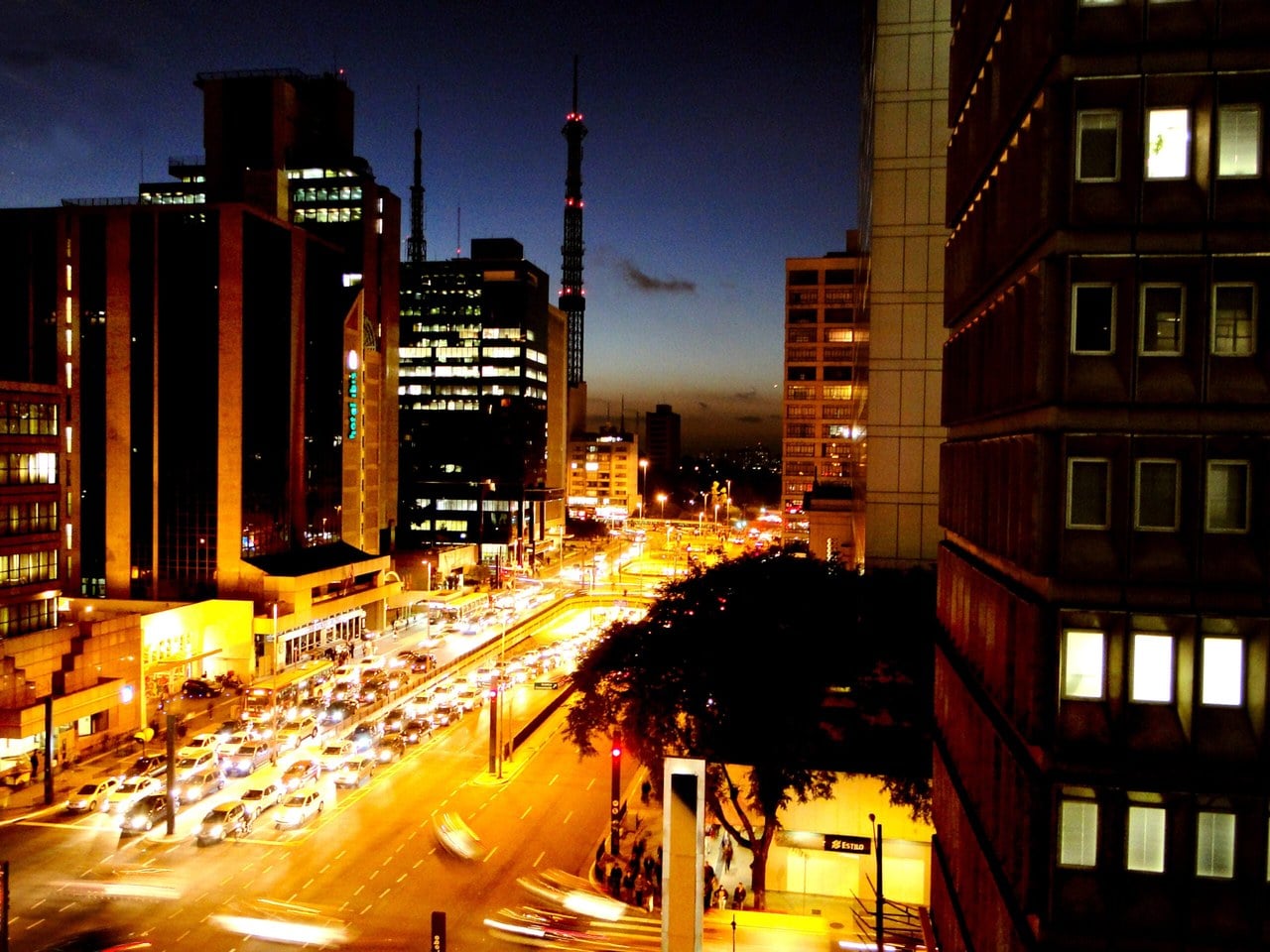
They say they will concentrate on pressing for lower interest rates. Union leaders say they plan their own rally on Tuesday 8 December 2026 on Avenida Paulista in São Paulo, in front of the Central Bank’s local office.
The slogan is “Baixar os juros é um presentão de Natal”, which means “Lowering interest rates is a big Christmas present”. The CSB confederation announced the date and venue in its own statement.
What the Senate Bill Does
The Senate approved the main text by 45 votes to 31 on Thursday 12 November 2026. It completed the vote on Wednesday 18 November 2026 in a supplementary round, with 69 votes for and 2 against, the Senate said on both dates.
The government estimates an improvement of R$45.1 billion to R$56.1 billion (about US$7.7 billion to US$9.5 billion, at R$5.88 per US$, our market-close rate for 18 November 2026) in the 2027 primary result, the Senate said on 12 November 2026. The primary result is revenue minus spending before debt interest.
The bill cuts several tax benefits and allows new limits on offsets of tax credits, the Senate said on 12 November 2026. From 2027, in years when the government freezes extra spending, real spending growth is capped at 2% instead of the current 2.5% ceiling of the fiscal framework (Complementary Law 200 of 2023).
Three of four pending challenges (destaques) were rejected and the fourth was withdrawn, the Senate said on 18 November 2026. The bill, which is a complementary bill, now goes to the Chamber of Deputies.
The Government and Its Critics
Senate President Davi Alcolumbre said on 18 November 2026 that criticism of the bill has an electoral tinge and comes from those who lost the presidential runoff. Rapporteur Eduardo Braga, the senator who steered the text, said the Senate hands the Chamber “a project with social responsibility”.
Finance Minister Durigan says a gradual adjustment that respects social spending is the way forward, as he told the Senate committee on 17 November 2026. UNE, for its part, says the plan answers pressure from the financial market.
What Prediction Markets Say
Polymarket, a prediction market where users trade real-money bets, priced 83.5% for no change in Brazil’s Copom rate in December, as of 19 November 2026, 1:08 a.m. ET. The same market gave 5.9% for a cut of 25 basis points (0.25 percentage point) and 4.0% for a cut of 50 basis points or more, and the whole five-outcome market had US$113,950 traded.
These prices are bets, not polls, and a market this thin can move on a few large trades. The price also cannot tell us how the market’s own resolution rules would treat an unusual decision.
Why we show this: prediction markets turn real-money bets into a live probability that moves within minutes of the news, which is why investors, campaigns and newsrooms in the United States now follow them closely. We show them next to polls and official results, never instead of them.
Why It Matters
The government estimates the plan would improve the 2027 primary result by R$45.1 billion to R$56.1 billion (about US$7.7 billion to US$9.5 billion), the Senate said on 12 November 2026. Finance Minister Durigan has called gradual adjustment the way forward.
What to Watch
Copom meets on Tuesday 8 and Wednesday 9 December 2026, according to the central bank’s calendar. It will be the first decision since the 13.75% hold on Wednesday 4 November 2026.
The CSB says a union rally is planned for Tuesday 8 December 2026 on Avenida Paulista in São Paulo. The date of the Chamber of Deputies vote is not confirmed.
What Is Not Known
No organiser or police turnout figures for any of the rallies have been published that we could find, so we cannot say how large the protests were. No date for the Chamber of Deputies vote has been found either.
It is not known whether the protest changes that vote. It is also not known whether the confederations will join protests beyond their own 8 December rally.
What It Means for You
For a reader abroad, the episode shows a protest against the plan, even as several union confederations chose to press on interest rates instead of marching. The Chamber vote and the Copom meeting are the next two dates to watch.
The dollar’s 4.3% rise against the real, from R$5.64 on 12 November to R$5.88 on 18 November 2026, is the backdrop (our market-close data).
In Plain English
- UNE: the National Students’ Union, a national student organisation.
- CSB: a Brazilian union confederation.
- Copom and Selic: the central bank’s rate committee and its benchmark interest rate.
- Primary result: government revenue minus spending before debt interest.
- Basis point: one hundredth of a percentage point.
- Faria Lima: the São Paulo avenue that symbolises the financial market.
Frequently Asked Questions
Who organised the protest in Brazil on 17 November?
UNE, the National Students’ Union, called a National Day of Struggle on Tuesday 17 November 2026. UNE says protests took place in at least 13 cities.
Why did some union confederations stay away?
Union leaders say the plan does not cut pensions or the minimum wage. They say they will concentrate on pressing for lower interest rates, with a rally planned for Tuesday 8 December 2026.
What does Brazil’s fiscal bill do?
The government estimates it improves the 2027 primary result by R$45.1 billion to R$56.1 billion (about US$7.7 billion to US$9.5 billion), the Senate said. From 2027, in years of frozen extra spending, real spending growth is capped at 2%.
What happens next with the bill?
The Senate completed its vote on Wednesday 18 November 2026 by 69 votes to 2, and the bill goes to the Chamber of Deputies. No date for the Chamber vote has been found.
Sources
Federal Senate, 12 November 2026 · Federal Senate, 18 November 2026 · CSB union confederation, 16 November 2026 · Central Bank of Brazil · Polymarket market page
Connected Coverage
Brazil news · Brazil Unions Said to Skip Fiscal Protest · Brazil’s Left Splits on Lula’s Fiscal Plan · Brazil Says Rate Cuts Hinge on a Fiscal Fix · Latin America Power Map
This article was produced by The Rio Times’ automated AI newsroom. Editorial responsibility: Matthias Camenzind, Publisher and Editor-in-Chief. The Rio Times also runs Ask Rio Times, which answers from 100,000+ of our own articles, the daily Latin America Power Map, and prediction-market odds on elections and markets.. How we use AI · Report an error
Brazil runoff, Sunday, October 25: Brazil runoff start time and results schedule. Latest: Brazil runoff polls, Flávio 51%, Lula 49%.