Bolivia Explained 2026: The Paz Government, the Fuel Crisis and What to Watch
GUIDES · BOLIVIA
Key Facts
- —Capital Sucre is the constitutional capital and home of the top courts. La Paz, at about 3,600 metres (nearly 12,000 feet), is the seat of government and Congress.
- —Population 11,312,620 at the census of 23 March 2024, a little fewer than Belgium. Santa Cruz department is now the largest, with 3.1 million people.
- —Currency The boliviano, written Bs. Held at 6.96 to the US dollar from 2011 until June 2026, it now floats. The central bank’s official rate for 25 September 2026 was 12.22 per US dollar.
- —Language Spanish, plus 36 indigenous languages recognised by the 2009 constitution. Quechua, Aymara and Guaraní are the most widely spoken. English is rare outside tourism and business.
- —GDP US$64.8 billion in 2025 by the World Bank’s count. That is about US$5,150 a person, less than a tenth of the US level.
- —Government A presidential republic, formally the Plurinational State of Bolivia. The president serves five years. Congress has 130 deputies and 36 senators, and there are nine departments.
Bolivia explained for outsiders: a landlocked Andean country that ran out of dollars, changed government, floated its currency and now waits on the IMF.
Bolivia explained in one sentence: a country that lived on natural gas and ran short of dollars when the gas ran down. That shortage, first of hard currency and then of fuel, ended nearly twenty years of socialist rule in 2025. It now shapes every decision of President Rodrigo Paz.
What kind of country is this?
Bolivia covers about 1.1 million square kilometres, roughly twice the size of France. With Paraguay, it is one of South America’s two landlocked countries. It lost its Pacific coast to Chile in the War of the Pacific of 1879 to 1884.
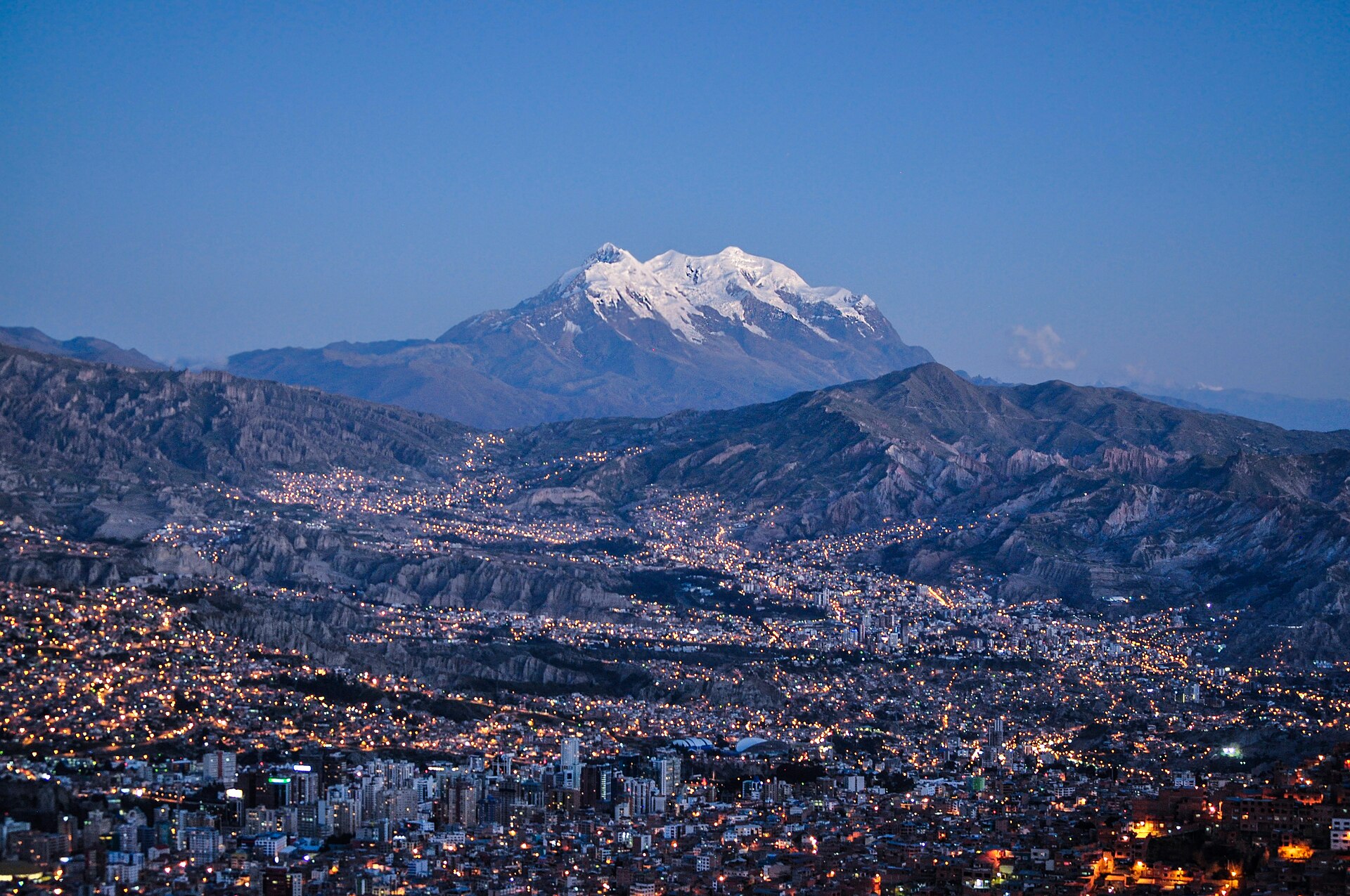
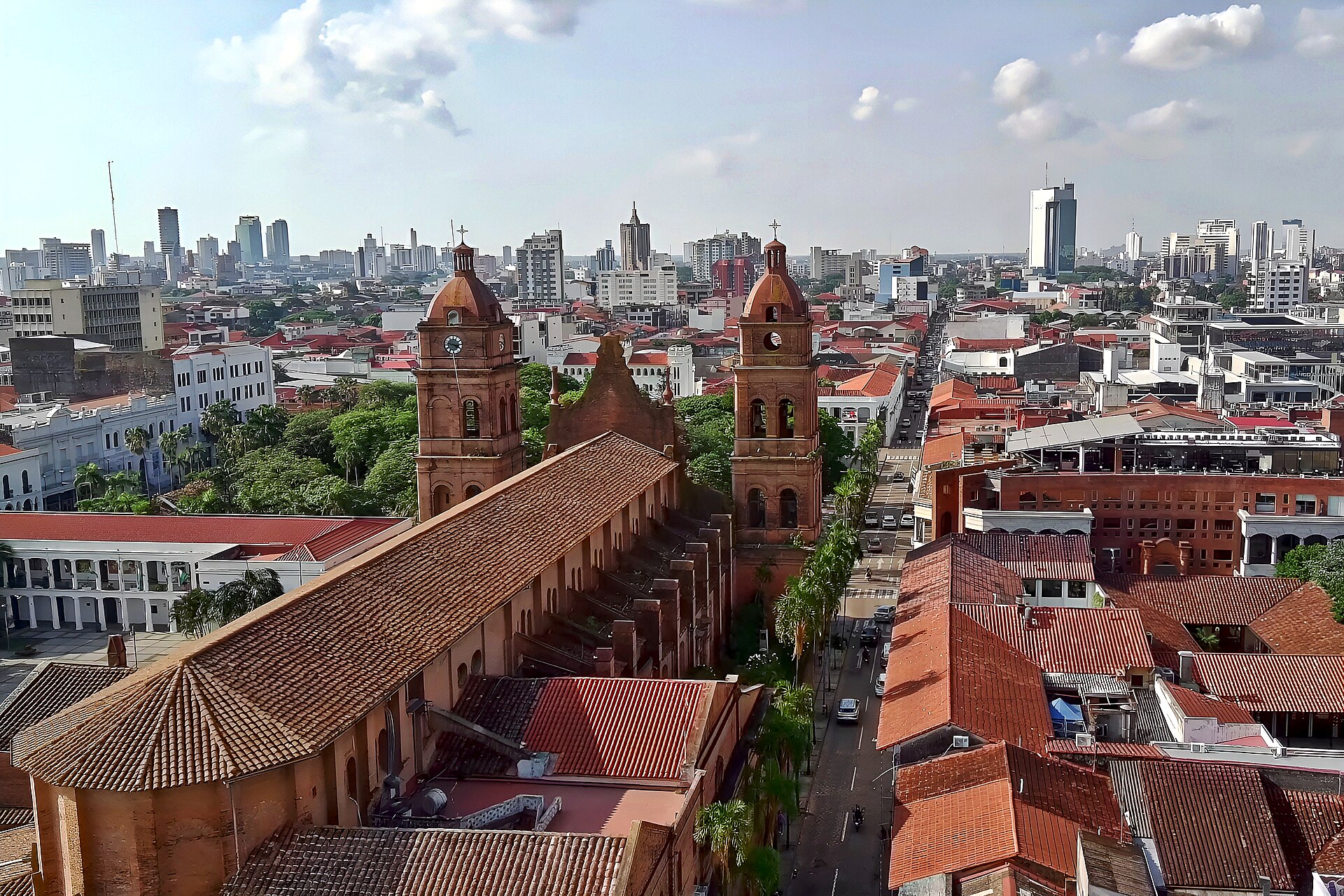
Geography splits the country in two. The west is the Altiplano, a high plateau holding La Paz and its twin city El Alto. The east is lowland. Its hub, Santa Cruz de la Sierra, had 1.6 million people at the 2024 census and is the largest city.
El Alto counted 885,000 people and La Paz 756,000. The country’s weight has been shifting east, towards soy, cattle and private business.
Bolivia has a large indigenous population, mainly Quechua and Aymara in the highlands and Guaraní in the south-east. Evo Morales, an Aymara coca growers’ leader, became the first indigenous president in 2006. His 2009 constitution renamed the country the Plurinational State of Bolivia.
Recent history is turbulent. In 2003 protests against a plan to export gas through Chile, the Gas War, forced President Gonzalo Sánchez de Lozada from office. Morales then nationalised oil and gas in 2006 and ruled until 2019, when he resigned after a disputed election.
His former economy minister, Luis Arce, won in 2020 for their party, the Movement Toward Socialism (MAS). Any account of Bolivia explained for newcomers starts with that party’s long rule and sudden collapse.
Who runs Bolivia and how
The president is head of state and government, directly elected for five years. If no candidate wins outright, the top two meet in a runoff. That happened for the first time in 2025.
Rodrigo Paz Pereira of the Christian Democratic Party (PDC) surprised the field by topping the first round on 17 August 2025. He beat former president Jorge “Tuto” Quiroga in the runoff on 19 October, by 54.96 percent to 45.04 percent. He was sworn in on Saturday 8 November 2025.
Paz is a former senator and mayor of Tarija, and the son of former president Jaime Paz Zamora. His vice-president, Edmand Lara, is a former police captain who denounced police corruption. MAS collapsed: its candidate took about 3 percent, and it holds 2 of 130 lower-house seats and none in the Senate.
The PDC is the largest group in Congress but has no majority. Paz relies on the centre-right blocs of Quiroga and of businessman Samuel Doria Medina, who backed him in the runoff.
Congress can censure a minister, which under the constitution leads to dismissal. It censured Economy Minister José Gabriel Espinoza on 18 August 2026, by 91 votes to 34. Paz removed him on 21 August and on 25 August swore in his deputy, Christian Morales.
Foreign policy has swung hard. Paz is an ally of US President Donald Trump and has rebuilt ties that Morales cut, notably by expelling the US ambassador.
How the economy works
For two decades the economy ran on natural gas, piped mainly to Brazil and Argentina. Output topped 60 million cubic metres a day in 2014, when gas exports earned more than US$6 billion. Central bank net reserves stood at US$15.1 billion at the end of that year, close to their all-time high.
The money paid for public investment, cash transfers and cheap fuel. Then the gas ran down. Fields matured, exploration stalled, and Argentina, now rich in its own shale gas, stopped firm purchases in October 2024.
YPFB, the state oil company, put 2025 output at 27.3 million cubic metres a day, less than half the peak. Gas export income fell to about US$1.1 billion in 2025. YPFB warns that without new discoveries Bolivia may have to import gas from 2031.
Fuel was the second trap. Bolivia froze petrol and diesel prices for about two decades, yet imports most of its fuel. Officials said in December 2025 that about 90 percent of diesel and 60 percent of petrol came from abroad.
With gas income gone, the central bank spent its reserves on the peg and on fuel. Net reserves fell to US$1.98 billion by the end of 2024, almost all of it gold. Only US$47 million was foreign currency. Dollars vanished from banks, a street market opened and fuel queues formed.
Twelve-month inflation hit 24.86 percent in July 2025, according to the national statistics institute (INE). The economy shrank 1.1 percent in 2024 and 1.6 percent in 2025, by the World Bank’s count. The International Monetary Fund (IMF) put fiscal deficits above 10 percent of output.
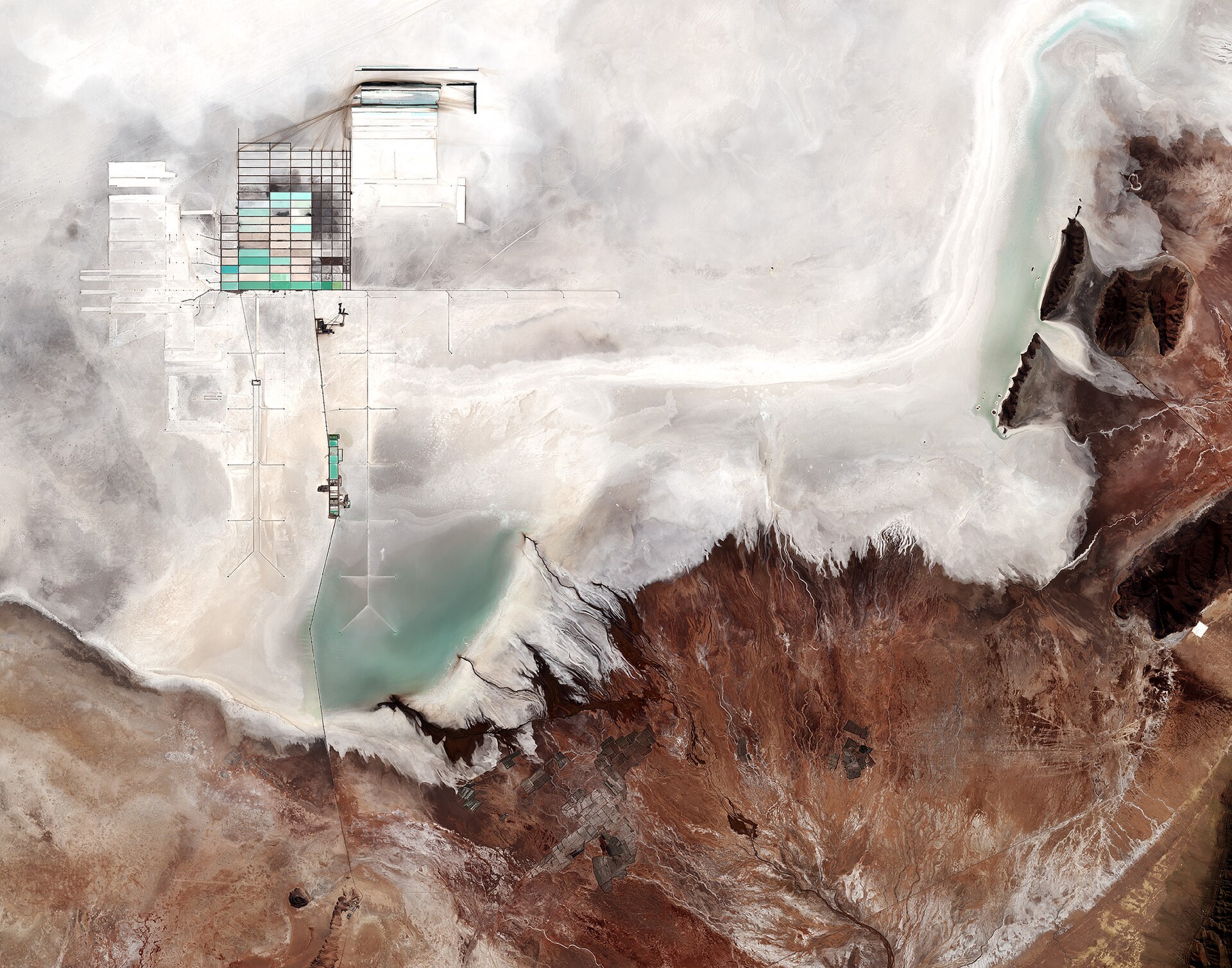
Lithium is the hoped-for next act. Bolivia holds an estimated 23 million tonnes of lithium resources, mostly under the Salar de Uyuni salt flat. Yet it produces less than 1 percent of world supply. The state company YLB’s first industrial plant ran at about 16 percent of capacity in 2025.
The Arce government signed contracts with Russia’s Uranium One, a Rosatom company, and CBC, a Chinese consortium including battery maker CATL. Together they promised plants worth about US$2 billion. Both were still stalled in Congress in mid-2026, pending a Constitutional Court review of a challenge by 53 indigenous communities.
The 2009 constitution declares lithium brines a strategic resource, and Law 928 of 2017 puts the state company YLB in charge. Analysts say a full opening to private firms would need a constitutional change. Under Article 411, that requires a two-thirds vote in Congress and a referendum.
What is happening right now
As of 25 September 2026, Bolivia is ten months into a sharp economic adjustment. Paz began on 17 December 2025 with Supreme Decree 5503, which ended the long fuel price freeze. Petrol rose from 3.74 to 6.96 bolivianos a litre (from about US$0.54 to US$1.00 at the rate of the time).
Diesel rose from 3.72 to 9.80 bolivianos a litre (from about US$0.53 to US$1.41 at the time). The same package raised the minimum wage 20 percent, to 3,300 bolivianos a month (about US$270 at the 25 September 2026 rate). The monthly Renta Dignidad old-age pension rose to 500 bolivianos (about US$41).
The measures set off the biggest protests of his term. Farmers, the Bolivian Workers’ Central union federation (COB) and Morales loyalists ran over 100 roadblocks in May and June, for 53 days in all. They demanded that Paz resign, and La Paz was cut off from food, fuel and medicine.
The ombudsman’s office put the death toll at 22. Paz declared a 90-day state of emergency on Saturday 20 June, and soldiers helped police clear the roads. Congress extended it by another 90 days on 17 September.
On 29 July prosecutors issued an arrest warrant for Morales on charges including terrorism and armed uprising. Morales, sheltering among supporters in the Chapare coca-growing region, denies orchestrating the blockades and calls the case persecution. He remains a major force outside Congress.
The currency came next. The economy ministry ended the peg on Friday 26 June. The flexible rate began on Monday 29 June at 9.73 bolivianos to the dollar, set daily from what banks pay customers for dollars.
It has been volatile. The central bank’s table shows 12.64 on 9 September, 9.83 on 17 September and 12.22 on 25 September. From 7 September the bank stopped buying dollars and made banks lock up 3 percent of some deposits.
Then came the IMF, the Washington-based lender to governments in trouble. Its staff agreed on 29 July 2026 to a 36-month Extended Fund Facility of about US$1.9 billion. The lower house approved it on 17 September, the Senate on 18 September, and Paz signed it as Law 1765.
The IMF Executive Board, where member governments sit, must still vote before any money moves. It would be Bolivia’s first multi-year IMF arrangement since 2006. The IMF says it should help unlock a wider package of more than US$5 billion from other lenders.
Hours after the Senate vote, Paz ended the diesel subsidy. Supreme Decree 5716 set diesel at 17.95 bolivianos a litre (about US$1.47), up from 9.80 (about US$0.80) for most buyers. The price now tracks import costs and changes when they move more than 5 percent.
Paz announced cash aid of 874 million bolivianos (about US$72 million) for some 2.9 million Bolivians. He also offered cheap loans for truckers and small firms. The COB has denounced the IMF programme and warned of renewed protests.
Some numbers have improved. Twelve-month inflation fell to 5.02 percent in August 2026, partly because prices are compared with the spike of mid-2025. Net reserves recovered to US$4.14 billion by the end of August, mostly gold.
What to watch
The IMF board vote. As of 25 September 2026 no date had been published. Approval would release the first tranche and, by the IMF’s account, open the door to World Bank and Inter-American Development Bank money.
The daily exchange rate. The central bank publishes the official rate at 8 p.m. La Paz time each business day, valid for the next day. Track the gap with the street rate. On 24 September the street quote was 12.22 to 12.30 bolivianos per dollar, against an official 12.26.
Inflation. INE publishes September consumer prices in early October, the first reading to include the diesel increase. Monthly inflation was 1.10 percent in August. A sharp jump would test the central bank’s promise that inflation will not return to double digits.
Petrol in January. The government has committed to ending all fuel subsidies from 2027, and petrol is still subsidised. That is the next price shock. Paz has also promised to renegotiate the minimum wage at the end of 2026, using actual inflation data.
The streets. The extended state of emergency runs to about mid-December 2026. Watch the COB, the rural unions loyal to Morales, and the warrant against him. Morales has warned that any police or military move into the Chapare would be resisted.
Gas and lithium. First-quarter 2026 gas output was 26.6 million cubic metres a day, a smaller fall than in earlier years. On lithium, watch for a decision on the Russian and Chinese contracts.
What this means for foreigners
Entry got easier. Since 1 December 2025, US citizens can visit Bolivia without a visa for up to 90 days; before, they paid US$160. The same change covered Israel, South Korea, South Africa and several eastern European countries.
Money is the biggest practical change. Anyone paid in dollars now receives about 75 percent more bolivianos per dollar than under the old 6.96 peg. Local prices have risen far less: 5.02 percent in the twelve months to August 2026.
The rate moved by more than a quarter within September alone, so budgets in bolivianos need a margin. In 2025 the street dollar at times traded near 20 bolivianos. On 24 September 2026 it was within a few cents of the official rate.
Disruption is the main risk, not crime. Road blockades are a standard protest tool, and in 2026 they cut La Paz off for weeks. Diesel shortages have disrupted harvests and deliveries, so overland plans need slack days.
The guides below cover residency, tax, banking, property and healthcare in detail. Bolivia explained in one line: a contested exit from a state-run gas economy, on a timetable set by fuel, dollars and the street.
Connected Coverage
Bolivia Ends 15 Year Dollar Peg as Paz Scrambles for IMF Cash
Investing in Bolivia as a Foreigner 2026 — Property and Currency
Bolivia Residency for Expats: Permits, Costs, Steps
Moving to Bolivia: Residency Steps for Expats
Taxes in Bolivia for Expats: Territorial Income, Global Assets
Opening a Bank Account in Bolivia as a Foreigner
Buying Property in Bolivia: Foreigner Guide
Healthcare in Bolivia for Expats: Why Private Cover Is Essential
Safety in Bolivia for Expats: Low Homicide Rate, High Disruption
Cost of Living in Santa Cruz, Bolivia: US$600 to US$1,300 a Month
Retire in Bolivia 2026: Residency, Tax and the Currency Change That Reset Costs
Sources: Population and inflation from Bolivia’s national statistics institute (INE), exchange rates and reserves from the Banco Central de Bolivia, the loan terms from the International Monetary Fund, output from the World Bank, and fuel prices from the supreme decrees as published. All accessed 25 September 2026.
- INE — 2024 census, 11,312,620 inhabitants
- INE — consumer prices, August 2026
- Banco Central de Bolivia — official exchange rates, 2026
- Banco Central de Bolivia — net international reserves by component
- Banco Central de Bolivia — Board Resolution 88/2026, foreign exchange regulation
- International Monetary Fund — staff-level agreement with Bolivia, 29 July 2026
- World Bank — Bolivia GDP, growth and inflation data
- Supreme Decree 5716 on diesel pricing, as reported by Visión 360
- BNamericas — YPFB gas output and import outlook
What Is Not Known
When the IMF board will vote. Congress has approved the programme, but the Fund had not published a board date as of 25 September 2026. The size and timing of the first payment are therefore also open.
Where the boliviano settles. The official rate has ranged from 9.73 to 12.64 per dollar since the float. The central bank says it will step in only against “overreactions”.
How far the diesel increase feeds into prices. For most buyers the price rose about 83 percent overnight, and diesel moves Bolivia’s trucks, buses and tractors. The petrol subsidy is due to end after that.
Whether the calm on the streets holds. The COB, rural unions and Morales loyalists have warned of new protests. Whether the state of emergency is enforced, extended or allowed to lapse in December is undecided.
What happens to lithium and gas. Neither lithium contract has been approved or cancelled, and constitutional reform bills were still in committee as of 25 September 2026. YPFB’s gas outlook depends on exploration results that are years away.
Frequently Asked Questions
Who is the president of Bolivia in 2026?
Rodrigo Paz Pereira of the Christian Democratic Party, sworn in on 8 November 2025. He beat Jorge Quiroga in the runoff of 19 October 2025 by 54.96 percent to 45.04 percent. His win ended nearly twenty years of MAS rule.
What is the capital of Bolivia?
Bolivia has two. Sucre is the constitutional capital and home of the top courts. La Paz is the seat of the president, the government and Congress, which is why most foreigners treat it as the capital.
Did Bolivia devalue the boliviano?
Yes. Bolivia ended its fixed rate of 6.96 per US dollar on 29 June 2026 and let the boliviano float, starting at 9.73. The official rate for 25 September 2026 was 12.22 bolivianos per US dollar.
Why does Bolivia have a fuel shortage?
Because gas production fell by more than half from its 2014 peak, cutting the export dollars that paid for fuel imports. Bolivia imports most of its diesel and much of its petrol, and sold both at frozen, subsidised prices for about two decades.
Has Bolivia agreed an IMF loan?
IMF staff agreed on 29 July 2026 to a three-year Extended Fund Facility of about US$1.9 billion. Bolivia’s Congress approved it on 17 and 18 September, but the IMF Executive Board must still vote before any money is paid.
Do Americans need a visa for Bolivia?
No, not since 1 December 2025. US citizens can now visit without a visa for up to 90 days; before, they paid US$160. The same change covered Israel, South Korea, South Africa and several eastern European countries.
This article was produced by The Rio Times’ automated newsroom system. How we use AI · Report an error
In depth
Read More from The Rio Times