Colombia’s Bocas De Ceniza River Mouth Gets Tourist Revival
Colombia · Infrastructure & Tourism
Key Facts
—Location. Bocas de Ceniza is the main mouth of the Magdalena River where it meets the Caribbean Sea in northern Barranquilla.
—The Project. A public investment is restoring the western breakwater and building a new waterfront promenade, viewpoint, and electric tourist train route.
—Sustainable Mobility. The plan includes 2.6 km of rail line, 2.2 km of cycle path, and 2.6 km of pedestrian path connecting Las Flores to the river mouth.
—Economic Goals. Authorities aim to generate local employment, boost commerce, and position the site as a flagship Caribbean coast attraction.
—Current Status. Works are underway with 1.5 km of the breakwater already rehabilitated, though no official opening date has been published.
Bocas de Ceniza, the dramatic point where the Magdalena River pushes into the Caribbean Sea, is being transformed from a rustic local spot into a modern tourist corridor that Barranquilla hopes will attract visitors and investment to Colombia’s northern coast.
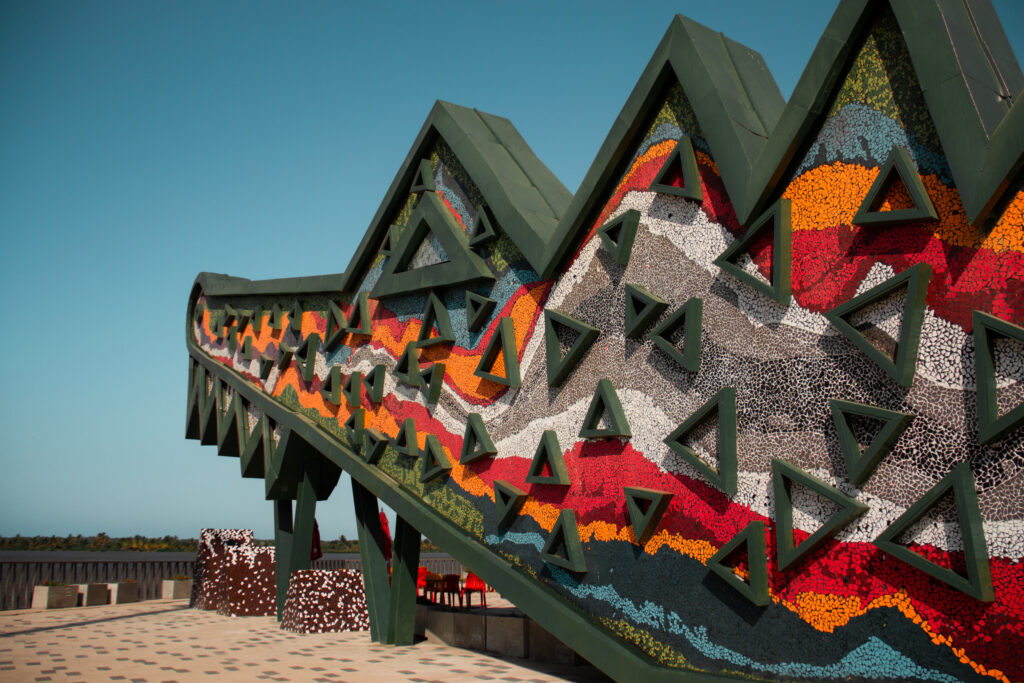
A Natural Spectacle Gets a Modern Makeover
For decades, reaching Bocas de Ceniza meant a bumpy ride on an artisanal train or the back of a motorcycle along crumbling breakwaters. The journey was part of the adventure, but the infrastructure was never designed for mass tourism.
That is now changing under a coordinated push by Barranquilla’s district government and national authorities. The plan reimagines the entire corridor from the Las Flores neighbourhood to the river mouth as a smooth waterfront experience spanning nearly three kilometres.
The project’s centrepiece is the restoration of the Tajamar Occidental, the western breakwater that guides visitors to the point where brown river water collides with blue sea. Officials report that 1.5 kilometres have already been intervened, with surface levelling and adaptation work to improve safety for fishermen, residents, and tourists alike.
The Electric Train and the New Waterfront Corridor
Perhaps the most visible change for returning visitors will be the replacement of the old artisanal train with a new electric tourist tram. The route restores the traditional connection between Las Flores, Puerto Mocho beach, and the Tajamar Occidental.
The mobility package is substantial: 2.6 kilometres of rail line, 2.2 kilometres of cycle path, and 2.6 kilometres of pedestrian walkway. Two stations, at Las Flores and Puerto Mocho, are already in their finishing stages and will include ticket offices, information points, kitchens, and commercial stands.
Mayor Alejandro Char has promised the renewed corridor will be fully accessible to electric motorcycles, bicycles, skaters, runners, and pedestrians. The goal is a continuous, car-free waterfront experience hugging the Magdalena River, the Mallorquín marsh, and mangroves all the way to the sea.
A Viewpoint and a Monument at the River’s Mouth
At the tip of the breakwater, where visitors currently scramble over rocks for a view, the city is preparing a proper tourism infrastructure. Plans include a pedestrian path and a viewing platform crowned with a monumental monolith.
Local media have described the new malecón and mirador as a “new tourist jewel” for Barranquilla. The design aims to consolidate the corridor along the river’s edge while enabling ecological recovery of the surrounding landscape.
The sensory experience of the river meeting the sea remains the star attraction. But the new infrastructure promises to make that experience safer, more comfortable, and accessible to a far broader range of visitors than the rustic access of years past.
The Business Case for Bocas de Ceniza
For investors and business owners watching Colombia’s Caribbean coast, the Bocas de Ceniza project signals a broader municipal strategy to diversify Barranquilla’s economy beyond its traditional port and industrial base. Tourism infrastructure is a long-term bet on visitor spending and real estate value along the northern corridor.
The project explicitly targets employment generation and local commerce. Revitalising the train and waterfront responds to years of resident demand for improved infrastructure, while the new commercial stands at the tram stations create small-business opportunities in Las Flores and Puerto Mocho.
The environmental angle also carries weight with international development partners and eco-conscious travellers. The works tie into broader efforts around the Ciénaga de Mallorquín, a coastal wetland, aiming to balance ecological restoration with controlled, sustainable tourism.
What Visitors and Expats Should Know Now
As of the latest reports, works are actively underway but no official opening date has been published for the full corridor or the new mirador. Authorities state repeatedly that the electric train and waterfront route will be operational “prontamente,” though Colombian infrastructure timelines often reward patience.
In the interim, Bocas de Ceniza remains accessible as a natural attraction. Artisanal train services and motorcycle rides still operate on some segments, though conditions can be rustic and variable depending on weather and ongoing construction.
For expats based in Barranquilla or considering a move to Colombia’s Caribbean coast, the project adds another recreational asset to a city that has invested heavily in public spaces over the past decade. The Gran Malecón along the Magdalena has already proven the model; Bocas de Ceniza extends it to the sea.
More: Colombia news in English, every day from The Rio Times.
Frequently Asked Questions
What is Bocas de Ceniza and why is it significant?
Bocas de Ceniza is the main mouth of the Magdalena River where it flows into the Caribbean Sea, located in the Las Flores area of northern Barranquilla. It is a striking natural spectacle where brown river water meets blue ocean, and it has long been a local attraction accessed by artisanal train or motorcycle along the breakwaters.
When will the new Bocas de Ceniza tourist corridor open?
Authorities have not published an exact opening date, though works are underway with 1.5 kilometres of the western breakwater already rehabilitated and the electric train stations in finishing phases. Officials say the corridor will be operational soon, but visitors should check local updates before planning a trip around the new infrastructure.
How do I visit Bocas de Ceniza while construction is ongoing?
Bocas de Ceniza remains accessible as a natural attraction during the construction period. Artisanal train services and motorcycle rides still operate on some segments, though conditions can be rustic and variable.
Visitors should expect ongoing works and plan accordingly, especially during the rainy season when access may be more challenging.
Connected Coverage
Plinio Apuleyo Mendoza, García Márquez Confidant, Dies
US Delegation Courts Colombia’s President-Elect in Barranquilla
Sources: Barranquilla's district government.
This article was produced by The Rio Times’ automated newsroom system. How we use AI · Report an error
Read More from The Rio Times