Colombia Politics Explained, Who Holds Power in 2026
COLOMBIA · POLITICS
Key Facts
- —The country Colombia, home to about 53.4 million people (World Bank, 2025), is a presidential republic and a US free-trade partner since 2012.
- —Who governs President Abelardo de la Espriella, a conservative lawyer, took office on 7 August 2026. The constitution bars re-election, so his single term ends in 2030.
- —The mandate He won the 21 June 2026 runoff with 12,960,166 votes against 12,708,312 for leftist Iván Cepeda, a gap of about 252,000 votes.
- —Congress No party has a majority alone, but parties backing the president hold 58 of 103 Senate and 108 of 183 House seats. Leftist Pacto Histórico leads the opposition.
- —Security A new military high command was named in August 2026, and the government has shut down its predecessor’s peace talks with armed groups.
- —US ties Washington kept Colombia decertified on drugs on 15 September 2026 but kept aid flowing. Former president Gustavo Petro remains on a US sanctions list.
- —Still open Talks with the International Monetary Fund, an opposition march on 14 October 2026 and regional elections in October 2027 will test the new balance.
Colombia politics swung right on 7 August 2026, with direct effects on US drug policy, security cooperation and trade. The new president, conservative lawyer Abelardo de la Espriella, holds wide powers and, since September 2026, a coalition majority in Congress.
This guide explains who holds power as of October 2026, and how courts, regions and a vocal left share it.

The President and the Rules of the Office
Abelardo de la Espriella was sworn in on Friday, 7 August 2026, for the 2026-2030 term. The ceremony was held in Cali rather than in Bogotá, and outgoing president Gustavo Petro did not attend.
He won the 21 June 2026 runoff with 12,960,166 votes to 12,708,312 for Iván Cepeda, the electoral council’s final count shows. That margin of 251,854 votes was under one percentage point.
Under the 1991 constitution, the president is head of state, head of government and the highest administrative authority. He appoints and dismisses ministers freely and directs foreign policy and the security forces.
The term lasts four years, and Article 197 bars anyone who has held the presidency from running again. Colombia politics therefore resets every four years, with no incumbent on the ballot.
His vice-president, José Manuel Restrepo, served as trade and finance minister under President Iván Duque (2018-2022). He represented the government at the United Nations in New York in September 2026.
De la Espriella registered through a citizens’ signature drive, the Defensores de la Patria movement, rather than as a party nominee. His career is covered in the Rio Times profile of Abelardo de la Espriella.
The Ministers Who Matter Most
The cabinet has already changed. Education minister Viviane Morales quit on 2 September 2026 and was replaced by Ilva Myriam Hoyos, the business daily La República reported.
The head of DANE, the national statistics office, was replaced in September 2026. The economic team is described in the Rio Times guide to who runs Colombia’s economy.
These are the ministers foreign readers will meet most often, as of October 2026:
- Miguel Gómez Martínez, finance minister: he writes the budget, and on 27 September 2026 the president told him to open talks with the International Monetary Fund (IMF).
- Rodrigo Lara, interior minister: he handles political affairs and on 9 October 2026 announced a decree with new rules for handling street protests.
- Jorge Eduardo Mora, defence minister: a retired major general who oversees the armed forces and the National Police.
- Omar Bula Escobar, foreign minister: he runs relations with Washington, the Andean neighbours and the United Nations.
- Iván Cancino, justice minister: he works with prosecutors and the electoral registry on crime and identity fraud.
Congress and the Party Map
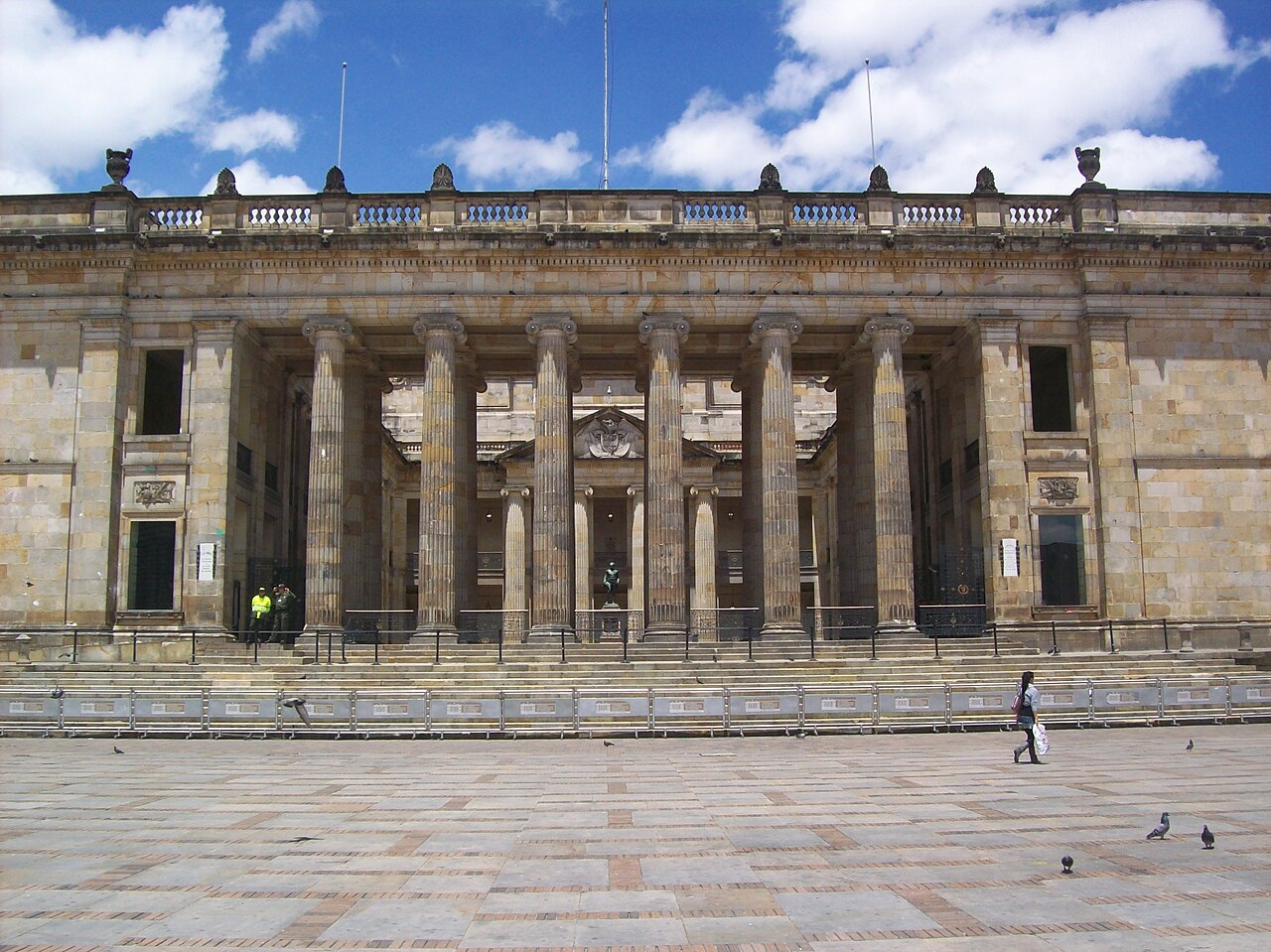
Congress has two chambers, both elected for 2026-2030 and sworn in on 20 July 2026. The Senate has 103 seats and the House of Representatives has 183.
Senator Honorio Henríquez of Centro Democrático was elected Senate president on 20 July 2026. He beat Alfredo Deluque of the Partido de la U by 56 votes to 45 in a secret ballot.
In the House, Nicolás Barguil of the Conservative Party, from Córdoba department, leads the chamber for 2026-2027.
In the House, Pacto Histórico has 41 seats, Centro Democrático 30, the Liberals 24 and the Conservatives 20. Another 16 seats are reserved for regions hit hardest by the armed conflict.
In Colombia politics no party controls either chamber alone. By a September 2026 deadline set by the opposition statute, every party had to declare itself pro-government, independent or opposition.
The governing coalition then counted 58 of 103 senators and 108 of 183 representatives, the Bogotá daily El Nuevo Siglo calculated. The final Senate count of the National Electoral Council (CNE) gives this split:
- Pacto Histórico, 25 seats: the left-wing coalition of former president Petro and the core of the opposition.
- Centro Democrático, 17 seats: a conservative party built around former president Álvaro Uribe, now on the government side.
- Liberal Party, 13 seats, and Conservative Party, 10 seats: the two traditional parties, both declared pro-government in September 2026.
- Alianza por Colombia, 11 seats: a joint list of the Green Party, En Marcha and three smaller parties. The Greens declared themselves independent.
- Partido de la U, 8 seats: a pro-government party whose senator Alfredo Deluque lost the July 2026 race for Senate president.
- Cambio Radical-ALMA, 7 seats: a joint list of the Cambio Radical party and smaller allies, on the government side.
- Ahora Colombia, 5 seats: a joint list of MIRA, Nuevo Liberalismo and Dignidad y Compromiso, which declared themselves independent.
- Salvación Nacional, 4 seats: a small conservative party that backed De la Espriella’s candidacy.
- Two seats reserved for indigenous communities, and one opposition seat held by Iván Cepeda.
The Opposition and the Rising Figures
Gustavo Petro, the left-wing president from 2022 to 2026, now leads the opposition from outside office. He called opposition marches for 14 October 2026; his record is covered in the Rio Times profile of Gustavo Petro.
Iván Cepeda, the runoff loser, sits in the Senate in the seat the opposition statute reserves for the runner-up. He leads Pacto Histórico and says the left has the experience to win back Bogotá.
Carlos Fernando Galán, the mayor of Bogotá, runs the capital and chairs Asocapitales, the association of capital cities. In October 2026 Petro called him an accomplice to genocide, and Asocapitales backed the mayor.
Governors run Colombia’s departments, the rough equivalent of US states, and are elected separately from the president. Antioquia, whose capital is Medellín, is governed by Andrés Julián Rendón; Valle del Cauca, around Cali, by Dilian Francisca Toro.
Governors and mayors face voters again in the regional elections of October 2027. That vote will be the first big test of Colombia politics under the new president.
The Military, the Police and the New Security Line
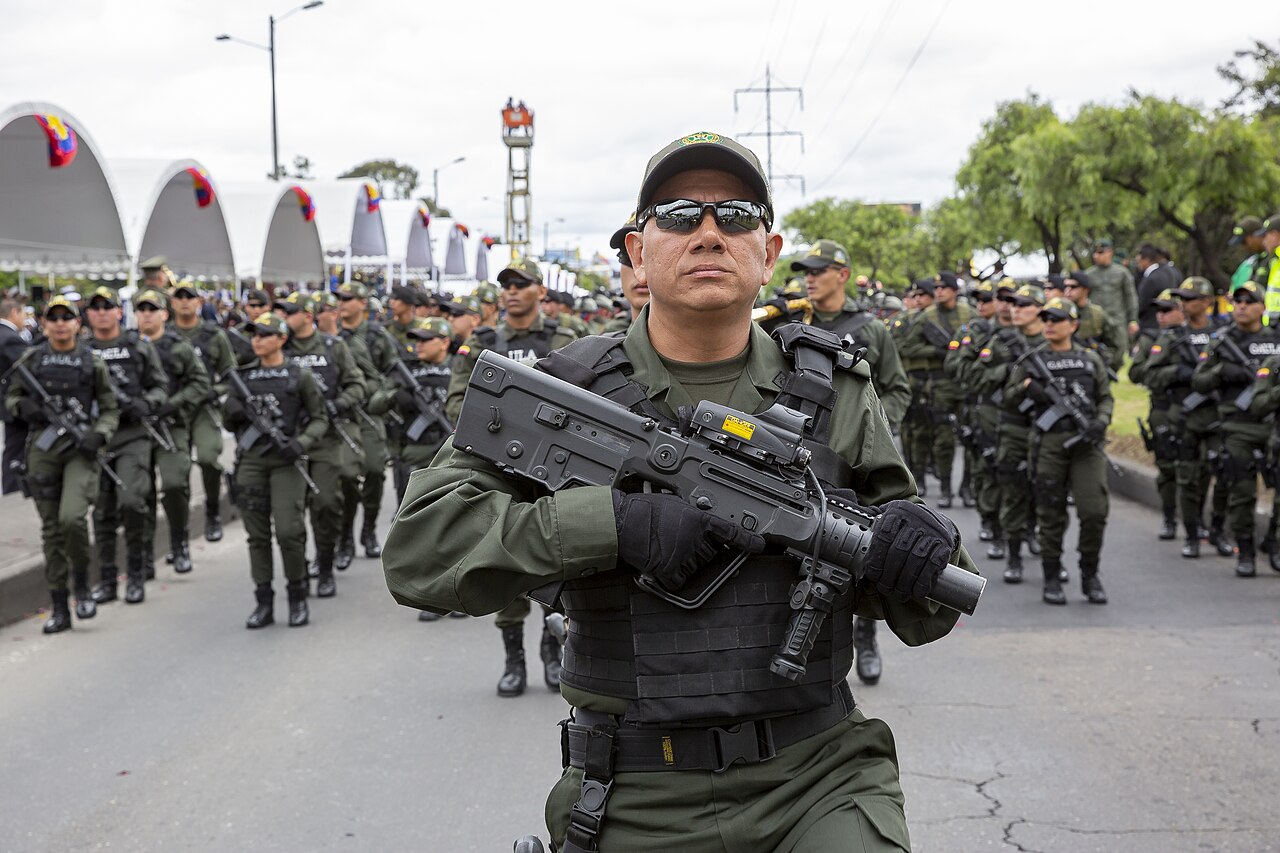
The president is commander of the armed forces, and De la Espriella replaced the high command within two weeks of taking office. The security line has hardened since.
The government revived Joint Task Force Urano, based in Aguachica in Cesar department, with more than 1,200 soldiers, airmen and police. It targets the Clan del Golfo and the ELN guerrilla.
“There will be no leniency on the battlefield, nor on the political terrain,” the president said in October 2026. He has also promised to start spraying coca, the raw material of cocaine, and to go after laboratories and trafficking routes.
The armed forces command named the new chiefs on 20 August 2026. As of October 2026 the line-up is:
- Major General Erik Rodríguez Aparicio, commander of the armed forces.
- Major General José Bertulfo Soto Sánchez, commander of the army.
- Vice Admiral Javier Alfonso Jaimes Pinilla, commander of the navy.
- Major General Juan Jaime Martínez Ossa, commander of the air and space force (Fuerza Aeroespacial Colombiana).
- Major General Alejandro Barrera Peña, director of the National Police.
Armed Groups and the End of Total Peace
Several armed groups still weigh on Colombia politics, controlling rural areas and drug routes. The main ones are the ELN guerrilla, the Clan del Golfo drug-trafficking army and dissident factions of the former FARC guerrilla.
The FARC itself signed a peace accord in 2016, but dissident factions of the former guerrilla remain armed. The US State Department lists the ELN, the FARC-EP dissidents and Segunda Marquetalia as foreign terrorist organisations.
Petro’s “total peace” policy opened talks with many of these groups at once. Under it, arrest warrants for 205 people were suspended at the request of his office, the weekly Semana reported in October 2026.
The new government ended those negotiating tables and stripped the groups’ spokespeople of their status. The prosecutor’s office says no suspended arrest warrants remain in force.
Courts, Prosecutors and Watchdogs
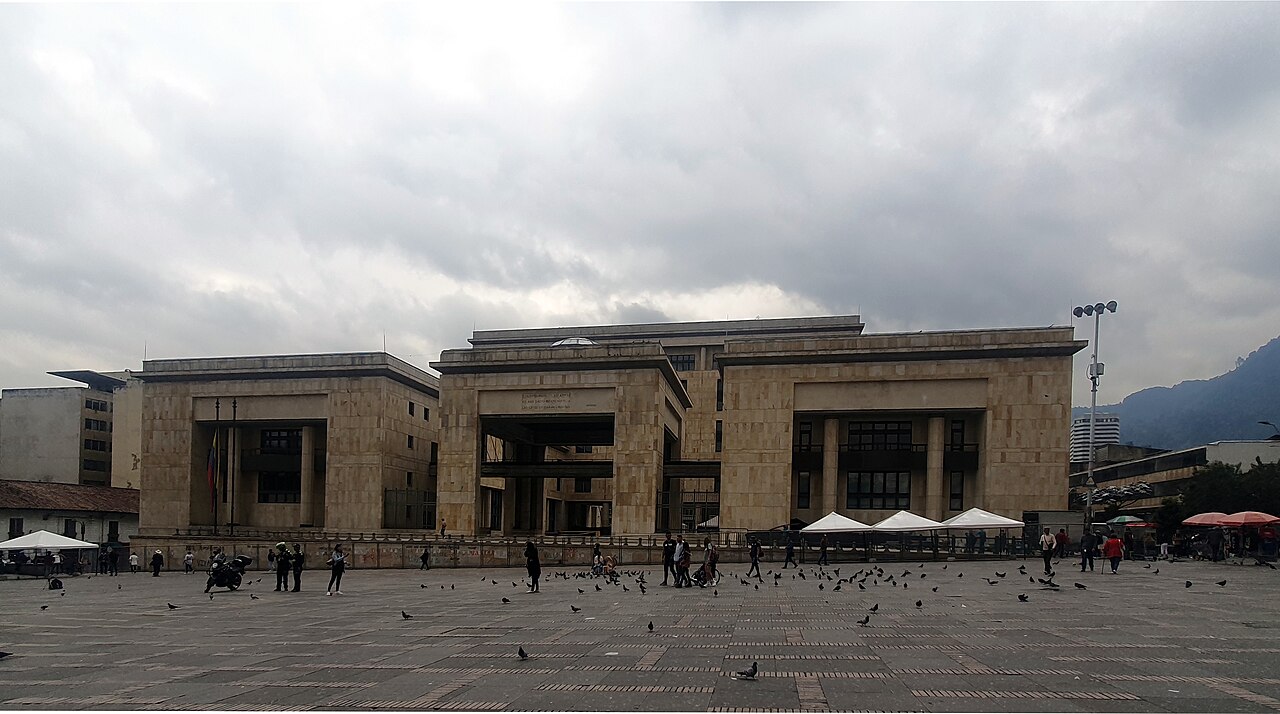
The Constitutional Court guards the 1991 constitution and has the final word on every emergency decree. That gives its judges a direct check on any president who governs by decree in a crisis.
The Supreme Court of Justice is the top court for criminal and civil cases, and it investigates and tries members of Congress. On 9 October 2026 it sentenced Senator Wilmer Carrillo to more than eight years over a road contract.
The same day it freed two former heads of Congress, Iván Name and Andrés Calle, pending trial because time limits had expired. Both are accused in a bribery scandal at the national disaster agency.
The chief prosecutor, Fiscal General Luz Adriana Camargo, decides whom to charge. The Supreme Court elects the post for four years from a shortlist sent by the president.
Gregorio Eljach, the inspector general or Procurador, can discipline and remove public officials. Hernán Penagos, the national registrar, runs elections and the civil register.
How Power Is Shared in Practice
The president names and dismisses ministers freely and picks the commanders of the armed forces and the police. That gives him firm control of the executive and the security forces.
Congress writes the laws and approves the budget, and since September 2026 a broad coalition there backs the president. Every emergency decree also goes to the Constitutional Court, which can strike it down.
Money is the second limit: the central bank, the Banco de la República, is autonomous, though the finance minister chairs its board. Strained public finances also pushed the government into IMF talks in September 2026.
Governors, mayors and courts form a third layer of power. In Colombia politics, a president can set the direction, but he rarely gets everything he wants.
What It Means for US Readers
De la Espriella met US Secretary of State Marco Rubio in Barranquilla on 8 September 2026. Afterwards he said the two countries would be the “main partners in South America” on security.
Colombia also joined the Shield of the Americas, an alliance against organised crime, with Medellín chosen as its Colombian base. The president proposed a joint plan to modernise aircraft, radars, drones and air defence, the presidency said.
Drug policy remains the sore point. On 15 September 2026 President Donald Trump kept Colombia among countries that have “failed demonstrably” against drugs, blaming the previous government.
US assistance continued despite that decision, under conditions, the Medellín daily El Colombiano reported. The certification review covered September 2025 to September 2026, mostly under Petro.
Petro has been on the US Treasury’s sanctions list since 24 October 2025 and was still on it in October 2026. US citizens and companies are generally barred from dealings with him.
Trade is the other link: US goods trade with Colombia reached about US$37.3 billion in 2025, Census Bureau data show. A free-trade agreement between the two countries has been in force since May 2012.
For investors, the new government means closer ties with Washington but strained public finances. The guide to Colombia in Latin America covers its regional role, and the Rio Times Colombia page collects the news.
What Is Not Known
It is not yet clear whether his coalition in Congress will hold together on the budget and on security laws.
The outcome of the IMF talks is open, as is the size of any spending cuts. Nor is it known how the armed groups will respond to the end of negotiations.
Washington’s next drug certification decision is due in September 2027. Until then, Colombia politics is likely to be judged in the United States on coca, cocaine seizures and extraditions.
Frequently Asked Questions
Who is the president of Colombia in 2026?
Abelardo de la Espriella, a conservative lawyer, has been president since 7 August 2026. He won the 21 June 2026 runoff against leftist Iván Cepeda by 251,854 votes.
Can the president of Colombia run for re-election?
No. Article 197 of the constitution, amended in 2015, bars anyone who has held the presidency from being elected again. De la Espriella’s term ends in 2030.
Which party is the largest in Colombia’s Congress?
Pacto Histórico, the left-wing coalition, with 25 of 103 Senate seats and 41 of 183 House seats for 2026-2030. No party has a majority alone, but the pro-government coalition controls both chambers.
Who leads the opposition in Colombia politics?
Former president Gustavo Petro and Senator Iván Cepeda of Pacto Histórico lead the left-wing opposition. Cepeda holds the Senate seat reserved for the runner-up in the presidential race.
What happened to Petro’s total peace policy?
The new government ended the negotiating tables with armed groups such as the ELN and the Clan del Golfo. The prosecutor’s office says no suspended arrest warrants remain in force.
Is Colombia certified by the United States in the drug fight?
No. On 15 September 2026 Washington kept Colombia decertified for a second year, blaming the previous government, but it kept assistance flowing under conditions.
Sources: Senado de la República: Honorio Henríquez elected Senate president, 2026-07-20; Senado de la República: composition of the 2026-2030 Senate, 2026-06-28; Cámara de Representantes: new House leadership 2026-2027, 2026-07-21; Comando General de las Fuerzas Militares: new high command, 2026-08-20; Gobernación de Antioquia: police command handover with the National Police director, 2026-10-01; Registraduría Nacional: joint action with Fiscalía and ministers, 2026-10-08; Presidencia de la República: De la Espriella and Rubio in Barranquilla, 2026-09-08; Presidencia de la República: address to the UN, Vice-President Restrepo, 2026-09-24; Cancillería: Foreign Minister Omar Bula Escobar, 2026-09-30; Corte Suprema de Justicia: provisional release of Iván Name and Andrés Calle, 2026-10-09; Constitución Política de Colombia 1991 (Secretaría del Senado), 2026-10-10; Procuraduría General de la Nación: Procurador Gregorio Eljach, 2026-10-06; Gobernación del Valle del Cauca: Governor Dilian Francisca Toro, 2026-10-07; Alcaldía de Bogotá: Mayor Carlos Fernando Galán, 2026-10-07; US Treasury OFAC: counter narcotics designations of 24 October 2025, 2025-10-24; US State Department: Foreign Terrorist Organizations, 2026-10-10; US Census Bureau: trade in goods with Colombia, 2026-10-10; USTR: US-Colombia Trade Promotion Agreement, 2026-10-10; World Bank: Colombia population 2025, 2026-10-10; El Colombiano: US keeps Colombia decertified, 2026-09-16; El Colombiano: Joint Task Force Urano reactivated, 2026-10-05; El Colombiano: protest decree and the 14 October march, 2026-10-09; La República: House seats per party 2026-2030, 2026-07-21; La República: departures from the De la Espriella government, 2026-09-24; El Espectador: Iván Cepeda interview, 2026-10-03; Semana: end of total peace, 205 suspended warrants, 2026-10-06; RTVC Noticias: government opens IMF talks, 2026-09-28; La FM: Petro remains on the OFAC list after 6 October update, 2026-10-07; La Silla Vacía: CNE declares De la Espriella president-elect, final runoff count, 2026-06-24; Univision: De la Espriella sworn in at a ceremony in Cali, 2026-08-07; El Colombiano: profile of Vice-President José Manuel Restrepo, 2026-06-21; El Nuevo Siglo: governing coalition holds 58 of 103 Senate and 108 of 183 House seats, 2026-09-08; El Colombiano: CNE confirms the composition of the Senate, 2026-07-14; Caracol Radio: parties and coalitions in the 2026-2030 Senate, 2026-07-16; Senado de la República: Senate President Honorio Henríquez, 2026-10-08; Infobae: House President Nicolás Barguil, 2026-09-26; El Colombiano: Antioquia Governor Andrés Julián Rendón, 2026-10-04; Asocapitales: statement backing Mayor Carlos Fernando Galán, 2026-10-08; La FM: armed forces commander Erik Rodríguez Aparicio on Task Force Urano, 2026-10-05; El Heraldo: army commander José Bertulfo Soto Sánchez, 2026-10-06; Las2orillas: navy commander Javier Alfonso Jaimes Pinilla, 2026-10-05; Infobae: air and space force commander Juan Jaime Martínez Ossa, 2026-10-02; Corte Suprema de Justicia: sentence against Senator Wilmer Carrillo (news list), 2026-10-09; La Silla Vacía: Name and Calle released, UNGRD case, 2026-10-09; Ley 163 de 1994: regional elections on the last Sunday of October, 2026-10-10; Constitución Política, Arts. 371-372: Banco de la República, 2026-10-10; Centro Democrático: party website, 2026-10-10.
This article was produced by The Rio Times’ automated newsroom system. How we use AI · Report an error · Editorial responsibility: Matthias Camenzind, Editor-in-Chief
Rotate for Best Experience
This report is optimized for landscape viewing. Rotate your phone for the full experience.
You've reached your free article limit
Subscribe to The Rio Times for unlimited access to our news, expat and nomad guides and market intelligence on Latin America and Africa.